i. Biography
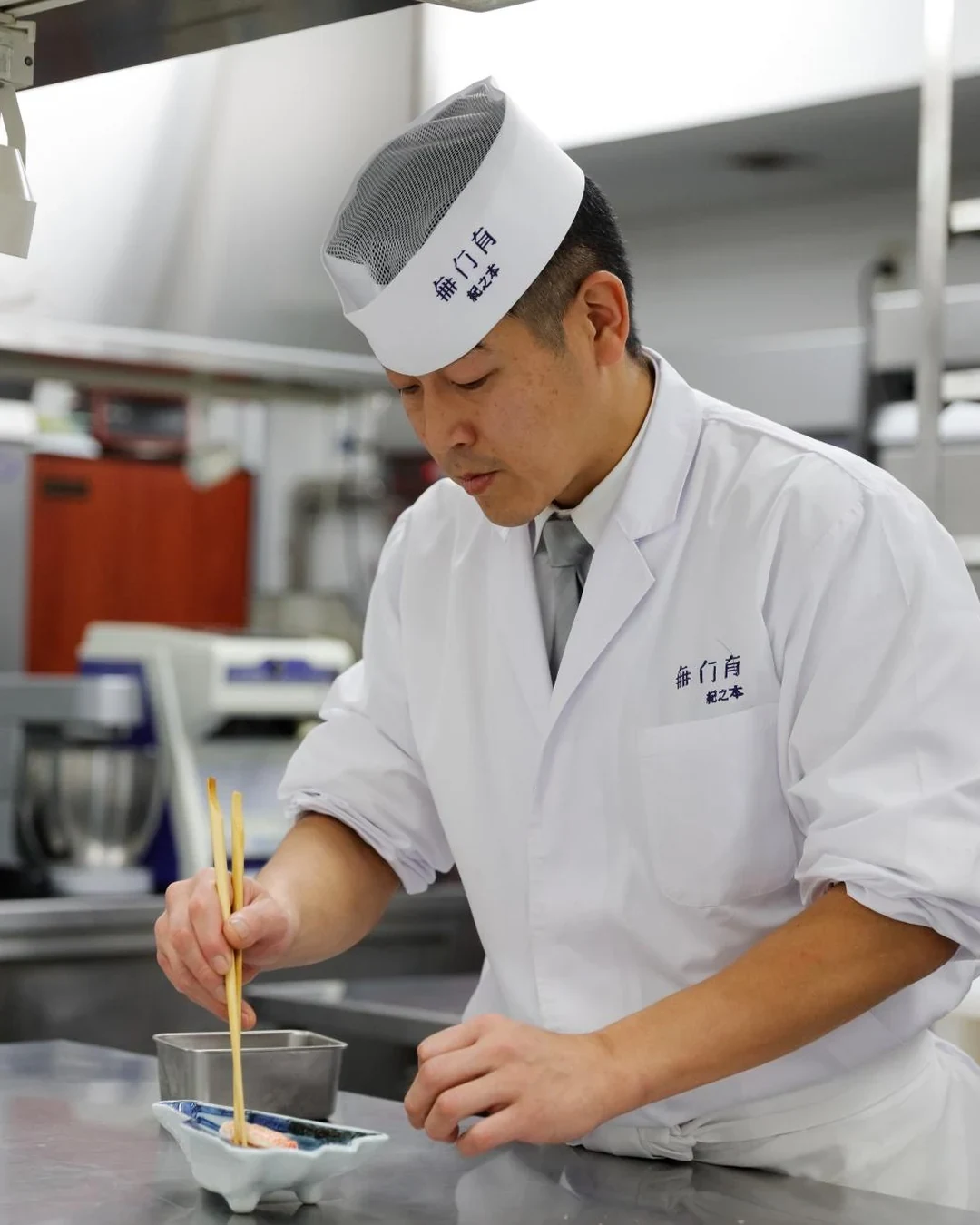
Kaga supplies the working range for Hiroaki Kaku’s kaiseki: Hashidate Port, the surrounding fields, and the local seasonal calendar set the limits and the possibilities. At Kaiseki Horin at Beniya Mukayu in Kaga, Japan, the meal is built from local specialties rather than held to a menu conceived apart from the season. The discipline is kaiseki used as a reading of place, with nearby waters and farms determining what can be served at a given moment.
The Path
Training in Kaga regional ingredients and local culinary culture gave Hiroaki Kaku the basis for a kitchen organized by locality. The meal is not treated as a detached sequence of polished courses; it is composed through the region’s ports, fields, and seasonal rhythm, with each course answerable to what the area provides. The chef role at Beniya Mukayu gives that regional training a precise format. Kaiseki supplies the structure, while Kaga supplies the reference point and ingredient vocabulary. Novelty is not pursued by leaving the region; the work returns to what is close, using each season as both boundary and prompt.
The Work Today
Kaga Kaiseki Horin at Beniya Mukayu is prepared through local specialties, including ingredients from Hashidate Port and the surrounding fields. The menu stays close to nearby waters, farms, and seasonal change. Its structure depends less on a fixed template than on timing: what has arrived, what is at its peak, and what the season will not repeat in the same form. Ingredient rhythm sets the register. Winter menus include female snow crab and steamed Kaga lotus root, both tied to the cold season’s materials. Autumn menus include seven varieties of local mushroom, marking the region’s fields and forests as the year turns. The craft is in following these arrivals without overstatement, letting the meal record the region at a specific point in the calendar. Rice with Zuwai crab and homemade karasumi functions as a named signature within that logic. The course brings grain, crab, and preserved flavor into the same frame while staying inside the seasonal and regional discipline of Kaku’s kitchen. In this setting, Kaga is carried through specific materials: crab, karasumi, rice, lotus root, mushrooms, and the seasonal order of kaiseki. Each dinner reads the region through texture, temperature, and timing.
Career - Chef — Beniya Mukayu Education: Kaga regional ingredients and local culinary culture
Acclaim
The special tasting menu placed Kaga cooking within a ten-course format, with rice, Zuwai crab, and homemade karasumi serving as a notable course in the meal. The recognition sits in the specificity of the work: Hashidate Port, nearby fields, and seasonal Kaga ingredients translated into kaiseki for guests in Tokyo.
FAQ What is Hiroaki Kaku's current role? Hiroaki Kaku is chef at Kaiseki Horin at Beniya Mukayu. What is Hiroaki Kaku known for? Kaga kaiseki using ingredients from Hashidate Port and surrounding fields.