i. Biography
The Path
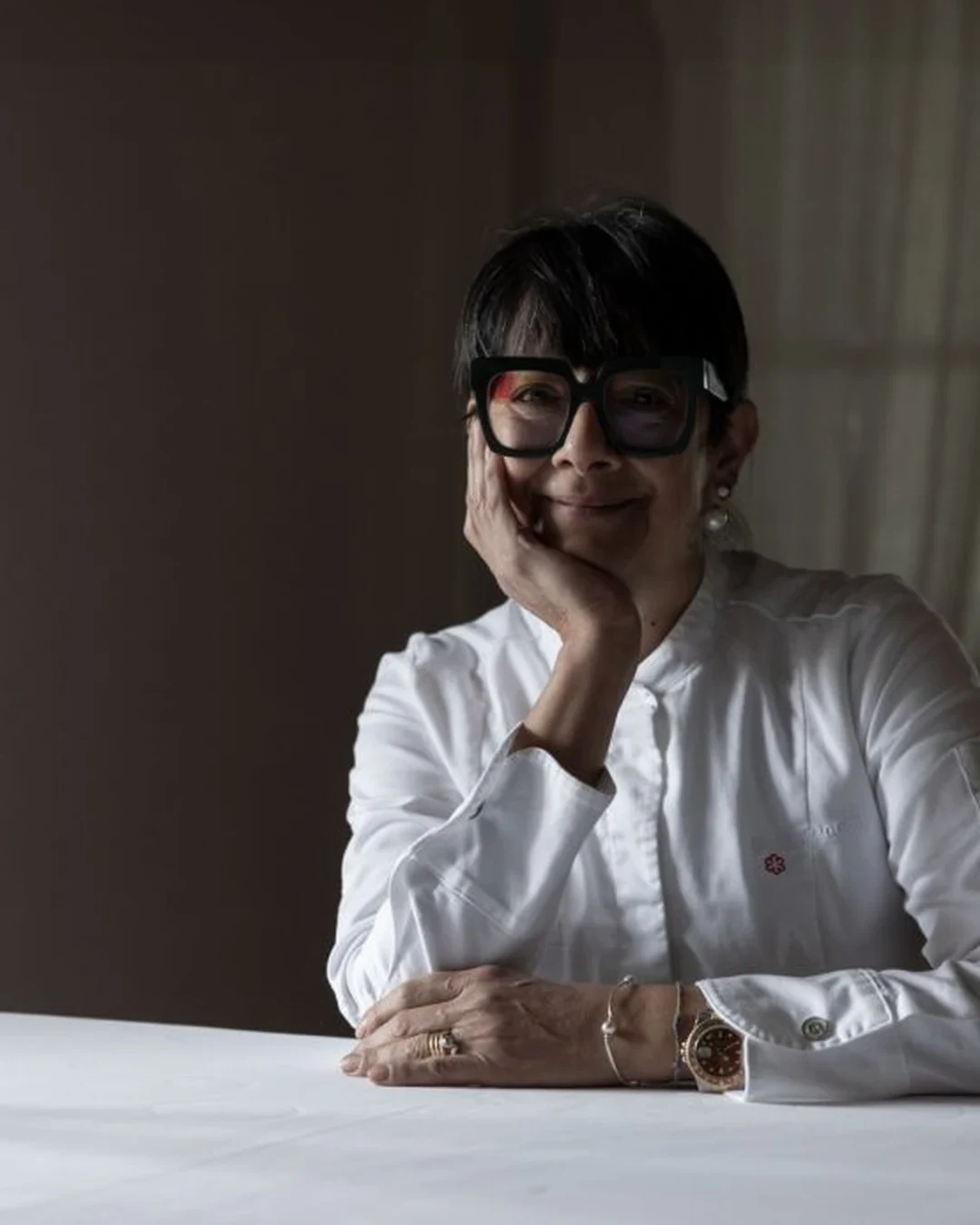
Formation in hospitality gives a kitchen its first working grammar: sequence, restraint, service, and the discipline to repeat a standard under pressure. For Isa Mazzocchi, that base came through Carlo Porta hotel school, followed by study with Georges Cogny in Emilia. The useful lesson was not ornament; it was precision joined to the ability to read season, ingredient, and occasion. Italian cooking at a high level has long moved between regional memory and technical revision. Early-career work in Italy with Gianfranco Vissani, Gualtiero Marchesi, and Herbert Hintner placed Mazzocchi near that argument: how to hold rigor and emotion, the rooted and the unexpected, without losing the dish. Since 1987, that question has been worked through La Palta, where she is chef and co-founder; through Euro-Toques Italia, where she is a member; and through the Chef to Chef group, where she is an active participant. The territory remains Piacenza: fields, larders, rivers, grains, herbs, and preserved flavors translated through a contemporary hand.
The Work Today
Teaching keeps technique accountable to transmission. As an external lecturer at ALMA, Mazzocchi carries forward not only kitchen method, but a view of food as culture, memory, and responsibility. Piacentine cooking is the base: traditional recipes brought into contact with avant-garde techniques. The point is not effect. The technique has to clarify flavor, open an old recipe from another angle, or give a familiar ingredient renewed force. Local and seasonal ingredients keep the work tied to the countryside and the agricultural economy of the region, while historical memory and contemporary creativity meet on the plate. Regional craft holds the center more firmly than trend. The cooking returns to local Piacenza ingredients and traditions, with a fresh approach to classic regional dishes and an emphasis on local products. Tradition and innovation are treated as working tools, not opposing camps. The core remains country cooking: pasta, preserved flavors, grain, herbs, beans, river and field. The structure often reads in layers: stored goods, herbs, dough, and ingredients that have been dried, smoked, cured, or kept. Handmade pasta is one of the clearest signatures, especially braided tortelli, where the form carries both hand skill and local identity. La Palta – La Pasta uses pasta to move through Emilia, Romagna, and the Tuscan-Emilian Apennines. In that frame, pasta is not only a course; it is a practical map of neighboring territories, shared techniques, and border kitchens. The milk-cream dot on each dish is described as the first food shared by all human beings and as a reminder that the craft is to nourish. Other defining plates include whole wheat toast with preserved venison, sour herbs, and jujube mayonnaise; seared sturgeon with smoked bean puree, lentil dressing, lemon balm, and crustaceans; Rice Ravioli from East to West, blending Thai cuisine elements with Italian ingredients; and Pastìss, a sumptuous timballo of macaroni in sweet crust that her cooking helped bring back to light. “Time is the secret ingredient in every dish.” In this kitchen, time means more than duration. It means patience, ripening, memory, transmission, and the confidence to let tradition continue working in the present.
Career - Chef and co-founder — La Palta, Borgonovo Val Tidone / Bilegno, Piacenza, Italy (1987–present) - Member — Euro-Toques Italia, Italy - Active participant — Chef to Chef group, Italy - Student — Georges Cogny, Emilia - Early-career cook — With Gianfranco Vissani, Gualtiero Marchesi, and Herbert Hintner, Italy Education: Carlo Porta hotel school
Signature
Signature dishes include Milk-cream dot on each dish, Whole wheat toast with preserved venison, and Seared sturgeon with smoked bean puree.
In Their Words “Time is the secret ingredient in every dish.”
Acclaim
Isa's honors include Female Chef of the Year / Michelin Chef Donna by Veuve Clicquot (2021