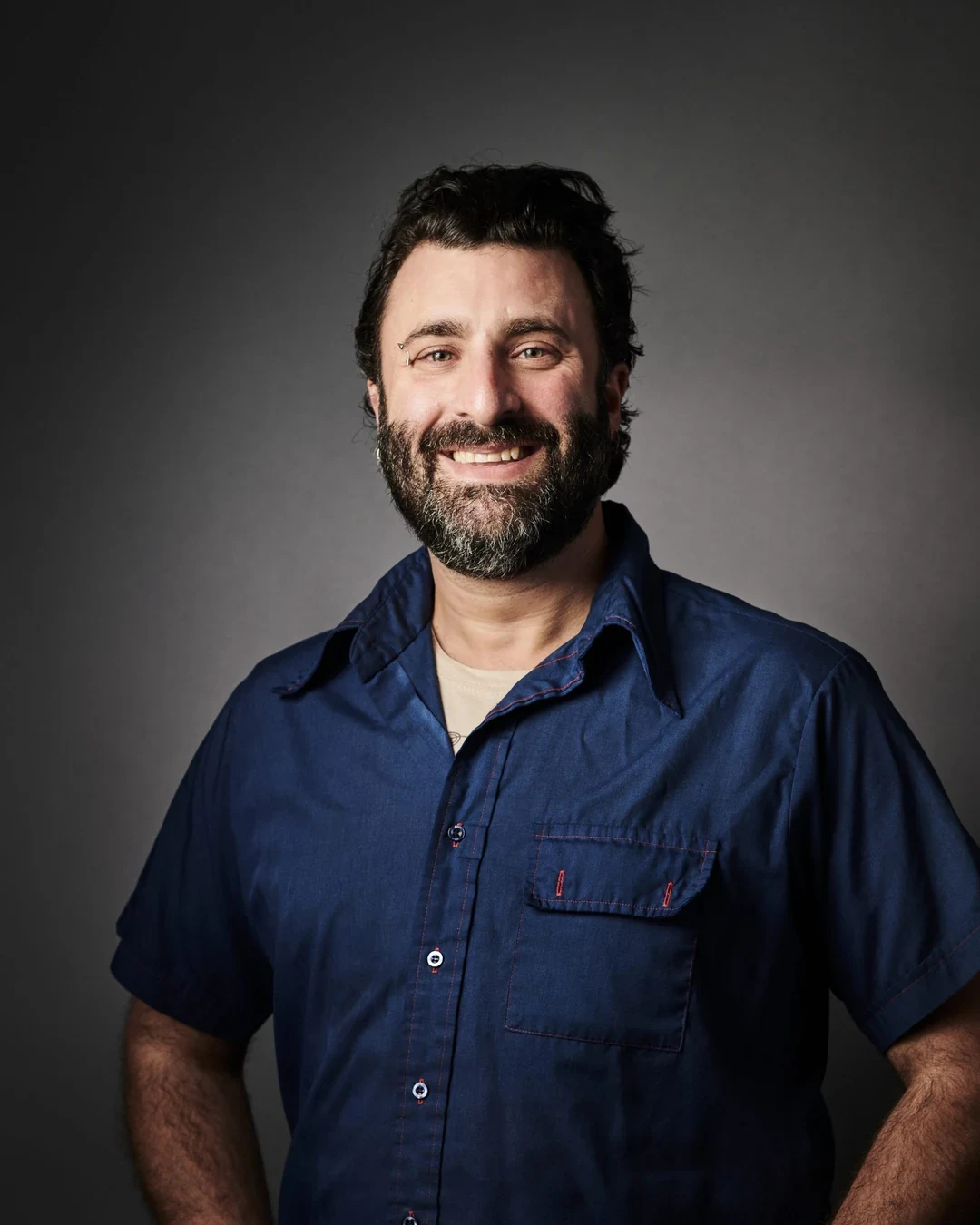
i. Biography
Jeremy Umansky’s formation begins with land, preservation, and appetite turned toward experiment: before Cleveland, before the deli counter, his interest in culinary preservation began while he was land manager on a 40-acre farm in the Hudson Valley. From that soil line came a cook who would become chef and co-owner of Larder Delicatessen in Cleveland, Ohio, and chef/owner of Larder Delicatessen & Bakery, carrying farm knowledge into Eastern European deli cooking with koji, foraged food, and seasonal restraint.
Where It Started The Hudson Valley farm is the cleanest starting point for understanding Umansky’s kitchen inheritance. Preservation was not an abstract technique there; it was tied to land management, wild food, and the discipline of making ingredients last without flattening their character. A childhood edge also runs through the work. Umansky has said, "By the time I was in my mid-teens I was cooking insects – mealworms and crickets –and feeding them to my friends. I’d roast and salt them and put them in the trail mix." By 2009, he was opening chef for a new restaurant in the Hudson Valley, New York. He also worked as a local chef for Whole Foods in Manhattan, New York, a role that sits naturally beside the sourcing and preservation concerns that later defined his Cleveland kitchen.
Who Shaped Them No single teacher defines the line as clearly as place, product, and method. The shaping tradition is Eastern European deli cooking, but filtered through local and wild sourcing, seasonal cooking, and an effort to minimize ecological impact without giving up intensity or flavor. That lineage is practical rather than decorative. At the restaurant, koji is used to boost French fry seasoning, accelerate pastrami curing, and help develop plant-based foods with complex flavor and texture. The technique links fermentation to the deli case: seasoning, curing, texture, and depth all become part of the same family of ideas. In 2020, Umansky co-authored *Koji Alchemy*, extending that method beyond the Cleveland kitchen. The book places koji at the center of his craft vocabulary, not as novelty, but as a working tool for preservation, savoriness, and transformation.
The Work Today
At Larder in Cleveland, the fried chicken and pastrami sandwich are described as standout dishes, with koji-culturing, foraged edibles, and sustainable food sourcing as their underlying forces. The pastrami connects directly to curing; the fried chicken shows how the same pantry logic can move beyond the deli’s expected borders. The restaurant received a 2019 James Beard Foundation Award nomination for Best New Restaurant in America. For a Cleveland deli-bakery built around local food, wild ingredients, ecological care, and deep flavor, that national recognition fixed Umansky’s work to a larger American conversation about what preservation-driven cooking can be. The through-line remains unusually coherent: land to larder, wild food to deli counter, koji to pastrami, and seasonal sourcing to a restaurant identity rooted in Cleveland, Ohio. Umansky’s craft is not nostalgia for deli tradition; it is a living inheritance, handled by a cook who learned to see preservation as a way to make food more vivid.
FAQ What tradition or house shaped Jeremy Umansky? His work is shaped by Eastern European deli cooking, a 40-acre Hudson Valley farm background, and preservation methods centered on koji, foraging, and seasonal sourcing. Who has Jeremy Umansky mentored? His influence is expressed through *Koji Alchemy* and the techniques practiced at his Cleveland restaurant, rather than through a specific protégé.
Explore
In the same rooms


