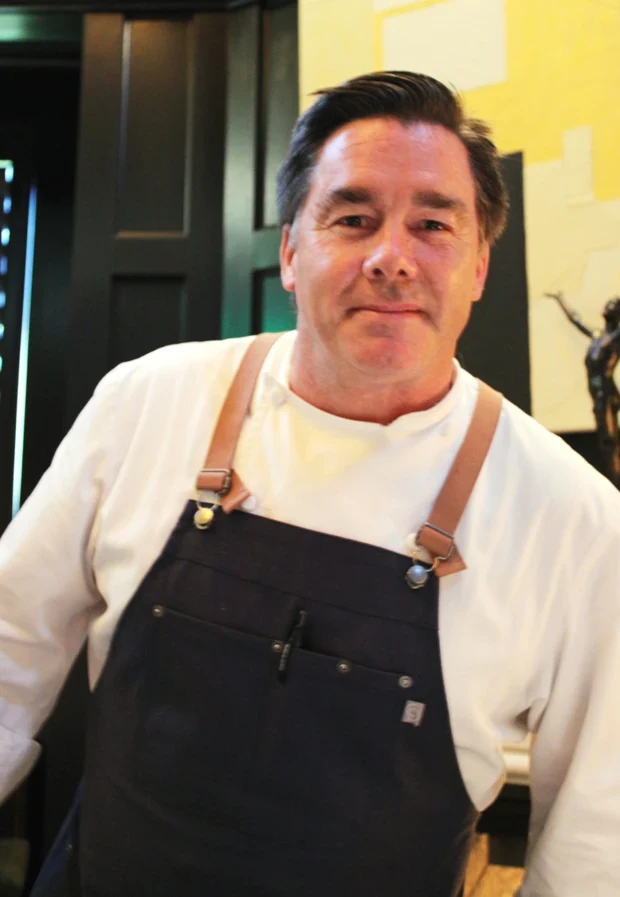
Chef
Mark Sullivan
- Discipline
- Chef
- Based in
- Atherton, California, United States

i. Biography
Cooking, in Mark Sullivan’s account, is a matter of temperament before it is a matter of title. “I didn’t choose to become a chef. It basically chose me. I actually started cooking just because I wanted to cook and enjoyed cooking.” As executive chef of Selby’s in Atherton, California, Sullivan describes the work without ornament: the stove held his attention, the daily act of cooking kept him there, and the kitchen became the place where that attention had use. American cuisine and professional service set the frame for the work. In Sullivan’s cooking, an idea is not complete until it can survive heat, timing, pickup, and the movement of a room. The craft is shaped less by performance than by repetition under pressure: instinct checked by intention, and intention tested on the line.
The Philosophy The first professional kitchen lesson came during lunch service at Sol Y Luna in San Francisco. Sullivan’s memory is operational, not sentimental: “It was lunch service, and it was the first time I was actually work on line during a very busy service. I just remember that I was really out of sorts. I didn’t understand the pace of the kitchen, and the chef was barking at me.” Line work teaches pace before it teaches authorship. The room has hierarchy, tempo, language, and consequence, and a cook who falls behind feels all four at once. Sullivan’s recollection points to the basic discipline of service: hear while moving, respond while cooking, and keep the hands from scattering when the pressure rises. The philosophy in the work comes from that physical education. Speed, sound, heat, instruction, and response precede theory. Before his current leadership roles, Sullivan cooked at Slow Club in the Bay Area, another stage in a practice built through kitchens rather than declaration.
In Practice “It’s pork and beans, but it’s kind of reinvented.” The phrase places Sullivan’s American cooking in familiar territory and then opens it up. Pork and beans is a known pairing; the craft lies in reconsidering it without cutting it loose from recognition. Reinvention here means giving an established dish new structure while keeping its identity legible. That kind of work depends on restraint. A familiar dish can carry tension; a humble one can be composed. Memory gives the cook a starting point, but service, technique, and judgment decide where the plate ends.
In Their Words “I didn’t choose to become a chef. It basically chose me.” The statement keeps the career close to the work itself: cooking as a fact followed, not a claim enlarged. “I actually started cooking just because I wanted to cook and enjoyed cooking.” That first motive sits beside the harder instruction of lunch service at Sol Y Luna, where pace, command, and pressure made the kitchen’s terms clear. Taken together, the remarks describe a practice pulled toward the stove by enjoyment and shaped by the discipline of service.
Signature
Mark's signature dishes include pork dish. The description is spare, but it fits the register of the cooking as presented: ingredient, heat, attention, and the pressure of execution rather than spectacle for its own sake.
Profile updated July 2026
FAQ
Asked of Mark
What is Mark Sullivan's current role?
Mark Sullivan is Executive Chef.
What is Mark Sullivan known for?
American cuisine.
What recognition has Mark Sullivan received?
Food & Wine — America's Best New Chefs (2002).