i. Biography
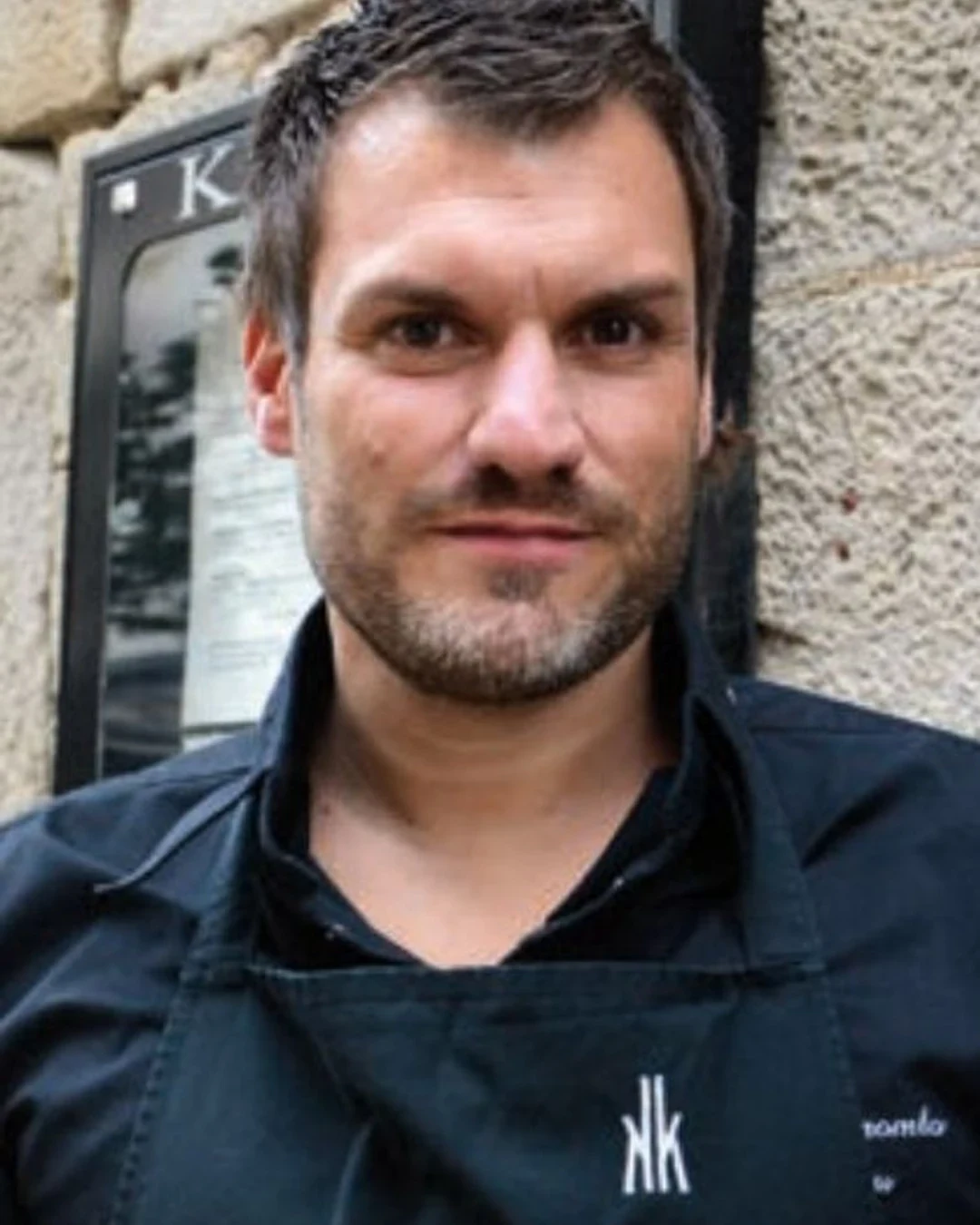
At Le Kaïku in Saint-Jean-de-Luz, Modern Cuisine is worked through Basque and Atlantic products rather than laid over them. In Nicolas Borombo’s kitchen, seafood is handled for coastal clarity, seasonal produce is used while it is still expressive, and exceptional meats are given the necessary time, heat and attention. Local sweets, aromatic herbs, bouillons, crunch, softness and heat are used as working elements, applied for timing and flavor rather than effect. Basque refinement at Le Kaïku depends on proportion: generosity without rustic weight, precision without severity. From Bayonne, Borombo cooks as Executive Chef of a house where place sets the material and restraint sets the frame. The result is composed, deliberately seasoned cooking with a clear line between product, technique and service.
Coming Up
Classical hotel discipline shaped the early technical base. Nicolas Borombo worked and trained at Four Seasons Hotel George V in Paris, France, trained at Hôtel de Crillon in Paris, France, and worked at Grand Hôtel. Those kitchens put timing, polish, consistency and the quiet mechanics of elegant service into the work before the Basque coast became the main register. The return to Saint-Jean-de-Luz brought those tools back to local material. Since 2012, Nicolas has been Executive Chef / chef-owner of Le Kaïku, where classical precision is used on Basque products, Atlantic seafood, seasonal produce and exceptional meats. The cooking is not nostalgia for place; it is a practical meeting of training, market selection and regional identity.
Where They Are Now
Market cuisine at Le Kaïku is modern and refined, built from Basque and Atlantic ingredients: local products, seasonal produce, exceptional meats, seafood and local sweets. Since 2012, Borombo has held the Executive Chef role in Saint-Jean-de-Luz, where the first decision is product selection—what is fresh, expressive and worth building around on that day. Product-led cooking here relies on direct technique. Braising, roasting, baking and searing are treated as primary tools for controlled instant cooking, not background processes. The work is simple, generous and characterful, with taste and seasoning kept central. Heat changes according to the ingredient: slower when depth is needed, more direct when clarity and immediacy matter. Balance is the house grammar. Fine, gentle cooking with fusion influences and unusual light flavors is supported by bouillons for depth, soft textures set against crunch, and aromatic herbs used for lift. Dishes are directed and dressed with a light hand, keeping the ingredient legible and avoiding clutter. Texture variation is part of the method. Lime blancmange with pea glacé is cited as an example: cool, soft, green and precise. In Borombo’s work, contrast can carry the plate—warm against cool, tender against crisp, sweetness checked by green freshness, intensity brought back to a clean finish. Refinement at Le Kaïku stays close to the region. Basque and Atlantic ingredients are given shape through balance, elegance and enough contrast to keep the plate active without obscuring the product.
Career - Executive Chef / Chef-owner — Le Kaïku, Saint-Jean-de-Luz, France (2012–present) - Worked/trained — Four Seasons Hotel George V, Paris, France - Worked/trained — Hôtel de Crillon, Paris, France - Worked — Grand Hôtel
Signature
Signature work includes lime blancmange with pea glacé, roasted langoustine, and Saint-Pierre "Petit Bateau.
Honors
Nicolas Borombo has received MICHELIN Guide — One Michelin star for Le Kaïku (2015). Recognition includes One Michelin star for Le Kaïku (2015), Le Trophée de la Mer (2016), and Grand chef de demain.
FAQ What is Nicolas Borombo's current role? Nicolas Borombo is Executive Chef at Le Kaïku. Where did Nicolas Borombo work before? Earlier in their career, Nicolas Borombo worked at Four Seasons Hotel George V, Hôtel de Crillon, and Grand Hôtel. What recognition has Nicolas Borombo received? On