Chef
Nicolas Fontaine
- Discipline
- Chef
i. Biography
Before Nicolas Fontaine took on Executive Chef duties at Dorfstuben in Baiersbronn, his work moved through kitchens that demanded different forms of control: apprenticeship, then command. The line from Michel Kayser in Garons to Pierre Gagnaire, Gaya, Bordeaux, and Nîmes shows the kind of progression chefs recognize immediately — each stop tightening technique, pace, and precision.
The Path
Formal study at BTS (2002) gave Nicolas Fontaine the base for a career that shifted quickly from classroom to service. The early years at Michel Kayser (from 2002) introduced the discipline that separates repetition from habit: technique under pressure, timing under scrutiny, and the daily order of a working kitchen. In 2005, he moved on to Pierre Gagnaire (from 2005), where exacting standards sit alongside creative momentum. By 2009, Fontaine had become chef of Gaya (from 2009), a step that marked the move from absorbing a system to being responsible for it. The title placed him in a position where experience had to translate cleanly into service, with standards that had to hold in the dining room as well as in the pass. That progression continued in 2016, when he opened Grande Maison de Bernard Magrez for Pierre Gagnaire at Grande Maison de Bernard Magrez (from 2016). Opening a kitchen is its own discipline: the room is still being defined, the rhythm is still being established, and every detail has to be set with care. In 2019, Fontaine became Executive Chef of Duende and Brasserie de l’Imperator at Duende in Brasserie de l’Imperator (from 2019), another role that shows how often his career has been trusted at moments that mattered. Today, Nicolas is Executive Chef of Dorfstuben.
The Work Today
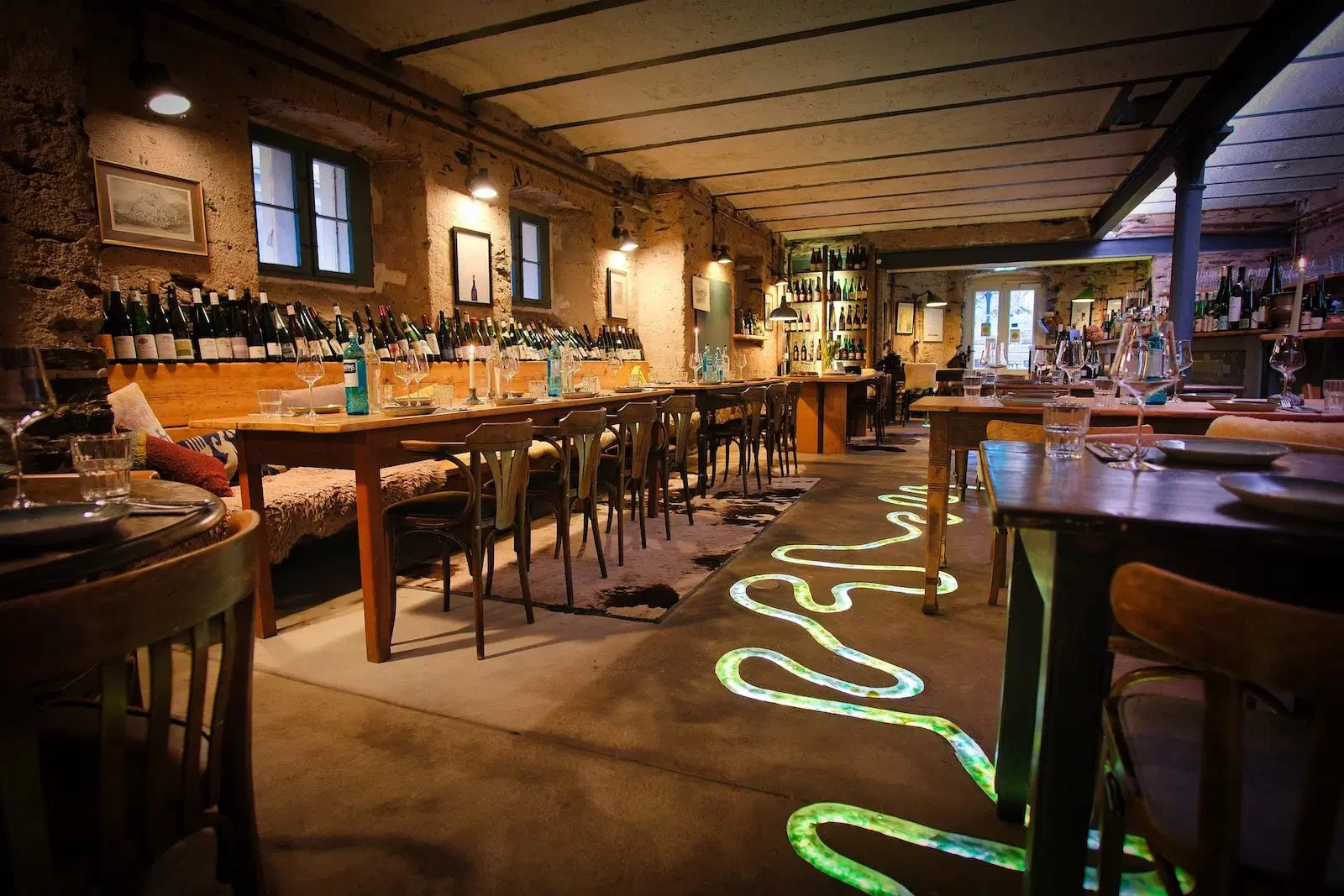
Fontaine’s current role is Executive Chef at Dorfstuben in Baiersbronn. The kitchen’s named specialty is Traditional Swabian-Baden Black Forest cuisine, which places the work inside a regional tradition with its own rules and expectations. That kind of cooking is less about invention for its own sake than about keeping faith with a place while applying disciplined technique. In Baiersbronn, that responsibility gives the role both weight and texture. Traditional Swabian-Baden Black Forest cuisine asks for attention to detail and a restrained hand, with the chef working inside a language already understood by the region. Fontaine’s present work sits in that framework, shaped by the long series of kitchens that brought him here.
In Their Words “We work first for our customers, with the ambition of making the most honest cuisine possible, constantly evolving and having fun.” “Together with Logan, we imagined a bistronomic table, a warm, epicurean place focused on the world of wine.”
Career - Executive Chef — Dorfstuben, Baiersbronn, Germany - Started out with — Michel Kayser (from 2002) - Worked with — Pierre Gagnaire (from 2005) - Chef of Gaya — Gaya (from 2009) - Opened Grande Maison de Bernard Magrez for Pierre Gagnaire — Grande Maison de Bernard Magrez (from 2016) - Executive Chef of Duende and Brasserie de l’Imperator — Duende, Brasserie de l’Imperator (from 2019) Education: BTS
Acclaim
The markers in Fontaine’s career are clear: the Chef title at Gaya in 2009, the opening of Grande Maison de Bernard Magrez for Pierre Gagnaire in 2016, and the Executive Chef role at Duende and Brasserie de l’Imperator in 2019. Taken together, they describe a chef repeatedly trusted at pivotal points, with the technical assurance to inherit, build, and lead. The current appointment in Baiersbronn continues that line. After Garons, La Rochelle, Bordeaux, and Nîmes, his work now gathers around Traditional Swabian-Baden Black Forest cuisine, a specialty that depends on continuity as much as technique. Fontaine’s career takes shape there: composed, attentive, and still in motion, with experience used as a working tool rather than a posture.
FAQ What is Nicolas Fontaine's current role? As of 2026, Nicolas Fontaine is Executive Chef. Where did Nicolas