i. Biography
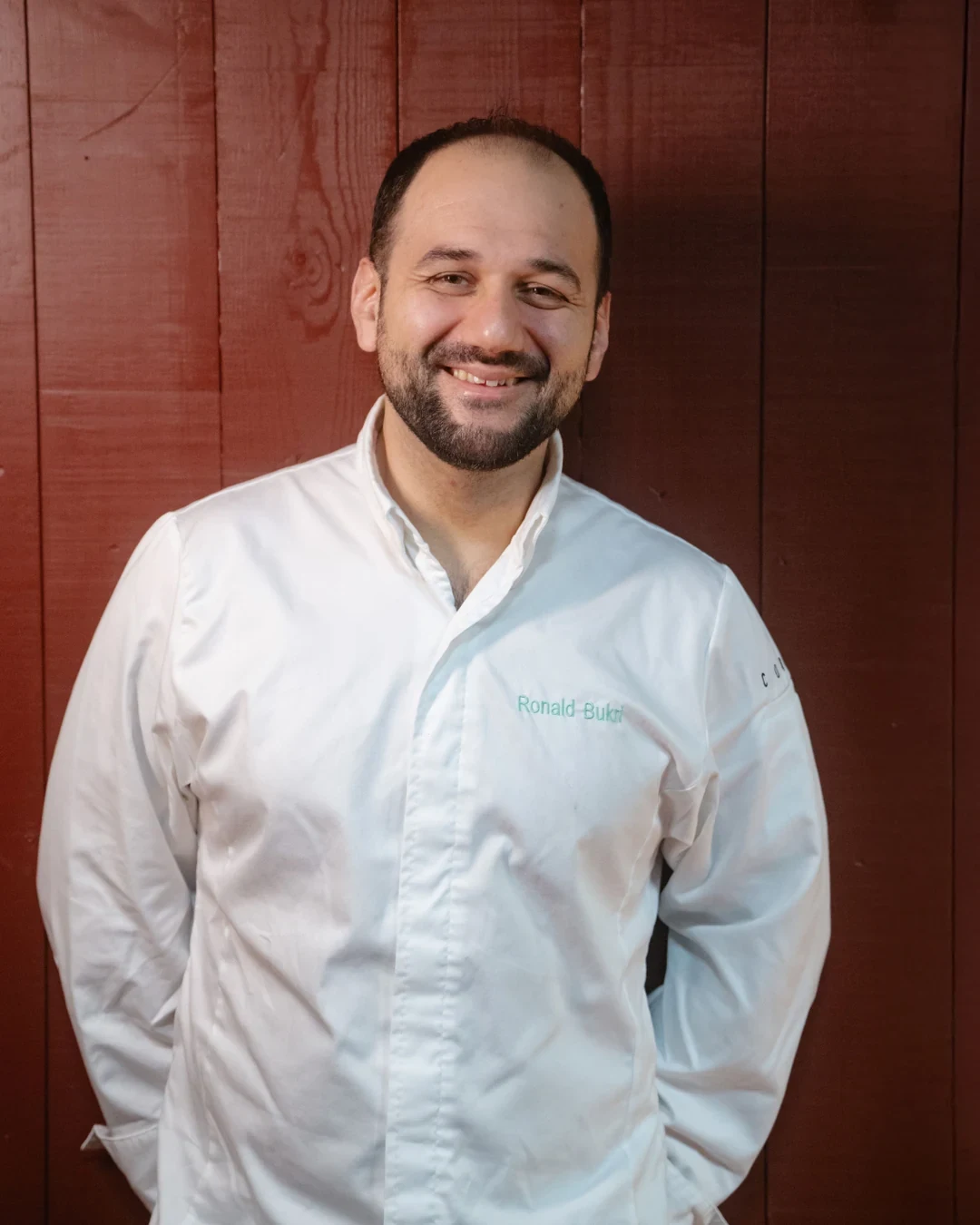
"The goal is always the same: taste. A taste that is not only flavor, but also beauty, sensitivity, and gesture." For Ronald Bukri, chef of Coro in Orvieto, that sentence is less a motto than a working definition of cooking itself. Taste, in his telling, is something that begins before the first bite: in the eye’s first impression, in the hand’s attention, in the quiet precision with which a plate is made to speak. Born in Durrës, Albania, in 1987, Bukri has built his career around Contemporary Italian cuisine, shaping it with a sense of movement and return, of restraint and openness.
The Philosophy At Coro in Orvieto, Bukri holds two titles that seem especially fitting for a chef whose ideas about cooking are also ideas about form: he is both chef and co-founder. The dual role suggests a close relationship between the kitchen and the place itself, between what is cooked and how the project is held together. His language is exacting, and deliberately broad at the same time: taste is not reduced to flavor alone, but widened to include beauty, sensitivity, and gesture. That belief gives his work an inward rhythm. Contemporary Italian cuisine, in Bukri’s hands, is not framed as a departure from tradition or a refusal of belonging, but as a way of keeping rootedness and freedom in conversation. He describes that direction plainly: "After professional experiences in London and Sydney, I chose to return to an idea of cooking that was at once rooted and free." The sentence carries a sense of arrival, but also of deliberate choice. It is not nostalgia, but orientation. The return is central to the story. London and Sydney mark important chapters in his professional life, yet the present tense belongs to Orvieto, where Coro becomes the place that gathers those experiences into a focused, contemporary language. In that setting, his cooking feels shaped by discipline, but never closed; precise, but never rigid.
In Practice Bukri traces the beginning of his career to Arnolfo. "My career began at Arnolfo." The statement is brief, almost understated, but it gives his biography a clear first step: a kitchen, a threshold, the point at which professional life begins to take form. From there, his path widened through professional experiences in London and Sydney before turning toward Coro. In Orvieto, his role is not limited to the act of cooking. As co-founder, he is part of the structure that holds the restaurant together, helping define its character as well as its cuisine. That combination of creation and stewardship seems to suit a chef whose own ideas are so closely tied to balance. His specialty is Contemporary Italian cuisine, and the terms he uses to describe it are telling. He speaks not of flourish for its own sake, but of alignment: flavor with beauty, sensitivity with gesture, rootedness with freedom. In Bukri’s vocabulary, these are not abstractions. They are the standards by which the kitchen works, and the measure of whether taste has been truly found.
In Their Words "The goal is always the same: taste. A taste that is not only flavor, but also beauty, sensitivity, and gesture." "My career began at Arnolfo." "After professional experiences in London and Sydney, I chose to return to an idea of cooking that was at once rooted and free."
FAQ What is Ronald Bukri's current role? As of 2026, Ronald Bukri is Chef. What is Ronald Bukri known for? Contemporary Italian cuisine.