i. Biography
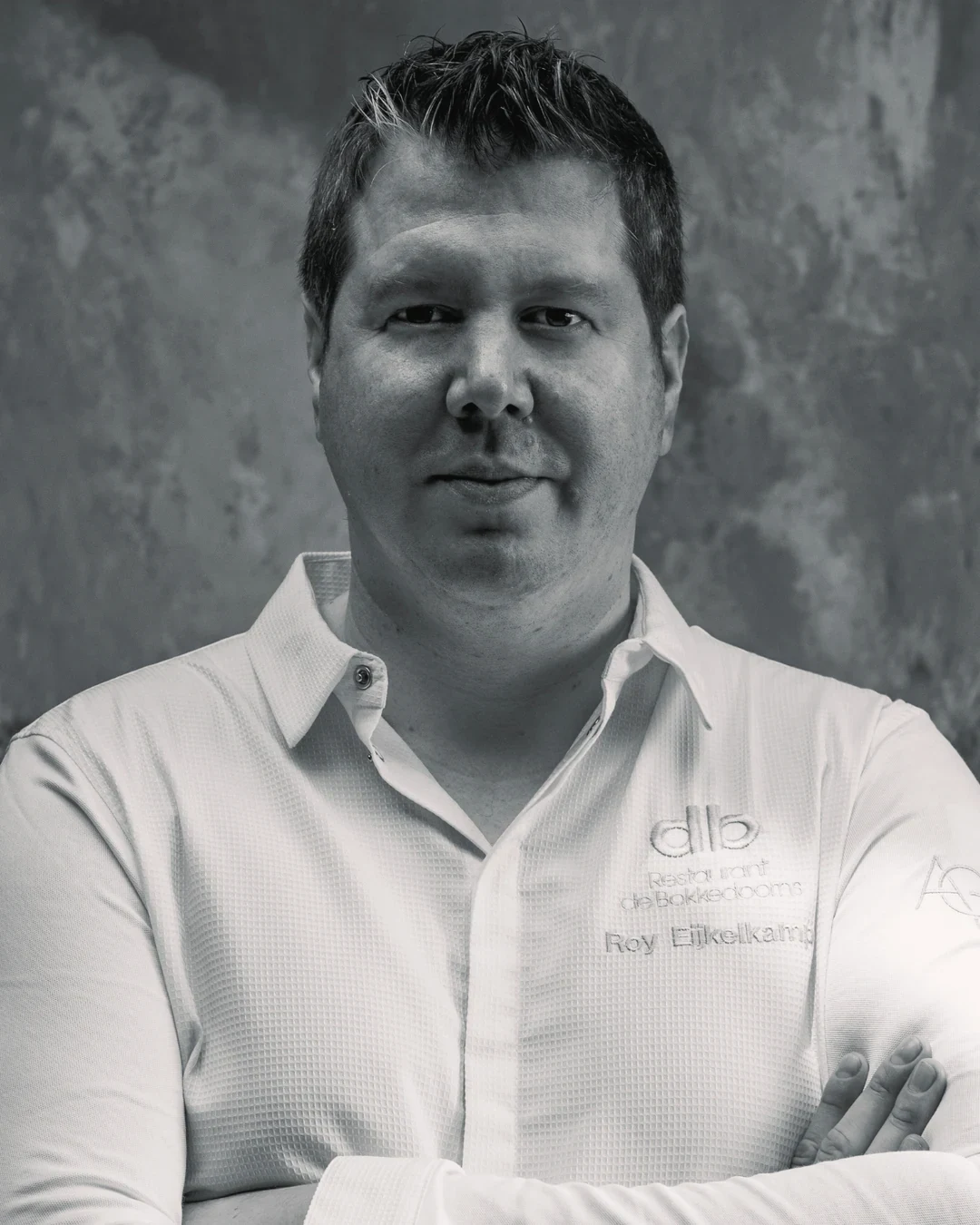
Born in Vorden, Roy Eijkelkamp’s path reads as kitchen discipline accumulated over time: fundamentals learned early, then tested through service, section work, and leadership. Since 2018, chef-kok at De Bokkedoorns in Overveen has been the point where that progression becomes visible in the food, with precision and restraint doing the heavy lifting.
The Path
Training at Galen Tijn, Diku, and Schutterhus gave Roy Eijkelkamp the base that many kitchens demand but few articulate: technique first, consistency always, and detail measured in the finished plate rather than the talk around it. The first rung was afwasser at Bistro de Rotonde, where the work sits low in the hierarchy but high in exposure to service rhythm, timing, and the pressure of repetition. A move to chef de parti at De Bokkedoorns in Overveen, followed by sous chef at De Bokkedoorns in Overveen, shows the familiar shape of advancement inside one house: wider responsibility, deeper familiarity, tighter standards. By the time Roy Eijkelkamp became chef-kok, the kitchen language had already been learned through repetition and proximity. Today, Roy is chef-kok of De Bokkedoorns, where that line of progression is held in full view.
The Work Today
Since 2018, Eijkelkamp has been chef-kok of De Bokkedoorns in Overveen, and his own description of the work is direct: “I just want the best ingredient to be used, whether it comes from the Netherlands or Japan. With that quality, we want to be distinctive.” The point is not decoration for its own sake. It is a kitchen built to let product quality and composition carry the expression. Tomatillo broth gives the plate its frame, crispy blanched beans bring texture, and mezcal meringue-style marshmallows introduce smoke and sweetness. The result is built on contrast—spicy, sour, salty, sweet—handled in a way that keeps the structure legible. The dry aged rode biet, served with sherry vinaigrette, uses a different register: the beet is sliced at the table, and the dish is allowed to open in front of the guest. It is a simple service gesture, but one that gives the plate timing and presence without adding excess. Other works in his current repertoire include Paling Tom Kha Kai, Blood Orange, Amuse ✨, and Truffle. Taken together, they point to a kitchen language that stays ingredient-led while moving across different references. The through-line is clarity: careful sourcing, controlled composition, and flavors that are meant to be read cleanly.
Career - chef-kok — De Bokkedoorns, Overveen - afwasser — Bistro de Rotonde - Chef de parti — De Bokkedoorns, Overveen - sous chef — De Bokkedoorns, Overveen Education: Galen Tijn; Diku; Schutterhus
Signature
Roy's signature dishes include Blood Orange, Amuse ✨, Truffle, Paling Tom Kha Kai, and dry aged rode biet. Each sits inside the same working frame: careful sourcing, composed construction, and flavors that stay clear rather than overworked.
In Their Words “I just want the best ingredient to be used, whether it comes from the Netherlands or Japan. With that quality, we want to be distinctive.”
Acclaim
The clearest recognition in Eijkelkamp’s profile is his role at De Bokkedoorns (Overveen), where he has served as chef-kok since 2018. His current work is marked by dishes such as the bean salad with tomatillo broth and Mezcal-marsmellow, the dry aged red beet with sherry vinaigrette, and the named dishes Paling Tom Kha Kai, Blood Orange, Amuse ✨, and Truffle.
FAQ What is Roy Eijkelkamp's current role? Roy Eijkelkamp is chef-kok. Where did Roy Eijkelkamp train or study? Roy Eijkelkamp trained at Galen Tijn and Diku.