i. Biography
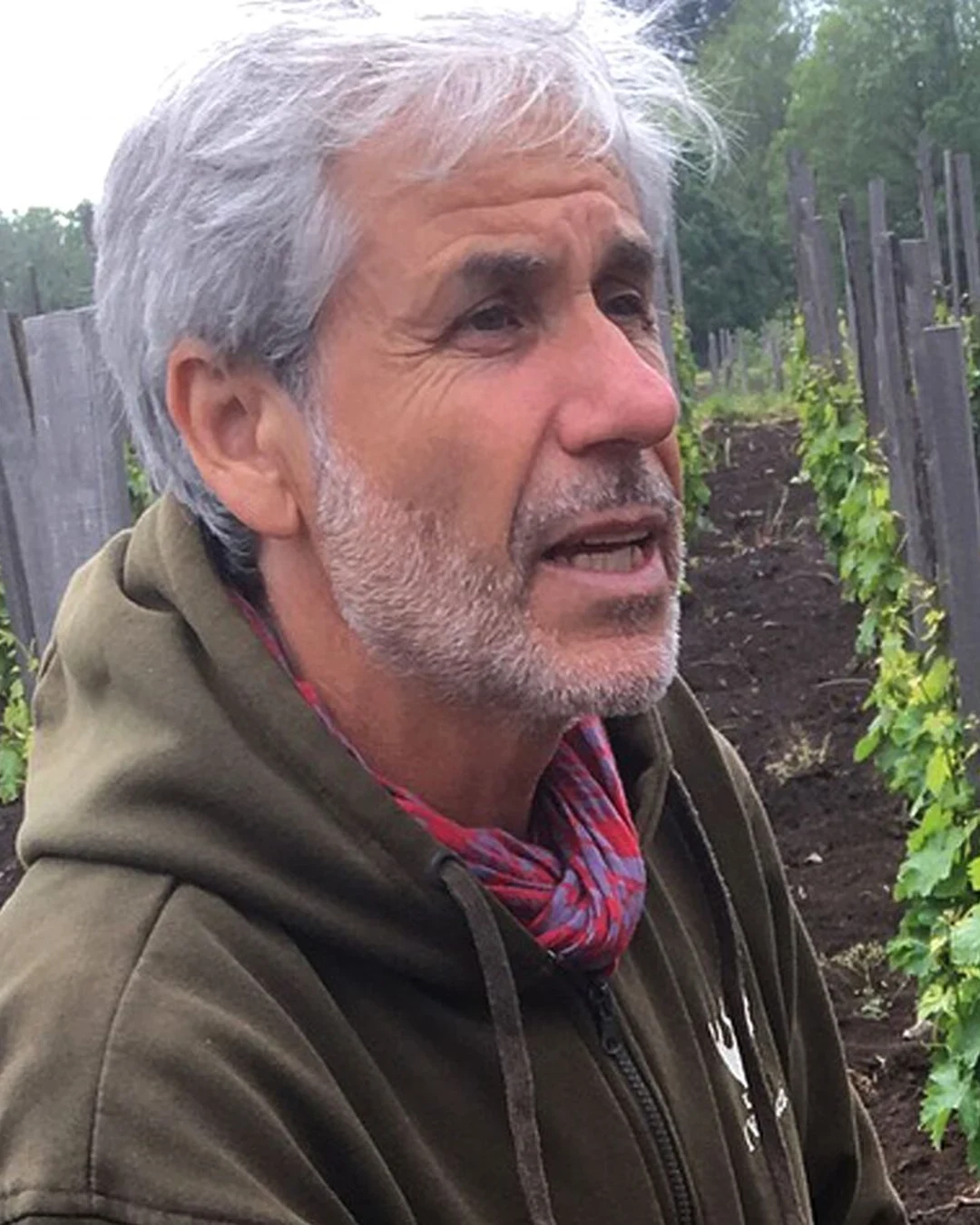
Salvo Foti works in enology from the vineyard outward, at I Vigneri di Salvo Foti (Milo), with close attention to land, vine, and the conditions that shape both. The method is observational before it is interventionist: taste first, then decide. On Riesling, Salvo Foti makes that sequence explicit: "Before starting to vinify Riesling by direct-pressing it, I took the time to taste many wines made on this type of terroir: that is to say hard soils such as granite, schist or gneiss." The point is practical rather than rhetorical: the wine is read against the ground that produced it.
Where They Are Now
From 1981, Salvo Foti worked as technical and agrarian advisor at noted estates in Sicily, a long run of fieldwork rooted in the island’s soils and traditions. That experience underpins a philosophy of winegrowing that favors the long view over quick correction, and asks what a vineyard can tell you when it is allowed to remain legible. Today, Salvo is proprietor of Salvo Foti-I Vigneri, where the work stays tied to both daily viticulture and a deliberate sense of heritage. The throughline is clear: vines, soils, and the craft of translating a place without flattening it.
Career - Proprietor — Salvo Foti-I Vigneri, Sicily - Technical and Agrarian Advisor — noted estates, Sicily (from 1981)
Signature
Salvo's signature wines include VINUPETRA, AURORA, VINUDILICE, and Etna rosso I Vigneri. Read together, they point to a style concerned with structure, origin, and the specific voice of the vineyard rather than surface effects. In Salvo Foti’s work, these wines function as examples of a larger discipline: making wines that hold their shape and keep the details of their place intact.
In Their Words “This is why vines were historically planted on hillsides: there is clay for the link to the living (growth, fermentation) and hard soil for the non-living (flower, fruit, aromatic, tannins, bitterness).” The remark sets out a working view of hillside planting as a division of labor between soil types, with clay and hard ground each assigned a role in the vine’s life and in the wine’s expression. It is a compact statement of field logic: observe the terrain, then read what it contributes. “Before starting to vinify Riesling by direct-pressing it, I took the time to taste many wines made on this type of terroir: that is to say hard soils such as granite, schist or gneiss.” The emphasis is on comparison before method. Salvo Foti describes a process built on tasting wines from similar soils before choosing how to work the fruit, with granite, schist, and gneiss treated as references rather than abstractions. The approach is deliberate, and it stays close to texture, soil, and precedent.
FAQ Where did Salvo Foti work before? Earlier in their career, Salvo Foti worked at noted estates.