James Beard Award winner
Susanna Foo
- Discipline
- James Beard Award winner
Made By record
Awards & recognition
1 total
1 winner

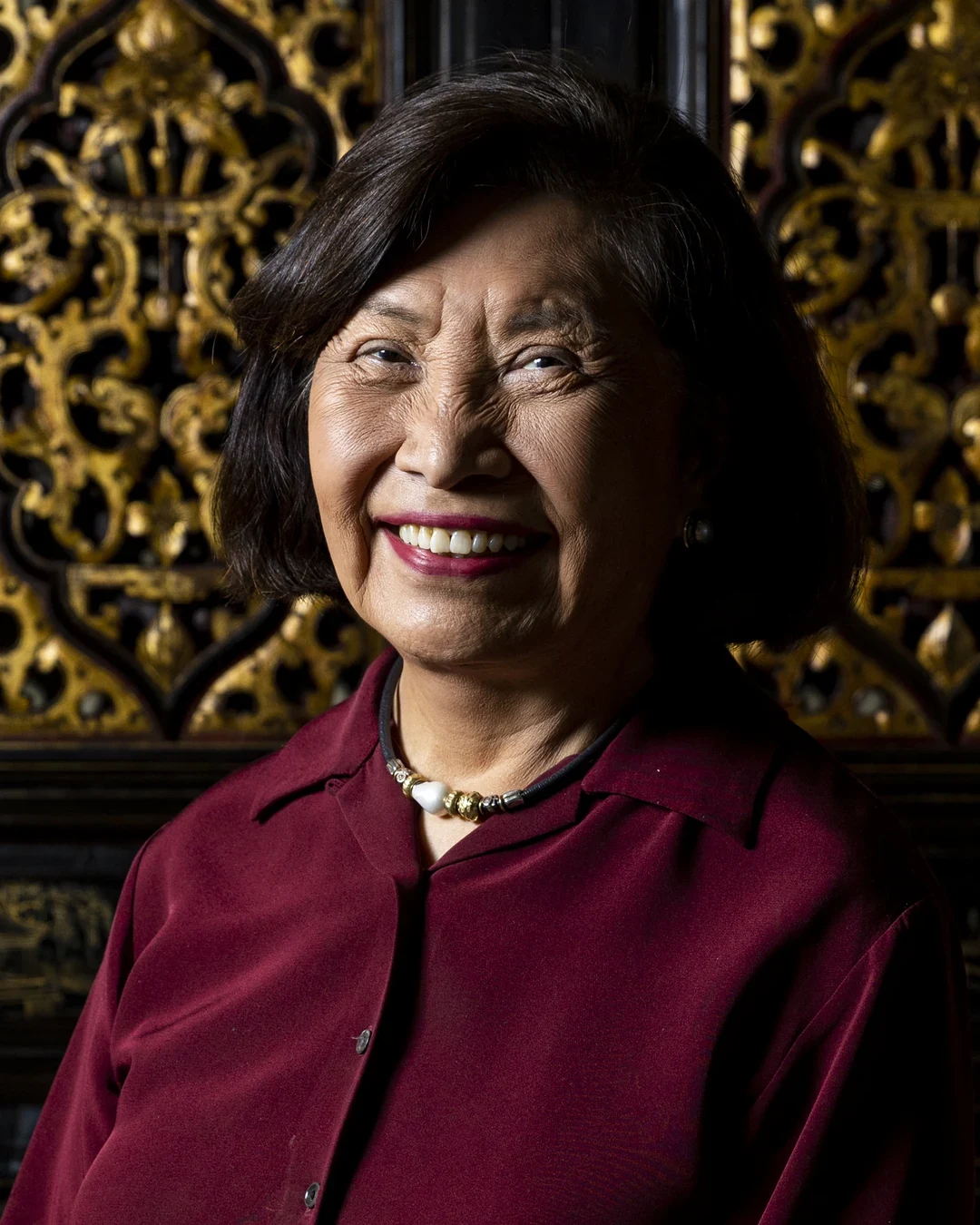
i. Biography
The through-line in this cooking is a controlled meeting of traditional Chinese ingredients and classical French techniques. In Susanna Foo’s restaurants, that meant structure without erasing source material: balance, texture, sauce work, and finish applied to flavors that remained legible as Chinese rather than absorbed into a vague fusion idiom.
The Climb
Formal study set an unusually broad base for the kitchen practice that followed. Restaurant craft became daily work in 1979, when Susanna Foo helped run the family Chinese restaurant at Hu-Nan in Philadelphia, Pennsylvania. Service made the questions concrete: how to feed guests consistently, how to carry family responsibility through a commercial dining room, and how to work from Chinese ingredients under the pressure of repetition. The defining method at Susanna Foo was the melding of traditional Chinese ingredients with classical French techniques. The value was not novelty for its own sake, but control: balance, restraint, texture, and enough polish to let familiar flavors read cleanly. In that room, Susanna Foo’s name became attached to a style that treated Chinese foundations with French-trained precision in structure, sauce, and presentation. The restaurant practice later moved into other formats and markets without dropping that vocabulary. Susanna Foo became owner/operator at Suilan in Borgata, Atlantic City, New Jersey (from 2003), and served as owner/operator at Susanna Foo Gourmet Kitchen in Radnor, Pennsylvania (until 2015). Today, she is co-owner/operator of Suga (since 2016), continuing the same core proposition: Chinese ingredients handled with discipline, finish, and a measured sense of adaptation.
Today
The current work at Suga (since 2016) belongs to a longer craft record that includes scholar, librarian, restaurateur, chef, and owner/operator. Susanna Foo’s role as co-owner/operator keeps the practice active rather than archival. The cooking associated with her name still points toward clarity and composure, with fresh, locally sourced seasonal ingredients treated as the substance of the plate rather than decoration. Expectation became part of the operating conditions around this work. The standards attached to Susanna Foo’s name required consistency across restaurants, menus, and public recognition. Read as trade history, the restaurants are not just addresses in sequence; they show a working temperament built around precision, adaptation, and a low tolerance for failure.
Career - Co-owner/operator — Suga (2016–present) - Librarian — United States - Helped run family Chinese restaurant — Hu-Nan, Philadelphia, Pennsylvania (from 1979) - Owner/operator — Susanna Foo, Philadelphia, Pennsylvania (1987–2009) - Owner/operator — Suilan, Borgata, Atlantic City, New Jersey (from 2003) - Owner/operator — Susanna Foo Gourmet Kitchen, Radnor, Pennsylvania (until 2015) Education: National Taiwan University; University of Pittsburgh; Culinary Institute of America
Signature
The signature dishes named to Susanna Foo’s repertoire—wild mushroom dumplings, Sizzling Pine Cone Bass, Tea Smoked Duck, Hundred Corner Crab Cake, and Crab Meat Sui Mei with Red Pepper Sauce—show the range of the house grammar. Dumplings, sizzling service, tea smoke, shaped crab work, and a Red Pepper Sauce all point to Chinese foundations handled through composed technique. The common thread is not a single flavor profile, but a method: recognizable ingredients and forms brought into tighter structure, cleaner finish, and controlled presentation.
In Their Words “Because of my name, everyone expected me to be perfect. I don’t like to fail.” “I cook blending fresh, locally sourced seasonal ingredients.”
Recognition
The recognition around this work spans restaurant cooking, authorship, and public standing: James Beard Foundation Award for Best Chef in the Mid-Atlantic Region (1997), James Beard Foundation Award for Best International Cookbook (1995), Best New Chef (1989), and Best


