Bollinger Cellar Master: Émilien Boutillat Named for 2026
Champagne Bollinger names Émilien Boutillat as cellar master from October 2026, bringing two IWC titles and a four-continent Pinot Noir career to the house's bicentennial era.
HM
Director of Editorial Standards
Hugo Marchetti
Filed June 27, 2026
9 min read
Charles Armand de Belenet, managing director of Champagne Bollinger, chose his words with care when he announced the appointment of Émilien Boutillat as the house's next cellar master.
Boutillat's career, de Belenet said, his exacting standards and his vision of winemaking would be invaluable assets in preserving and advancing the style of the house, while supporting its evolution in the next chapters of its history.
The Sunday letter
Get our new stories in your inbox every Sunday.
One email with our newest profiles and guides. See a sample before you subscribe.
That is the language of a house that knows exactly what it is buying: not a name, not a résumé, but a specific set of hands trained across four continents and tested, twice, against every other cellar master the International Wine Challenge could put in the room.
Boutillat takes up the Bollinger cellar master role on 1 October 2026. The timing is deliberate. Bollinger approaches its bicentenary, and the house has chosen this moment to install the winemaker it believes can carry its Pinot Noir-anchored identity through the next hundred years of a warming, shifting Champagne.
Émilien Boutillat: The Bollinger Cellar Master Chosen for Its Next 200 Years
Boutillat was born and raised in Champagne, which gives him the regional grammar from the start. He studied at Montpellier SupAgro, graduating with qualifications in both oenology and agricultural engineering. That dual grounding matters: oenology without agronomy produces a winemaker who understands the cellar but not the vine; agricultural engineering without oenology produces the reverse. Boutillat came out of Montpellier holding both, and the career that followed made use of both in equal measure.
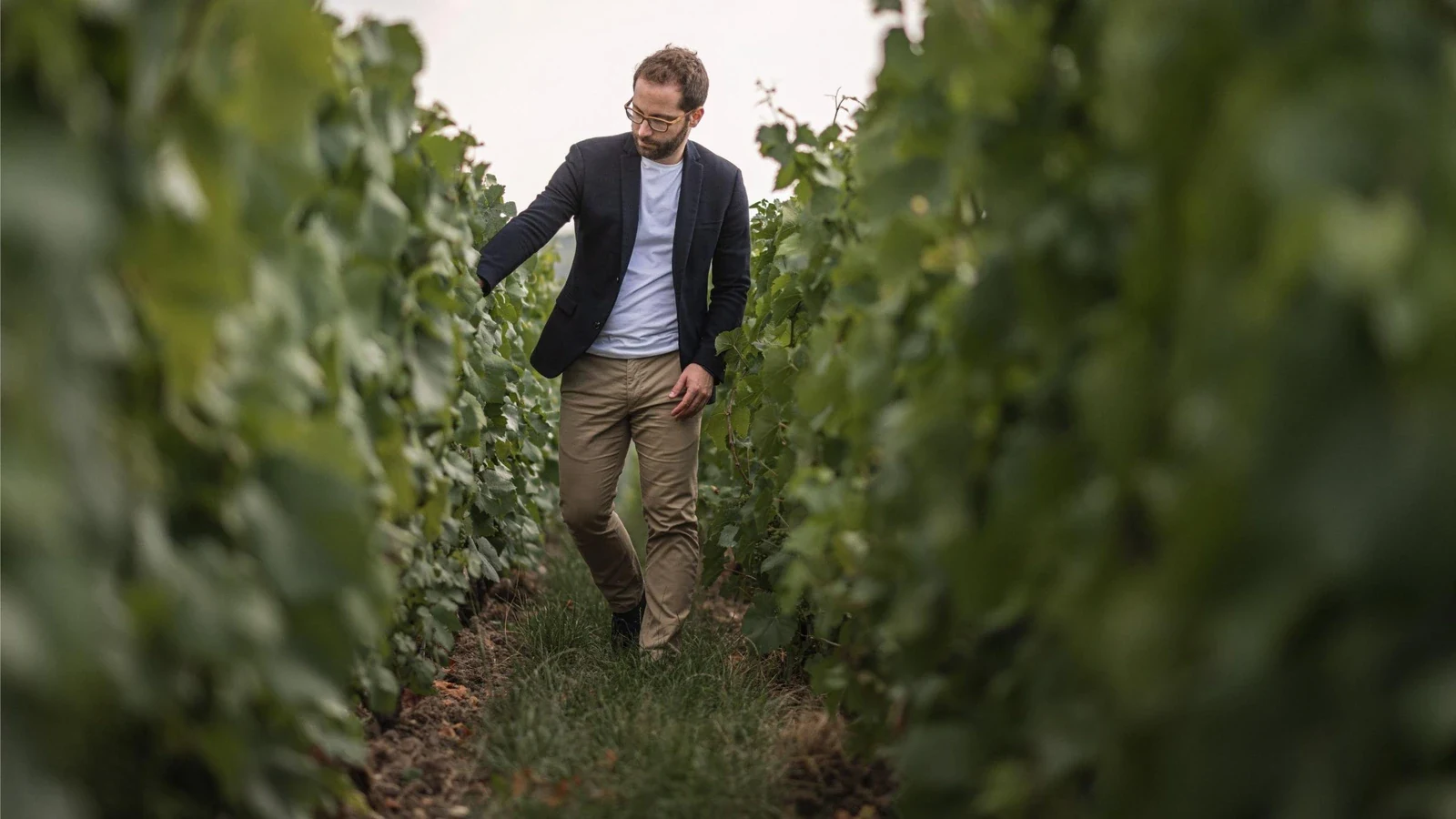
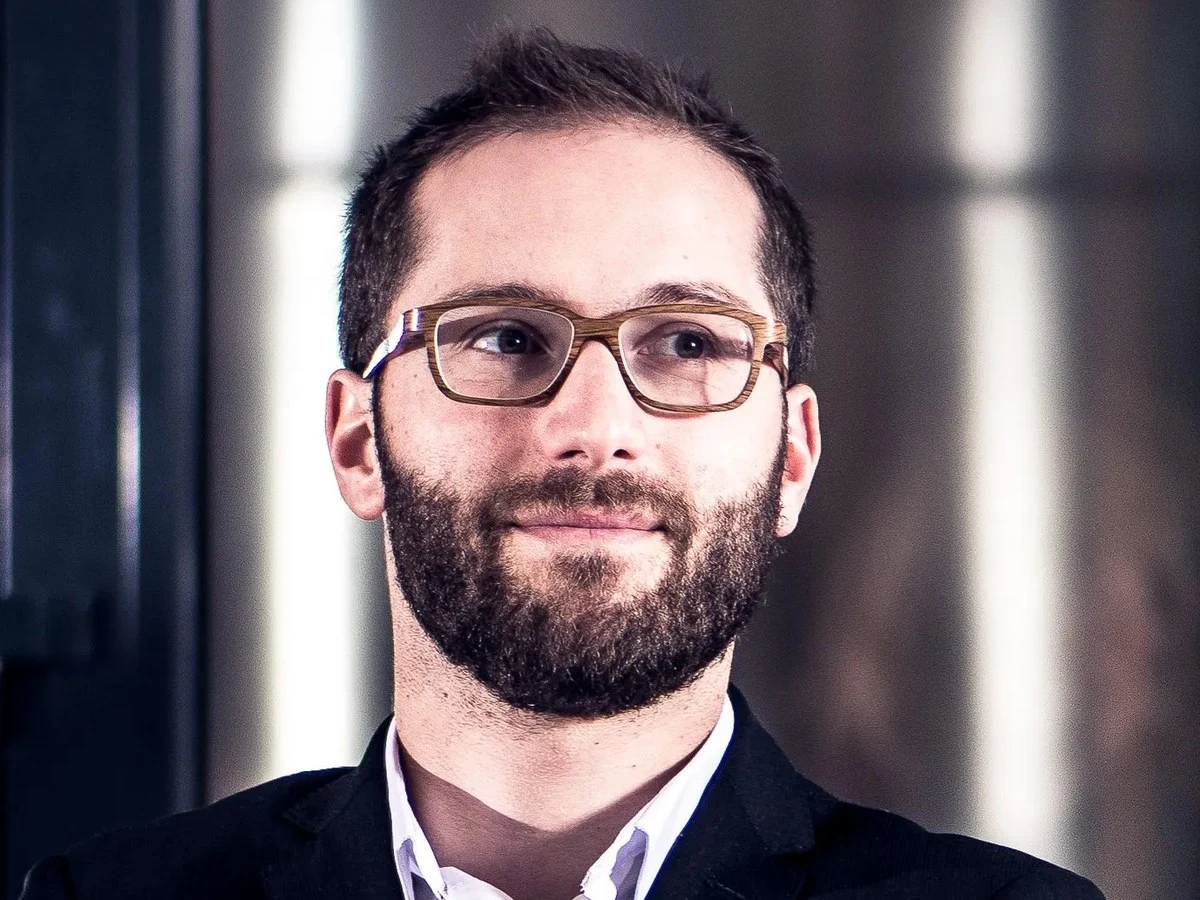
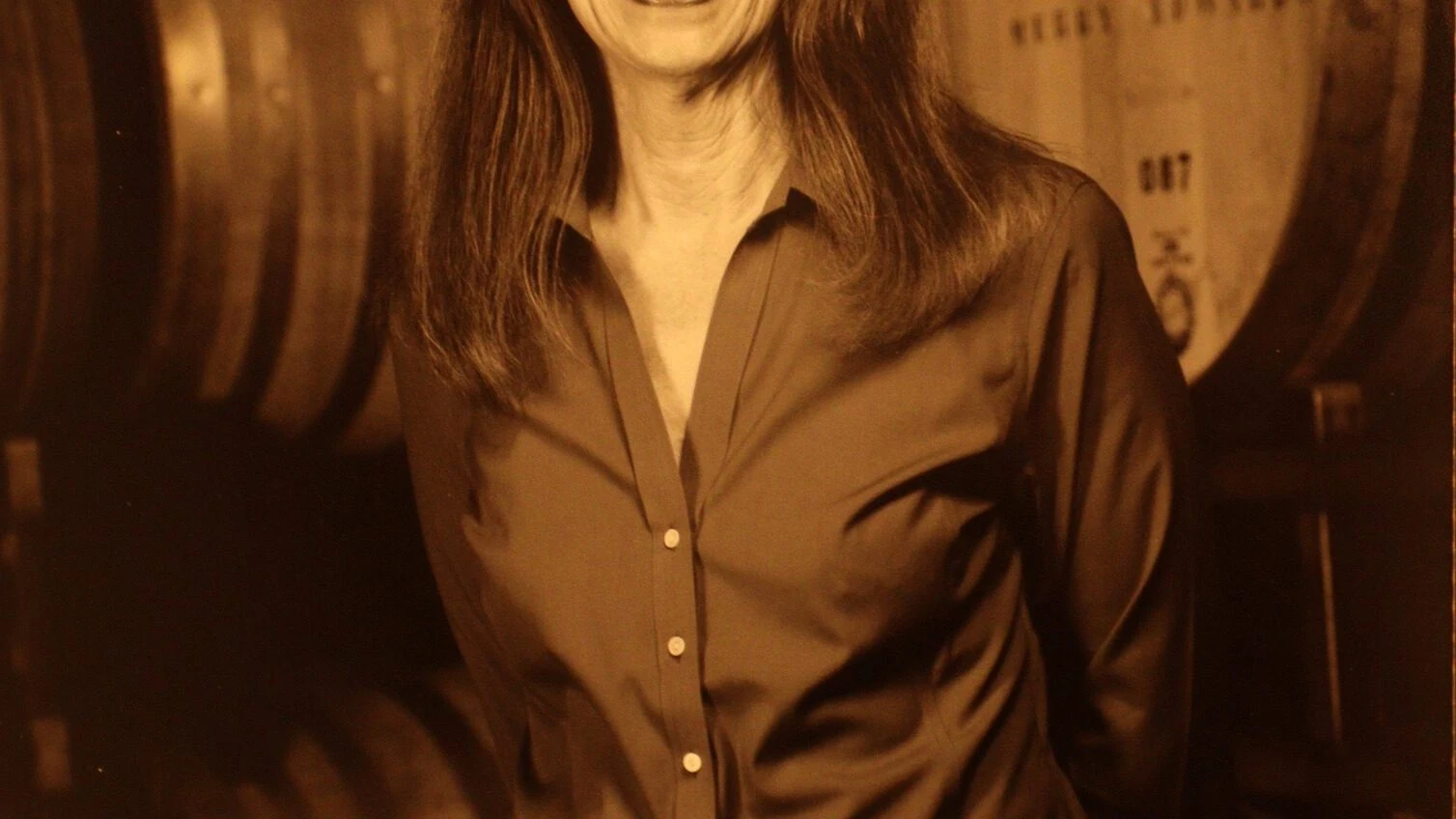
Émilien Boutillat, cellar master, stands confidently in a winery, reflecting his hands-on winemaking background.
What he did next is the part that sets him apart from the standard Champagne trajectory. Rather than moving directly from school into a regional house and staying there, Boutillat left Champagne. He worked at Château Margaux in Bordeaux, then at Domaine de la Solitude in Châteauneuf-du-Pape, two appellations with nothing in common except the seriousness of their terroir and the precision their winemaking demands. From there he went further: Mud House Winery in New Zealand, Peter Michael Winery in California, Viu Manent in Chile, La Motte Estate in South Africa. Six houses across four countries before he returned to Champagne.
That circuit is not a gap year. It is a curriculum. Each of those stops would have placed Boutillat in a different climate, a different soil type, a different set of winemaking constraints. Peter Michael Winery in Sonoma County works with Pinot Noir and Chardonnay on steep, cool-climate hillside sites.
Viu Manent in Chile's Colchagua Valley sits at the other thermal extreme. La Motte Estate in Franschhoek operates in a Mediterranean climate that demands a different calculus around harvest timing and acid management than anything in northern France. A winemaker who has worked all of those sites does not need to theorise about climate variability.
He has lived it, vintage by vintage, in four different hemispheres.
Two IWC Titles and a Four-Continent Career
When Boutillat returned to Champagne, he came back to the Cattier house, where he served as cellar master, and then to Armand de Brignac, the prestige cuvée operation that Cattier produces. The Armand de Brignac program is small, tightly controlled, and built around a house style that demands consistency across non-vintage blends of considerable complexity. Running both simultaneously, or consecutively, would have required Boutillat to hold two distinct house styles in his head and execute against both without letting one drift into the other. That is the kind of discipline that competition judges notice.
By 2018, Boutillat had moved to Piper-Heidsieck as chief winemaker, a role he has held continuously since. Piper-Heidsieck is a house with a large, commercially significant portfolio and a style that has shifted considerably over the past decade toward freshness and precision. Holding that course across eight consecutive vintages, including years that tested every assumption Champagne winemakers had about harvest timing and acid retention, is the kind of sustained performance that a house like Bollinger watches closely before it makes a move.
Denis Bunner, the outgoing cellar master, joined Bollinger in 2013 as deputy to Gilles Descôtes, who then held the cellar master position. Bunner was appointed chief winemaker in 2023 and has overseen the house's oenological development across more than a decade. His tenure has been one of continuity and careful stewardship. Boutillat's appointment signals that Bollinger is now ready to bring in someone whose profile is built not on continuity within a single house but on the breadth of a career that has crossed climates, grapes, and hemispheres.
Pinot Noir Mastery and a Climate-Change Mandate
Bollinger's identity is inseparable from Pinot Noir. The house's vineyards are concentrated around Aÿ, one of the grand cru villages of the Montagne de Reims, where Pinot Noir dominates the plantings. The house style, across its non-vintage Special Cuvée and its prestige Grande Année, leans on Pinot Noir for structure, depth, and the particular kind of fruit weight that distinguishes Bollinger from the Chardonnay-forward houses of the Côte des Blancs. Choosing a cellar master who is specifically recognised for his work with Pinot Noir is not a coincidence. It is a statement of intent about where the house style is going.
Boutillat's reputation, according to Bollinger's own announcement, has been built on a combination of technical precision, vineyard knowledge, and an ability to adapt winemaking practices to the challenges posed by climate change. That last credential is the one that will matter most in the decades ahead. Champagne is warming.
The region's average harvest date has moved earlier by roughly two weeks over the past thirty years, and the natural sugar levels at harvest have risen while the acidity that defines Champagne's structure has come under pressure.
A cellar master who has worked in Châteauneuf-du-Pape, where alcohol management in a warming Mediterranean climate is a daily discipline, and in South Africa, where harvest decisions are made under thermal stress that Champagne winemakers are only beginning to encounter, arrives at Bollinger with a practical vocabulary for problems that are still theoretical for many of his peers.
The craft of Pinot Noir in Champagne is not the same as the craft of Pinot Noir in Burgundy or California, but the underlying grape knowledge transfers. Pinot Noir is thin-skinned, early-ripening, and sensitive to temperature swings in ways that Chardonnay and Pinot Meunier are not.
A winemaker who has handled Pinot Noir across multiple climates understands its range of expression and its failure modes in a way that someone who has worked only in Champagne cannot.
Boutillat's time at Peter Michael Winery, where Pinot Noir is grown on cool, fog-influenced Sonoma hillsides at elevations that push the grape toward the edge of ripeness, would have given him a precise understanding of how the variety behaves under marginal thermal conditions.
That understanding is directly applicable to a Champagne that is getting warmer but still needs to taste like Bollinger.
The House He Is Joining
Bollinger is one of the few grandes marques that remains family-controlled, and that ownership structure shapes everything about how the house operates. Decisions about style, about vineyard management, about the pace of change, are made with a generational horizon rather than a quarterly one. The appointment of a cellar master is not a hire that gets revisited in two years. It is a commitment that is expected to run for a decade or more, long enough for the appointee's decisions in the vineyard and the cellar to work their way through the reserve wine system and into the bottles that collectors will eventually open.
That reserve wine system is central to understanding what a Bollinger cellar master actually does. The house maintains a library of reserve wines across multiple vintages, blended each year into the non-vintage Special Cuvée to maintain house style continuity.
Managing that library, deciding which vintages to draw from and in what proportions, is a long-form discipline that rewards exactly the kind of technical precision and vineyard knowledge that Boutillat's career has built. The decisions he makes in his first years at the bench will not be fully audible in the wines for some time.
The decisions he makes in his first decade will define what Bollinger tastes like at its bicentenary and beyond.
De Belenet framed the appointment explicitly in those terms. On the eve of its bicentenary, he said, the appointment is fully aligned with the house's ambition to prepare for the future while remaining faithful to the values, savoir faire and commitments that define its singularity. That phrase, remaining faithful while preparing for the future, is the essential tension that every cellar master at a house of Bollinger's age must hold. The style is not a fixed formula. It is a moving target that has to feel continuous even as the climate, the vineyards, and the tools available to the winemaker change around it.
What Comes Next
Boutillat steps into the cellar on 1 October 2026. The vintages he will work with first are already in the ground, already shaping themselves in the vineyards around Aÿ and across Bollinger's wider holdings. His first blending sessions will draw on reserve wines assembled under Denis Bunner's watch, which means the transition will be gradual rather than abrupt. The house style has continuity built into its architecture; no single vintage, no single blending decision, can shift it overnight.
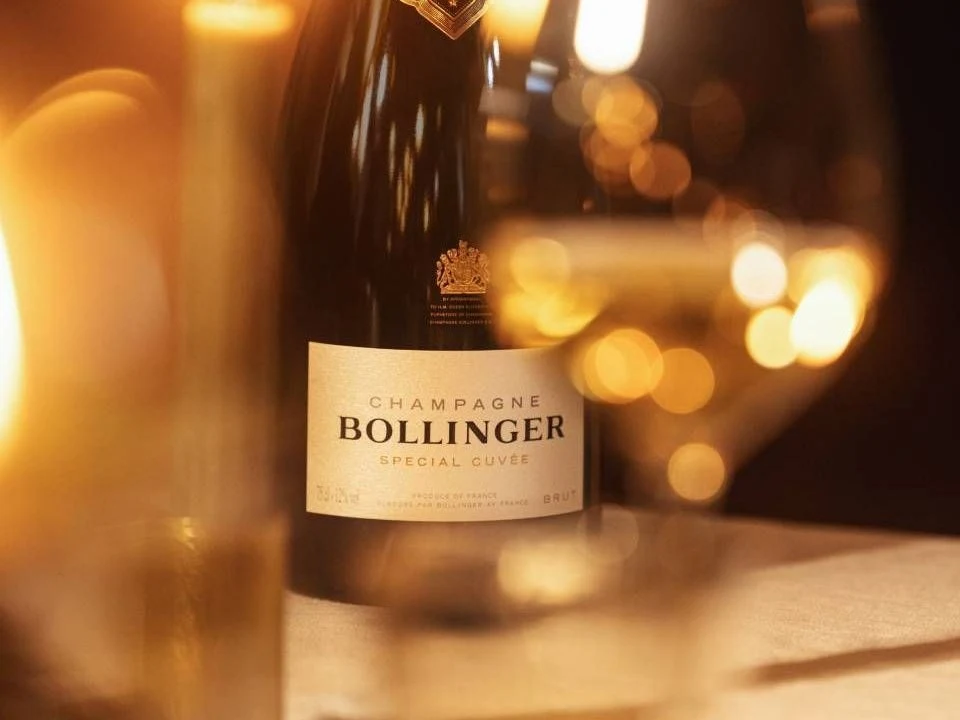
Bollinger Special Cuvée, a testament to Émilien Boutillat's blending decisions.
What Boutillat brings is the specific weight of that four-continent career and the two IWC Cellar Master of the Year titles, awarded in 2021 and 2023, that came out of it. He arrives at Bollinger with a climate-change credential that is not decorative. The warming of Champagne is not a future problem. It is a present one, and the house has chosen someone who has been solving versions of it for the better part of two decades.
For collectors and Champagne enthusiasts, the appointment is worth tracking from the first releases that carry Boutillat's blending decisions. Those will not arrive immediately; the reserve wine system means his influence will build gradually into the Special Cuvée over successive disgorgements, and his first full vintage at the helm will take years to reach the market. But the direction is clear. Bollinger has named its cellar master for the bicentennial era, and the name is Émilien Boutillat.
Made By follows the people who shape what you eat and drink. Subscribe, and the next dispatch from the bench, the cellar, or the kitchen comes to you.
The Sunday letter
Get the next Made By guide in your inbox.
We send one email every Sunday morning with the guides and profiles we published that week.