Broken Spanish Comedor Brings Ray Garcia Back to LA
Ray Garcia closed Broken Spanish in 2020. Five years later, Broken Spanish Comedor in Culver City is his most personal work yet.
HM
Director of Editorial Standards
Hugo Marchetti
Filed June 25, 2026
7 min read
The café de olla arrives in a ceramic mug, sweetened with piloncillo and spiced with canela, made with Verve instant coffee. It is a deliberate choice: instant coffee, the kind kept in Mexican kitchens across generations, lifted not by replacing the ingredient but by understanding why it works. That cup tells you where Ray Garcia's cooking stands in 2025, a decade after Broken Spanish first opened in Downtown Los Angeles and five years after the pandemic closed it without ceremony. Garcia is back, and the cooking is sharper.
Garcia's Comedor and the Alta California Table
Alta California has always lived at a particular intersection: Mexican cooking, California produce, and the border region's layered identity. When Garcia opened Broken Spanish and its casual sibling B.S. Taqueria in 2015, he joined a generation of Latin chefs writing that cuisine's future in real time. Esquire named Garcia its chef of the year that same year, and the restaurant built its reputation on dishes that required technical fluency and cultural specificity: a 36-hour chicharrón, refried lentils with epazote and quesillo, a potato-stuffed chile relleno under soubise.
The Sunday letter
Get our new stories in your inbox every Sunday.
One email with our newest profiles and guides. See a sample before you subscribe.
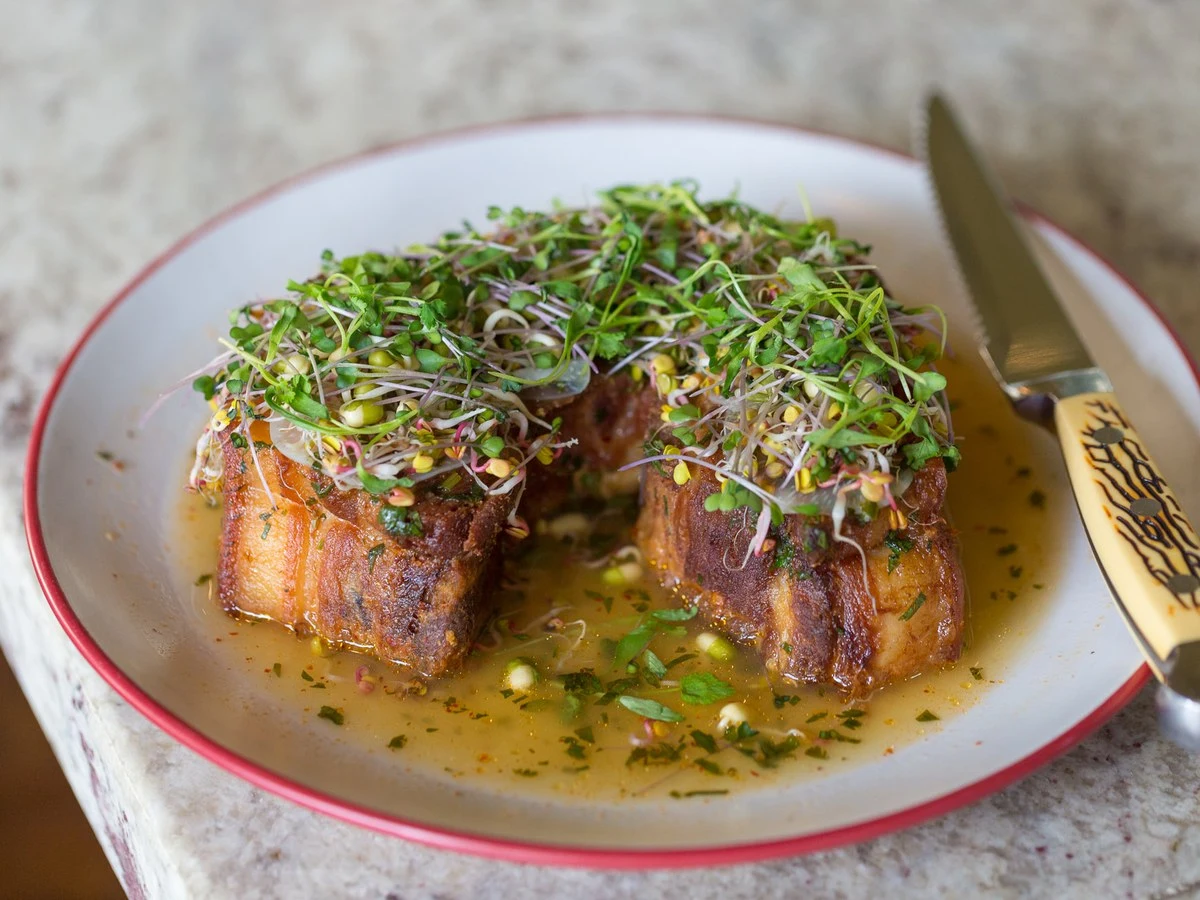
Broken Spanish Comedor serves pork belly topped with microgreens and a savory sauce.
Broken Spanish Comedor, which opened in October 2025 in Culver City's former A-Frame space, picks up where the original project left off and moves it into a different register. The word comedor matters here: in Spanish, it means dining room or eatery, a register below the formal restaurant, closer to the table where family sits without occasion. Garcia has taken that shift seriously. The room draws on the tradition of homestyle restaurants found across Mexico, and the result is a space where the cooking carries the same attention as it did at the original Broken Spanish, but the atmosphere is built for repetition rather than pilgrimage.
The tamal en cazuela makes the point plainly. It arrives studded with honeynut squash, roasted mushrooms, and spinach under a layer of salsa tatemada, and the masa base carries nutty, complex notes that linger after the last bite. Masa is the foundation of Alta California cooking, and Garcia treats it that way: not as a vehicle, but as the point. The refried lentils follow the same logic. Black lentils cooked to a silky puree, stretched with salty quesillo, served alongside pliant corn tortillas. The dish asks you to reconsider what a refried bean is, and why it matters.
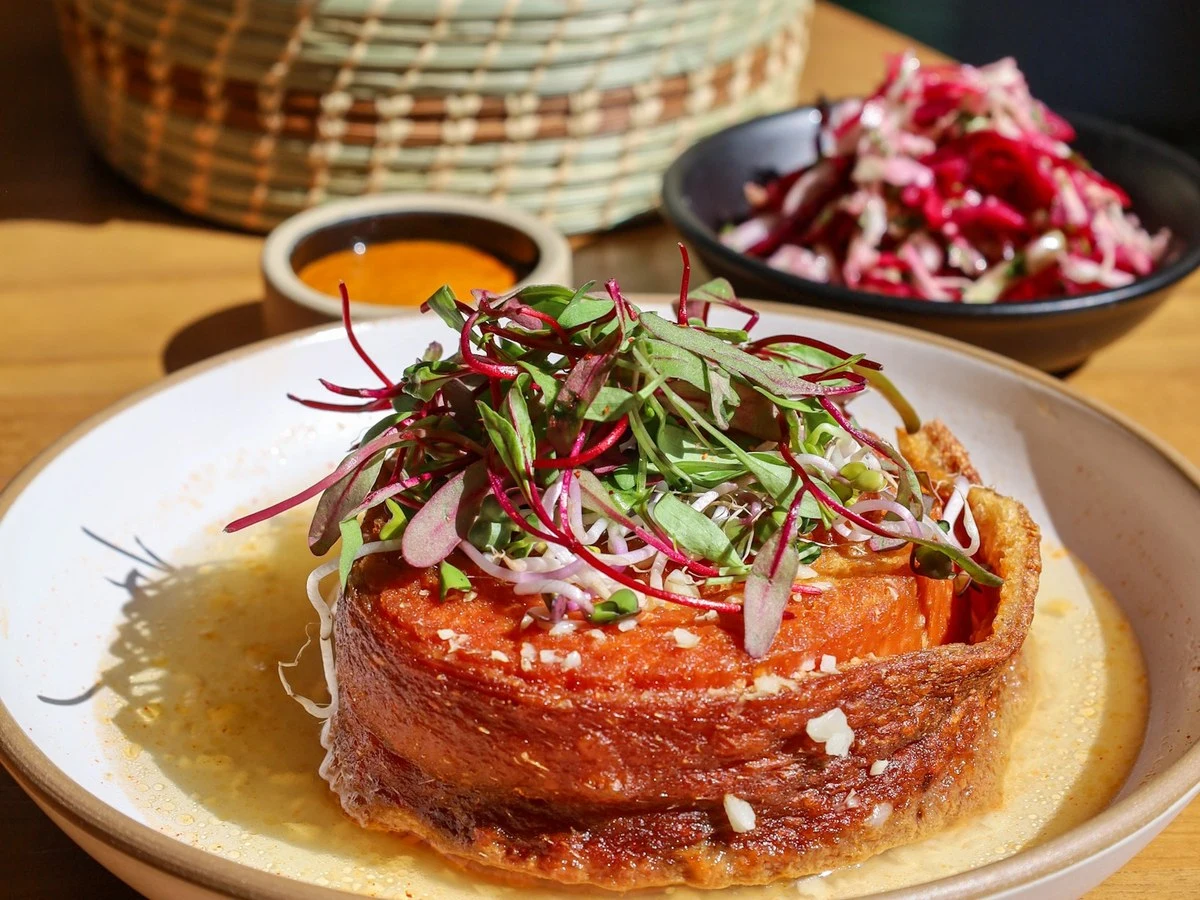
The chicharrón, Broken Spanish's best-known dish, returns in its original form. Garcia wraps a thick-cut pork belly around itself, closer in structure to porchetta than to the puffy preparations common at Mexican markets, then runs it through a day-long sous vide before finishing it in the fryer. The exterior blisters and crisps; the interior softens into the garlic mojo below. Pickled red cabbage cuts the fat. It is a dish that rewards knowing what went into it, and it is the dish that earned the original Broken Spanish its reputation in the first place.
The Culver City Room, Five Years On
Broken Spanish closed in August 2020 as the pandemic expanded. B.S. Taqueria had already shuttered the year before, after lease negotiations failed. For a period, the Broken Spanish name survived only in Las Vegas: B.S.
Broken Spanish Comedor's vibrant dish, featuring a crispy-edged cylinder in sauce, topped with fresh greens and sprouts.
Taqueria announced it would open at Sundry at Uncommons before eventually relocating to the Via Via Food Hall in 2025, and Garcia opened Viva and Qué Bárbaro inside the Level 8 development, along with Asterid at Walt Disney Concert Hall, which has since closed.
In 2021, Broken Spanish briefly returned as a limited-term pop-up at the now-defunct Neuehouse in Hollywood, with a shortened menu that included the chicharrón, squash-stuffed tamal, and albondigas. Garcia said at the time that the restaurant would continue in some form, but years passed before that promise took shape.
The Culver City space has its own layered history. Before Broken Spanish Comedor, it held Jason Neroni's short-lived Best Bet; before that, Roy Choi's A-Frame, which helped establish Culver City as a destination for serious, chef-driven cooking; before that, an IHOP. Garcia's arrival at this address is not incidental. The A-frame structure, with its wrap-around patio, suits the neighborhood ethos he is building: a place for locals to walk in without a reservation, order margaritas and corn tostadas, and come back the following week.
Garcia has also announced plans to reopen the original Broken Spanish as a permanent Los Angeles restaurant, which means Broken Spanish Comedor is not a replacement but a parallel project, a more casual expression running alongside what will eventually be a full revival of the original. That distinction matters. Comedor is not carrying the full weight of the original's legacy so much as extending the conversation into a different register. For anyone who followed the first Broken Spanish closely, that announcement alone makes this an early chapter worth reading in person.
The Baja Wine List That Sets Broken Spanish Comedor Apart
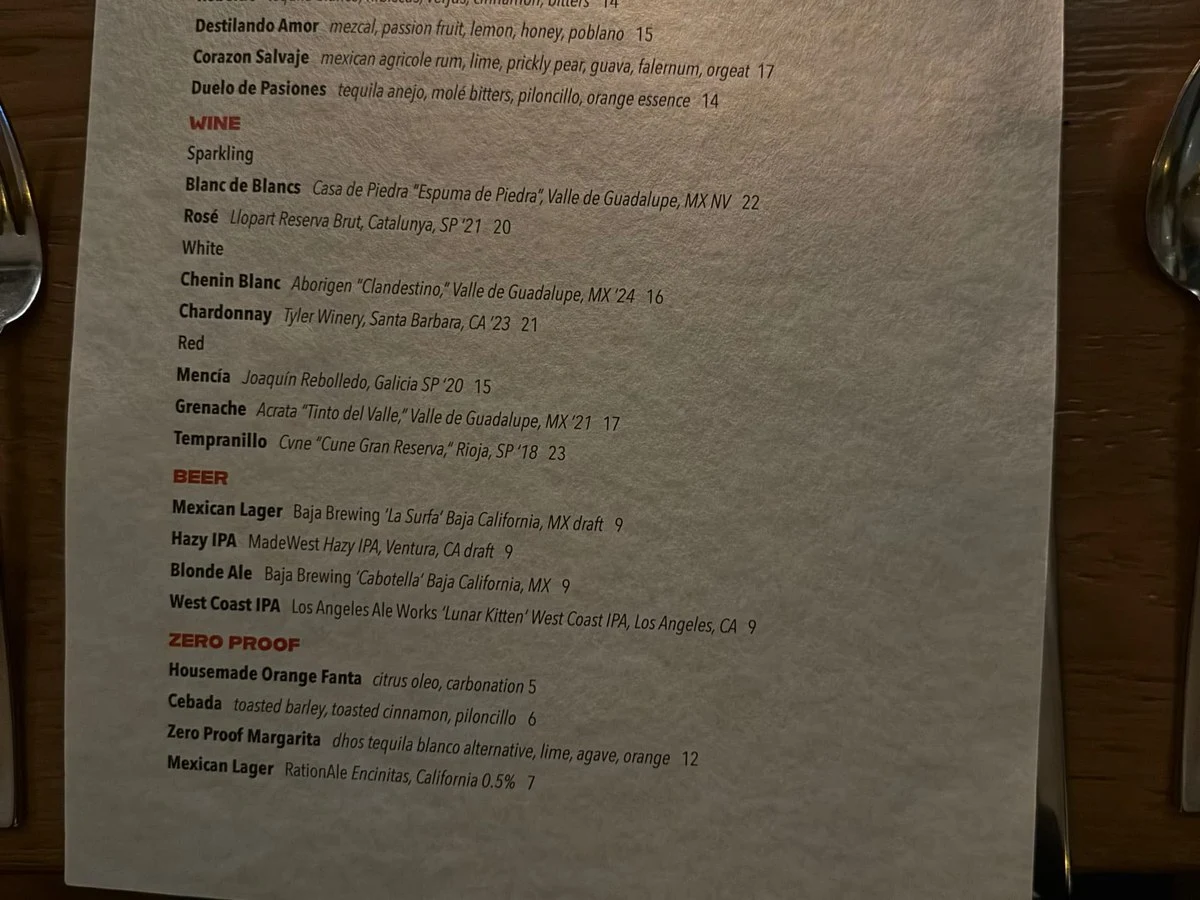
The wine list at Broken Spanish Comedor draws mainly from Baja California and California, a curatorial choice that aligns the beverage program directly with the kitchen's philosophy. Baja California wine is not a novelty category for those who have tracked the Valle de Guadalupe over the past decade, but its place at the center of an LA restaurant list remains uncommon enough to signal intent. Placing Baja bottles alongside California producers makes a clear argument: the cuisine Garcia cooks is rooted in Mexican culinary tradition and expressed through California ingredients and technique; the wine program follows the same geography.
Broken Spanish Comedor's menu features a variety of wines, beers, and zero-proof beverages.
For drinkers who track emerging regions, Baja California deserves sustained attention. The Valle de Guadalupe's Mediterranean climate and Pacific influence have drawn serious producers whose work is beginning to reach international audiences. The list at Broken Spanish Comedor offers a practical entry point into that conversation, one that rewards repeat visits as the list evolves alongside Garcia's cooking. If you have been meaning to explore Baja wine with some rigor, this is a useful place to start.
The margarita program runs parallel to the wine list in seriousness. The house margarita arrives strong, not too sweet, and clearly saline, a choice that reflects the same instinct Garcia applies to his food: restraint in sweetness, confidence in salt and acid. A zero-proof version is available. The housemade fizzy orange Fanta sits in its own category, the kind of drink that earns its place by being exactly what it says it is.
A Neighborhood Ethos Without Sacrificing Ambition
The weekend brunch program at Broken Spanish Comedor is where the neighborhood ethos comes into focus. Chilaquiles verdes arrive bathed in mild tomatillo salsa and topped with briny feta, crema, and cilantro; add the eggs, and the yolks break bright orange over the chips below. The masa pancakes, a two-stack served with citrus butter and maple syrup, taste like a sweet corn tamale turned toward breakfast. These are dishes built for a Saturday morning with no particular agenda, the sort of plates that turn a first visit into habit.
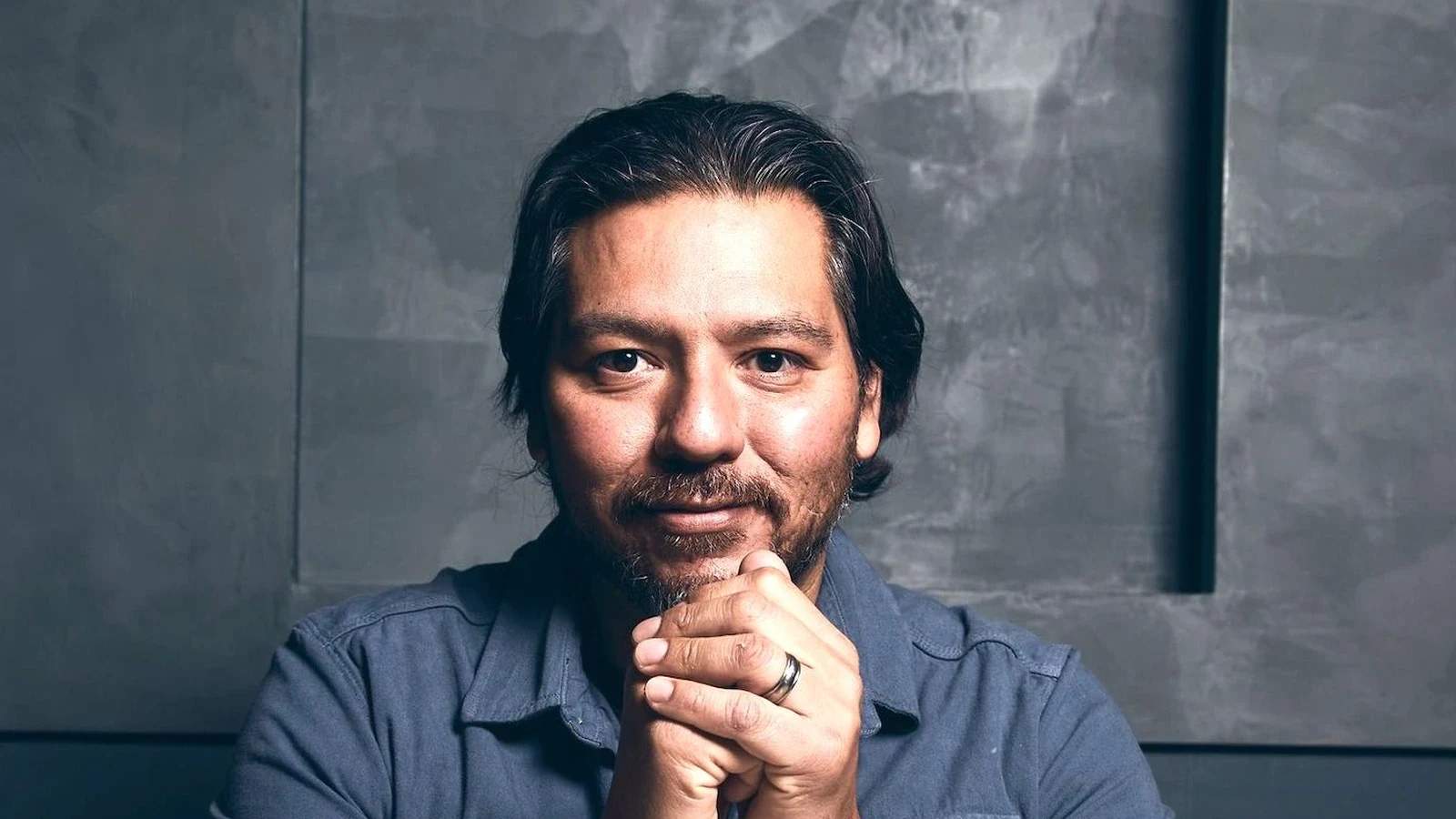
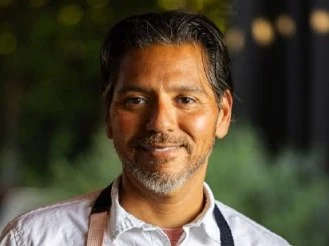
Chef Ray Garcia, a culinary expert, smiles for a portrait.
The camote shows how Garcia keeps ambition inside the casual format. A coal-roasted Japanese sweet potato arrives with salsa macha butter, pork rinds, and chives: smoky, spicy, nutty, salty, each note landing in sequence without any one of them taking over. It could read as a bar snack. Instead, it lands as a tight study in restraint.
Happy hour runs from 4 to 6 p.m. Monday through Friday, with discounted dishes including crispy chicharrones, a quesadilla, albondigas, and enchiladas, alongside a Mexican lager and margaritas. That program signals who Broken Spanish Comedor is built for: the cook getting off a shift and wanting something precise and affordable, the office worker who lives nearby, the regular who does not need a special occasion to justify the visit. That is rarer than it sounds, a restaurant where the cooking operates at a high level and the barrier to entry stays genuinely low.
Garcia built his reputation at Fig at the Fairmont before Broken Spanish became a reference point for Mexican-American fine dining in Los Angeles. The move to Culver City, and to a smaller, more casual format, is not a retreat from that reputation. It clarifies what the work was always about: cooking rooted in place, served without ceremony, built to last.
A decade after Broken Spanish first opened, Comedor is where that project continues, and with a permanent revival of the original Broken Spanish also in the works, this is the stretch of Garcia's career to follow closely. Made By follows the people who shape what you eat and drink.
Subscribe, and the next dispatch from the bench, the cellar, or the kitchen comes to you.
The Sunday letter
Get the next Made By guide in your inbox.
We send one email every Sunday morning with the guides and profiles we published that week.