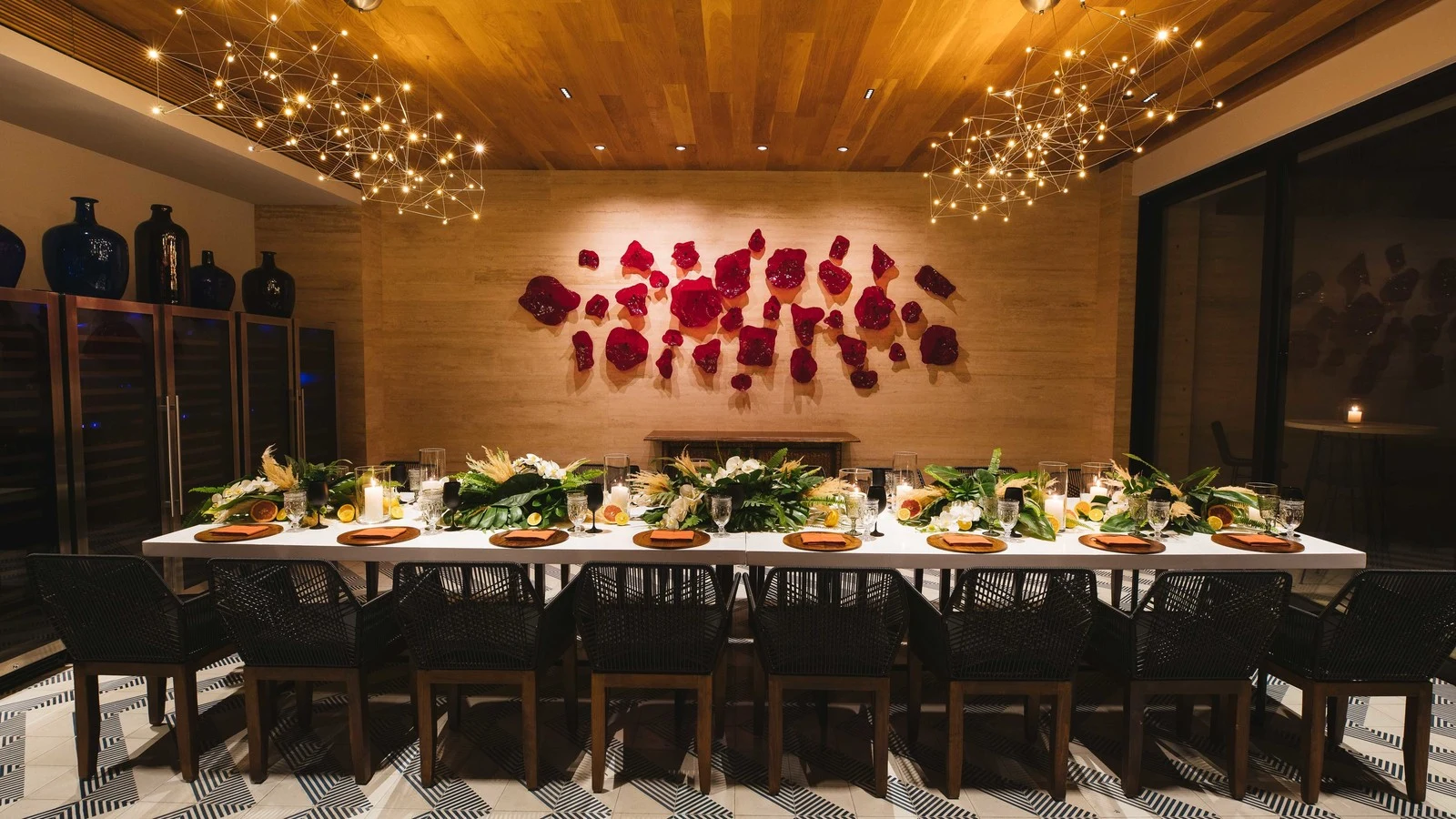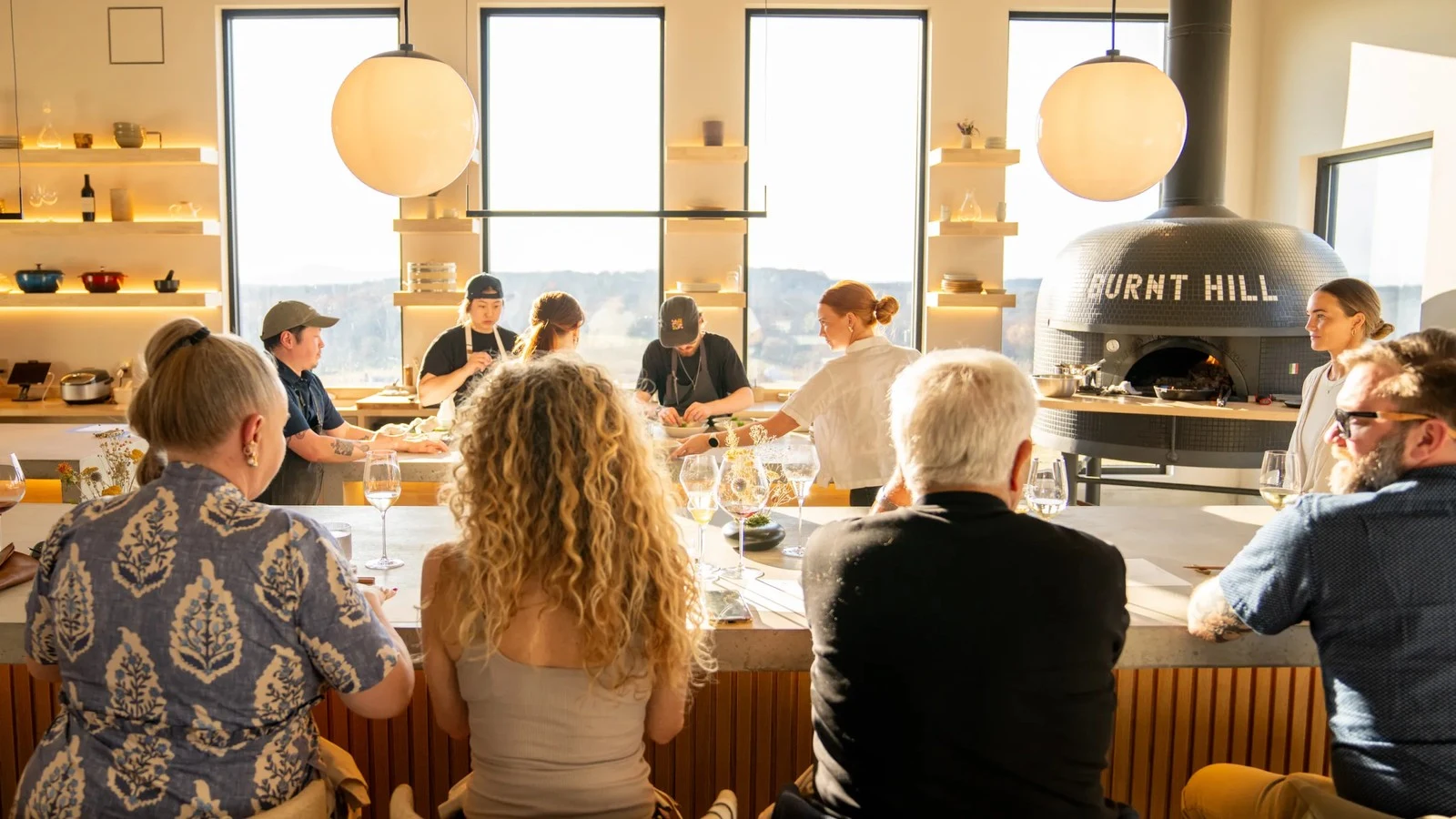
Drew Baker, Lisa Hinton, and Ashli Johnson are now seating their first weekend guests at Burnt Hill Farm in Montgomery County, and the May calendar is already full. The siblings behind Old Westminster Winery opened the 117-acre vineyard and farm in fall 20254 after a decade-long build toward this kind of place: vines, animals, fruit, bees, mushrooms, wine, and a kitchen working from the same ground. Chef Tae Strain leads the menu after kitchens at The Progress in San Francisco, the Michelin-starred restaurant PUBLIC in New York City,1 and Momofuku in D.C.; Johnson works beside him in the room, pouring and carrying the wine program into the meal.
A glass of sparkling Blanc de Blancs lands first, followed by pull-apart shokupan with umeboshi salt and whipped miso honey butter. Strain stretches the dinner across three hours at the 12-seat counter, at $250 per person including wine or nonalcoholic pairings (tax and gratuity extra, $75 deposit at booking).2
How the Siblings Built Burnt Hill Farm
Baker, Hinton, and Johnson built this project as more than another room for pours. They grow native American and European grape varieties for a low-intervention wine program, then let Strain work from the same agricultural field of view.
The farm's inventory is practical: six beehives, a small fruit orchard, a tiny mushroom farm, and Mangalitsa pigs. Strain moves honey into butter, mushrooms into sauces, and pork into the anchor of a communal board. Fruit gives his pastry and savory courses another seasonal clock.
Johnson's role keeps the family's labor visible during dinner. She welcomes guests, pours across the room, and explains details that belong to the making: decanters fashioned from historical glass excavated from the property, wines resting in ashwood tanks, and the choices that brought each pour to the table.
The Old Westminster connection gives drinkers a reference point, but Baker, Hinton, and Johnson are asking a different question at Burnt Hill. Here, their wine program does not sit apart from Strain's menu. It has to meet bread, fermented heat, pork fat, fish sauce richness, orchard fruit, and whatever the vineyard and fields make possible that week.
What Tae Strain Brings to the Counter
Before Burnt Hill, Strain worked in city kitchens with hard clocks and different kinds of pressure. During the pandemic, he left city life for a farm in his home state of Maryland and started a pop-up supper club built around his own produce. That move explains his work at the counter more clearly than any dining-room language could: he wanted the ingredient source closer.
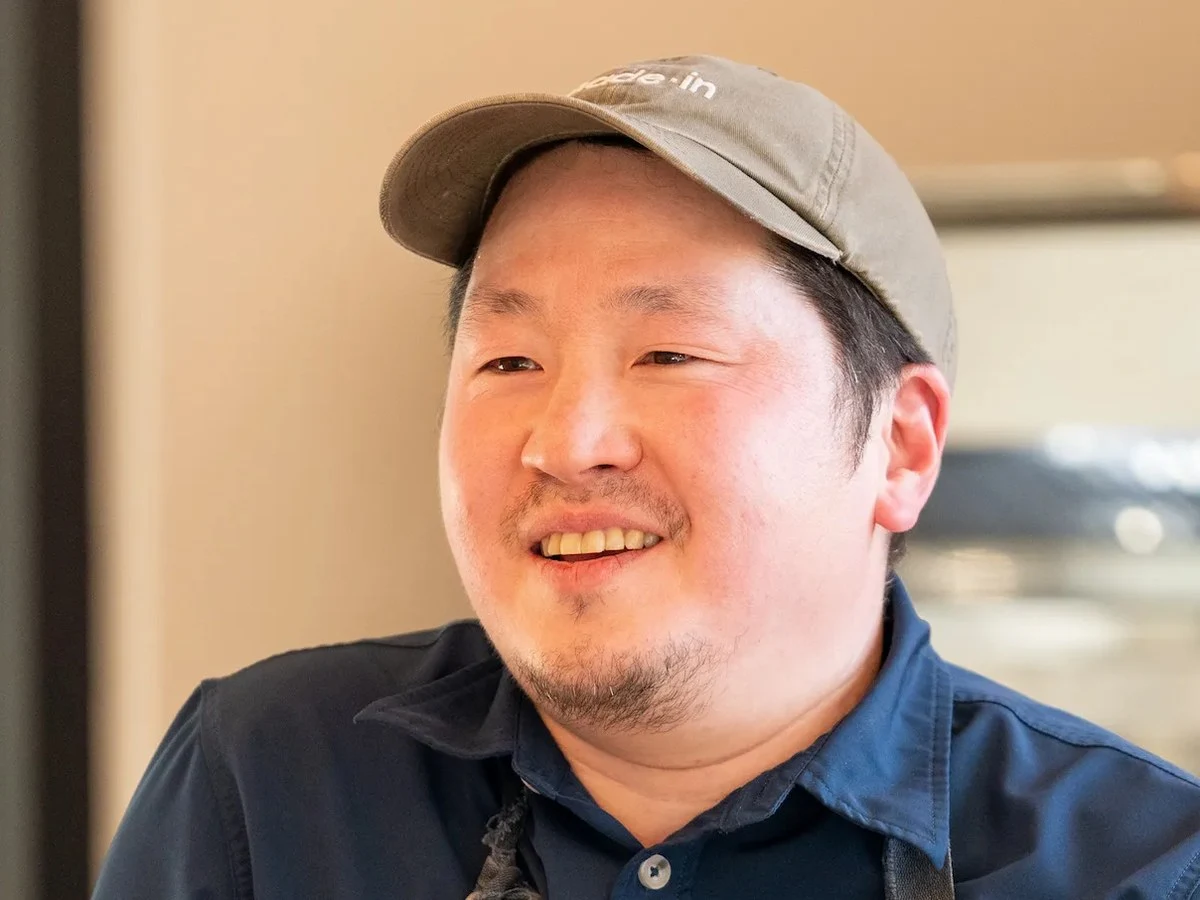
Strain's cooking at Burnt Hill keeps returning to materials with memory and force (umeboshi, miso, kimchi, shiso, sambal, curry oil) without losing sight of where the dinner is being made. The siblings supply the frame; Strain supplies the technique and the seasoning logic.
His opening sequence sets the method. Sparkling wine, soft milk bread, plum salt, miso, honey, butter: each element has a job before the first vegetable, fish, or duck course arrives. The counter is small enough that a guest can read the handoff between Johnson's pour and Strain's plate without needing it translated into ceremony.
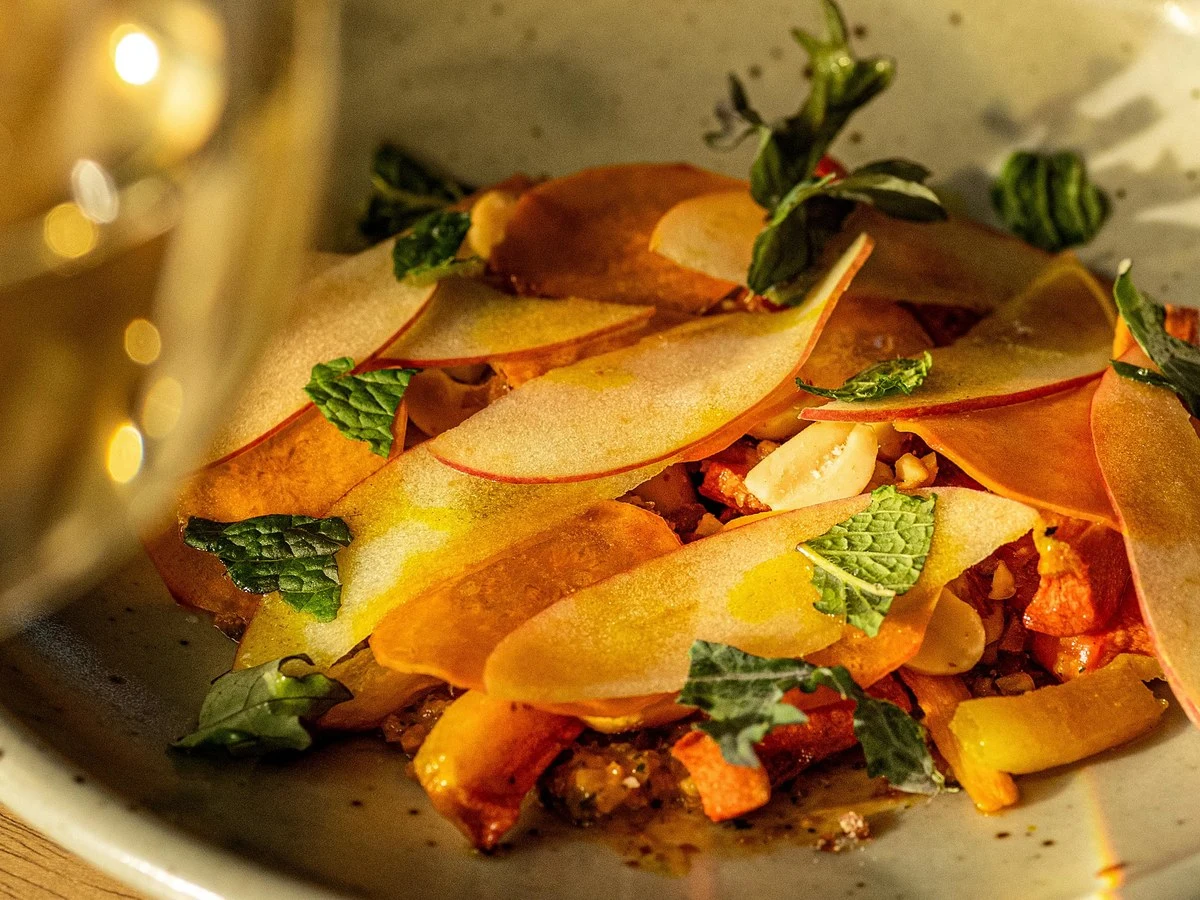
Early dinners included roasted carrots with Virginia peanut sambal and curry oil; striped bass with the vineyard's mushrooms in a crab, wine, and butter sauce; and dry-aged duck with mandarinquats and shiso salt. Those are not fixed signatures. They show the grammar Strain is using: mid-Atlantic ingredients, Asian-leaning technique, and enough fat, salt, and acid to give the wines something to answer.
Strain's final savory course moves from plating to assembly. Mangalitsa pork shoulder arrives as a shared ssam board with house-made kimchi, chive crepes, fresh radish, and spicy, tangy sauces. The guest finishes the bite by hand. That matters. In a tasting menu, letting the diner fold, smear, and adjust is its own kind of trust.
His dessert closes in layers rather than one neat ending: a ggoma snowball with marshmallow fluff, citrus granita, fruit, and shortbread; an eight-year-aged brandy fat-washed with honey sesame butter; and a seasonal sweet such as sweet potato toffee cake with whipped cream and roasted soybean powder.
Strain's strongest idea is to let structure and looseness sit together: a composed fish course, then a pork board meant to be wrapped by the diner; a measured wine pairing from Johnson, then buttered bread that demands fingers.
His own language for the menu begins with flavors he has cooked with throughout his career, including ingredients and profiles important to him as a chef born in Seoul, Korea. At Burnt Hill, those references pass through Maryland soil, the sibling-run winery, and a dining room built for close attention.
How Baker, Hinton, Johnson, and Strain Structure the Week
Not every visitor has to enter through Strain's counter. Baker, Hinton, and Johnson also serve à la carte dishes from 11 a.m. to 7 p.m. every weekend in the winery lounge and tasting room.
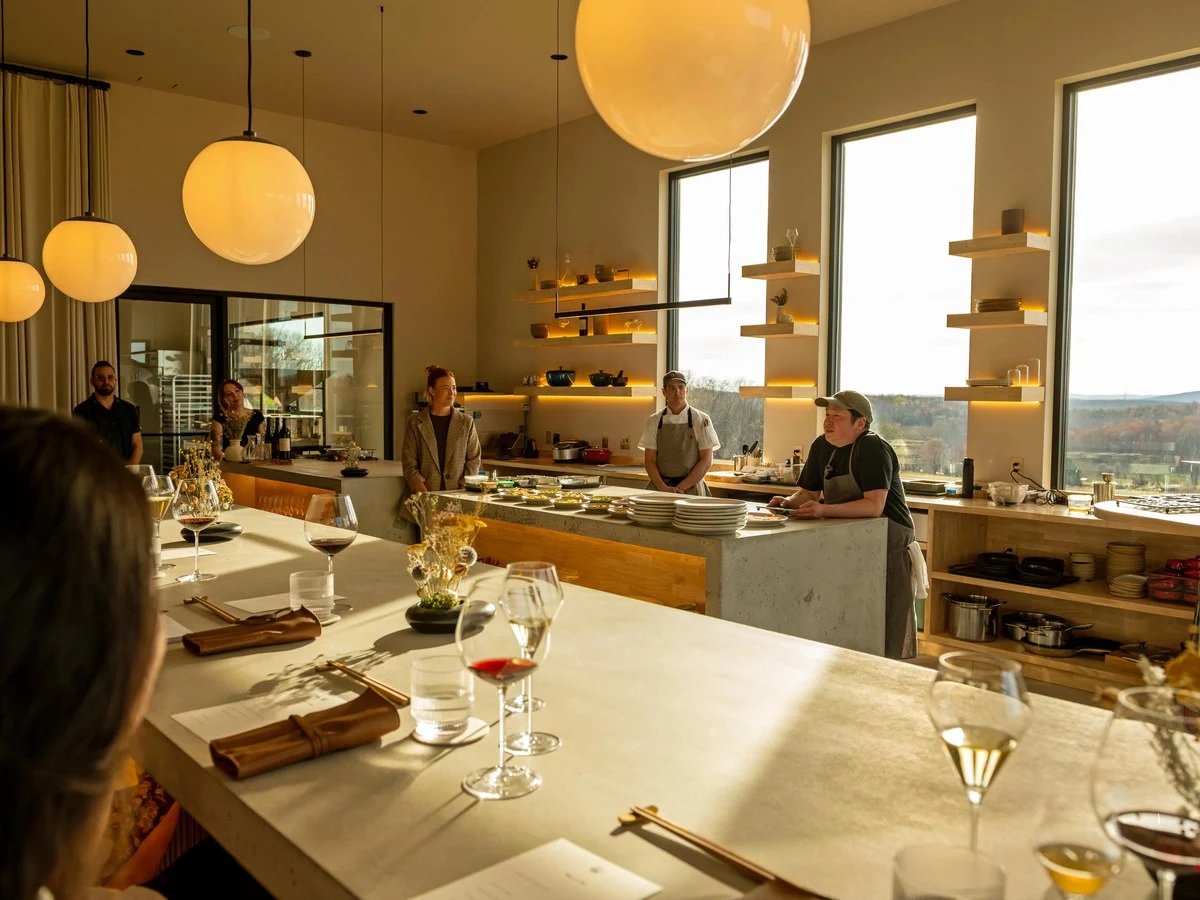
Strain uses the same farm vocabulary in a looser register: sourdough focaccia with sesame-honey butter, pizza with smoked mozzarella and Mangalitsa sausage, and rotating roasted vegetables. For a wine drinker, it offers another way to measure the siblings' work, less sequence, more immediate appetite.
The two services create different rhythms. The lounge can absorb people across the day. Strain's evening counter narrows the work into one sustained arc, with Johnson's wine pairings and a menu that changes as ingredients come in and out of season.
Visitors willing to drive from D.C., Baltimore, and the surrounding suburbs get a clear choice: taste the wines with casual dishes, or sit for the longer meal and watch how Strain and Johnson connect farm, cellar, and kitchen in real time.
What to Watch as the Team Settles In
The first May reservations went live online in early April3 and sold out within hours. The next release covers June: 5:30 p.m. seatings on Fridays, Saturdays, and Sundays, available through a private Tock link for Burnt Hill newsletter subscribers at 7 p.m. on Monday, May 4.
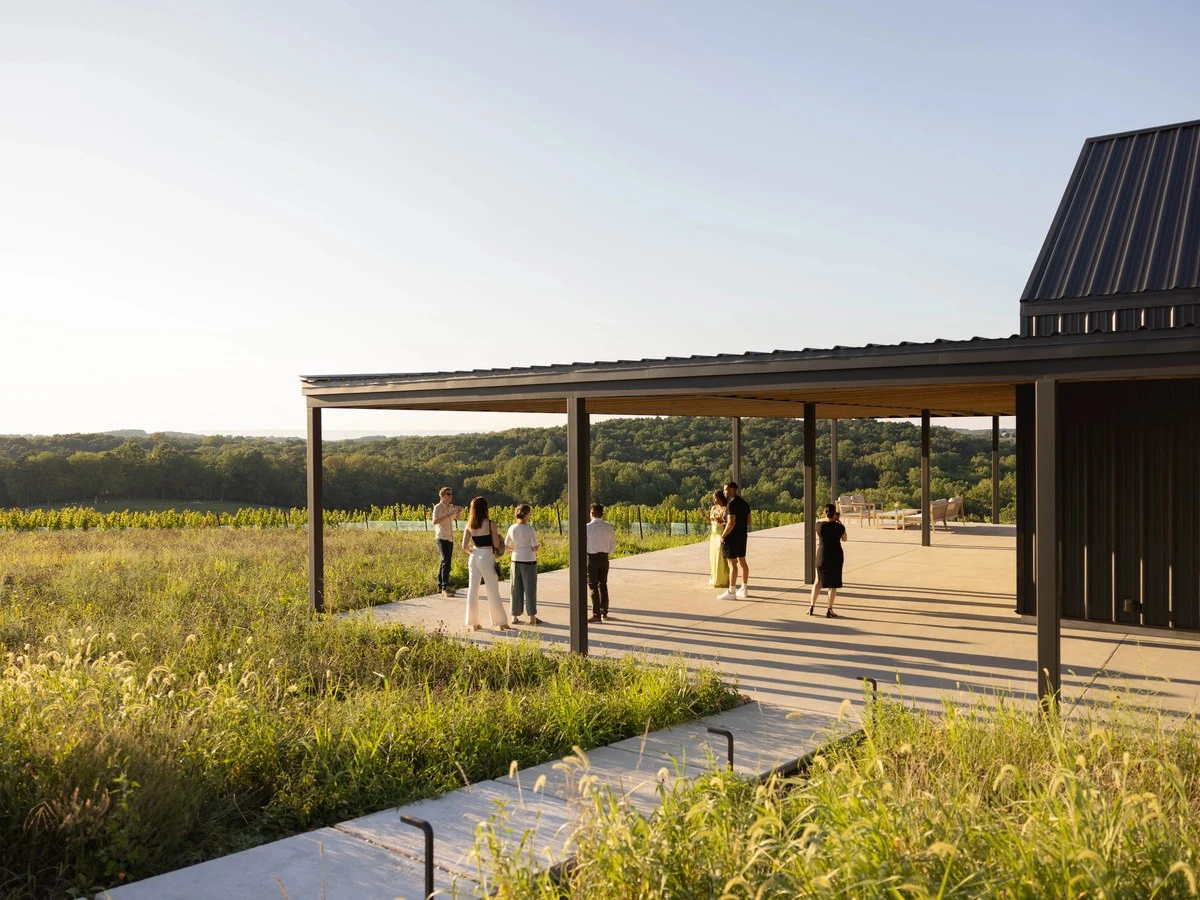
The reservation pressure is real, but the more useful measure will be how Strain and the siblings change with the farm. A place built on seasonal vegetables, fish, duck, pork, orchard fruit, mushrooms, honey, and estate wine cannot stay still without betraying its own premise.
The makers to follow are clear. Baker, Hinton, and Johnson carry the agricultural and wine work; Johnson brings that work directly to the table. Strain builds the meal, drawing on a career that has moved through Michelin-starred cooking, hotel dining, restaurant groups, farm life, and pop-up service.
If the counter holds, it will not be because it is scarce. It will be because each handoff remains legible: the vineyard into the bottle, the farm into Strain's prep list, the cook into the course, Johnson's pour into the bite.