Bernard Antony, Ivan Larcher, and the family behind Maison Mons control who gets into their caves and when. Between a few dozen and a few hundred visitors per year gain access to the working affinage operations that produce the world's most closely watched aged cheeses, depending on the house and the practitioner's willingness to host. Whether you can visit is a question with a conditional answer: sometimes, with effort, and almost never by walking in. The single best route for most readers is a direct inquiry to the affineur or fromagerie itself, well in advance, asking specifically about guided cellar visits or affineur-led tastings. Some practitioners run structured programs; others open only for trade, press, or by personal introduction. A handful refuse public access entirely.
What follows is a practical account of how affineurs decide who gets in, what they show when they open the door, and where to direct your energy if the practitioner you want won't see you.
What Affineurs Actually Do in the Cave: The Work That Shapes the Wheel
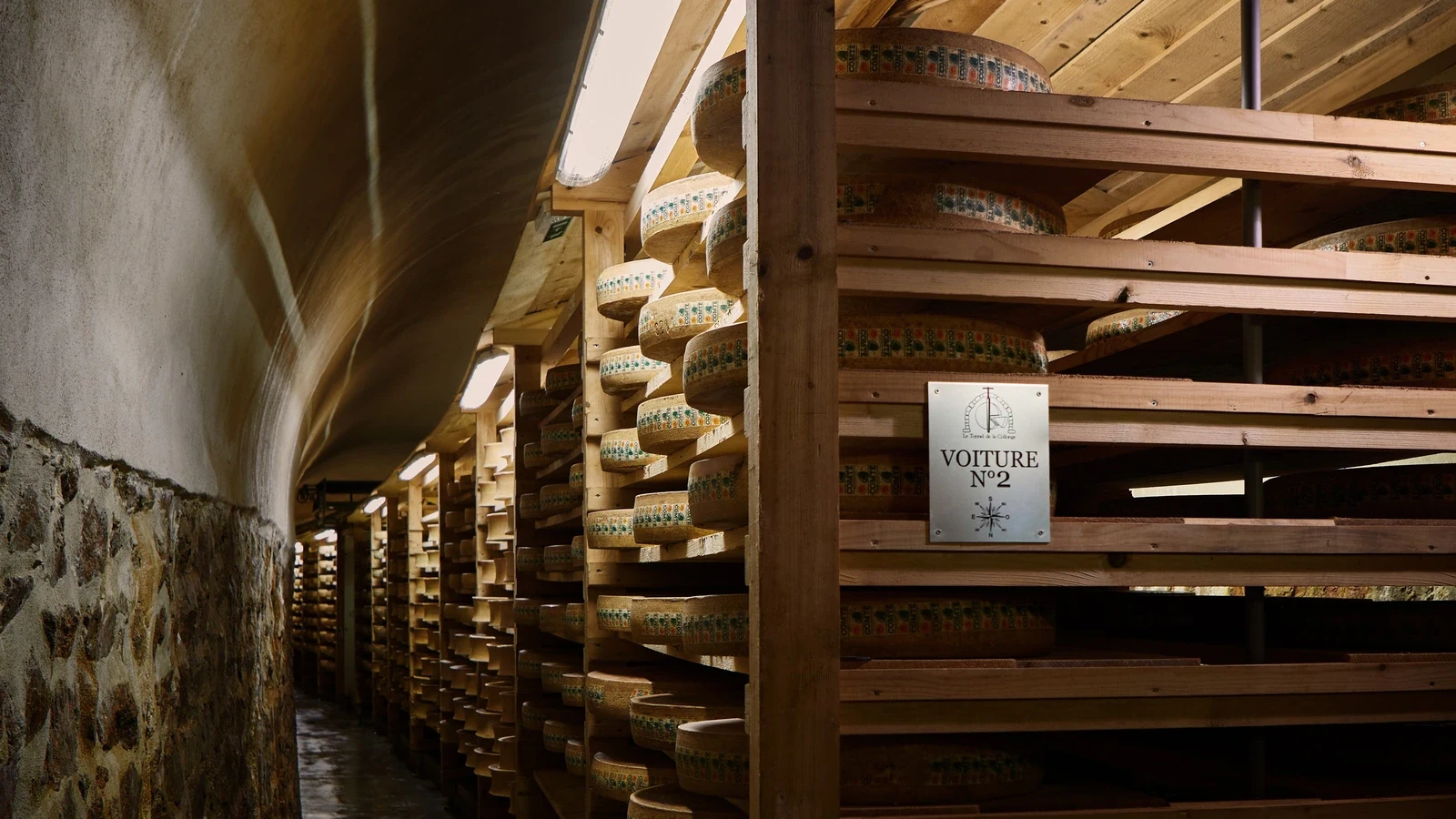
Ivan Larcher, who later established his own affinage practice, turns wheels by hand on a schedule calibrated to the rind's moisture loss, not the calendar. The gesture is specific: both palms flat against the face of the wheel, a quarter-rotation, a check of the surface for unwanted mold bloom, a return to the shelf. He does this across hundreds of wheels in a single session. The cave smells of ammonia, salt brine, and something older, a mineral note that comes from the stone itself.
That is what a working affineur allows you to see if you get in. Not a tasting room with a cheese board. Not a retail counter. The real thing is a cold, low-ceilinged space where the practitioner is still working and serves as guide, narrator, and subject simultaneously.
The visits that affineurs offer vary considerably in format, shaped by each practitioner's priorities. Some guide you through the aging rooms and then structure a tasting of cheeses at different stages of maturation, from a wheel at three weeks through one at eighteen months, so you can track the transformation they steered across time.
Others focus on a single cheese type and its lineage, tracing the milk source, the make, and their cave's specific contribution to the finished wheel.
A few practitioners, when they trust the visitor, offer bench-side sessions where a guest stands alongside the affineur during the actual turning and brushing work, which is the closest thing to an apprenticeship experience available to a non-professional.
Duration, when affineurs publish it, tends to run between ninety minutes and three hours for a serious guided visit. The practitioners hold the temperature inside a working cave between 10°C and 14°C for most soft and semi-hard styles; harder alpine cheeses age at slightly lower humidity. Dress accordingly. The floor is often wet.
The tasting component, where affineurs include it, is not a retail exercise. The affineur selects the wheels. You taste what is ready, not what is for sale. This is the distinction that separates a cave visit from a cheese shop experience, and it is the reason practitioners travel for it.
Who affineurs let into the room: On trade and press visits, the practitioner keeps the group small, and the conversation runs technical: milk fat percentages, the effect of seasonal pasture on curd structure, the decision to wash a rind versus leave it natural. On public or semi-public visits, where affineurs run them, the group is more mixed, but the format tends to self-select for people who have done some reading. The practitioners who run open programs attract food professionals, serious home cooks, and the kind of traveler who plans a trip around a specific producer rather than a region.
Why Affineurs Restrict Access and Keep It That Way
The scarcity is structural, not manufactured, and it protects the work. A working affinage cave is a production environment. The affineur holds the temperature and humidity within narrow tolerances because the cheese requires it, not because the practitioner prefers solitude. Foot traffic introduces variables: body heat, outside air, the risk of cross-contamination from shoes and clothing. Every visitor is a small disruption to a controlled system that the affineur took years to establish.
Bernard Antony, whose cave at Vieux-Ferrette is among the most cited in the affinage world, built his reputation over decades of work that predates the current interest in artisan cheese. His program is not structured around public access; it is structured around the cheese. Antony accepts visits, but they are not the point of the operation, and he does not advertise them through conventional booking channels. Fromagerie Antony maintains six cheese cellars1 in Vieux-Ferrette, and the cellars can be visited, though access is by direct inquiry rather than open booking.
The same logic applies to the affineurs working the great Roquefort caves at Combalou, where the natural Penicillium roqueforti spores that define the cheese's character have been present in the rock for centuries. The practitioners treat the caves as a production site first. Seven Roquefort producers operate in Roquefort-sur-Soulzon,2 and their approaches to visitor access differ considerably. The team at Société runs a guided visitor program at €8.50 admission;2 the affineurs at Caves Roquefort Papillon offer guided tours at no charge;2 Gabriel Coulet's team runs a self-guided visit, also free.2 The working caves of smaller houses are not open on a walk-in basis.
Demand compounds the scarcity. The global interest in artisan cheese has grown steadily over the past two decades, and the number of people who want to stand in a cave with an affineur now exceeds the number of affineurs willing or able to host them. The practitioners who do run programs fill quickly, and the best ones fill through word of mouth before any public announcement.
When Affineurs Open Their Programs and How to Find Out
The affineurs and fromageries that run structured visitor programs do not, as a rule, publish release windows or booking calendars in the way a restaurant does. The practitioner does not publish a standardized booking schedule; confirm directly with the affineur or fromagerie before planning travel around a specific date.
Seasonality matters to the practitioners. Spring and autumn are the most active periods for affinage visits in France and Switzerland, aligned with the rhythms of alpine transhumance and the milk cycles that drive cheese production. Summer brings tourist pressure to some regions; serious practitioners often find the shoulder seasons more productive for access. Winter visits to caves in the Massif Central or the Jura can be arranged but require more lead time, as some smaller operations reduce staff and hosting capacity outside peak production months.
The practical approach: identify the specific affineur you want to visit, find a direct contact (the practitioner's own website, a regional cheese guild, or a trusted importer who works with the producer), and write a specific inquiry that demonstrates you understand what affinage is and why you want to see this particular operation. A generic tourism inquiry gets a generic response. A letter that names the cheese, the technique, and the reason for the visit gets read differently by the practitioner.
For the Mons family, the Collonge Tunnel near Roanne offers a structured entry point. Visits to the Collonge Tunnel and immersion events can be booked online,3 with a visit and tasting from €16.50 per adult,3 a round-trip visit from €50 per adult,3 and the Mons x Reniteo immersion terroir experience from €55 per adult.3 This is one of the few working affinage operations with a published, bookable program.
The Channels That Actually Work With Affineurs
There is no single booking platform for cave visits because the practitioners control access individually. The access routes, ranked by reliability, are as follows.
Direct contact with the affineur or fromagerie. This is the primary route. Most working affineurs who accept visitors do so by appointment only, arranged by email or phone. The practitioner's own website, where one exists, is the starting point. For affineurs without a web presence, regional cheese guilds and affineur associations in France (the Guilde des Fromagers, for instance) can provide contact information.
Through a specialist importer or cheesemonger. Importers who work directly with affinage caves often have relationships that translate into access. A cheesemonger who sources from a specific affineur can sometimes arrange an introduction that a cold inquiry cannot. This is the route that works for the practitioners who do not host the general public at all.
Culinary travel operators with established producer relationships. A small number of food-focused travel companies have standing arrangements with affineurs and can include a visit as part of a structured itinerary. The quality of access varies; the best operators have genuine relationships with the affineur, not just a tourism agreement with the regional board. Ask specifically whether the visit includes time with the working affineur or only a guided tour of the aging rooms.
Trade and press channels. If you work in the cheese trade, as a buyer, a cheesemonger, a food writer, or a culinary educator, say so. Many affineurs who do not run public programs will host a professional visit. The conversation is different, the access is deeper, and the affineur is more likely to talk about the work in technical terms.
How to Improve Your Odds With an Affineur
Write a specific inquiry. Name the cheese, the technique, the reason. A letter that arrives knowing the difference between affinage and fromagerie, that can name the affineur's predecessor or the cave's founding generation, reads as a serious request. Most affineurs are not running a hospitality operation; they are running a production operation. The visitor who understands that gets further.
Plan for the shoulder seasons when affineurs are most active. Spring visits, particularly April and May in the Jura and the Savoie, align with the end of the winter make season and the beginning of the alpine milk cycle. Autumn, September through November, is when many practitioners are at peak capacity with wheels aging toward the holiday market. Both windows offer genuine production activity to observe, not a staged demonstration.
Use your cheesemonger as an introduction. If you buy regularly from a shop that sources directly from European affineurs, ask whether they have a relationship with the practitioner you want to visit. A personal introduction from a known buyer carries weight with an affineur that a cold inquiry does not.
Be prepared to wait. The practitioners worth visiting are not waiting for visitors. Lead times of several months are normal for a serious guided visit; for the most sought-after affineurs, a year or more is not unusual. Build the visit into a longer trip rather than planning a trip around the visit.
Who Should Make the Effort, and When
Cave visits reward practitioners and the seriously curious: cheesemongers building their sourcing knowledge, cooks who want to understand how aging transforms a curd, food writers working on producer profiles, and travelers who measure a trip by what they learned rather than what they photographed. The experience is cold, technical, and slow. It is not a tasting menu. It is not a wine cave with a gift shop at the end.
The best occasion is a trip built around a specific affineur or a specific region, with the cave visit as the anchor rather than an add-on. A week in the Jura that includes a visit to a Comté affineur, a morning at a fruitière watching the make, and a meal built around the cheese at different ages is a coherent experience. A single afternoon detour from a broader holiday is less likely to yield the depth of access that makes the effort worthwhile.
Skip it if you want a comfortable tasting experience with a retail component at the end. The operations that offer that exist, but they are the tourist-facing programs, not the working affinage houses where practitioners still do the daily work. The two are not the same thing.
How Affineurs Control Access: Working Houses vs. Visitor Programs
| Type of Access | Typical Format | Booking Route | Lead Time | Who It's For |
|---|---|---|---|---|
| Working affineur (private, by appointment) | Guided cave walk, bench-side observation, affineur-led tasting | Direct inquiry or importer introduction | Several months to a year or more (unpublished; confirm directly) | Trade, press, serious practitioners |
| Maison Mons, Collonge Tunnel (bookable online) | Guided tunnel visit and tasting; immersion terroir program available | Online via Roannais Tourisme3 | Confirm at time of booking; published program | Food-curious travelers, practitioners |
| Large producer visitor program (e.g., Société Roquefort) | Guided tour of aging caves, retail tasting at end | Producer website or regional tourism office | Days to weeks; confirm with producer | General public, food-curious travelers |
| Fromagerie Antony, Vieux-Ferrette | Six cellars; access by direct inquiry, not public program | Direct inquiry via fromagerie website1 | Variable; relationship-dependent | Trade, press, serious practitioners |
| Cheesemonger-arranged introduction | Variable; depends on the relationship | Through your cheesemonger or importer | Variable; relationship-dependent | Trade buyers, serious retail customers |
Where to Go If the Affineur You Want Won't See You
The Comté fruitières of the Jura. The cooperative dairies that make Comté before it goes to the affineur are more accessible than the caves themselves, and a morning at a fruitière watching the make, the pressing, and the early salting gives a foundation for understanding what the affineur then does over months or years. The Comité Interprofessionnel de Gestion du Comté (CIGC) can direct you to fruitières that accept visitors.
The cheesemongers at Neal's Yard Dairy, London. Not a cave, but the team who have done more than almost anyone outside France to document and communicate the work of British and Irish affineurs. Their shop visits and tasting events are accessible, technically serious, and run by people who have spent time in the caves. A tasting led by a Neal's Yard buyer is a genuine education in affinage without the travel.
The founders at Jasper Hill Farm, Vermont. The Cellars at Jasper Hill represent one of the most documented affinage operations in North America, with a cave system the founders built specifically for aging American artisan cheeses. The team has been open about their methods and occasionally hosts visits; their operation is worth contacting directly for current access.
Bernard Antony's successors at Fromagerie Antony, Vieux-Ferrette. The fromagerie continues the work Bernard Antony established across six cellars1 in Vieux-Ferrette, and the ageing cellars are open for visits, bookable via their website.4 Access is not a public walk-in program, but a serious written inquiry is the correct first step for anyone who wants to understand what the benchmark looks like.
Worth the Chase?
Yes, for the right person, with the right preparation. A working cave visit is one of the few food experiences that cannot be approximated by eating the product alone. The cheese on the board tells you what the affineur achieved; the cave tells you how, and at what cost in time and attention. That gap between the finished wheel and the process behind it is what the visit closes.
The access equivalent here is the direct inquiry, written specifically and sent early to the practitioner. There is no platform, no drop time, no waitlist to join. The route that reliably works is a letter that demonstrates you understand the work, sent to the right affineur, with enough lead time to be useful. Months, not weeks.
For most readers, the most productive first step is not the cave itself but the cheesemonger who sources from it. Build that relationship first. The introduction that follows is worth more than any cold inquiry.
madeby follows the people, and in affinage, the people are in the caves, not at the counter. The access problem here resolves the same way the cheese is made: slowly, by hand, with patience for the process and respect for the work that precedes the visit.
Frequently Asked Questions
Can you walk into a working affinage cave without an appointment?
Almost never. Working affinage caves are production environments, not visitor attractions. Access is by appointment only at the operations that accept visitors at all, and many do not. Plan well in advance and make contact directly with the cave or fromagerie before traveling.
How far in advance should you contact an affineur to arrange a cave visit at a specific fromagerie?
The caves that run structured programs do not publish booking windows. Based on the nature of these operations, several months of lead time is a reasonable minimum; for the most sought-after affineurs, a year or more is not unusual. The venue does not publish a standardized schedule, so confirm directly with the cave.
Does Fromagerie Antony at Vieux-Ferrette accept visitors to its six cellars?
Fromagerie Antony does not run a public walk-in visitor program. The cellars can be visited, but access is by direct inquiry and is typically reserved for trade, press, and serious practitioners. A specific, well-informed written inquiry to the fromagerie is the correct first step; a generic tourism request is unlikely to succeed.
Is there a dress code or practical requirement for visiting a working cheese cave?
Working caves are cold (typically 10°C to 14°C for most styles) and often wet underfoot. Warm layers and closed-toe shoes with grip are practical requirements. Some caves require visitors to wear protective clothing, including hairnets and overshoes, to protect the production environment. Confirm specific requirements with the cave when arranging your visit.
What does a Roquefort cave visit at Société cost compared to Papillon or Gabriel Coulet?
Caves de Roquefort Société charges €8.50 for a guided tour. Caves Roquefort Papillon offers a guided tour at no charge. Caves Roquefort Gabriel Coulet runs a self-guided visit, also free. All three are in Roquefort-sur-Soulzon, one of seven producers operating in the village. The experiences differ in depth and format; none is a substitute for a private working-affineur visit.