A week before soft opening, Lana Lagomarsini broke her wrist roller skating, after the opening menu at Creola had already been set. She opened anyway. Creola restaurant Harlem is the search phrase many diners now use for Lagomarsini's 14-seat tasting menu restaurant near the edge of Harlem on Manhattan's Upper East Side, which officially opened on September 9, 2024.
The injury matters because it stripped the opening down to the thing every chef-owner eventually has to face: whether the method can hold when the hands cannot do everything. Lagomarsini had spent six months moving from lease signing to first service.
She had a sous chef learning the tasting menu, a tiny room to fill, permits and licenses to clear in New York City, and a debut restaurant named for her grandmother Creola, born in Dixon Mills, Alabama. The restaurant began under pressure, but not as a stunt.
It began as a small room built around a long apprenticeship, a family line, and a cook who had already spent years deciding what her own food should carry.
How Lana Lagomarsini Opened Creola in Six Months With a Broken Wrist
Lagomarsini signed the lease while she was in South America, then returned to New York in March 2024 and began the work of making Creola real. The official opening came on September 9, 2024. Six months is a narrow window in any city; in New York, it means every permit, license, contractor delay, furniture decision, and menu test lands on the same bench.
She started with permits and licenses because restaurant time bends around them. The beer and wine license took the longest. A full liquor license did not fit the room or the plan. Creola opens four days a week and works with a tasting menu format, not a bar program. In a 14-seat space, the choice reads less like restraint than geometry. There is only so much room for bottles, glassware, ice, service movement, and the bodies doing the work.
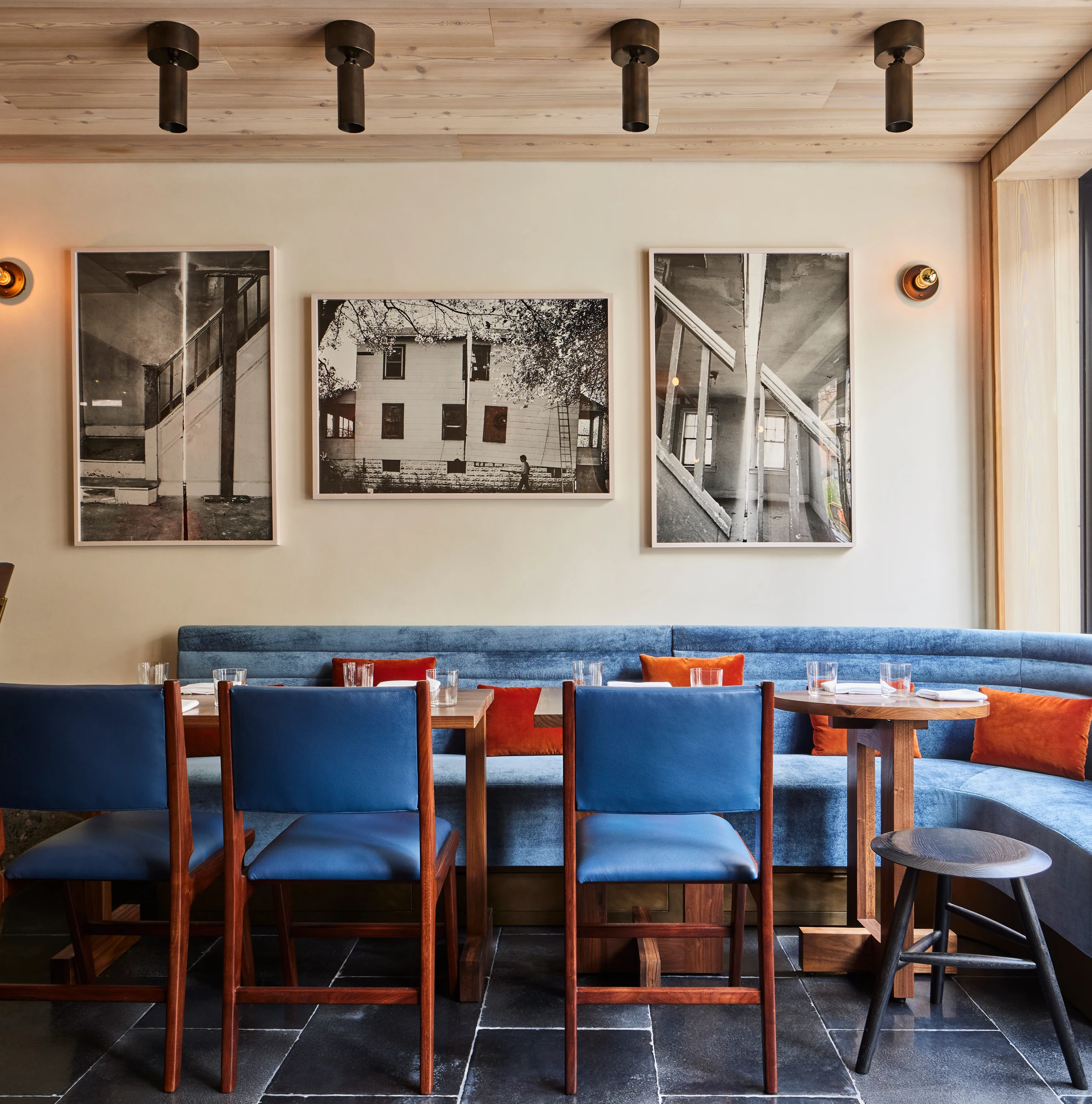
The kitchen already existed. The previous tenant had used the space as a tasting room for a catering business, so Lagomarsini inherited a room close to use, not a shell. The bathroom still had to move. The furnishings came from restaurant friends, antique shops upstate, and a mentor who gave her plates. Lagomarsini sewed the curtains herself. A friend hand-embroidered the napkins. These are not decorative trivia; in a room of 14 seats, a napkin is not background. It passes through every cover.
Then the wrist broke. Lagomarsini had finalized a multi-course opening menu and could not cook it as planned. Her sous chef picked up much of the work in the opening weeks, with chef friends also stepping in while Lagomarsini recovered. Staffing stayed lean: chef-owner, sous chef, dishwasher, server. Creola does about 25 covers nightly across 2 to 2.5 table turns. That number explains the restaurant better than any room description. A service can be counted by hand.
Lauren Monroe, founder of Monroe Media House, has worked with Lagomarsini on getting Creola into public view. Monroe described the chef's steadiness during the opening period, including surgery the day before the official opening. The restaurant stayed on time. That is not common in first openings, especially in a small independent room where the owner is also the cook, the buyer, the problem solver, and the person answering for every delay.
From Restaurant Daniel to a 14-Seat Counter: The Creola Restaurant Vision
Lagomarsini graduated from the Culinary Institute of America before spending 10 years in fine-dining kitchens, including Restaurant Daniel, Momofuku Ko, and Blue Hill at Stone Barns. Those names matter because they describe a discipline of repetition: the pass that does not forgive sloppy timing, the station that trains the body before the ego, the vegetable work and sauce work and service rhythm that teach a cook how much pressure a plate can carry.
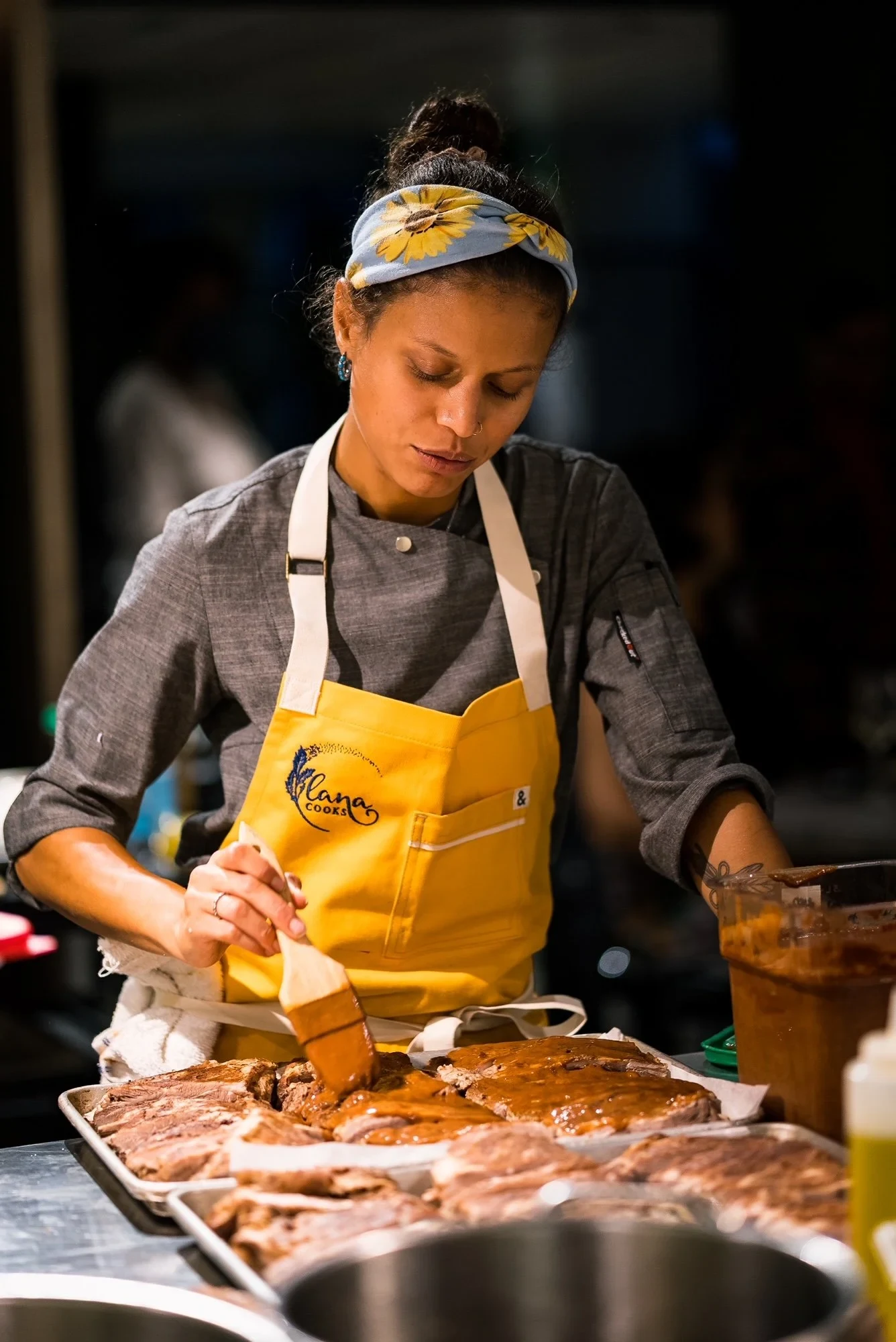
Creola is her first restaurant, but not her first test outside another chef's structure. During the pandemic, when restaurant work dried up, Lagomarsini launched Lana Cooks, a personal chef business. Her clientele wanted restaurant-level cooking at home. That business gave her a different kind of apprenticeship, one without the cover of a large brigade. She cooked directly for people, adjusted at domestic scale, and learned how much of a chef's voice survives when the dining room disappears.
In 2021, she added pop-ups to Lana Cooks. The point was not volume. It was language. Lagomarsini described that period as a way to keep the creative part of the work alive.
"I wanted to push my own voice as a chef, to figure out what I wanted to say with food"Restaurant Business1
Lana Lagomarsini, chef-owner
That sentence sits at the center of Creola. A 14-seat tasting menu restaurant near Harlem gives Lagomarsini less room to hide and more control over the sequence. She can name each dish in relation to the African diaspora, literally or figuratively. She can bring fine-dining technique to foods that formed her palate. She can keep the room small enough that the menu does not have to flatten itself for scale.
The space became available while Lagomarsini was working at Francis Mallman's restaurant in Uruguay. The connection came through Les Dames d'Escoffier New York, the nonprofit membership organization for women in food, fine beverage, and hospitality. The previous operator, a caterer, needed a larger space. Lagomarsini needed a room whose limits could become part of the method. The tiny footprint near the edge of Harlem answered both the budget and the idea.
Black Diaspora Cooking Meets CIA Training at Creola
Lagomarsini's restaurant is named for her grandmother Creola, who was born in Dixon Mills, Alabama. The name is not a branding flourish. It gives the restaurant a predecessor. Lagomarsini has said her grandmother shaped both her cooking and the way her family ate.

"she was a huge influence on my cooking and the way my family eats"Restaurant Business1
Lana Lagomarsini, chef-owner
Her mother's side is mostly from the South. Her father's side is from Puerto Rico. At Creola, that family geography meets the technique of kitchens where precision is expected before personality is heard. The menu draws on pot likker, oxtail, cornbread, plantains, and jerk, then passes them through Lagomarsini's fine-dining training. The move is not to polish the foods until their origins vanish. The work is to keep the memory intact while changing the frame.
The opening menu carried five courses plus an amuse called Snacks, a shareable plate with deviled eggs and pimento cheese gougères. The dish title gives a clue to Lagomarsini's scale of address. Snacks is small before it is formal. Deviled eggs bring the table to the plate; pimento cheese gougères bring choux technique into conversation with Southern spread. The menu detail is brief, but it shows the hinge on which the restaurant turns: family foods, diaspora references, and the learned grammar of fine dining.
Creola's cooking also follows Lagomarsini's work from the Supper Club from Nowhere series, which she created in 2025 while her Top Chef season was airing. Those multi-course dinners around New York explored the city's Black culinary history. The series matters because it shows that Creola did not arrive as a sudden post-television project. Lagomarsini had already been using dinners as a research form, asking what New York's Black food history could look like when given courses, pacing, names, and a room listening closely.
The CIA training, the Daniel years, the Momofuku Ko years, the Blue Hill at Stone Barns years, the family food, the supper club format: Creola gathers these lines into one station. The restaurant's smallness lets the references stay close to the hand. A larger dining room would ask for more staff, more systems, more repetition at volume. Here the discipline is tighter. Twenty-five covers nightly is enough to create pressure and still keep the chef's voice audible.
Creola restaurant Harlem: Four Days, 25 Covers, 14 Seats
Creola restaurant Harlem is not a large-room reservation problem. It is a seat-count problem. Fourteen seats and roughly 25 covers nightly mean each service has little slack. A late cancellation, a slow table turn, a dishwasher problem, or a broken wrist changes the shape of the night. In a room this small, the restaurant cannot absorb difficulty by spreading it across a large brigade.
That scarcity creates its own kind of attention. Diners do not enter a 14-seat tasting menu space the way they enter a dining room designed for anonymity. They see the room's handmade decisions: donated tables and chairs, antique pieces, mentor-given plates, curtains sewn by the chef-owner, napkins embroidered by a friend. The feel is closer to a supper club than to a restaurant engineered for distance. The labor is visible because the room is too small to conceal it.
For the craft-curious diner, the practical reading is simple. Creola operates four days a week. It offers a tasting menu. The restaurant has a beer and wine license rather than a full liquor program. The format asks guests to commit to the sequence Lagomarsini has built, not to assemble a meal around preference. That matters for food rooted in lineage, because sequence can do some of the storytelling. A bite of deviled egg before a later course is not just an amuse; it sets the room's register.
The location, near the edge of Harlem on the Upper East Side, also carries pressure. Harlem's food history is not an accessory to Creola's story, and Lagomarsini's Supper Club from Nowhere dinners had already taken New York's Black culinary history as material. The restaurant does not need to claim a whole neighborhood to be in conversation with it. It sits close enough that the phrase Creola restaurant Harlem will keep surfacing in searches, bookings, and word of mouth, especially among diners tracking Black diaspora cooking in New York.
Small-format restaurants often get described through intimacy, but the operational fact is more useful: fewer seats mean fewer chances to correct a mistake before it reaches the guest. Every table hears the timing. Every plate returns a signal. For Lagomarsini and her sous chef, that means the tasting menu must function as both food and service map. The bench has to stay organized; the pass has to stay calm.
Top Chef, Pop-Ups, and the Work of Finding a Voice
Lagomarsini competed on Bravo's Top Chef in 2024 and won a Quickfire Challenge. The competition gave her another compressed room, another format where a chef has to make decisions quickly and stand behind them. It also placed her food in front of a wider audience before Creola opened.
Television can distort a cook's public identity. It can make the personality arrive before the method. Lagomarsini's path is steadier than that. The Top Chef run sits between a decade of restaurant kitchens, a pandemic personal chef business, pop-ups, the Supper Club from Nowhere series, and a first restaurant opened with a damaged wrist and minimal staff. The Quickfire win belongs in the record, but it is not the whole argument for Creola. The stronger argument is the sequence of work that came before and after it.
The pop-ups gave Lagomarsini room to test a voice. The supper club dinners gave her a structure for historical inquiry. Creola gives that work a permanent address, even if the room itself is small. This is the difference between a project and a restaurant. A pop-up can carry an idea for one night. A restaurant has to repeat it without draining it.
The mentor network around Creola also tells part of the story. Lagomarsini has called on mentors for opening advice, and one gave her plates. Restaurant friends donated furniture. Chef friends helped while she recovered. The lineage here is not only the formal résumé of CIA, Restaurant Daniel, Momofuku Ko, and Blue Hill at Stone Barns. It is also the informal economy of cooks who lend objects, labor, warnings, and encouragement when a first-time owner is trying to get the doors open.
That support did not remove the risk. Lagomarsini self-funded the restaurant with investments from a few family members and friends, along with money she won from Top Chef competition. The budget stayed small because the room stayed small. The tradeoff is clear: less room for revenue, more room for control. Creola's first months depend on that equation holding.
Why Lagomarsini's Next Service Is the One to Watch
Creola began with the chef-owner partly removed from her own station by injury, which means its early story belongs as much to the team as to the founder. The sous chef carried much of the opening workload. The dishwasher and server held the room's basic rhythm. Friends and mentors put their hands into the project through furniture, plates, advice, and labor. Lagomarsini's name is on the restaurant, but the opening weeks show the crew required to keep a 14-seat place alive.
What follows is the more revealing phase. Once Lagomarsini is fully back on the tools, Creola can settle into the original question that animated Lana Cooks, the pop-ups, and Supper Club from Nowhere: what does she want to say with food, service after service, in a room small enough to hear the answer? Watch the four-day week, the next menu turns, and any future Supper Club from Nowhere dinners. The name to follow is Lana Lagomarsini; the technique to watch is how she folds Southern and Puerto Rican family memory into a fine-dining tasting menu without letting either side disappear.