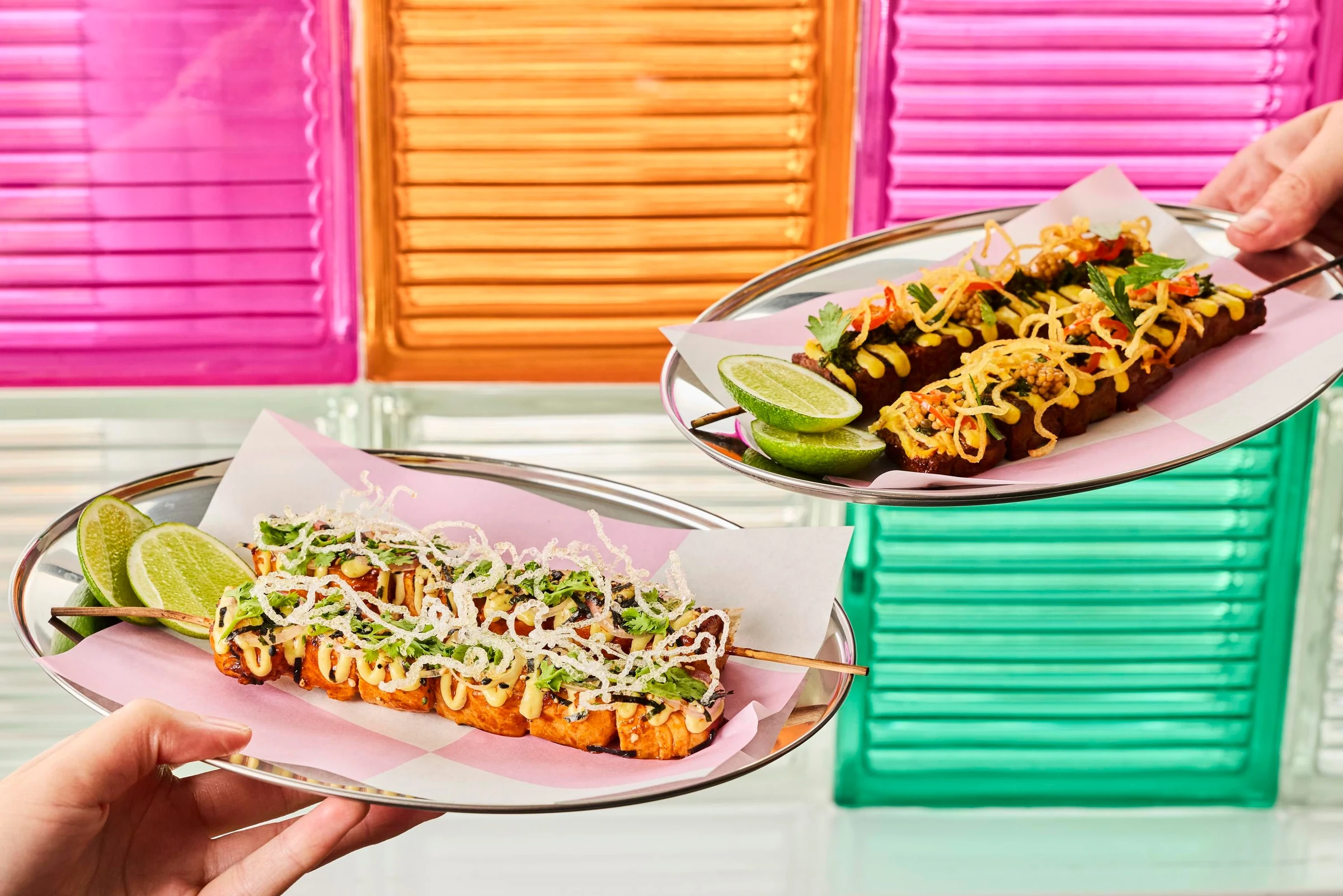
It is the return of her beef patty croissant, the kind of pastry that asks for lamination discipline and a cook's memory in the same bite.
According to Eater NY, Mick, a four-time James Beard Award semifinalist in the Outstanding Pastry Chef category, is moving from executive pastry chef roles at the Musket Room and Raf's into a restaurant built around Afro-Caribbean cuisines, fermented breads, laminated pastries, and an alcohol-free beverage program.
That sequence matters. Mick's work has already lived on the bench in New York kitchens with starched expectations and tight turns at service. Calabash changes the direction of the pass.
The venue is named for the dried gourd used as vessel and instrument across parts of the African diaspora, a form Mick saw growing up in Pennsylvania and encountered again during research and development travel across Africa and the Caribbean, Eater NY reports.
At Calabash, the vessel is literal enough to carry coffee from across Africa, tea from Kenya, chocolate from One One Cacao in Jamaica, and food that folds Jamaican, Nigerian, Trinidadian, and New York references into the same service.
Camari Mick Opens Calabash West Village
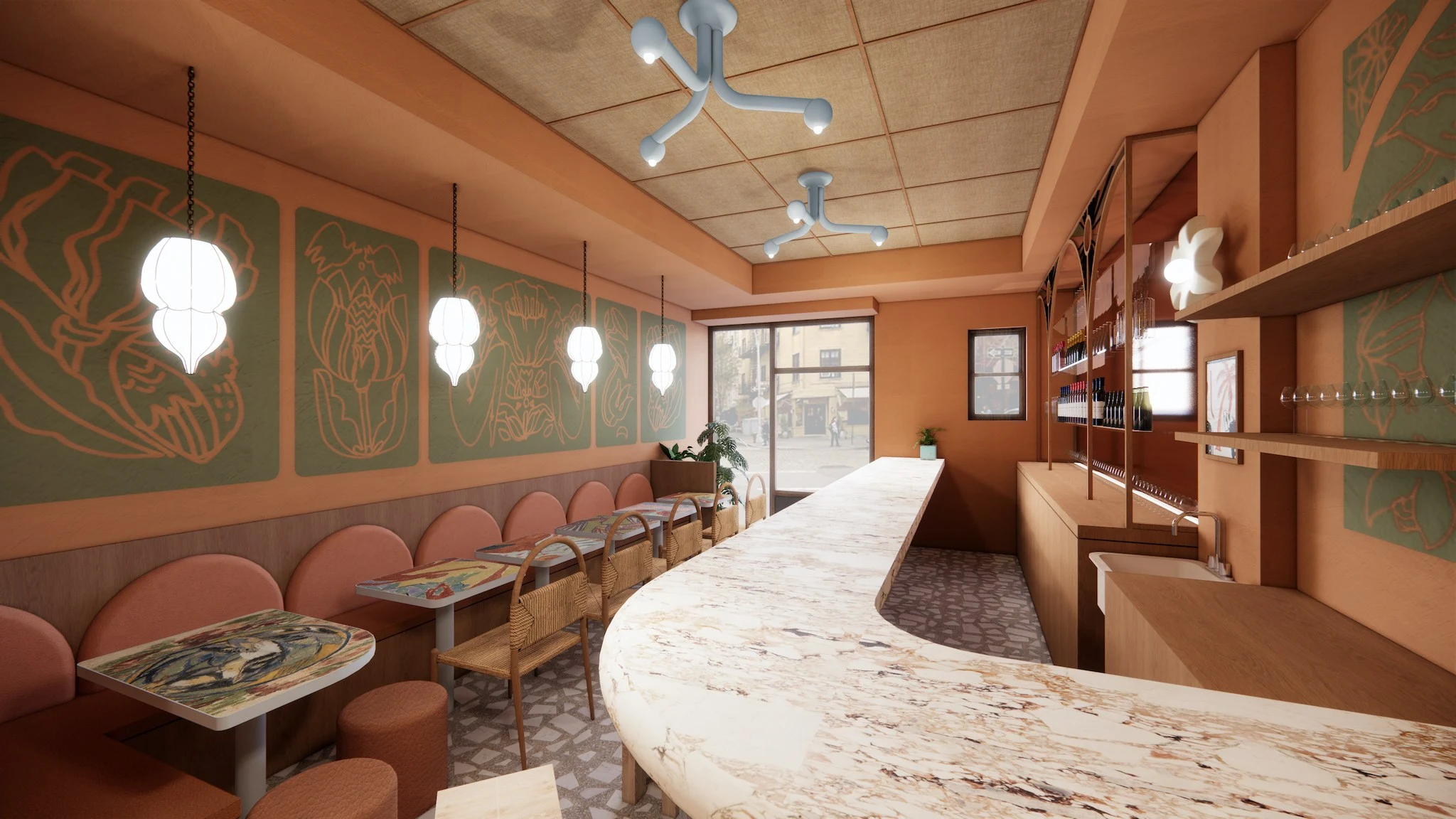
Calabash West Village is scheduled to open in fall 2026 at 183 Christopher Street, near Weehawken Street, according to Eater NY. According to Eater NY, the room is 1,300 square feet and 30 seats, designed by Drummond Projects, a D.C. Architecture firm. Those numbers give the opening its working scale. This is not a large brasserie using Afro-Caribbean language as broad décor. It is a small room with limited turns, a daytime bakery rhythm, and two dinner services a week.
The team is named early, and that is part of the shape of the project. Tajeh Porter joins as chef de cuisine from Nura. Jasmine L. Pierce is the hospitality brand consultant. Drummond Projects handles the architecture.
Calabash is also a collaboration with Heermance Farm, the upstate New York farm whose former city event space is becoming the restaurant, according to Eater NY. Mick is asking the farm to grow specific produce for her, with sweet potatoes teased for Thanksgiving.
The detail says how she wants the place to work: not a menu written in isolation, then handed to purchasing, but a kitchen talking to a farm before the dish reaches the pass.
The opening puts a pastry chef's hands at the center of an all-day restaurant. Daytime service will run from 8 a.m. To 4 p.m. Thursday through Sunday. Friday and Saturday nights switch to prix fixe dinner. Reservations will be available on OpenTable when the restaurant opens. As Eater NY describes it, for diners tracking the first weeks of Calabash West Village, the useful facts are spare: 30 seats, four daytime services, two dinner services, fall 2026. The scarcity is built into the model before a single table is booked.
From Michelin Kitchens to Solo Venture
Mick's previous work at the Musket Room and Raf's put her in pastry stations where structure carries consequence. Rum cake cannot hide behind nostalgia if the crumb is wrong. A beef patty croissant fails if the butter leaks, the layers collapse, or the filling reads as an afterthought. At Calabash, she is bringing that same bench-side discipline to food that begins closer to her own line of inquiry.
The source of the restaurant is not a generic pivot from pastry to savory cooking. Mick grew up in Pennsylvania; Eater NY reports that her father is Jamaican and her mother is from Brooklyn, and that she recently discovered Nigerian ancestry. In the section of her career that produced Calabash, she is choosing to study the foodways around those facts and put them through the techniques she has earned in restaurant kitchens. "It's time to learn about my own culture and be able to put that on the plate," said Camari Mick.1
That sentence gives the opening its pressure. Mick is not rejecting technique. She is rejecting the idea that technique has to point back to someone else's canon. The restaurant was originally called L'Atelier Ebenè, according to Eater NY, before she changed the name because it did not fit the work. The new name, Calabash, moves the reference away from a European atelier frame and toward a vessel that has traveled through African diasporic use. The decision is a naming choice, but also a method choice. What does the bench do when the reference points change?
Pastry chefs often understand systems before they lead rooms. They work in temperatures, folds, textures, timing, holding windows, and the quiet problem of making something fragile repeat under pressure. Mick's daytime menu keeps that grammar visible: laminated pastries, fermented breads, and a cornbread pancake with salted maple sabayon.
The useful reading comes from the categories themselves. Lamination asks for cold control and sequencing. Fermented bread asks for patience. Sabayon asks for heat held just long enough to thicken without breaking. Those are tools Mick is taking with her.
The Afro-Caribbean Menu and Alcohol-Free Beverage Program
The food list at Calabash West Village reads like a cook translating memory through station work. Eater NY reports a suya steak frites built from Mick's take on the Nigerian grilled meat skewer. She plans long, deep-fried fries made from ripe plantains, steak cut from whatever is available at Prince Abou's, a Black-owned halal butcher shop in Harlem, and an au poivre sauce based on suya spices, finished with peanuts. Plantain replaces potato; suya enters the pepper sauce; Harlem's butcher counter sets the cut.
Other dishes extend the same method. Mick has discussed goat ragu with pappardelle, spicy pomodoro sauce, and hard goat cheese. Marinated sardines sit on a Trinidadian bake with tomatillo chow. The daytime side brings cornbread pancake with salted maple sabayon. Dessert turns gizzada, a Jamaican coconut milk tart, into a sticky bun. The chocolate chip cookie uses single-sourced chocolate from One One Cacao in Jamaica. The beef patty croissant returns, now inside a restaurant whose full structure can explain why it belongs there.
The beverage program is the other part of the opening that practitioners will watch. Eater NY reports that Calabash will have no liquor. Instead, Mick's team will serve fermented drinks, nonalcoholic cocktails, and adaptogenic beverages using lion's mane mushrooms and vitamins. For a 30-seat brasserie, removing wine and spirits changes more than the check average. It changes the arc of dinner service, the way a server introduces pairing, and the way a guest reads acidity, tannin, bitterness, sweetness, and temperature alongside fat, spice, and starch.
Alcohol-free programs can fail when they mimic a bar without giving the kitchen anything useful back. Calabash has a cleaner opening question because the food already carries fermentation, pastry structure, chile, plantain, peanuts, goat, sardines, coconut, and chocolate. A fermented drink can meet a cornbread pancake without pretending to be Champagne. A nonalcoholic cocktail can carry spice or acidity beside suya steak frites without reaching for spirits vocabulary. The source names lion's mane mushrooms and vitamins; the test will be how they taste with the food.
The Room, the Farm, and the Hands Around Mick
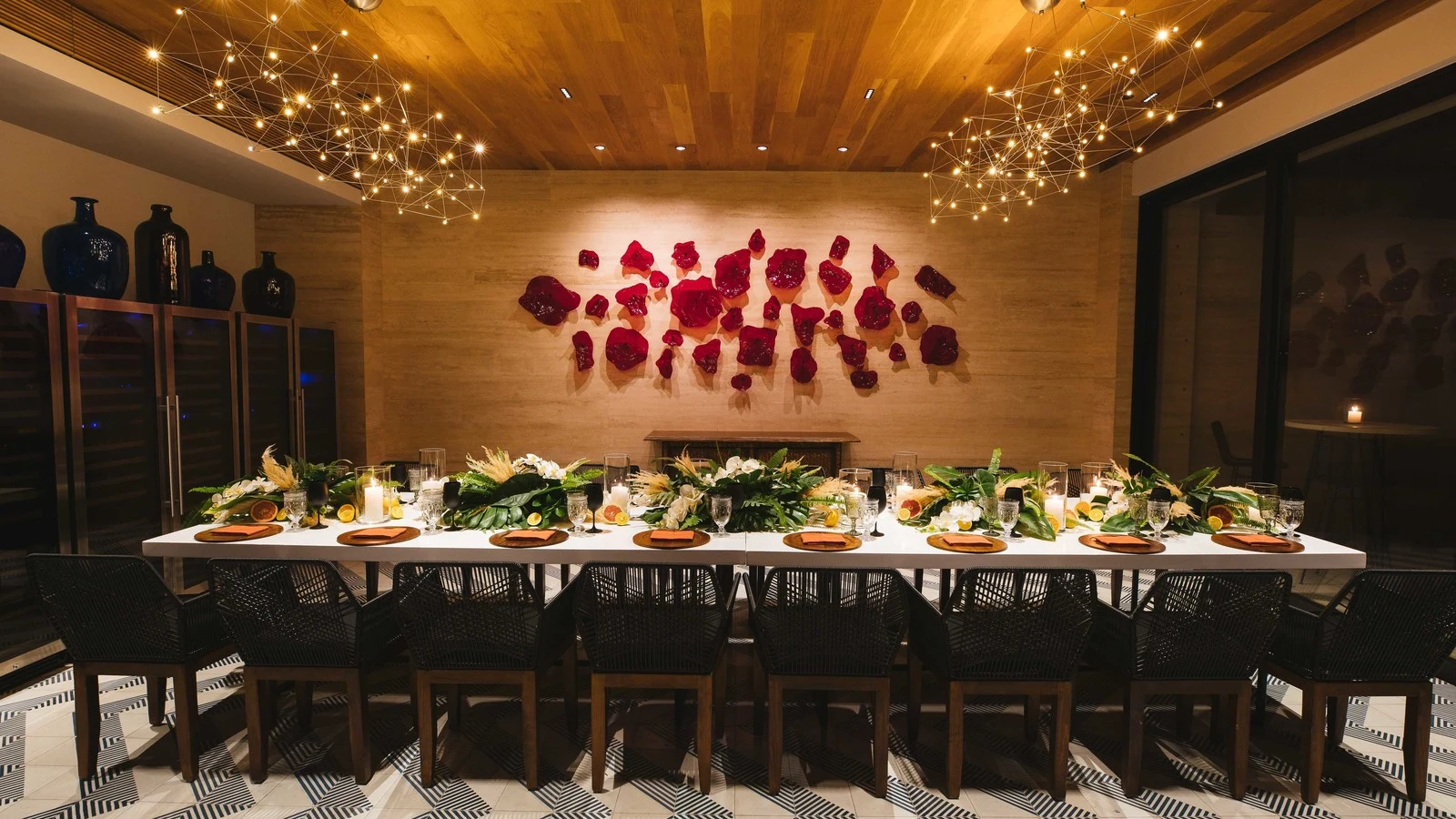
Drummond Projects designed the 1,300-square-foot, 30-seat restaurant, according to Eater NY. The size matters because Mick is not building a faceless dining hall. Thirty seats means the room can hear itself. The daytime service can move like a bakery and café; the dinner service can narrow into a prix fixe format on Friday and Saturday. In a neighborhood with no shortage of small dining rooms, Calabash has to make its case through the hands in the room, not through square footage.
The space will feature art by Black and brown artists curated by gallerist Cierra Britton, Eater NY reports. Mick has talked about pairing specific bites of food to each artwork and training staff to speak about both dishes and art. That puts hospitality training under pressure in a useful way. A server at Calabash cannot stop at ingredient recitation if the room asks them to carry cultural reference, visual work, and food technique in the same exchange. The pass extends to the wall.
Heermance Farm is not a background supplier in the source material. Calabash is a collaboration with the upstate New York farm, and Mick is asking the farm to grow specific produce. For a restaurant opening in a former event space tied to that farm, the connection gives the kitchen a practical line of communication. If sweet potatoes come in for Thanksgiving, as Mick teased to Eater NY, the question is not just where they appear on the menu. It is how the pastry station, savory station, and beverage program all respond to the same crop.
Porter's role as chef de cuisine will shape how Mick's pastry-rooted framework holds during service. The source names Porter as coming from Nura, but gives no further brief on her cooking there, so the honest point is structural: chef de cuisine is the role that turns a founder's intent into prep lists, station discipline, and repeatable plates. Pierce's work as hospitality brand consultant sits beside that. A small restaurant with a daytime and dinner split needs language as much as mise en place. Guests have to understand what Calabash is without flattening it into a bakery, a brasserie, or a cultural lesson.
How to Book and What to Expect
For now, the practical map is clear. Calabash West Village is slated for fall 2026 at 183 Christopher Street, near Weehawken Street. Daytime service is planned Thursday through Sunday from 8 a.m. To 4 p.m. Friday and Saturday bring the prix fixe dinner menu. Eater NY reports that reservations will be available through OpenTable when the restaurant opens.
The service model gives different reasons to visit at different hours. Morning and afternoon belong to laminated pastries, fermented breads, coffee sourced from across Africa, tea from Kenya, and the savory daytime plates that let Mick keep pastry technique close to the bench. Evening service narrows the frame. The prix fixe format gives the kitchen control over pacing and sequence, which matters for a menu that may move from sardines on Trinidadian bake to goat ragu, suya steak frites, or desserts built from gizzada and Jamaican chocolate.
Collectors of restaurant openings, the kind who book first weeks to see the weld marks before the polish settles, will be watching how Calabash handles constraint. Thirty seats limit access. Four daytime services and two dinner services limit repetition. No liquor removes the usual pairing safety net.
The room's art program asks the staff to speak across disciplines. The farm collaboration gives the kitchen a growing conversation rather than a fixed produce list. None of those pieces guarantees a smooth opening. They do make the first season legible as a working proof, which is exactly how Mick has described this iteration through Eater NY's reporting.
The next move is the fall opening, then the first reservation book, then the way Porter's kitchen team and Pierce's hospitality work translate Mick's bench discipline into service. Watch the beef patty croissant, the fermented drinks, and the first Friday prix fixe. They will tell us how Calabash turns a vessel into a restaurant.