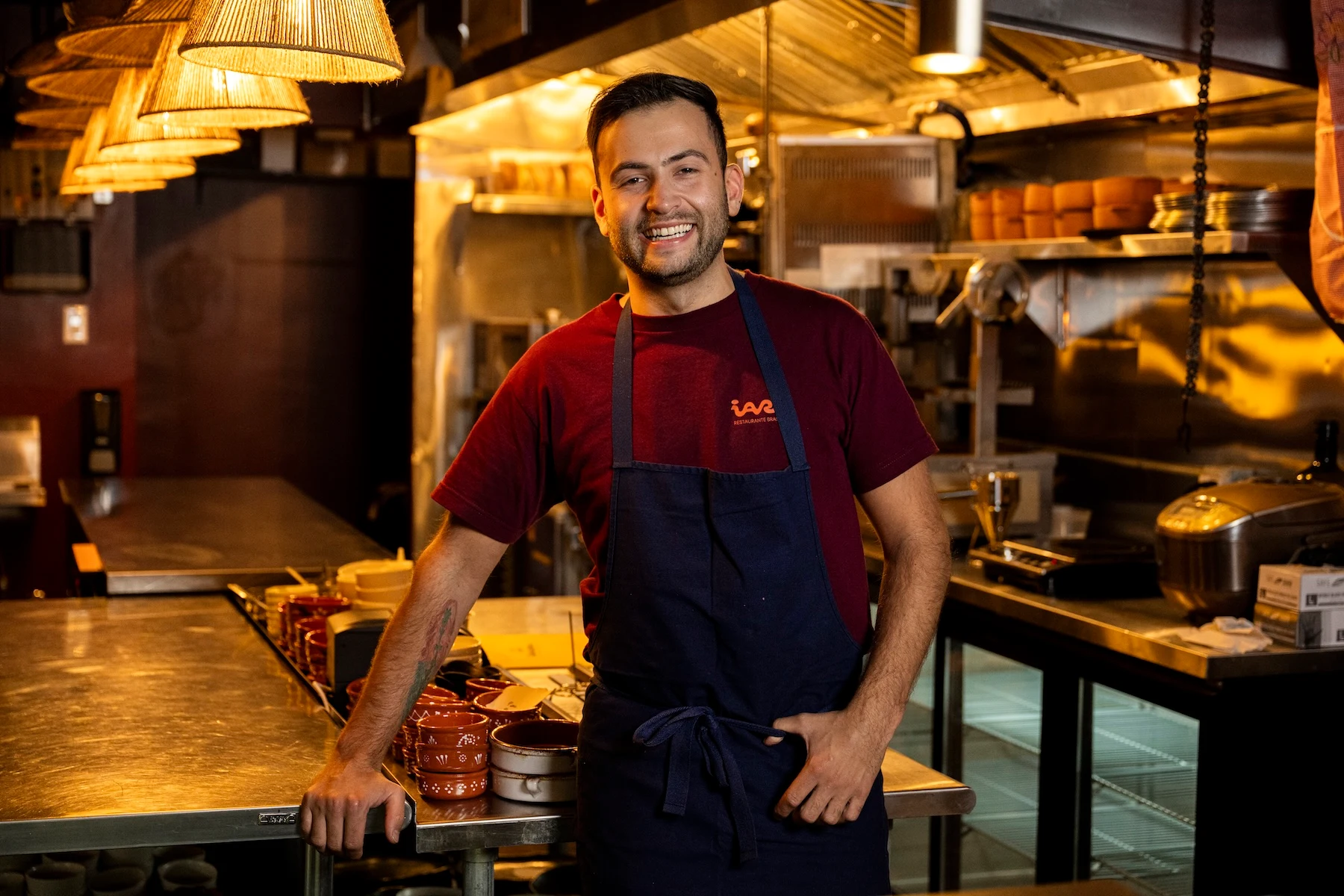
On October 2, chef Vitor Mendes sets tucupi on the table, keeps jambu within reach in the kitchen, and opens Iara Lower East Side around a 13-seat chef’s counter facing the hands at work. Mendes, formerly chef de cuisine at Theodora in Fort Greene, has been working toward this room since 2023, after his first trip to the Amazon following his father’s death (Resy1).
That trip changed the station he wanted to hold. Mendes had cooked in New York at Chef’s Table at Brooklyn Fare, The Fulton by Jean-Georges, and The Modern before Theodora, where chef-owner Tomer Blechman gave him his first stretch in what Mendes calls a more casual kitchen. At Iara, Mendes steps out as chef and owner, bringing fine-dining muscle into a restaurant built for sharing, low price points, charcoal cooking, and ingredients many New York diners have not yet met bench-side.
Chef Vitor Mendes Brings Iara Lower East Side Into View
Mendes began in food at 15, after immigrating to the United States from Brazil. His New York apprenticeship moved through rooms with different pressures: the fine-dining discipline of Chef’s Table at Brooklyn Fare, the waterfront polish of The Fulton by Jean-Georges, the museum-adjacent station work of The Modern, then the Fort Greene pace of Theodora. Those kitchens matter here because Iara is no nostalgia project. Mendes uses the timing, plating, and service habits he earned in those rooms to let Brazilian comfort dishes carry Amazonian ingredients without turning them into museum pieces (Resy1).
The first Amazon trip came in 2023, when Mendes went after his father passed away. He has described walking through open-air markets in Brazil and being caught off guard by the scale of what he saw. “As I started pacing through these open-air markets in Brazil, I thought, ‘This is insane.’ I was very surprised [by how much there was],” Mendes says. “I always thought Brazil was rice, beans, and barbecue meat.”
He returned to New York with more than a list of flavors. Mendes has been back several times since, with stints as long as seven months, trying ingredients, meeting purveyors, setting up distributors, and doing the research and development that became Iara. The length matters. Seven months gives a cook time to stop treating an ingredient as a souvenir and start asking how it behaves under heat, acid, salt, smoke, and repetition (Resy1).
Iara Lower East Side opens as a 60-seat restaurant, including a 13-seat chef’s counter and a private dining room for up to 8 guests. The room has an open kitchen, which Mendes wants visible from every corner. That is not decoration. If the restaurant asks diners to follow tucupi, jambu, cumaru, puxuri, açai, cassava, and charcoal through a New York service rhythm, the counter becomes part of the method (Resy1).
The Amazonian Pantry Mendes Is Putting on the Pass
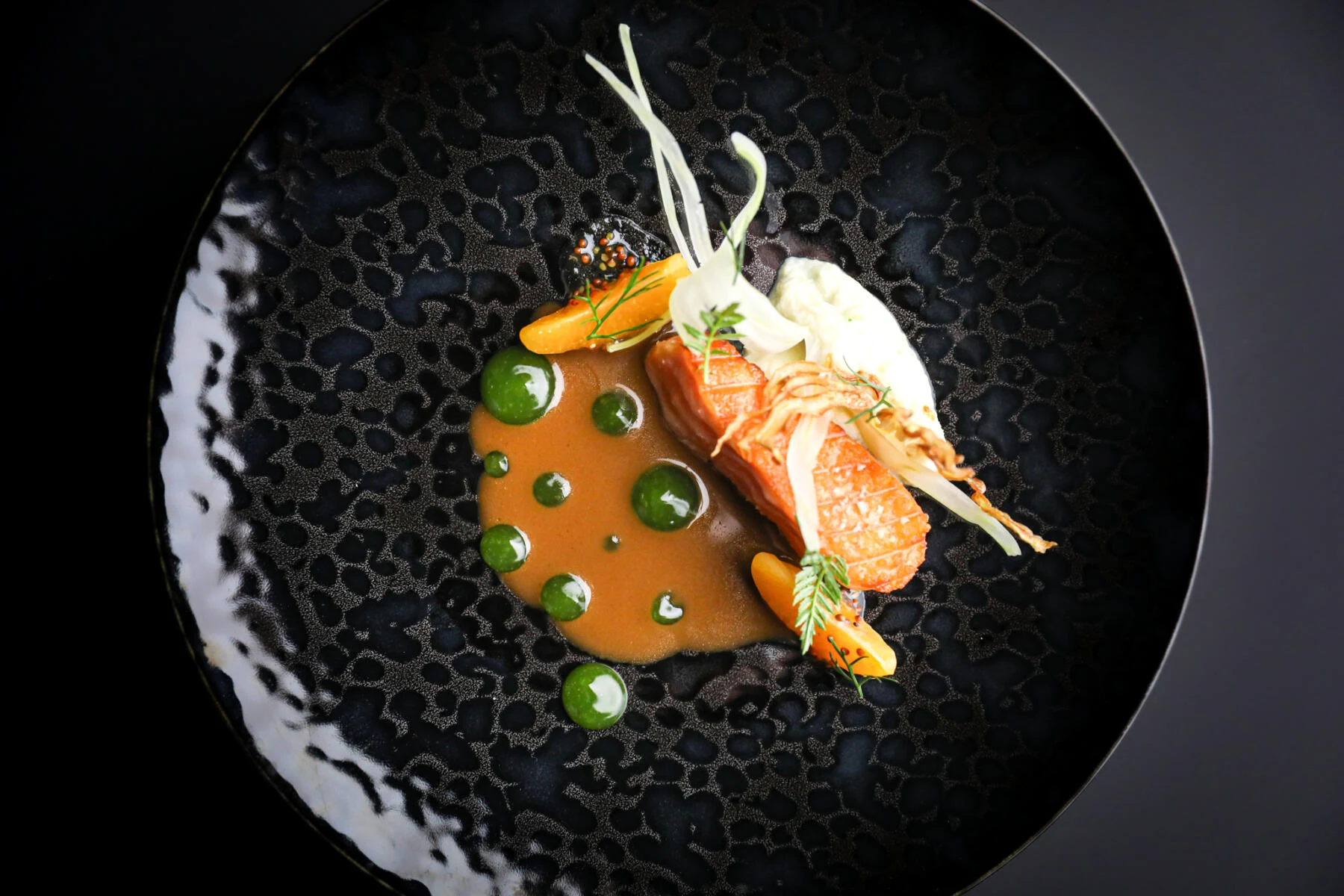
The menu turns on ingredients from the Amazon and Brazil, some familiar by name, others still rare in New York dining rooms. Jambu, a leafy green herb, brings a tingling sensation when eaten. Tucupi, a yellow sauce made from cassava root, moves through the menu as hot sauce at every table, then appears in ceviche, moqueca, cocktails, and other dishes. Cumaru, likened to Brazilian vanilla, and puxuri, called Brazilian nutmeg, season the signatures.
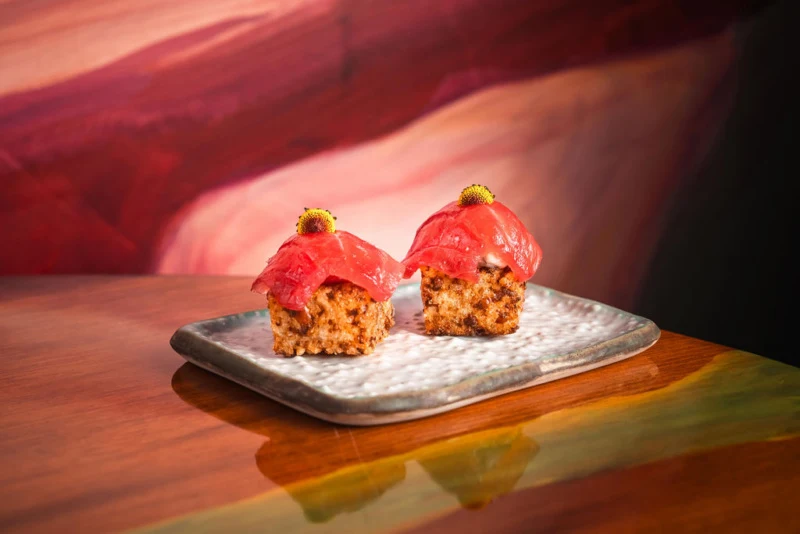
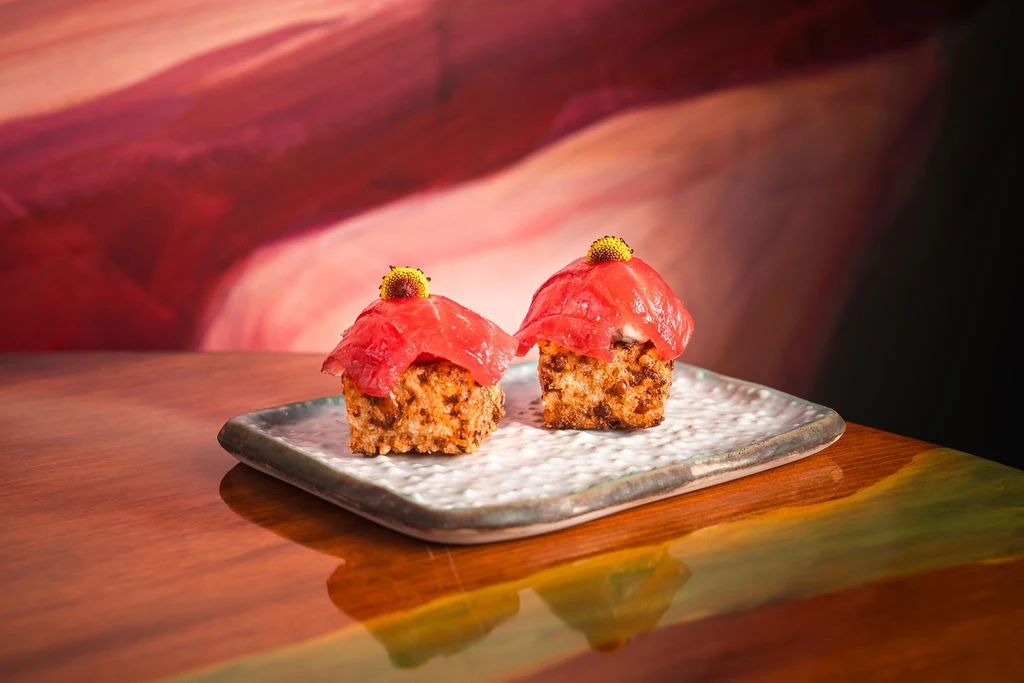
Mendes does not hide these ingredients inside tasting-menu logic. He places them where diners already understand the gesture. Pão de queijo comes with smoky eggplant dip because, as Mendes notes, New York diners know how to gather around dips. Tapioca and tuna nods toward crispy tuna rice, then changes the grain and the seasoning, using tapioca in place of rice and biquinho pepper for the finish. Familiar form, changed material.
The moqueca gives the clearest reading of the method. Mendes simmers Bahian red snapper in tucupi, letting the cassava-root sauce carry a classic Brazilian fish stew rather than sit beside it as explanation. The 10-ounce picanha steak points to the Brazilian Sunday habit around that cut, then arrives with cassava fries and açai ketchup. The açai is not the sweet bowl many American diners know from post-workout counters. At Iara, it also appears as part of a savory dressing for charcoal-grilled seasonal greens.
“When I came back to New York City [after spending time in the Amazon], I just started testing out the dishes that I had in my mind after years of fine dining, with the [new] access to these crazy ingredients,” Mendes says. The quote explains Iara’s structure better than any category label. The technique comes from years on the tools in New York. The pantry comes from Brazil and the Amazon. The plate has to hold both without making either feel imported for effect.
Comfort Cooking, Charcoal, and Prices Below $20
Mendes frames the cooking as Brazilian comfort food, but the comfort comes through process. At Theodora, he worked in a kitchen known to him for wood-fire grills; at Iara, he will use charcoal. That shift changes the dwell time and the way fat, fish, greens, and cassava take smoke. It also gives the kitchen a common thread across dishes that could otherwise read as a list of unfamiliar ingredients.
“[We want to] bring in this New York City way of eating,” Mendes says. “I’m bringing influences from places I’ve worked before and just adding these ingredients from Brazil. At Theodora, we used wood-fire grills, but here we’ll be using charcoal. Everyone in New York is in love with dips, so I’m doing pão de queijo with [smoky eggplant] dip.”
Most dishes at Iara are priced below $20, a figure that gives the opening a different kind of pressure. New ingredients can become expensive lessons for the diner; Mendes is trying to keep the first encounter within reach. Dishes are meant to be shared, so a table can move from pão de queijo to moqueca to picanha without turning the meal into a one-plate wager.
The dessert side keeps the Brazilian line intact. Pudim, the Brazilian flan, will rotate with seasonal flavors, with pumpkin-spice set for fall. Meals end with a Brigadeiro bite, also known as a Brazilian truffle. That final bite matters because it refuses the idea that the Amazonian ingredients are the only subject. Mendes is also building a Brazilian restaurant, one where memory, adaptation, and New York eating habits share the pass.
Calvin Czypinski Builds the Cachaça Line Beside the Kitchen
Calvin Czypinski, another Theodora alumnus, curated the beverage program at Iara. His list follows Mendes rather than standing apart from the kitchen. Cachaça anchors the bar, and Amazonian ingredients move into the glass the way they move into the food.
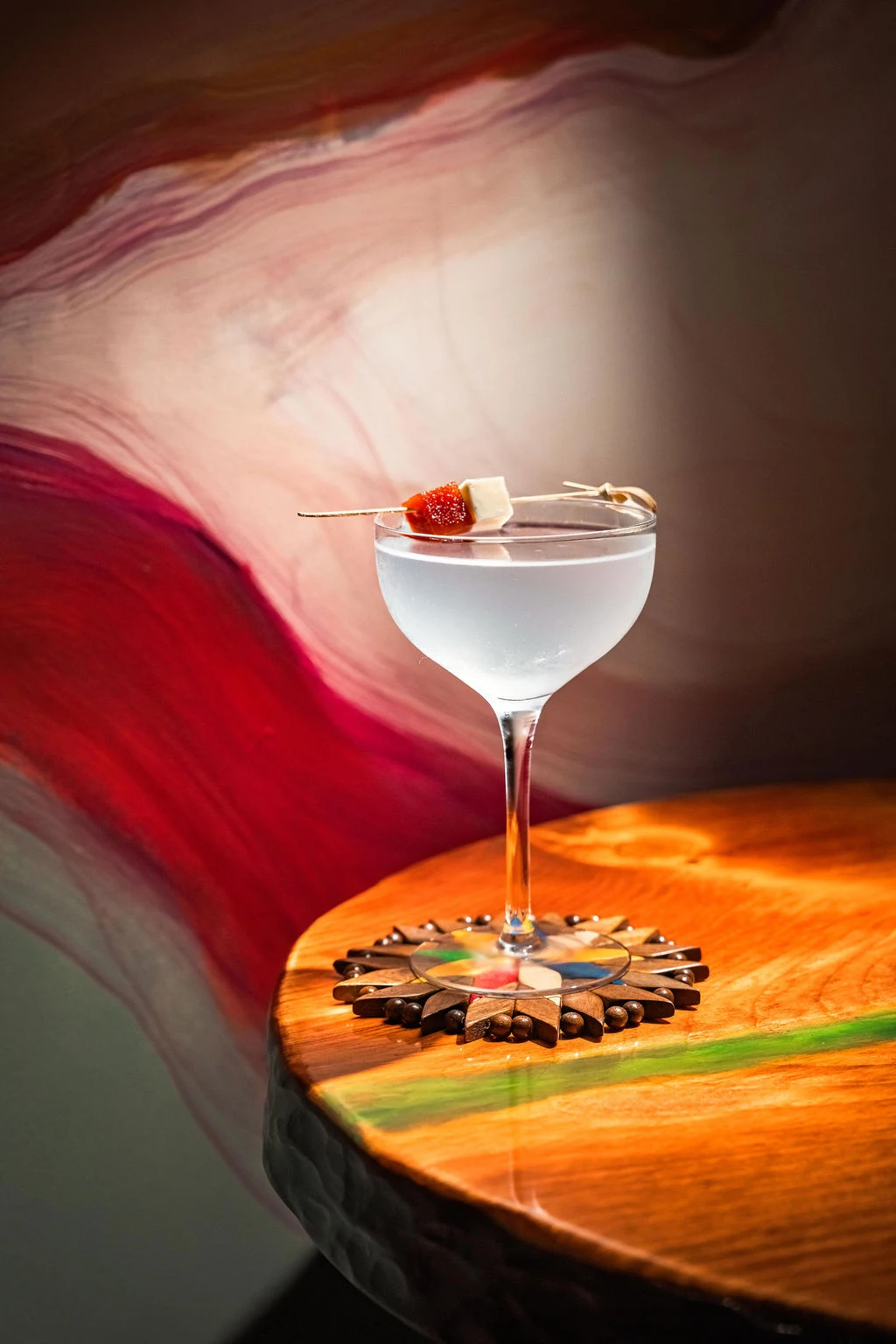
The Tucupi Martini brings gin together with preserved lemon brine and tucupi. The caipirinha gives the program its baseline Brazilian drink, while the house Iara uses cupuaçu, cachaça, and Brazilian vanilla honey. Those ingredients make the bar a second station for the same research Mendes has done in the kitchen. Tucupi serves as sauce for moqueca and a condiment on the table; it also becomes a cocktail ingredient with acid, salt, and spirit to carry.
Beer is served at -5 degrees Celsius, “as they do in Brazil.” That number is a small but useful signal for the kind of details Mendes and Czypinski are willing to import whole. It is not a flavor note. It is a serving discipline, the temperature of the bottle or glass arriving with the same intent as charcoal on picanha or cassava in the fryer.
For early diners at Iara Lower East Side, the beverage program may be the fastest way to understand the restaurant’s range. A table can order tucupi in a martini, taste it as hot sauce, then meet it again in fish stew. Repetition teaches faster than explanation. The ingredient becomes legible because Mendes and Czypinski keep changing its station.
Cleyton Alexandre’s Murals and a Room Built From Research
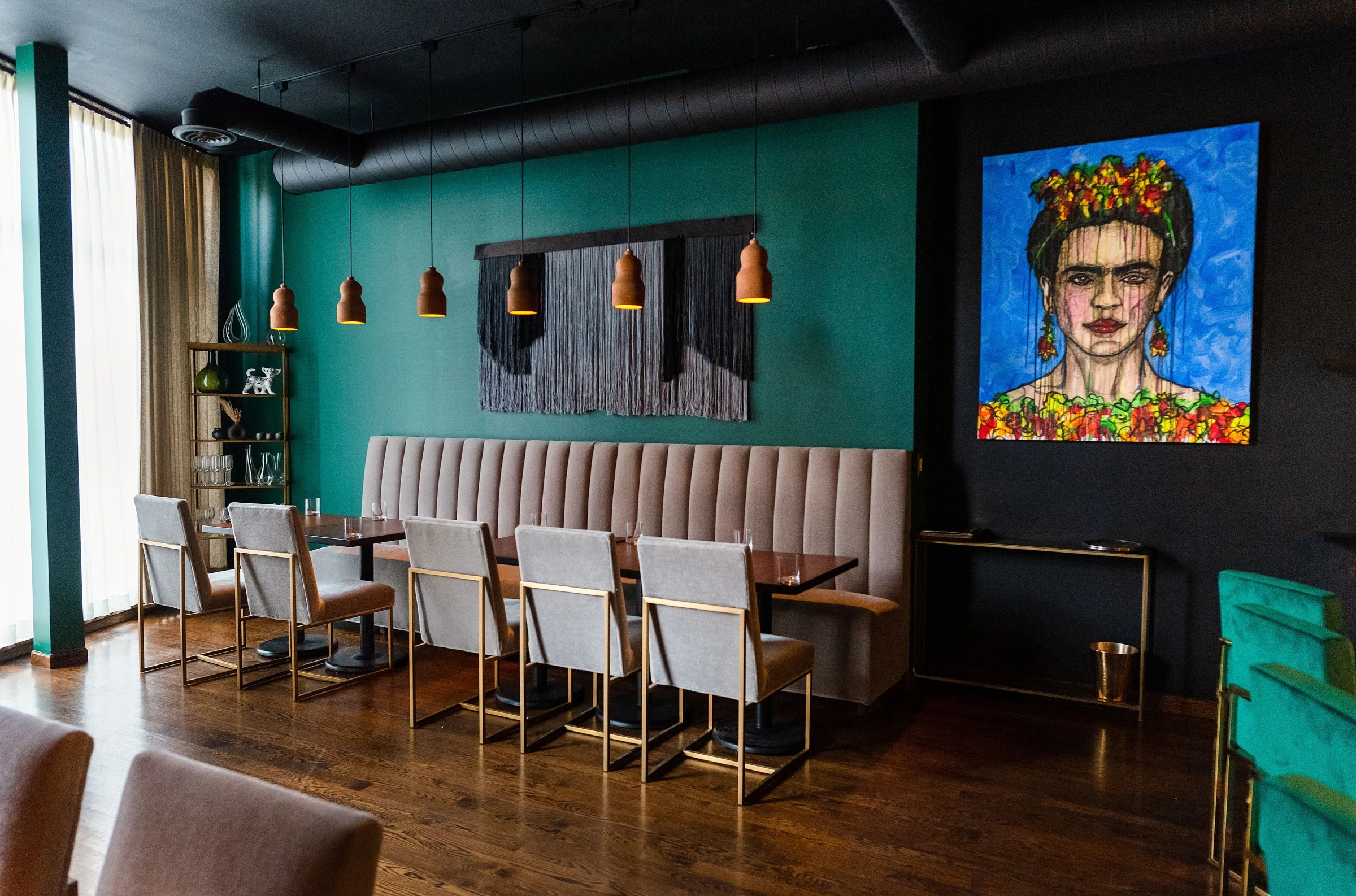
The Amazon appears off the plate, too, but the room is tied to Mendes’s trips rather than a loose design theme. Bags of spices, a tipiti, and dried fruits appear on the walls. The tipiti matters because it is an indigenous tool used to extract fermented cassava juice, the kind of object that connects the dining room back to the ingredient work behind tucupi and cassava.
Mendes also brought back serving utensils from Brazil and commissioned custom tables from a maker he found online, made from pine and maple. A tree structure runs through the space and holds paintings and other decorations. Brazilian artist Cleyton Alexandre created hand-painted murals for the walls, including one in the bathroom, where the soundtrack turns to the rainforest.
The room seats 60 in total, but the 13-seat chef’s counter will likely be the clearest view into the method. Mendes says, “Everyone can see the kitchen from every corner.” For a restaurant that asks diners to learn ingredients by watching them move across the pass, that sightline matters. The open kitchen lets the guest see the charcoal, the dips, the plates being shared, the sauce placed down for everyone at the table.
The name came through a conversation with Tomer Blechman, Mendes’s predecessor and mentor at Theodora. Mendes asked how Blechman had chosen his restaurant’s name; Blechman told him Theodora was named for a Greek goddess. Mendes then looked toward Amazonian spirits and found Iara, an Amazonian mermaid from mythology. “We thought, ‘This is it. This is perfect,’” Mendes says.
How to Visit Iara on the Lower East Side
Iara opens October 2 on the Lower East Side and serves Tuesday through Saturday from 5 to 11 p.m. The restaurant has 60 seats, including the chef’s counter and a private dining room for up to 8 guests. For diners tracking new restaurant openings through the people behind them, the useful seats are the ones close enough to watch how Mendes’s first independent kitchen settles into repetition.
The opening carries several names worth following. Mendes is the maker at the center, moving from chef de cuisine at Theodora into his own room. Czypinski is building the bar program from the same Theodora lineage. Blechman sits in the background as the chef-owner Mendes consulted when naming the restaurant. Alexandre gives the walls their hand-painted Amazonian presence. Together, they give Iara its shape on the Lower East Side.
Watch what happens after the first services, when the kitchen has to repeat the tucupi hot sauce at every table, keep pão de queijo moving with smoky eggplant dip, send picanha with cassava fries and açai ketchup, and teach jambu without stopping the room. That is where a debut becomes a discipline. On October 2, Mendes starts that work in public.