Chefs Ahn and McCoy Open Alfie's Georgetown Restaurant
Chefs Justin Ahn and Alex McCoy cap Alfie's curry steak frites at five nightly orders in a Georgetown alleyway.
HM
Director of Editorial Standards
Hugo Marchetti
Filed October 27, 2026
8 min read
At Alfie's Georgetown restaurant, chefs Justin Ahn and Alex McCoy now stop the Thai steak frites after five orders a night, each one built around a 26-ounce rib-eye, classic bar fries, and a massaman curry peppercorn sauce finished in the pan with beef fat (Eater1).
The 2024 permanent restaurant gives a fixed home to the chefs' northern Thai project, which began as a Petworth pop-up in 2017 before serving diners in New York and London. The alleyway address matters because the limit is so low. Five tables get the steak (Eater1).
The Sunday email
Get new Made By stories every Sunday.
Every Sunday we send a lead story and up to four more about the chefs, winemakers, sommeliers and hoteliers behind the restaurants, bars, wineries and hotels we cover.
Free. One email a week, and you can unsubscribe from any issue.
Everyone else reads the room through som tam, gaeng hung lay, sticky rice, herbs, curry paste, fish sauce, tamarind, palm syrup, and the hands working the line.
Ahn and McCoy have opened a fixed home for Alfie's after seven years of moving the concept through borrowed rooms and temporary services. They have kept one dish scarce enough that it changes the rhythm of ordering.
Why Alfie's Georgetown Restaurant Stops at Five Steaks
The five-order limit gives Alfie's Georgetown restaurant its first argument before the first plate reaches the table. Ahn and McCoy's steak frites is part of the Thai restaurant's menu. Their version pulls a bistro format into a northern Thai kitchen, then narrows the quantity until the dish behaves like a nightly allocation.
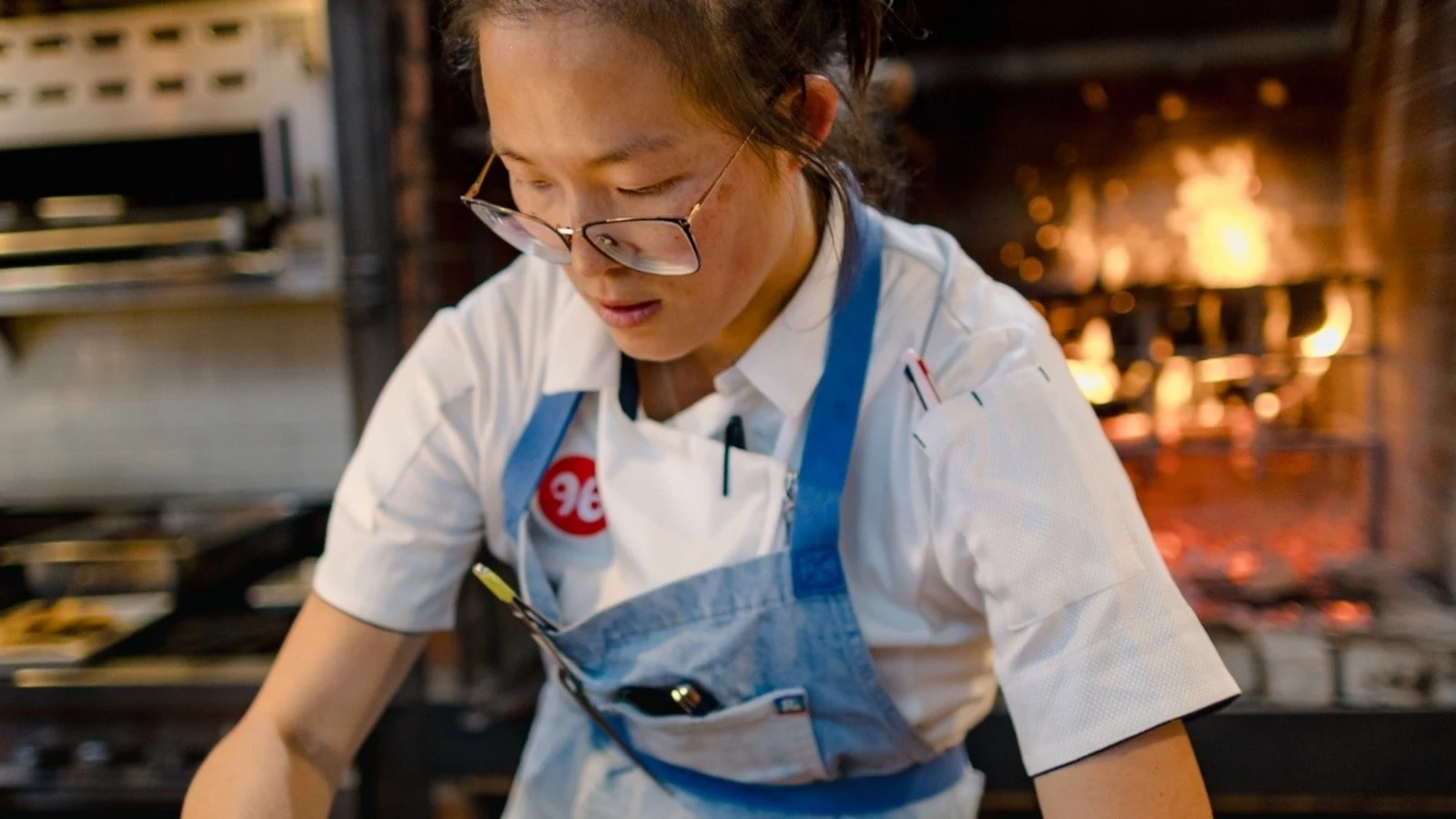
The kitchen team breaks down rib-eye steaks for the dish, then sears each steak for its order. After the meat leaves the pan, the sauce finishes in the leftover beef fat. The massaman curry peppercorn sauce picks up the residue of the sear and carries the fat from the rib-eye into the curry and peppercorn base. The plate includes bar fries, and the sauce ties the dish to the rest of the menu.
Five is a hard number in a dining room because it creates a different discipline for the guest and the line. The first service decisions carry weight. A diner who wants the rib-eye cannot treat it as a fallback after reading the rest of the menu. A cook cannot hide behind volume. Each steak carries the entire claim of the dish, and the pan sauce has to finish in the moment.
That scarcity also changes how the rest of Alfie's reads. After the five steak orders are gone, the kitchen serves northern Thai dishes that require hand work. The cap points diners toward the bench-side labor underneath the menu: papaya cut by hand, pork belly cooked down in curry, sticky rice soaked overnight and steamed before service (Eater1).
Ahn, McCoy, and the Pop-Up Years Before the Alleyway
Ahn and McCoy started Alfie's as a pop-up in Petworth in 2017. The project then moved beyond Washington, serving diners in New York and London before the chefs opened the permanent Georgetown alleyway restaurant in 2024. Seven years is a long apprenticeship for a concept without a fixed dining room. It gives the cooks time on the tools in changing stations, changing audiences, and changing service rhythms.
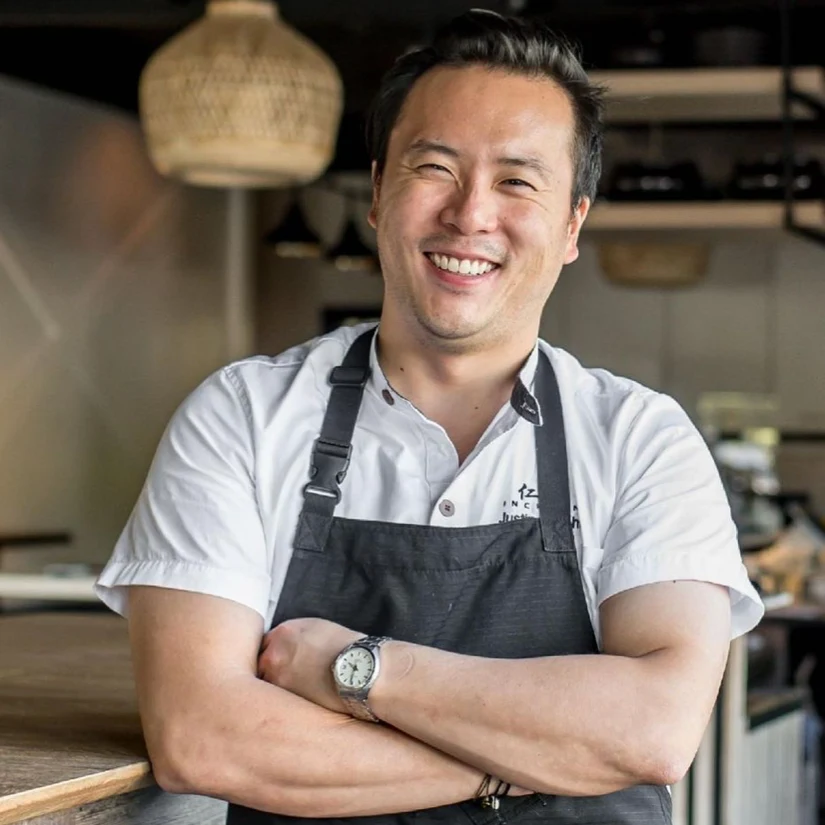
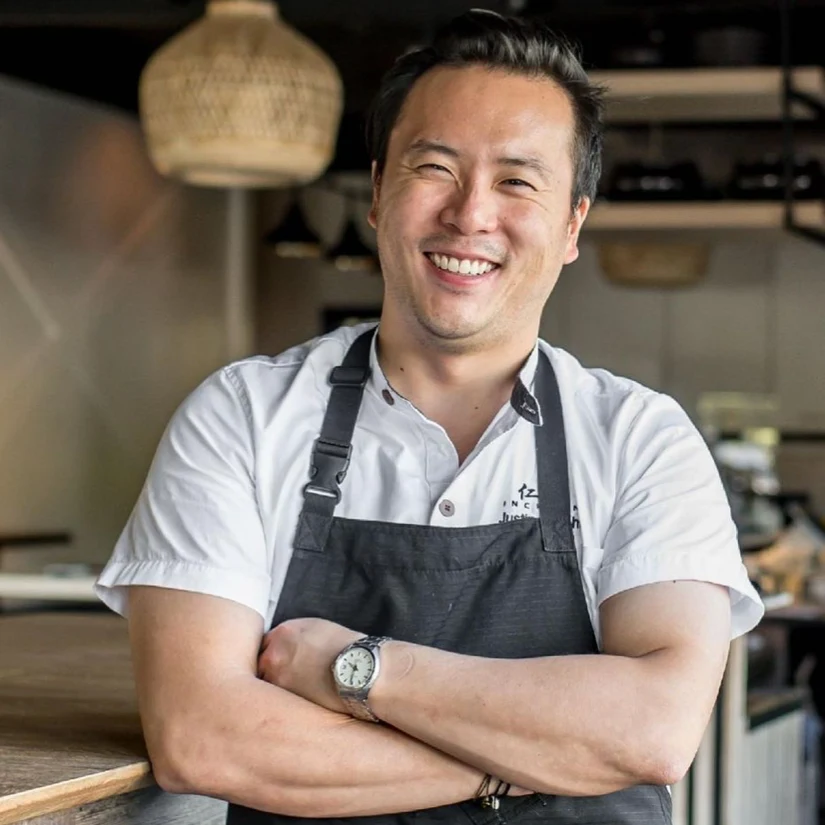
Portrait of a chef in a white chef's coat and dark apron standing in a professional kitchen.
Ahn's own path carries a separate thread. He is a self-taught Southern Californian, and his work at Incheon in Annandale, Virginia, already showed his interest in cooking that refuses the expected route through a cuisine. Speaking about Incheon, Ahn said, “the flavours are Korean, but you’re not going to get the usuals here.” The tasting menus there have included Hwe with lomi-lomi salmon, macadamia, coriander, furikake, and rice; Ssam with duck breast, spicy radish, pickled Napa cabbage, and walnut ssamjang; and Juk with mushrooms, Arborio rice, pecorino romano, and dashi.
Those dishes matter here because they show Ahn's method before the Georgetown opening: take a named form, keep its central flavor logic, then allow another pantry to enter without apology. At Alfie's, the same kind of pressure appears in a Thai steak frites with massaman curry peppercorn sauce, and in a menu that places local DMV ingredients inside northern Thai cooking.
McCoy's role at Alfie's is tied to the restaurant's long run from pop-up to permanent address. He and Ahn are co-owners and chefs, and the Georgetown kitchen now gives their work a daily pass instead of a temporary station. McCoy has described the life of a chef as a lifestyle rather than a job, and said he hopes Alfie's becomes a place where “you can just forget where you are, have a good time, and just lose yourself in the experience and the food.” In a small alleyway restaurant built from a seven-year run, that hope still depends on repetition: prep, service, reset, again.
The 26-Ounce Rib-Eye and the Pan Sauce
The steak frites at Alfie's begins with a 26-ounce rib-eye, a cut large enough to make the five-order cap feel less like ornament and more like station management. The kitchen team breaks the steaks down before service. During pickup, the rib-eye is seared for each order, and the massaman curry peppercorn sauce is finished in the pan with the beef fat left behind.
The French reference point is steak au poivre, but Alfie's shifts the center of gravity. Peppercorn remains in the frame; massaman curry changes the sauce's direction. The plate lands with bar fries, which keep the dish legible to anyone who has ordered steak frites in a bistro or tavern. The difference comes from the curry paste logic, the pan fat, and the decision to make only five.
It is the order of operations. The steak is seared. The fat is kept in the pan. The sauce is finished in the same pan. The sauce is made with the meat's pan fat. At scale, a restaurant could flatten that process into batch work. Alfie's nightly limit keeps the dish tied to the pan and the cook standing at it.
The curry steak frites has to be ordered early when it is the reason for the visit. The menu may carry other anchors, but five rib-eyes do not leave much room for hesitation. Alfie's Georgetown restaurant has turned one plate into a small nightly race without turning the rest of the kitchen into background.
Som Tam, Gaeng Hung Lay, and the Hands on the Line
The clearest labor at Alfie's may be the som tam. Another chef carves green papayas, and the irregular slices go into a funky, spicy dressing for each order. Ko, working from the line, calls it the “most labor intensive dish on the line;” the salad is mixed with fresh tomatoes, peanuts, and a dressing heavy with palm syrup and tamarind.
Hand-cut green papaya changes the texture of the dish before dressing touches it. The source of the labor is visible in the cut: irregular slices, not uniform shreds. The dressing then has to coat fruit, tomato, peanut, syrup, tamarind, and heat without turning the salad into a wet pile. This is the dish that explains the restaurant as clearly as the rib-eye does. Alfie's is using scarcity for one plate, but the daily craft sits in repeated hand work.
Gaeng hung lay carries the slower register. The traditional northern Thai curry cooks down large pieces of pork belly until the fatty layer becomes part of the dish. Pickled garlic and pineapple balance the curry paste, tamarind, and fish sauce. The dish asks for patience rather than last-second drama; the pot has to do its work before the room fills.
Right before service, the chefs prep herbs and sticky rice. The rice soaks overnight, then steams quickly for a malleable, glutinous texture. That overnight soak is the kind of detail that separates a menu description from a kitchen schedule. Someone had to decide yesterday what tonight's rice should feel like. Someone has to steam it at the right moment, close enough to service that the texture stays alive on the table.
How to Approach One of Five Nightly Orders
Alfie's five-order cap is a practical limit. The kitchen makes five curry steak frites each night. The dish uses a massaman curry peppercorn sauce finished in the steak pan. That plate's five-order limit leaves the rest of the meal in the same northern Thai frame.
Ahn and McCoy built the project around local DMV ingredients. The som tam, with hand-cut green papaya, tomatoes, peanuts, palm syrup, and tamarind, shows the knife work. The gaeng hung lay shows the pot. The sticky rice shows the planning that begins before the day's service.
That matters in Georgetown because the permanent address arrives with seven years of pop-up history behind it. A restaurant that began in Petworth in 2017, moved through New York and London, and landed in a D.C. alleyway in 2024 brings its audience with a memory of temporary rooms. The fixed kitchen now has to do a different job. It has to repeat the work every night without sanding off the parts that made people follow it from one location to another.
Watch the five steaks, but watch the papaya station too. The next chapter for Ahn, McCoy, Ko, and the Alfie's crew will be measured in how the Georgetown kitchen holds those two kinds of pressure: the scarce rib-eye that disappears early, and the hand-cut, soaked, steamed, simmered work that has to be ready for every table.
The Sunday email
Get new Made By stories every Sunday.
Every Sunday we send a lead story and up to four more about the chefs, winemakers, sommeliers and hoteliers behind the restaurants, bars, wineries and hotels we cover.