Cooper's Cut Wine List: Gonzalo Rodriguez Diaz's Hotel List Worth Seeking Out
Gonzalo Rodriguez Diaz has built the Cooper's Cut wine list into one of London's most historically grounded hotel programs, anchored by Haut-Brion provenance and aged whites at peak.
HM
Director of Editorial Standards
Hugo Marchetti
Filed July 2, 2026
10 min read
Les Forts de Latour 2000, poured from magnum in a private members' club above the Thames. That single bottle, served by Jonathan Wright at the Ten Trinity Square Private Club, says more about the ambition behind the Cooper's Cut wine list than any summary could.
A second wine from Pauillac, twenty-six years in bottle, in a format most collectors keep horizontal in the cellar rather than open on a Tuesday evening.
The Sunday letter
Get our new stories in your inbox every Sunday.
One email with our newest profiles and guides. See a sample before you subscribe.
Gonzalo Rodriguez Diaz, the Uruguayan-born sommelier who oversees the list at Cooper's Cut, watched it land on the table and said, with the air of a man for whom cellar discipline is common sense, that it was what the doctor recommended. He was not wrong.
This is a list where bottles at this level, and in this format, do not sit around; they are the allocations that disappear, and the kind of signal that tells a serious drinker to pay attention before the window closes.
The Cooper's Cut Wine List: How Gonzalo Rodriguez Diaz Built a Hotel List Worth Seeking Out
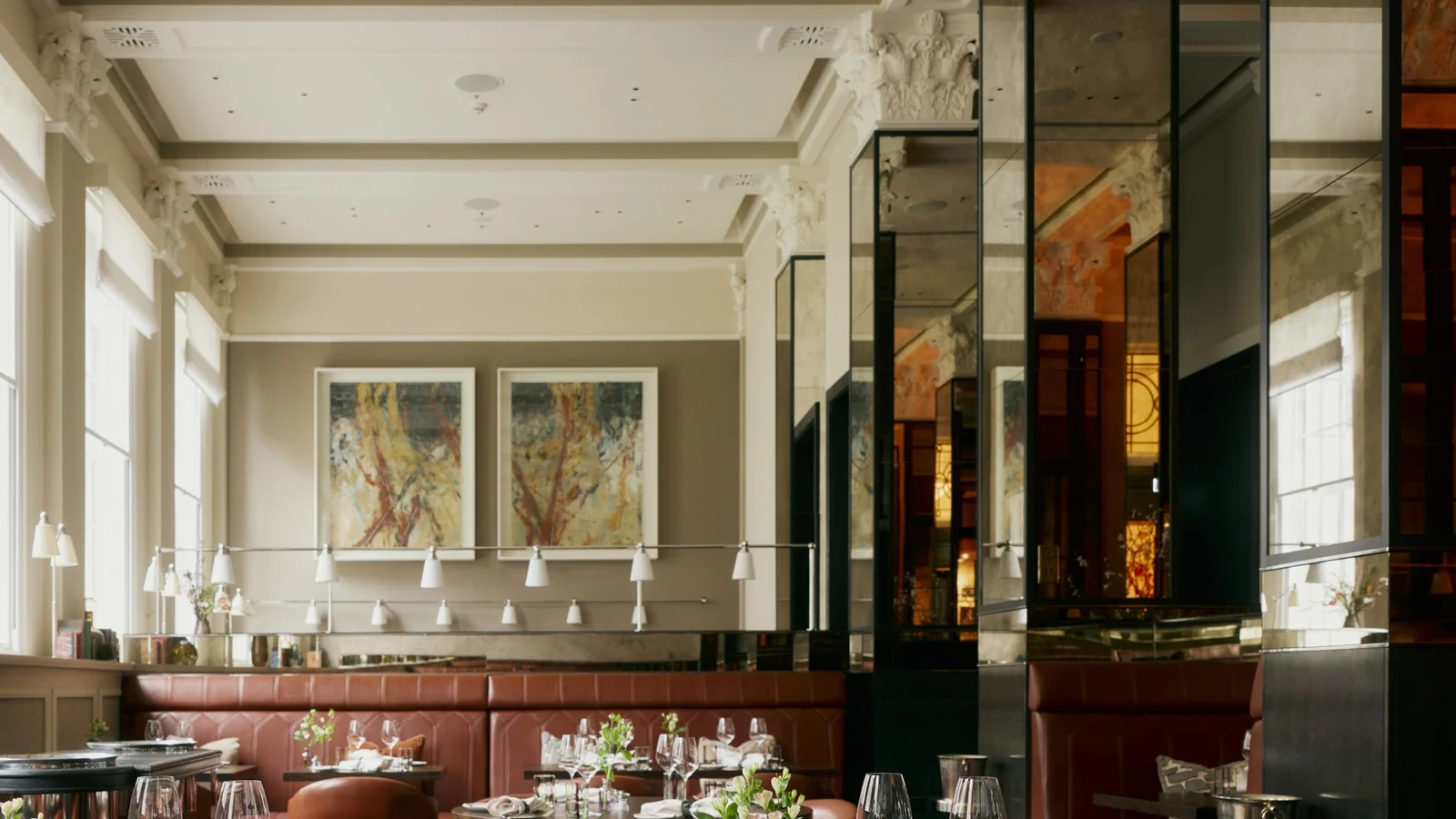
Cooper's Cut sits inside the former Port of London Authority headquarters at Tower Bridge, a Beaux Arts building opened in 1922 by Welsh Liberal prime minister David Lloyd George. The building once processed the financial machinery of Britain's maritime empire under a domed rotunda lined with marble, brass, and walnut, before the Blitz tore through its core.
Reignwood Group acquired and overhauled it; the building reopened in 2017 as a Four Seasons hotel, with rooms, residences, a spa, the Ten Trinity Square Private Club in partnership with Château Latour, and a pair of restaurants. Archaeologists working on the conversion uncovered first-century Roman amulets.
The restored walnut boardroom upstairs hosted the reception tied to the inaugural meeting of the United Nations in 1946. The restaurant takes its name from Sir Edwin Cooper, architect of both Marylebone Town Hall and the building itself.
Cooper's Cut replaced the hotel's former two Michelin-starred restaurant led by Anne-Sophie Pic, a shift that raised eyebrows when it was announced. What it gained, beyond the wagyu that Olive Magazine noted made their eyelashes flutter, was a sommelier with the appetite of a collector and the patience to build a list around provenance rather than prestige.
Rodriguez Diaz came to the role from Azurmendi and Seven Park Place, where he opened the port-led 1857 The Bar and built an illustrated Wine Book good enough for bedtime reading. He brings that same curatorial instinct to the Cooper's Cut wine list. The result is one of the more intellectually coherent hotel wine programs in London.
The list could have defaulted to the standard grand-hotel steakhouse inventory: Bordeaux, Burgundy, Napa Cabernet, Super Tuscans, Champagne, and applause. Rodriguez Diaz gives it historical weight instead, then builds outward with scholarship and appetite.
Grower champagne, Jura, Savoie, Loire, northern Rhône whites, English sparkling and still wine, and direct relationships with producers without UK representation.
The logic is not curatorial for its own sake; it is the logic of a buyer who, as Rodriguez Diaz puts it directly, believes that provenance is the most important thing and that when the wine is bought correctly, you have a different product.
The Haut-Brion Thread and Why Provenance Matters Here
The Cooper's Cut wine list begins, pointedly, with Haut-Brion. This is not trophy Bordeaux hung on the wall as prestige. The building sits on ground associated with Samuel Pepys, who in 1663 wrote of drinking 'Ho Bryan', an early English rendering of Haut-Brion.
Rodriguez Diaz has turned that reference into the Ho Bryan private dining room, a twelve-seat space created as an exclusive collaboration with Château Haut-Brion and Prince Robert of Luxembourg. The room has recently been fitted with new fridges, a detail that tells you the collaboration is active rather than decorative.
Twelve seats, one estate, one provenance thread running from 1663 to the present, this is the kind of scarcity a collector-facing list earns.
The opening pages of the list carry an ex-château selection from Domaine Clarence Dillon spanning Haut-Brion and La Mission Haut-Brion, red and white, alongside Quintus from Saint-Émilion.
The significance of ex-château stock is practical as much as symbolic: these are bottles that have remained at the estate since release, bypassing the auction rooms and bonded warehouses that introduce uncertainty into a bottle's history.
For a sommelier whose stated conviction is that provenance is the most important thing, this is the list's load-bearing wall. La Clarté de Haut-Brion 2016, the second wine of La Mission Haut-Brion Blanc, appeared during dinner at the transition point between the asparagus course and the move toward beef, bridging white Bordeaux precision with what came next.
It is the kind of placement that reveals a sommelier thinking in sequences rather than selections.
Clarence Dillon's presence extends beyond the wine list itself. The Dillon connection travels from rooms and suites through to Cooper's Cut and the Ho Bryan dining room, a thread of institutional relationship that underpins Rodriguez Diaz's sourcing logic. He is candid that the list runs younger than old-school hotel standards might expect; he prefers traceable stock to older bottles with murkier journeys. That is a position, not a compromise.
Standout Bottles and Vintage Conditions That Define the List
The evening at the Ten Trinity Square Private Club opened with two 2015 whites poured by Jonathan Wright, formerly of Pollen Street Social and now head sommelier at the Club. First, Eisele Vineyard Sauvignon Blanc 2015 from half bottle, still fresh and rich, a Napa white that has held its line across a decade.
Then Château-Grillet 2015, gentler and still moving, the Viognier from its own single-appellation AOC in the northern Rhône showing what eleven years does to a wine built on texture rather than fruit.
It is sometimes described as a Côtes du Rhône, though Château-Grillet has held its own appellation since 1936; the broader regional designation appears to be used loosely in context. Two aged whites, two different registers of patience, both at a drinking window that rewards the decision to open them now rather than defer.
Les Forts de Latour 2000 from magnum followed. The magnum format matters here: larger volumes age more slowly and more evenly, and a 2000 Pauillac in magnum in 2026 sits in a drinking window that rewards opening it now rather than leaving it horizontal for another year. That this bottle appears on a hotel list, rather than in a private cellar or a collector-facing auction, tells you what kind of program Rodriguez Diaz is running. Bottles at this level and in this format do not last on lists indefinitely; when they are gone, they are gone.
Spain gives the Cooper's Cut wine list one of its strongest pulses. The Spanish section runs from López de Heredia and Vega Sicilia through to Forjas del Salnés, Guímaro, Dominio del Águila, Cota 45, Tamerán, and Comando G. Basilio Izquierdo appears across the list, and the Rioja Blanco 2014, from very old vines led by Garnacha Blanca, is among the most instructive bottles on the card. A white Rioja from a producer working with old-vine material, at twelve years of age, is not a safe hotel choice. It is a considered one, and the kind of bottle that disappears from lists before most diners think to order it.
Tasting the Range: From Eisele Vineyard Sauvignon Blanc 2015 to Gautheron Chablis Grand Cru
Dinner at Cooper's Cut moved through a sequence that tested the list's range across several registers. Inama's I Palchi Foscarino 2022 Soave opened alongside red watercress and crapaudine beetroot, bringing volcanic breadth to a course that could easily have been overlooked. Soave from the Foscarino vineyard, on volcanic soils above Soave Classico, is a wine that rewards the kind of attention Rodriguez Diaz's list invites; the 2022 is young enough to carry energy, old enough to show where it is heading.
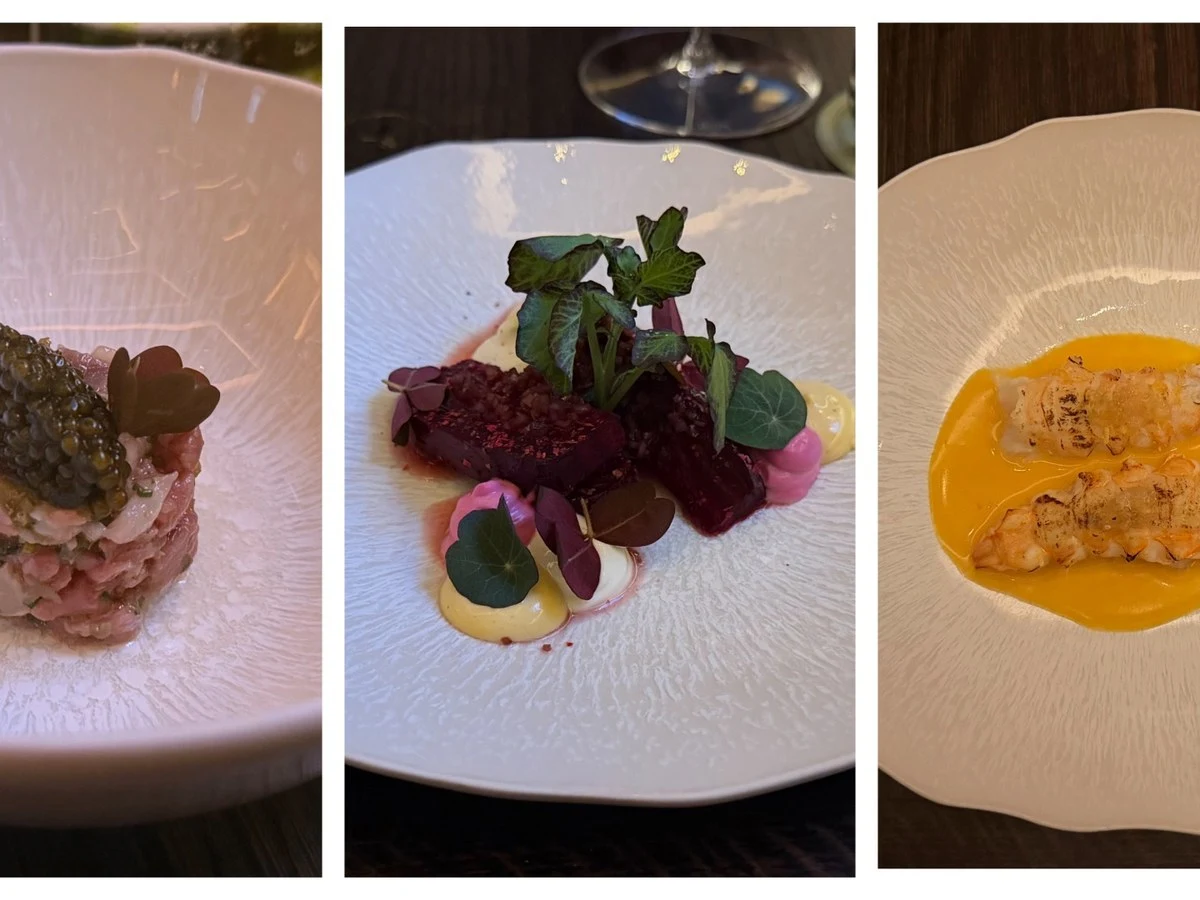
Cooper's Cut offers an elegant langoustine course, as seen in this triptych of fine-dining dishes.
The langoustines, lightly torched and set in orange and saffron sauce, arrived with Basilio Izquierdo's Rioja Blanco 2014. The wine met the saffron with freshness and depth, a pairing that worked because the sommelier knows the wine and knows the kitchen.
Rodriguez Diaz's affinity for saffron as a pairing anchor is not incidental; it reflects the kind of granular knowledge of both cellar and pass that comes from time spent in both directions.
The Garnacha Blanca from very old vines carries a texture that holds against the richness of shellfish without flattening it, and at twelve years of age it has the secondary development to meet the spice rather than retreat from it.
Gautheron Chablis Grand Cru Les Preuses 2023 cut through the asparagus course with authority, turning a vegetable course into a case for Chablis in a steakhouse. Les Preuses sits on Kimmeridgian limestone, and the 2023 carries the mineral precision the appellation demands at grand cru level. That it appeared alongside white asparagus cooked in white wine and green asparagus in salt water, with piment d'Espelette and wild garlic, is a pairing that asks the diner to pay attention. La Clarté de Haut-Brion 2016 then arrived as the bridge, its white Bordeaux precision carrying the sequence toward the A4 Hokkaido Wagyu that followed.
The breadth across the list, from Eisele Vineyard Sauvignon Blanc 2015 to Gautheron Chablis Grand Cru Les Preuses 2023, from Les Forts de Latour 2000 in magnum to Basilio Izquierdo's old-vine Garnacha Blanca, is not the breadth of a buyer covering categories. It is the breadth of a buyer with a point of view.
What to Order and Why It's Worth the Trip
For a collector visiting Cooper's Cut, the ex-château Domaine Clarence Dillon selection is the obvious starting point: bottles with traceable provenance from Haut-Brion and La Mission Haut-Brion, red and white, at a hotel where the sommelier has structured the entire list around the logic of knowing where a bottle has been. La Clarté de Haut-Brion 2016 is a particularly well-placed entry into that provenance thread, a white Bordeaux at a drinking window that rewards ordering now rather than deferring to the cellar.
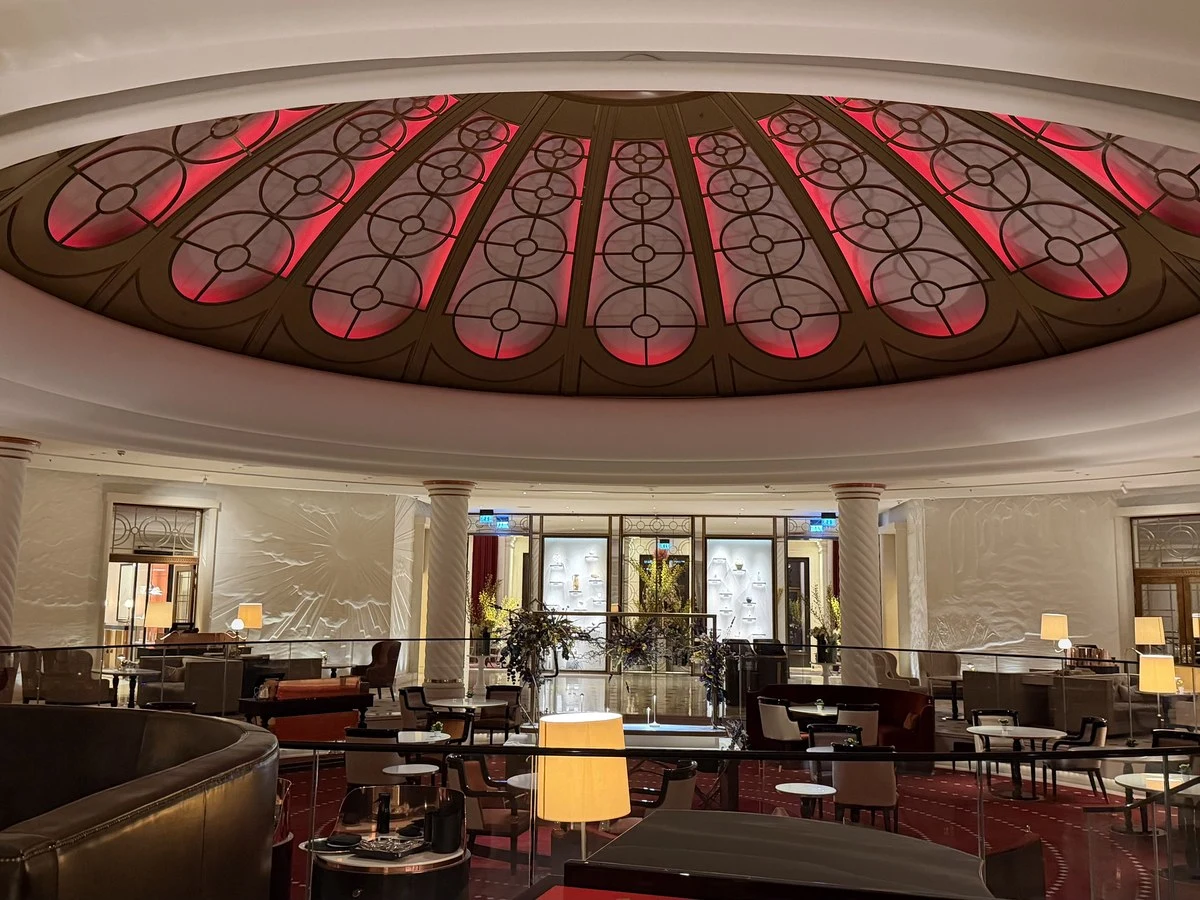
The Rotunda bar at Cooper's Cut offers a grand, illuminated setting for an unforgettable experience.
The Spanish section repays close reading. Comando G, Dominio del Águila, Cota 45, and Tamerán represent a generation of Spanish producers working at the edge of their appellations, and finding them together on a London hotel list is not routine.
Forjas del Salnés and Guímaro from Galicia sit alongside them, producers whose work in Rías Baixas and Ribeira Sacra has attracted serious attention from buyers who track Spanish wine beyond Rioja and Ribera del Duero. López de Heredia and Vega Sicilia anchor the classical end; the newer names extend it.
The Basilio Izquierdo Rioja Blanco 2014 is the bottle to order if you want to understand what Rodriguez Diaz means when he talks about provenance and traceable stock: old vines, a producer with a clear identity, a vintage with enough age to show its hand.
The bar program at Cooper's Cut, overseen by Michele Lombardi as Head of Bars, runs with the same curiosity. The Rotunda bar holds a cabinet devoted to independent spirits, and martinis at Cooper's Cut may be ordered as two- or three-course pairings, including lower-ABV versions. The CC Gimlet, left on ice in the Lloyd George Suite during the visit, combined No. 3 London Dry Gin with curry leaves, white port, Vetiver Gris, and verjus. It is the kind of detail that confirms the bar program is not an afterthought to the wine list; both are run by people who have thought carefully about what they are doing and why.
Julien Arribillaga, F&B manager and formerly of Geranium and Muse by Tom Aikens, brings additional fine-dining structure to the room. Executive chef Luke Armstrong, whose career spans L'Autre Pied, Pied à Terre, Oud Sluis, The Ledbury, and several Mandarin Oriental and Regent properties across Asia, leads a kitchen that does not lean on beef alone. The combination of Armstrong's kitchen, Rodriguez Diaz's cellar, Lombardi's bar, and Arribillaga's floor management gives Cooper's Cut the depth of a serious restaurant program, not a hotel restaurant filling a gap between check-in and sleep.
The Ho Bryan private dining room, twelve seats, exclusive collaboration with Château Haut-Brion, created with Prince Robert of Luxembourg, is the most concentrated expression of what Rodriguez Diaz has built here. A room named for a seventeenth-century diarist's phonetic rendering of a Bordeaux estate, fitted with new fridges, stocked with ex-château bottles that have never left the property. That is a specific kind of ambition, and it is worth the trip to Tower Bridge to sit inside it. Made By follows the people who shape what you eat and drink. Subscribe, and the next dispatch from the bench, the cellar, or the kitchen comes to you.
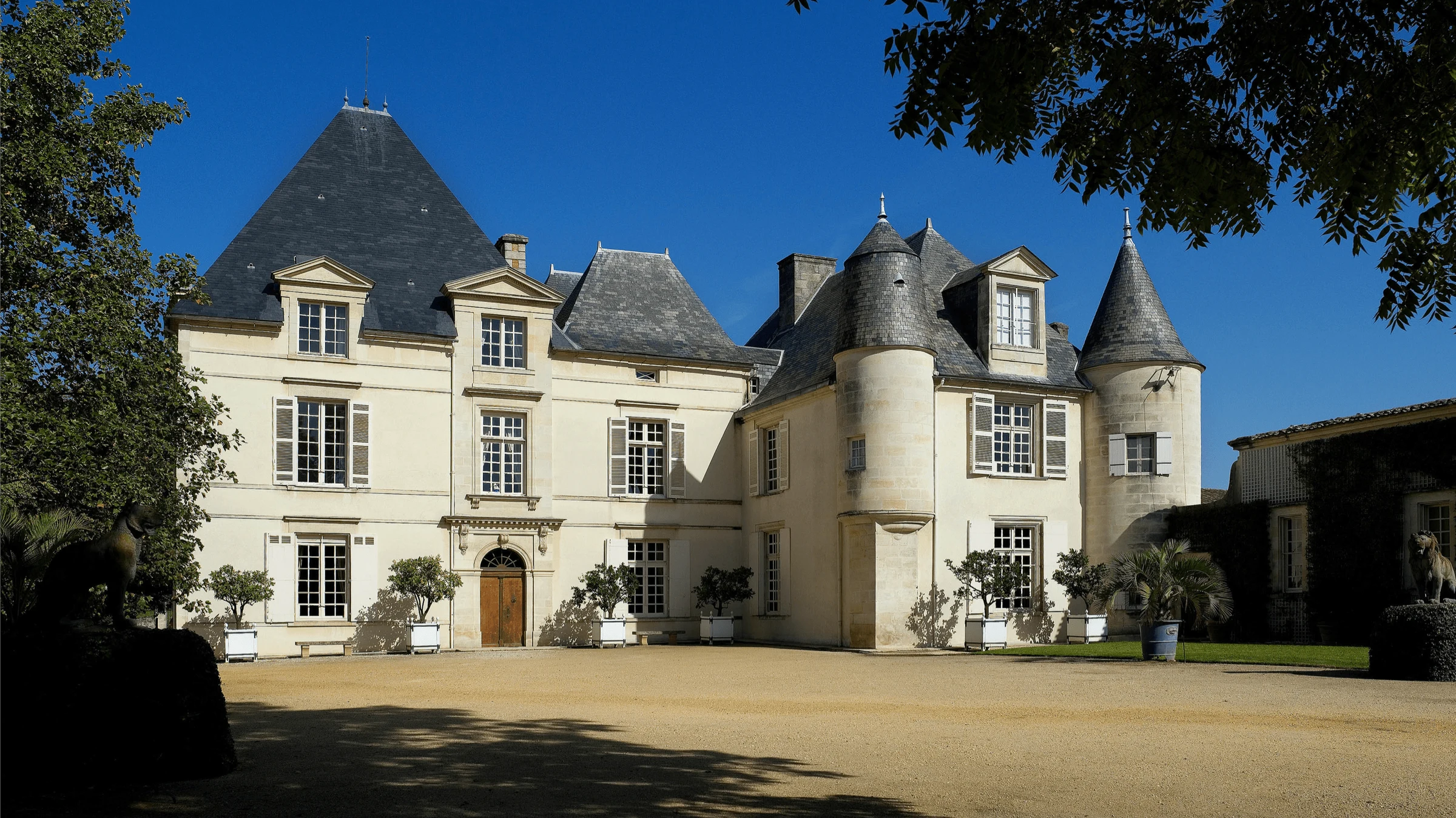
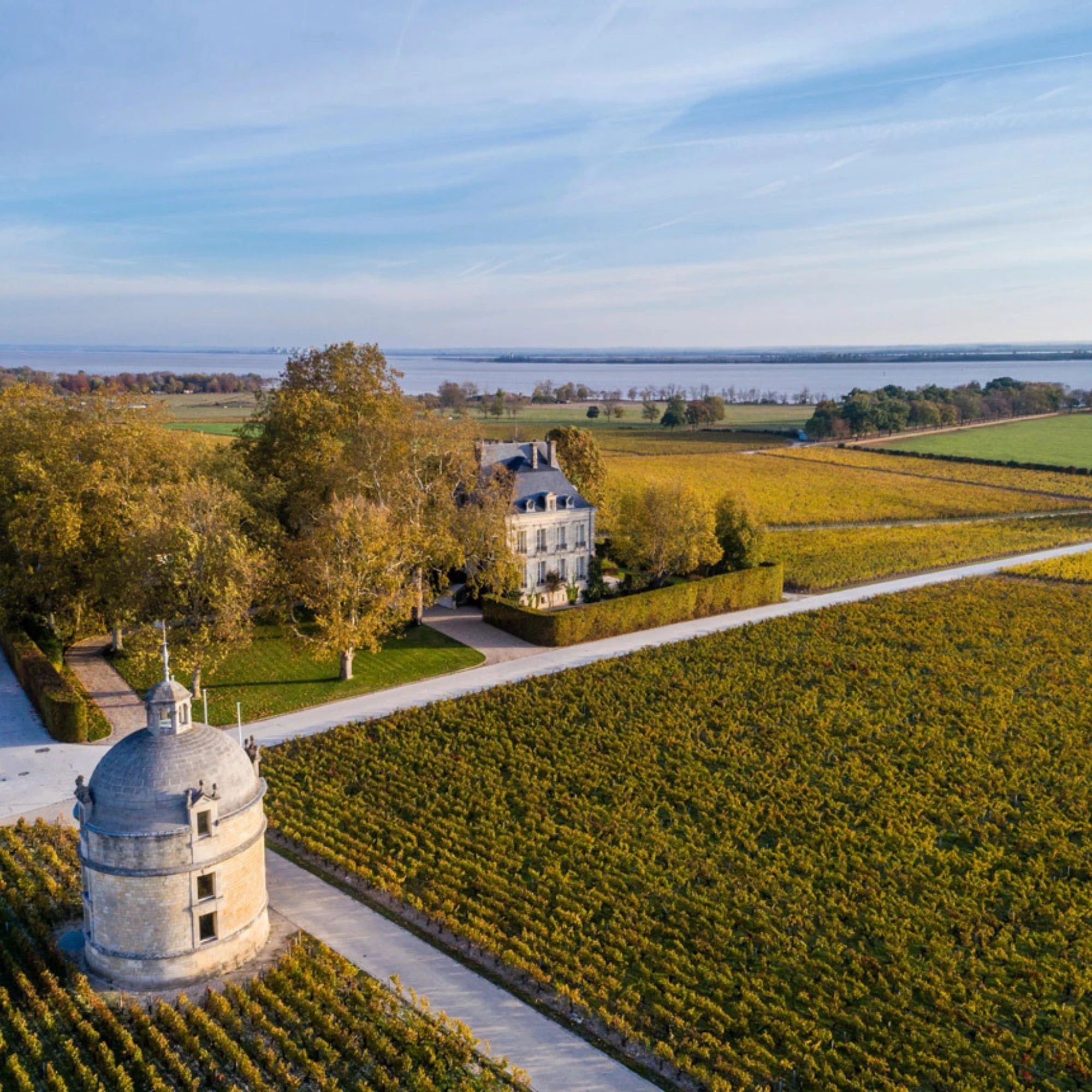
Château Haut-Brion features distinctive slate-grey turrets under a brilliant blue sky.
A historic château surrounded by vineyard terraces overlooks a lake in what appears to be a renowned wine region.
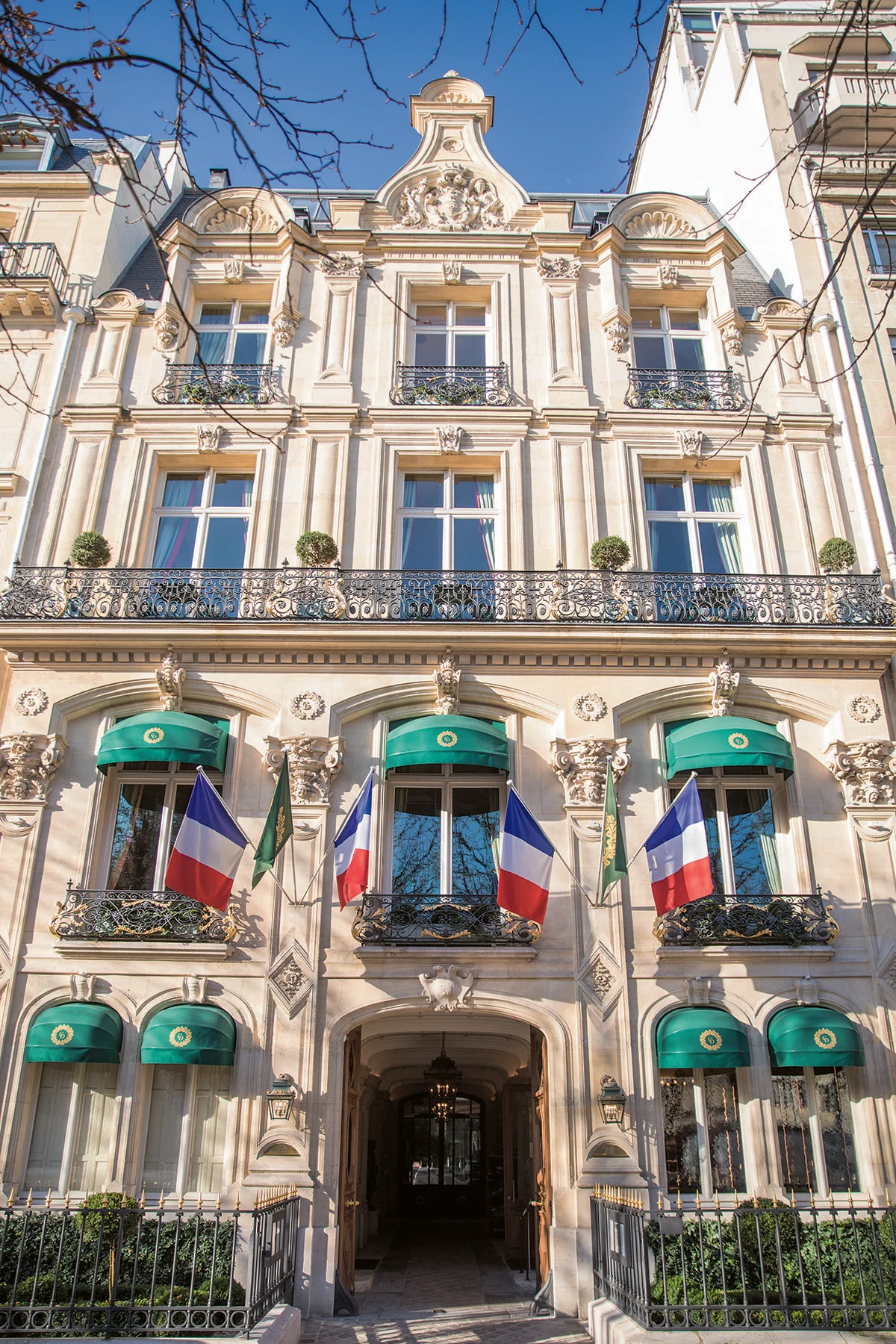
Domaine Clarence Dillon showcases its elegant facade with prominent green awnings.
The Sunday letter
Get the next Made By guide in your inbox.
We send one email every Sunday morning with the guides and profiles we published that week.