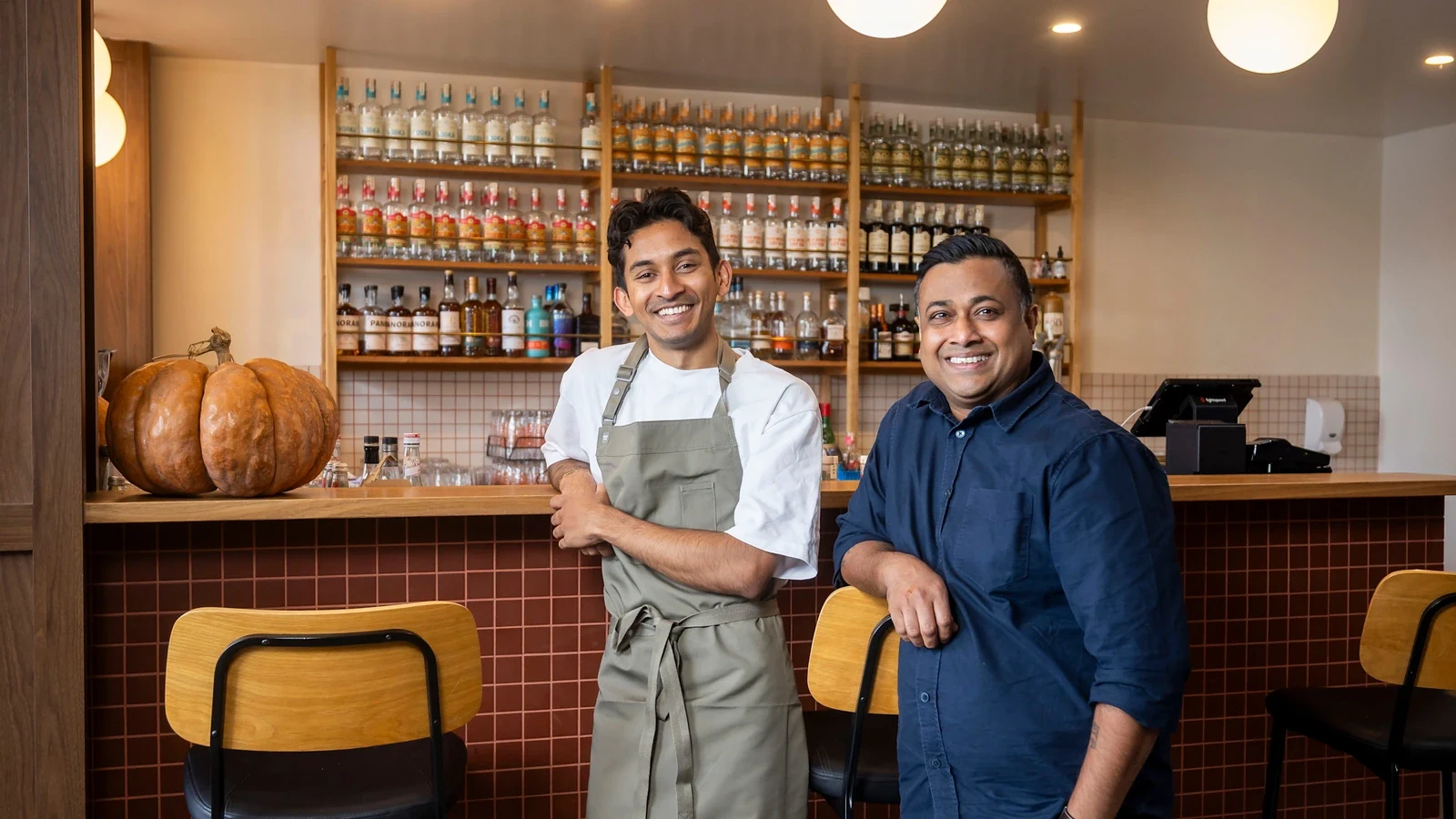
Viveik Vinoharan packs Flinders Island lamb shoulder, preserved lemon, fermented chilli, sultanas and rice into a biryani sausage, then smokes it over cherry wood. The casing lands inside Dutch Rules, Danny Perera's gin distillery in Mitcham, where Sri Lankan inheritance now has a kitchen as well as a glass.
Vinoharan takes the pass as The Age Good Food Guide's current Young Chef of the Year, moving into his first restaurant after working at Cremorne's Lilac Wine and running pop-ups across Melbourne. Perera met him while he was at Lilac Wine, liked his energy, and wanted food that could stand beside the distillery's Sri Lankan-rooted drinks.
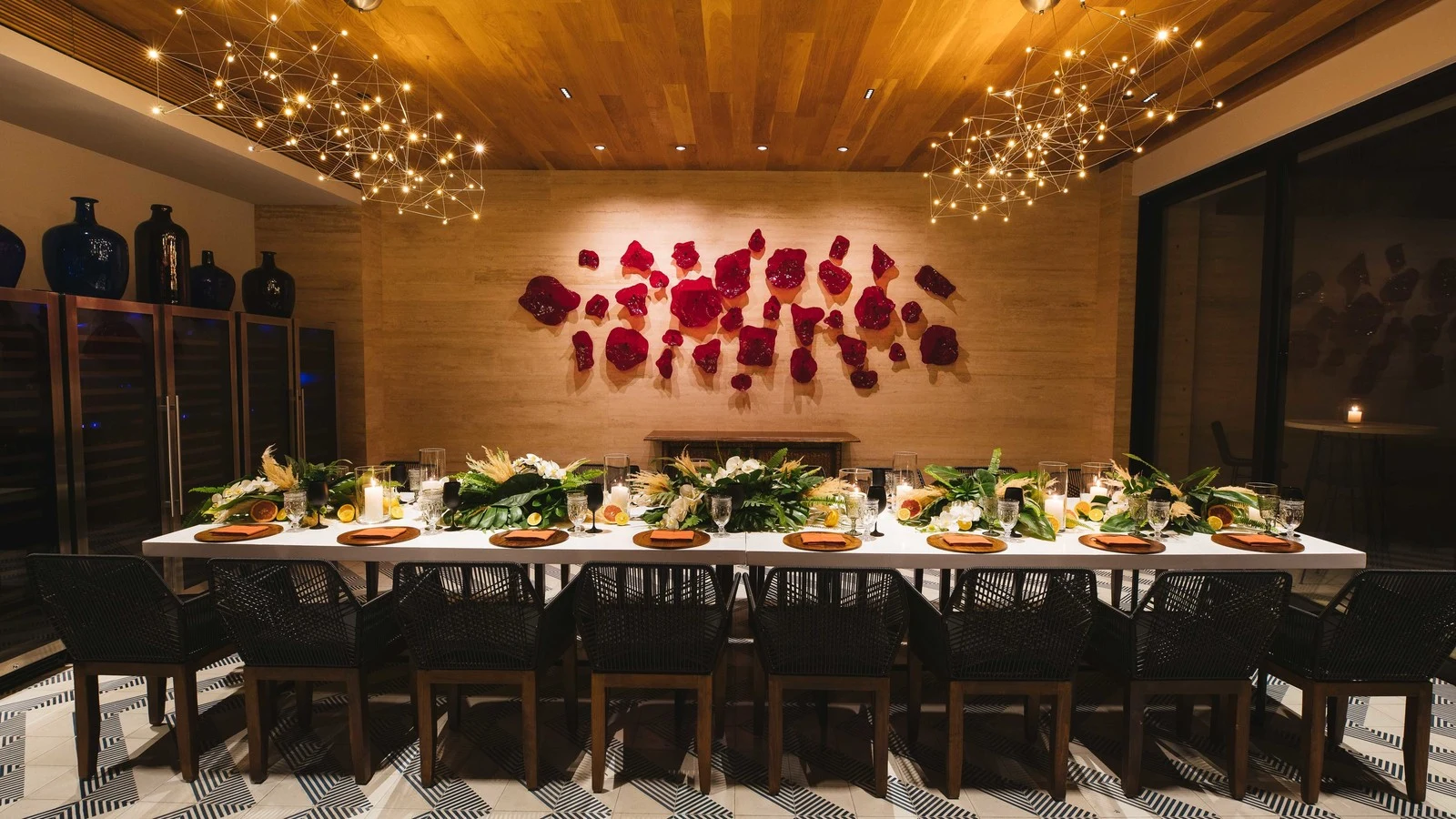
Perera began Dutch Rules as a distillery door in a Whitehorse Road warehouse, pouring spiced gins shaped by his Sri Lankan roots. Two years later, he has refitted the room for Vinoharan's service: an open kitchen, more tables downstairs, a mezzanine for busy nights and functions, the copper still kept in place, and a new shelf of house ferments and pickles beside it.
Vinoharan opens Wednesday, April 15
At 586 Whitehorse Road, Mitcham, the Dutch Rules restaurant opens Wednesday, April 15. Lunch runs Friday to Sunday; dinner runs Wednesday to Saturday.
Perera was always building toward this. "We knew we wanted to showcase [the label's] heritage, with food to match the cocktails," he says. Vinoharan now gives that plan its working form: curry technique, lamb fat, fermented chilli, pasta dough, gin, and fire in the same service.
A bigger role suits a chef who has been testing his voice in temporary kitchens. Since leaving Lilac Wine, Vinoharan has used pop-ups to sharpen a way of cooking that reaches toward Sri Lanka without treating heritage as a fixed border.
Perera has given him free rein. The menu also carries marks from Vinoharan's time cooking Italian and French food in Sydney, his two years in Japan, and the other influences that gather around a cook before a permanent room forces repetition.
How Vinoharan defines Lankan-leaning cooking
Vinoharan names the direction plainly: "It's what I like to call 'Lankan-leaning', with tonnes of spice, using really good Australian produce." The phrase leaves room for a cook who can move between a grinder, an extruder, a skewer, and a curry pot without flattening the work into fusion shorthand.
He takes Sri Lanka's black pork curry as the starting point for lamb belly. Vinoharan works that dark, smoky, almost-burnt register, slow-cooks the belly, presses it into a skewer, and flame-licks it to order. The method matters: flavour memory first, then cut, compression, and heat.
The biryani sausage is more rule-breaking. Vinoharan loads the lamb shoulder with preserved lemon to cut the fat, fermented chilli to bring time and acid, sultanas and rice to pull the biryani reference into the grind. It comes with cucumber salad and Dreaming Goat yoghurt from the Macedon Ranges.
Vinoharan also gives byproducts a station. He uses minced wallaby and pig skin for a lemongrass-forward curry, drawing on farms he sources from that have trouble selling those parts. He treats it like a ragu, pairing it with house-made rigatoni and grana padano. Pasta will stay on the menu, made with an extruder machine.
What Perera and Vinoharan built between gin and spice
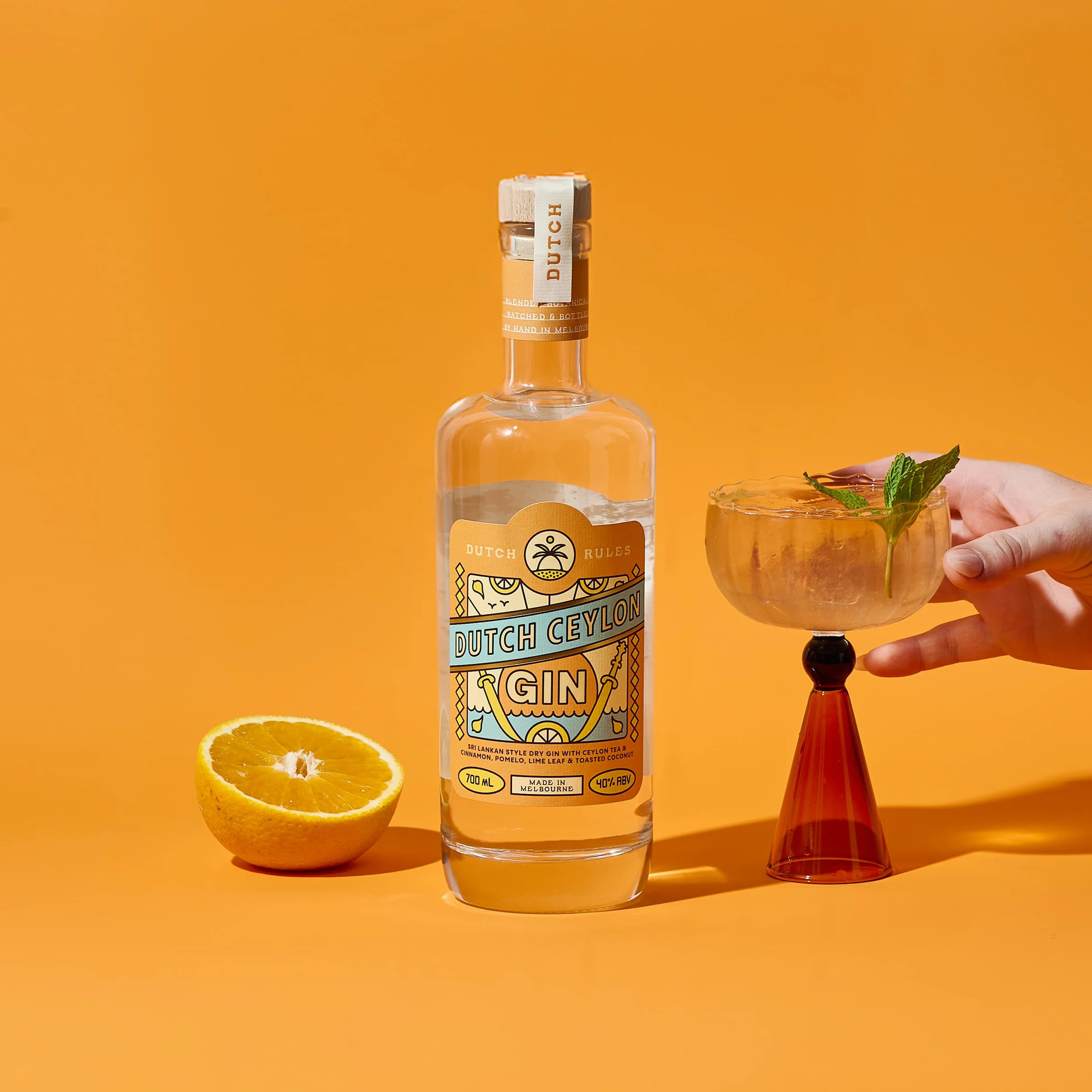
Plum, mandarin and Ferrero Rocher martinis sit on the cocktail side, alongside G&Ts built to show the Dutch Rules range. The bar measures gin; Vinoharan works with smoke, rendered fat, chilli, lemongrass and pressed meat. The point is not novelty. It is proximity.
A distillery door can ask a kitchen to stay small. Perera gives Vinoharan a full bench. Pasta can become a carrier for spice and cheese; lamb can move through a curry logic before it hits flame; a sausage can hold rice and sultanas without becoming a joke about biryani.
The open kitchen changes the evidence in the room. Copper and glass are still there, but now the visible work includes extrusion, skewering, finishing over flame, and the slow accumulation of a pantry. For a young chef, that visibility cuts both ways: it lets diners see the hand, and it asks the hand to be consistent.
Why Perera wanted this for Mitcham
Perera puts the neighbourhood need directly: "There are only a few great places to eat [in Mitcham], so we wanted to cater to as many people as possible," said Danny Perera. Vinoharan has kept every dish under $34, and the two are planning pasta and steak nights.
Affordability becomes credible when Vinoharan knows how to use more than obvious prime cuts. Wallaby and pig skin are not decorative sourcing notes here; he turns them into the base of a dish. That is kitchen economics made visible, not hidden behind the menu.
The Young Chef of the Year lineage around Vinoharan is active. Saavni Krishnan, the 2025 winner, opened Saadi in Punch Lane in the Melbourne CBD with her partner, Sriram Aditya; it is their first venue, built around contemporary takes on Indian dishes and techniques.
Cameron Tay-Yap, 2024 joint winner, runs Pebble, a pop-up showing South-East Asian ingredients in fresh guises, in North Melbourne until May 3, after residencies in Taipei, Singapore and Ho Chi Minh City.
Lily McGrath, also a 2024 joint winner, became head chef at Japanese charcoal grill restaurant Robata in October, using fermentation and dry-ageing across skewers, seafood and more. Nicholas Deligiannis, the 2023 winner, cooks at Glen Iris's Bar Sophia, which opened last summer, drawing on Greek heritage with a menu made almost entirely over fire and coals.
Zackary Furst, the 2022 winner, left Bar Liberty in April last year and launched Bez, an Australian Polish pop-up with events in Sydney and at Melbourne venues including Arnold's and Florian; monthly events are planned from May.
Vinoharan now enters that line through Perera's distillery dining room in Melbourne's east. Pop-ups reveal instinct under pressure. A restaurant tests something slower: the same prep list, the same service rhythm, the same ceiling on price, the same idea refined until it can feed regulars.
What to order, and what to watch
Start with the sausage if you want the clearest statement of Vinoharan's method. Move to the lamb-belly skewer for the curry-to-fire translation. Then order the rigatoni curry, because the pasta program may be where his Lankan-leaning cooking finds its most repeatable form.
On the drinks side, the G&Ts give the most direct read of Perera's distillery range. The martinis widen the field, especially beside chilli, smoke and fat.
The thing to watch is not whether one dish becomes a signature. Watch how Vinoharan uses the extruder, the less obvious animal parts, and the distillery setting once the first rush settles. A first restaurant shows itself service by service; the discipline is in what improves without becoming louder.