On July 28, 2026, one day after his 94th birthday, Emidio Pepe died at home in Torano Nuovo, Abruzzo; his granddaughter Chiara De Iulis Pepe confirmed his death, according to The New York Times. Emidio Pepe Abruzzo names more than an estate: it names a six-decade method built on vineyards worked by hand, white grapes crushed by foot, red grapes destemmed by hand, and spontaneous fermentation in glass-lined concrete without filtration or added sulfites.
Pepe founded his eponymous estate in 1964 with about 1.5 hectares of family vineyards. His grandfather had begun making wine in 1899, and his father had worked inside a regional economy where much Abruzzo wine moved in bulk or stayed close to home. Emidio chose the bottle. He became the first in his family to bottle commercially, and he did it for montepulciano and trebbiano abruzzese, two grapes that did not yet carry the easy confidence they carry on some lists now.
The temptation, with a life this long, is to make a monument of the man. The better tribute is to stay at the bench, or in this case the cellar floor, and follow the sequence of work he refused to surrender.
The Emidio Pepe Abruzzo Method: Six Decades of Hand Labor
The method began before the fruit reached the cellar. Pepe's vineyards were worked by hand and without synthetic chemicals throughout his career. That fact belongs near the front because it set the pace for everything that followed. The estate did not start with an industrial template and then subtract from it for fashion. Pepe started with older practices and held his ground long enough for the vocabulary around them to change.
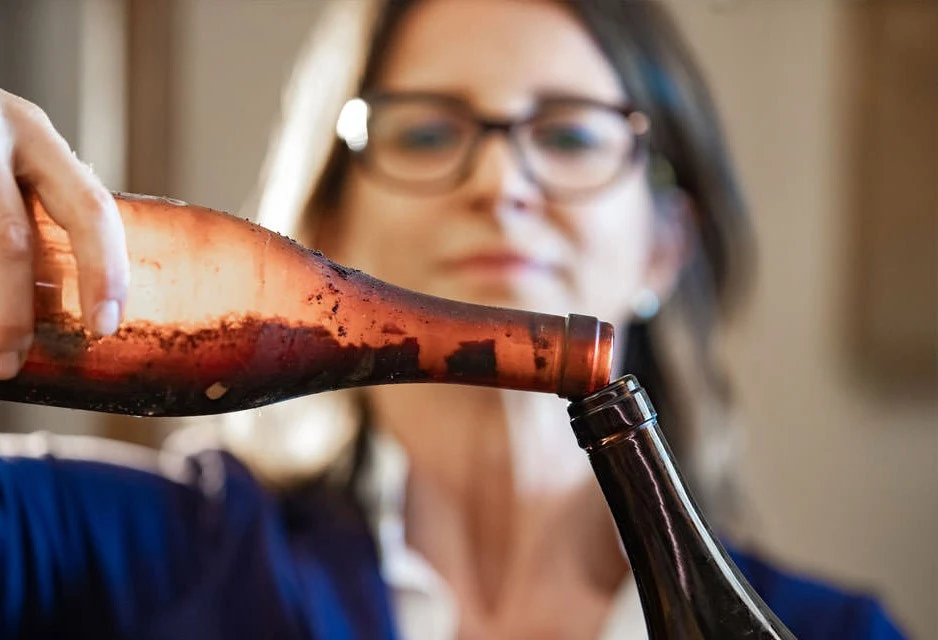
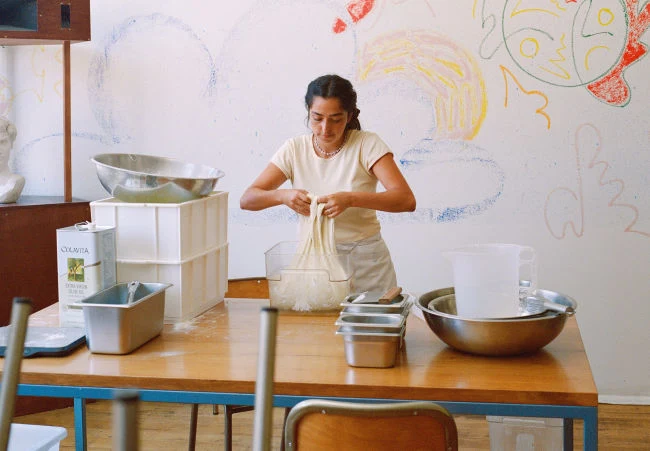
White grapes were crushed by foot. Red grapes were destemmed by hand. Fermentations started spontaneously in glass-lined concrete. The wines were not filtered, and Pepe did not add sulfites. Each of those decisions removes one layer of control that modern cellars often use to correct, polish, or stabilize. Taken together, they describe a program of proximity: fruit touched by hands and feet, fermentations watched rather than commanded, wines allowed to carry sediment, risk, and time.
The glass-lined concrete matters because it sits between two familiar poles. It is not the aromatic imprint of new wood, and it is not the stainless-steel grammar of chill, brightness, and seal. In Pepe’s cellar, the vessel was part of a broader refusal of shortcuts. The work asked for clean fruit, clean habits, patience, and acceptance of variation. Natural wine drinkers later recognized the outline. Pepe had already been working that way for decades.
Chiara De Iulis Pepe has described the period in which her grandfather kept to this path as one shaped by the pressure of industrial growth. The broader Italian postwar arc favored speed, scale, and new cellar technology. Pepe’s response was not a manifesto issued from a stage. It was a harvest routine, repeated until it became lineage.
That repetition gave the wines their discipline. Foot-crushing white grapes asks the body to measure pressure differently from a machine. Hand-destemming red grapes slows the day and narrows the margin between fruit selection and fermentation. Spontaneous fermentation asks the cellar to live with its own microbial population rather than a purchased script. The work made the maker visible because it left fewer places to hide.
1964 in Torano Nuovo, With 1.5 Hectares
When Pepe founded the estate in Torano Nuovo in 1964, the starting point was small: about 1.5 hectares of family vineyards. The number is useful because it keeps the origin from becoming vague. It was not a corporate launch, and it was not an appellation-wide campaign. It was one Abruzzo grower deciding that his family’s grapes belonged in bottle.
His grandfather’s winemaking dated to 1899. His father, by the accounts available, initially did not share Emidio’s confidence in bottling. That tension is part of the work. A predecessor gives land, habit, and memory; the next hand sometimes has to contradict the house in order to continue it. Pepe’s contradiction was not to leave Abruzzo behind. It was to insist that Abruzzo could stay itself and still age.
At the time, montepulciano was mostly sold in bulk or drunk locally. Pepe worked against that economy by bottling it and waiting. The bottle became a claim about time. A wine sold in bulk is usually judged close to its making; a wine held in glass for years asks a different question. Can the grape carry structure? Can the place speak after the noise of youth settles? Can a regional wine survive comparison not by imitation, but by duration?
Emidio Pepe Abruzzo now reads, to many drinkers, as shorthand for that question answered in the affirmative. But the answer took decades. It took releases that did not flatter the impatient palate. It took library bottles that allowed tasters to revisit the same method after twenty, thirty, or fifty years. It took a family willing to hold wine back when selling sooner would have been easier.
The estate’s habit of holding back around half of each vintage as library stock, sometimes more, belongs to the same discipline. The fact is not a collector gimmick in this story. It is a cellar practice that says the maker did not consider the wine finished just because it could be sold. The family released older vintages later, at higher prices, but the deeper point is temporal: Pepe built proof into the cellar by keeping bottles long enough for others to taste what he had believed in 1964.
Montepulciano and Trebbiano, Given Time
Pepe championed montepulciano for reds and trebbiano abruzzese for whites when few outside the region treated those grapes as long-distance runners. The red wines, on release roughly four years after the vintage, were described in The New York Times's obituary as tight, austere, and tannic. Those are not defects in a wine built for later drinking. They are the early grammar of fruit, skin, and structure still finding order.
With 20 years, the montepulciano changes course. The same obituary describes the wines as becoming complex and graceful, and notes that 50-year-old bottles can remain alive. That last word matters more than any tasting flourish. Alive means the wine still moves in the glass, still carries freshness, still asks to be read rather than merely admired. The 1975 Montepulciano stands in the record as one of the proof bottles tasted by critics more than half a century on.
The whites have their own register. Trebbiano abruzzese from Pepe is described as textured and saline, more accessible young than the reds while still capable of age. The 1971 Trebbiano appears in the same proof line as the 1975 Montepulciano, still alive more than half a century after harvest. For a grape too often flattened into a neutral category, that survival carries weight.
This is where sensory language should stay close to what witnesses actually wrote. Tight, austere, tannic. Textured, saline. Alive after decades. The words do not need a bouquet of invented fruit. They point to an architecture: red wine that asks for time before it loosens; white wine that carries texture and salt, not just freshness; both built without filtration or added sulfites, both fermented through the cellar’s own life.
Pepe’s wines also make clear that indigenous grapes do not need rescue by disguise. The reds did not become important by pretending to be Barolo or Brunello. The whites did not ask for a foreign accent. The method put Abruzzo’s own varieties under the pressure of time and let the answer arrive bottle by bottle.
From Regional Obscurity to Collector Grail
Abruzzo’s shift from bulk-wine reputation to a region capable of age-worthy bottles did not belong to one estate alone. Edoardo Valentini, who died in 2006, is part of that regional story, another producer whose wines demonstrated what local grapes and time-honored methods could do. But Pepe’s name became one of the clearest signals for montepulciano’s change in status, especially among sommeliers and drinkers who learned the grape through aged examples.
Michael Duffy, wine director at Rezdôra and Massara in New York, keeps an eleven-vintage vertical of the estate's old-vine Montepulciano on his lists, the kind of standing commitment usually reserved for noble grapes. That standing vertical names what Pepe changed without pretending he changed the grape itself. He changed the conditions under which people encountered it.
That change began with bottling, then continued through aging. A bulk wine disappears into the channel that moves it. A bottled wine can be kept, opened later, compared across vintages, poured for a skeptical buyer, and returned to after the fashion of the moment has passed. Pepe understood that bottle age was not a decorative add-on. It was the argument.
Latest-release reds sell for around $150 a bottle, while older library releases arrive later at higher prices. The number matters only insofar as it shows how far the perception of Abruzzo had traveled from the local bulk economy Pepe entered. Still, price is not the craft. The craft remains the hand-destemmed red grapes, the foot-crushed whites, the glass-lined concrete, the refusal to filter, the choice not to add sulfites, and the patience to hold back wine until it could show another register.
Scarcity followed from labor before it followed from demand. Handwork limits pace. Library stock limits immediate availability. Wines built to need time remove themselves from easy turnover. The collector signal came later, after sommeliers, critics, and drinkers had enough old bottles in front of them to understand that Pepe’s method was not nostalgia. It produced evidence.
Natural Wine Found a Predecessor, Not a Recruit
Pepe is widely described as a precursor of biodynamic and natural winemaking, decades before those movements had names. The wording should be kept in that order. The natural wine generation did not teach him to work this way. It found him already there.
That distinction matters because contemporary low-intervention language often arrives with a vocabulary of choice: no synthetic chemicals, spontaneous fermentation, no filtration, no added sulfites. Pepe’s career shows those choices before they became a public identity. In his case, the method came from a regional, familial, and practical lineage. The discourse caught up after the wines had already spent decades in bottle.
In 2016, Chiara and Elisa, Pepe’s granddaughters, poured the estate’s wines at Big Glou, the natural wine fair in Williamsburg, Brooklyn. The scene carries a useful generational charge: bottles from Torano Nuovo, made through practices set by a man born in 1932, poured in Brooklyn for a younger low-intervention crowd. That is not reinvention. It is recognition across time zones and drinking cultures.
Emidio Pepe Abruzzo entered that room with the authority of repetition. The wines did not need to borrow the movement’s language to belong. Foot-crushed whites, hand-destemmed reds, spontaneous fermentations, and no added sulfites had already been the estate’s grammar. Chiara and Elisa could pour them for a new audience because the grandfather’s method had survived long enough to become current without changing its bones.
The risk in calling someone a pioneer is that the word can flatten the work into a badge. Pepe’s case resists that because the practices remain so concrete. A person either puts feet to white grapes or does not. A cellar either relies on spontaneous fermentation or does not. A family either holds back wine for years, even decades, or sells through and moves on. The vocabulary around those decisions may shift; the work is still counted in harvests.
The Family Lineage After Emidio Pepe
The estate continues through Pepe's daughters, Sofia and Daniela, and his granddaughters, among them Chiara De Iulis Pepe, who confirmed his death, and Elisa, who poured with Chiara at Big Glou in 2016. Their presence matters because this is not only a story of one stubborn founder. It is a family workshop with a predecessor from 1899, a father whose generation worked inside the older local wine economy, Emidio’s 1964 decision to bottle, and descendants now carrying the estate after his death.
Alessandro Nicodemi, president of the Abruzzo wine consortium and head of his family estate Fattoria Nicodemi, issued a tribute after Pepe's death, calling him one of the greatest figures in Italian viticulture, a man of extraordinary integrity who never chased trends and steadfastly pursued a clear vision. The statement is useful not as ceremony, but as regional testimony. A consortium president naming those two grapes after Pepe’s death shows where the work landed: inside Abruzzo’s own account of itself.
The family’s task now is not to make Emidio Pepe modern. The modern world has already come to Torano Nuovo, in the form of natural wine fairs, international lists, old-bottle tastings, and drinkers willing to wait. The harder task is to keep the method from becoming a museum piece. Handwork can be repeated without becoming alive; tradition can be copied while losing the pressure that made it necessary. The next generation has to keep the friction in the process.
That friction includes the slow cellar economy of releasing reds roughly four years after vintage and holding a large library. It includes accepting that young montepulciano may be stern before it opens with age. It includes allowing trebbiano abruzzese to stand as a textured, saline white rather than a simple pour. It includes explaining, again and again, why a wine without filtration and added sulfites can still outlive many wines made with more technological protection.
For drinkers, the practical pointer is straightforward and not hurried. If an Emidio Pepe bottle appears on a list, read the vintage before you read the price. A young red will speak in tannin and reserve; an older red will tell you more about why Pepe bottled montepulciano in the first place. If you find the white, do not treat trebbiano abruzzese as background. The record gives it the same long horizon, with 1971 still alive more than half a century on.
Emidio Pepe died at 94, but the next thing to watch is not a memorial release or a market move. Watch Chiara, Elisa, Sofia, and Daniela in the cellar and at the table; watch whether the white grapes still meet feet, whether the red grapes still meet hands, and whether Torano Nuovo keeps teaching montepulciano and trebbiano abruzzese to answer time in their own language.