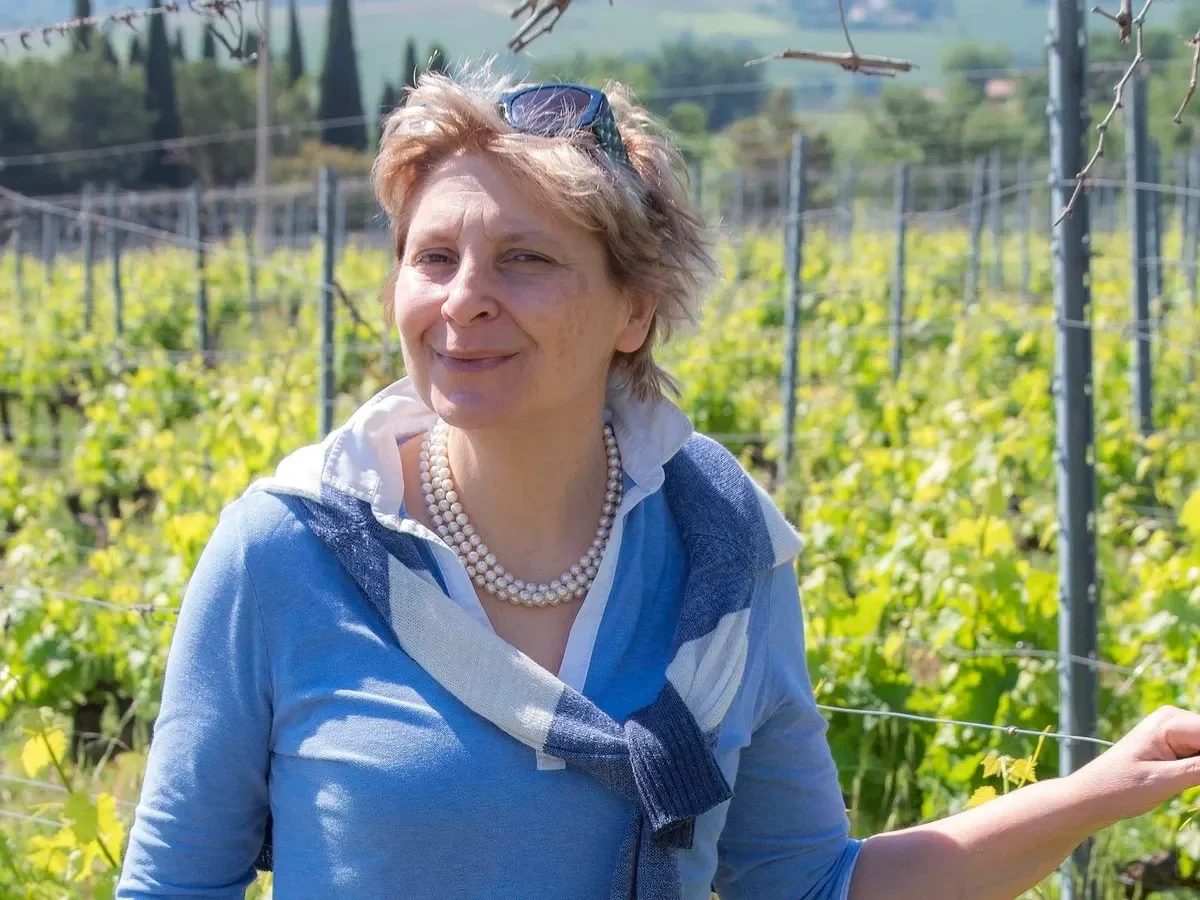
Chiara Lungarotti, named winemaker and CEO at Lungarotti, begins with the glass and returns it to Umbria: land, soil, varietals, and territory.
HM
Director of Editorial Standards
Hugo Marchetti
Filed November 26, 2026
10 min read
Chiara Lungarotti begins with the glass, saying, "In your glass, you will find our Umbria land, our soil, our varietals. You will taste wine that speak the territory they come from. That, for me, is essential."1 Lungarotti takes its bearing from Umbria. For readers asking how to meet the work, start with the Torgiano and Montefalco sites named later in the house materials, then taste in her stated order: land, soil, varietals, territory.
Chiara Lungarotti named winemaker and CEO at Lungarotti
Chiara Lungarotti named winemaker and CEO matters because the house she leads begins in Torgiano, in the central region of Umbria, and also works in Montefalco. Torgiano and Montefalco set the terms of the craft. Montefalco is a place of soils, slopes, weather, cellars, and people who make decisions before the bottle can speak truthfully about identity. If you want the point of entry, follow those two places before you follow the label.
The Sunday email
Get new Made By stories every Sunday.
Every Sunday we send a lead story and up to four more about the chefs, winemakers, sommeliers and hoteliers behind the restaurants, bars, wineries and hotels we cover.
Free. One email a week, and you can unsubscribe from any issue.
Built, in her case, means built on inheritance from Giorgio Lungarotti's postwar transformation of the family farm into a winery. Giorgio Lungarotti transformed the family farm into a winery in the postwar period.2 Chiara's work is to keep that line legible. She receives a house shaped by a predecessor and carries its lineage without blurring it. She returns the drinker to Umbrian land, soil, varietals, and wine that speaks the territory it comes from. That is cellar discipline: every decision, from vineyard to pour, has to answer to origin.
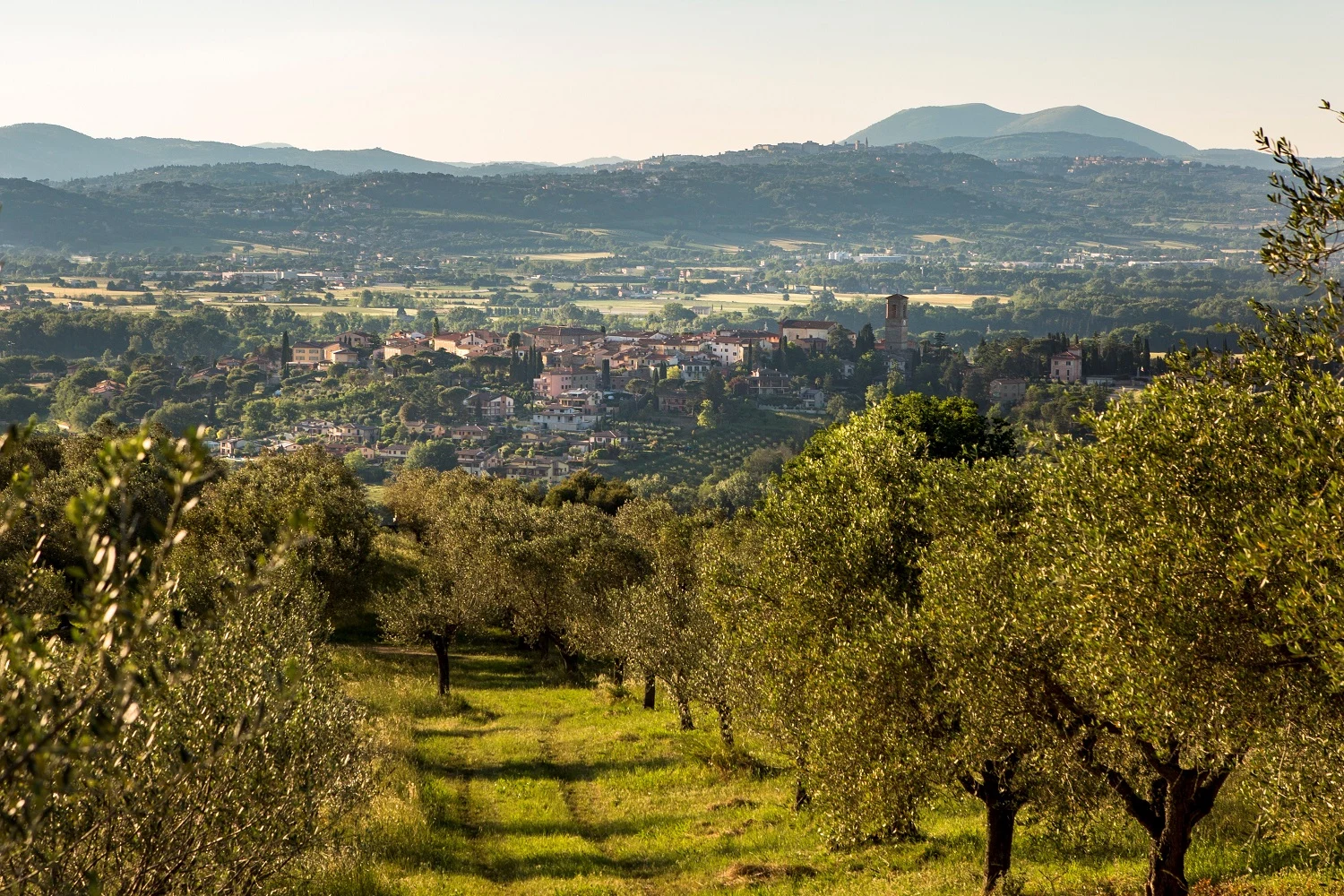
A maker in her position works beyond the romantic picture of the solitary hand. The CEO of a wine house sets the conditions under which agronomy, enology, export, communication, museum culture, and hospitality either pull apart or stay in one grammar. At Lungarotti, that grammar is regional. Vigna Monticchio sits on the Brufa hill at 300 meters above sea level.3 A number like that sits plainly on the page, but wine people know how to read it: altitude, exposure, slope, drainage, the day's heat and the night's correction. Chiara's own standard, territory in the glass, starts there.
Readers who follow the hands behind a program rather than the polish around it will find Lungarotti in conversation with other maker-led studies in the Made By archive: Julien Howsepian at Kosta Browne, Bobby Stuckey at Frasca Food and Wine, and Maggie Frerejean-Taittinger at French Bloom. Each study asks what one person can hold together when the program extends beyond a single station.
Chiara Lungarotti's route through agriculture and viticulture
Chiara Lungarotti has a degree in Agriculture and a specialization in Viticulture.4 Her degree in Agriculture and specialization in Viticulture place her first in the vineyard, before the market reads the bottle. Agriculture begins with the plant. Viticulture tightens the field of attention: vine, pruning, yield, health, ripeness, parcel, harvest timing. The cellar receives only what those choices allow. Read her leadership from the field inward, not from the dining room outward.
A degree in Agriculture, then specialization in Viticulture, gives the discipline beneath her leadership a field-facing base. It gives weight to her insistence that the glass should speak land and soil, because her vocabulary is rooted before fermentation begins.
Giorgio Lungarotti transformed the family farm into a winery in the postwar period.2 The first transformation was farm to winery. Hers is stewardship under scrutiny: keeping the cellar's voice tied to Umbrian ground while the house speaks to drinkers beyond Torgiano.
She is a Councillor of Federvini and of Unione Italiana Vini, an Academic of Accademia della Vite e del Vino, and an Auxiliary Academic of Accademia dei Georgofili of Florence.4 Those titles place her in the institutional architecture of Italian wine and agriculture, not only inside the private walls of Lungarotti. She holds roles in Federvini, Unione Italiana Vini, Accademia della Vite e del Vino, and Accademia dei Georgofili of Florence. Those names explain why her work moves between the vineyard, the cellar, and the language of Italian wine.
She does not need to perform rebellion against tradition to sound contemporary. Land, soil, varietal, and territory can be tested in the glass.
Chiara Lungarotti's glass begins with Umbrian soil
The clearest statement of Chiara Lungarotti's method is her own: "In your glass, you will find our Umbria land, our soil, our varietals. That, for me, is essential."1 It begins with land, then soil, then varietals, then territory. The order matters. Taste in that order and the bottle becomes easier to read.
That order puts the vineyard before the tasting note. The word "essential" defines her standard. It removes room for ornament. If the wine does not carry the territory, the method has failed by her own standard.
Vigna Monticchio, on the Brufa hill at 300 meters above sea level,3 gives one concrete measure inside that argument. It changes temperature swing, ripening pace, and the tension a cellar can preserve or lose. Chiara's stated emphasis on territory becomes legible when tied to a named vineyard and a measured site.
The making at Lungarotti also has named hands around it. Vincenzo Pepe has been enologist at Lungarotti since 2001,5 and Attilio Persia is agronomist at Lungarotti.6 One name belongs to the cellar, one to the vineyard. The work has to join vineyard and cellar if Chiara's glass is to carry soil and varietal together. The agronomist reads the plant and season; the enologist receives the fruit and decides how much of that reading survives fermentation, aging, and bottling.
That is where Lungarotti's craft sits: in the continuity between vineyard language and cellar consequence. Chiara's public standard gives the team a narrow target. The wine has to speak Umbria.
The Lungarotti hands around Chiara Lungarotti
Giorgio Lungarotti's postwar work made the farm a winery.2 He is the predecessor in this lineage, the person who turned agricultural ground into a named wine house. She works inside an existing Lungarotti, inside a line already cut into the family's land and name.
Teresa Severini is marketing and communications manager at Lungarotti,4 and Francesco Severini is Export Director at Lungarotti.7 Those roles matter because the bottle leaves the cellar in language as much as in glass. Communications shape how a place is described. Export carries the house into markets. Under Chiara's stated philosophy, those roles have to return to the same source: Umbria, soil, varietals, territory. The practical lesson is simple: read the back of the house as closely as the front label.
The technical bench has its own named makers. Vincenzo Pepe has served as enologist at Lungarotti since 2001.5 Attilio Persia is agronomist at Lungarotti.6 Chiara's leadership sits over this arrangement. Wine houses endure when the stations speak to one another: agronomy to cellar, cellar to bottle, bottle to market, market back to the vineyard without distorting the first decision.
It is more than an inherited name. It is the work of holding a field of people around one sensory standard. Everyone around it has a job with consequences.
Torgiano received the DOC appellation for its Rosso and Bianco wines in 1968, the first of these prestigious appellations to be awarded to Umbria's wine.4 That recognition came during the period when Giorgio Lungarotti was building the house. The DOC is a legal and sensory boundary, a set of rules about what can be called Torgiano and what cannot. Chiara's work now sits inside that boundary, and her stated philosophy, wine that speaks the territory it comes from, is tested against the DOC's terms every vintage.
How to experience Chiara Lungarotti's work
Lungarotti's work can be experienced at the winery in Torgiano and Montefalco.2 The house's official site is Lungarotti. All winery tours at Lungarotti have recommended reservations;8 the Lungarotti phone number is +39 075 988669,8 and the wine shop and enoteca phone is +39 075 9886649.8 The Torgiano address is Viale Giorgio Lungarotti, 2, 06089 Torgiano (PG).9 Use this section as the access guide: begin with the estate's own channels, then follow the places where the work moves from cellar to glass.
The Wine Museum of Torgiano (MUVIT) is located in the center of Torgiano,10 and the Olive and Oil Museum (MOO) is also located in the center of Torgiano.10 A museum ticket includes access to both museums and a glass of Lungarotti wine at the Osteria del Museo;8 the ticket price is €7 per person.8 Museum reservations phone is +39 075 9880200.8 For a reader planning around Chiara Lungarotti's work, these are the practical points of contact: the sites, the museum culture, and the bottle in the glass.
From October 1 to March 30, the Wine Museum is closed Monday and open Tuesday to Sunday, 10:00 to 13:00 and 15:00 to 17:00.8 From April 1 to June 30, it is closed Monday and open Tuesday to Sunday, 10:00 to 13:00 and 15:00 to 18:00.8 From July 1 to September 30, it is open daily, 10:00 to 13:00 and 15:00 to 18:00.8 The Wine Museum is closed on December 25 and January 1.8 The Olive and Oil Museum can be visited by appointment.8
Why Chiara Lungarotti matters now
Chiara Lungarotti gives the wine word territory a working structure. Her formation in Agriculture and Viticulture4 gives practical force to her own standard: wine should speak the land, soil, varietals, and territory it comes from.1 It is a demand placed on every hand around the bottle. The takeaway is to taste Lungarotti through origin first: the Umbrian ground, the named sites, the vineyard and cellar hands, then the finished glass.
Frequently Asked Questions
Who is Chiara Lungarotti at the Lungarotti winery?
Chiara Lungarotti is CEO of Lungarotti,4 a wine house based in Torgiano, in Umbria, with operations also in Montefalco.2
Vineyards in Florence
What did Chiara Lungarotti study before leading Lungarotti?
Chiara Lungarotti has a degree in Agriculture and a specialization in Viticulture.4
What is Chiara Lungarotti's winemaking philosophy at Lungarotti?
She has described Lungarotti's wine through Umbria, soil, varietals, and territory, saying that wine speaking the territory it comes from is essential to her.1
Who are the key team members working with Chiara Lungarotti?
Teresa Severini is marketing and communications manager at Lungarotti,4 Francesco Severini is Export Director,7 Vincenzo Pepe has been enologist since 2001,5 and Attilio Persia is agronomist.6
How can I visit Lungarotti to experience Chiara Lungarotti's work?
Lungarotti's work can be experienced at the winery in Torgiano and Montefalco,2 and reservations are recommended for all winery tours at Lungarotti.8
The Sunday email
Get new Made By stories every Sunday.
Every Sunday we send a lead story and up to four more about the chefs, winemakers, sommeliers and hoteliers behind the restaurants, bars, wineries and hotels we cover.