Ian Alexander and Mario Firmani, both former bar directors at The Dead Rabbit, take beverage partner stations at Limo Bar NYC when it opens June 11, 2026 in New York City's East Village. The first drink they want understood is the Clean Dirty Martini: a single Castelvetrano olive held inside a frozen orb of olive juice, built so the ice melts into the glass and changes the Martini as it is drunk, according to reporting by Lauren Bowes for The Spirits Business (Thespiritsbusiness) (Thespiritsbusiness1).
That detail matters because Alexander and Firmani are not arriving as bartenders with a cocktail list and a neon sign. Reed Adelson, owner of Virginia's bar and restaurant in New York City, and Jack Berry, of Ray's bar and Original Henry Lambert's Beer, co-founded the bar and brought Alexander and Firmani into the project. Alex Baker, formerly of Rebelle and Yves, created the food offering. Julie Roberts worked with Berry on the room. The opening gathers people who know the pass, the station, and the room, then gives them a narrow object to work around: the Martini.
Why Alexander and Firmani Start With the Martini
Alexander and Firmani place the Martini at the center of Limo Bar's drinks program. The source material names classic expressions alongside signatures such as the Pickle Martini and the Pornstar Martini, and they position the Clean Dirty Martini as the drink that will draw attention first. That build comes from Colin Field, who originally developed it in Paris, according to The Spirits Business. Alexander and Firmani keep the gesture legible: olive, frozen olive juice, dilution by design.
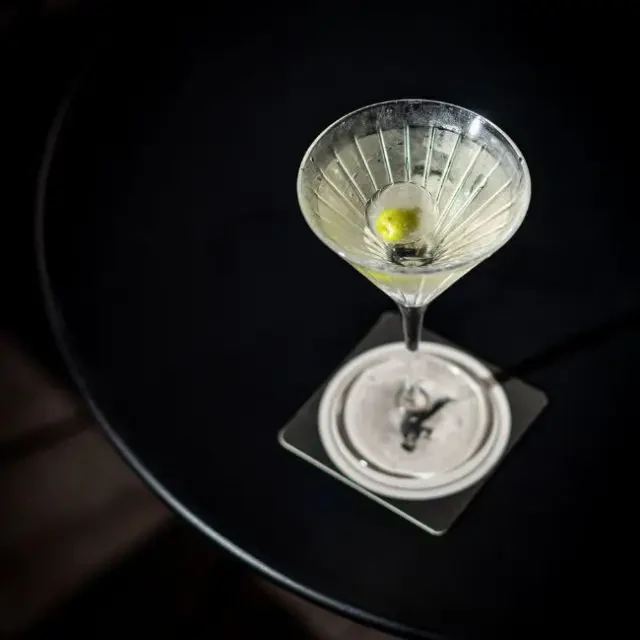
A Dirty Martini usually declares itself early. Brine enters the glass, the drinker knows the measure, and the bartender either reins it in or lets it dominate. Alexander and Firmani delay that transfer with the Clean Dirty Martini. The olive juice begins locked in ice. As the orb softens, the drink moves. They set the drink on the bar knowing it will not taste the same at minute one and minute seven. That is not theatre detached from method; it is dwell time, temperature, and controlled dilution.
Alexander and Firmani have both held bar director roles at The Dead Rabbit, a place whose alumni carry a certain expectation in New York drinking rooms. The useful fact is not the name alone, but the discipline they bring from that role. A bar director works above the single drink. They hold specs, training, speed, glassware, ordering, prep, station flow, and guest rhythm in one hand. At Limo Bar NYC, Alexander and Firmani narrow that experience toward Martinis rather than sprawling across an encyclopedic list.
The rest of the drinks menu they built, as reported, keeps to classic cocktails too: Negronis, Cosmopolitans, Bloody Marys, and more. That list tells you something about their stance. They are not hiding behind obscurity. They ask themselves to make drinks people already know, then put pressure on execution. A Martini gives little cover. The glass is cold or it is not. The garnish belongs or it does not. Dilution either gives the drink shape or leaves it thin.
Alexander and Firmani Work Within a Different Frame
The Dead Rabbit connection will bring the first wave of attention, but Alexander and Firmani are working inside a different frame at Limo Bar. They are not opening a replica. The co-founders are Adelson and Berry, both already tied to New York rooms through Virginia's, Ray's, and Original Henry Lambert's Beer.
Adelson's own quote makes the neighborhood piece explicit: "After 10 years of owning and operating Virginia's in the East Village, and three years on East 3rd Street, I knew I wanted to invest more in this neighbourhood," he said (Thespiritsbusiness).
"Not as an extension of Virginia's, but as a straightforward, comfortable, cocktail-focused space that I felt the neighbourhood needed."
There is a useful restraint in that sentence. Not an extension. Cocktail-focused. Comfortable. Adelson does not describe a concept built to impress passing drinkers with novelty. He describes a room meant to sit in the East Village, with the same people returning after the first opening-week noise drops away.
That puts pressure on Alexander and Firmani in a different way. A destination bar can live on one visit for some guests. A neighborhood cocktail room has to survive second orders, regular stools, and the hour when service fatigue usually shows. Alexander and Firmani must make the first Clean Dirty Martini cleanly, then make the fifth one the same way while club sandwiches leave the kitchen and another guest asks for a Cosmopolitan.
Limo Bar NYC, then, reads as a meeting point between lineage and use. Alexander and Firmani bring time on the tools from The Dead Rabbit. Adelson brings a decade of owning and operating Virginia's in the East Village, plus three years on East 3rd Street, by his account. Berry brings his own New York bar background. Baker and Roberts complete the shape of the place through food and design. The opening depends on all of them, not just the men behind the shakers.
Julie Roberts and Jack Berry Build a 1980s Stretch Limousine
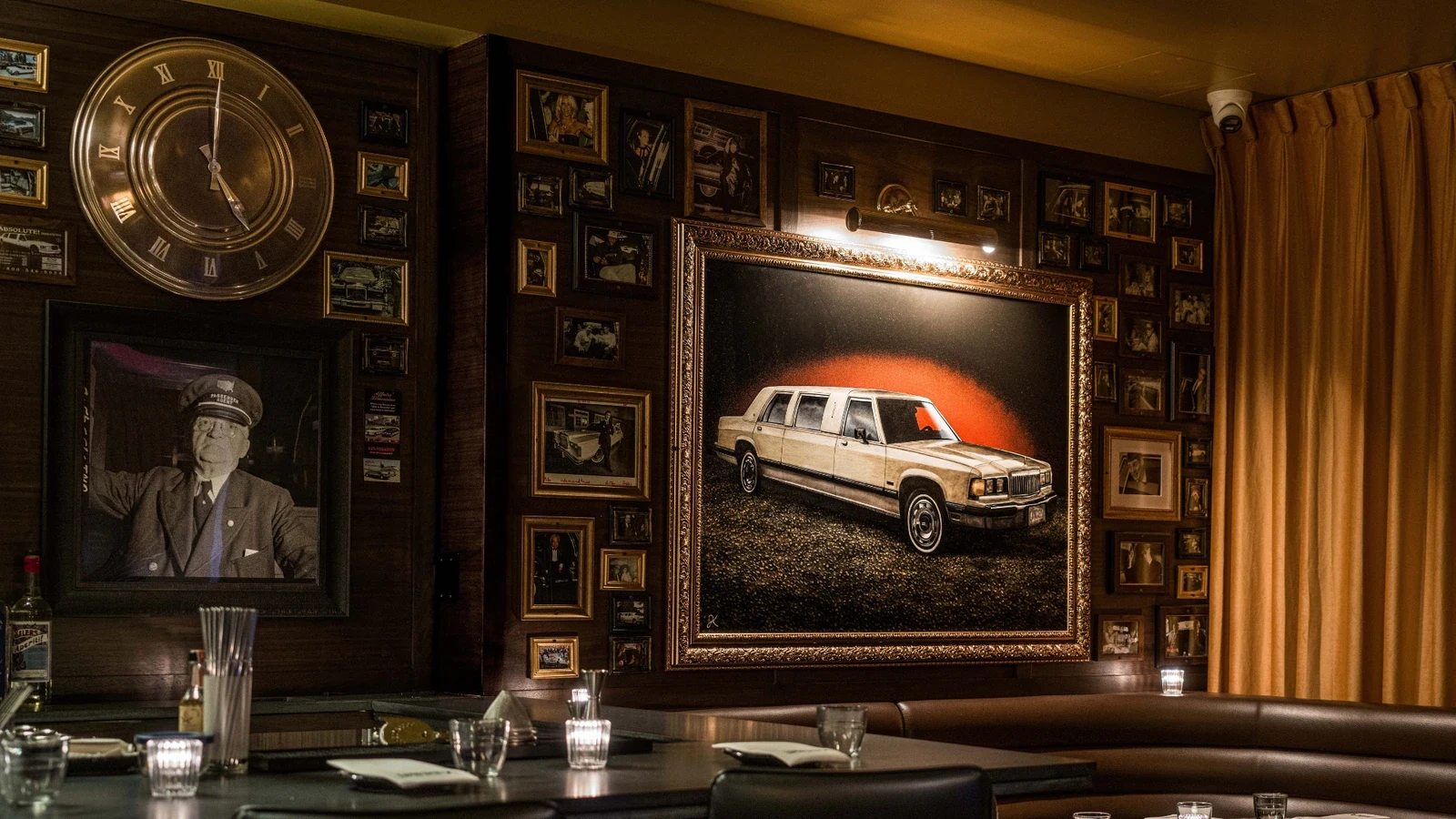
Julie Roberts collaborated with Berry on interiors designed to echo a 1980s stretch limousine. The source names the elements: wraparound banquettes, warm wood paneling, mirrors, and privacy curtains. Those are not neutral design notes. Roberts and Berry place the guest inside a particular New York fantasy, the ride before the arrival, the back seat where the city moves past in reflected fragments (Thespiritsbusiness) (Thespiritsbusiness1).
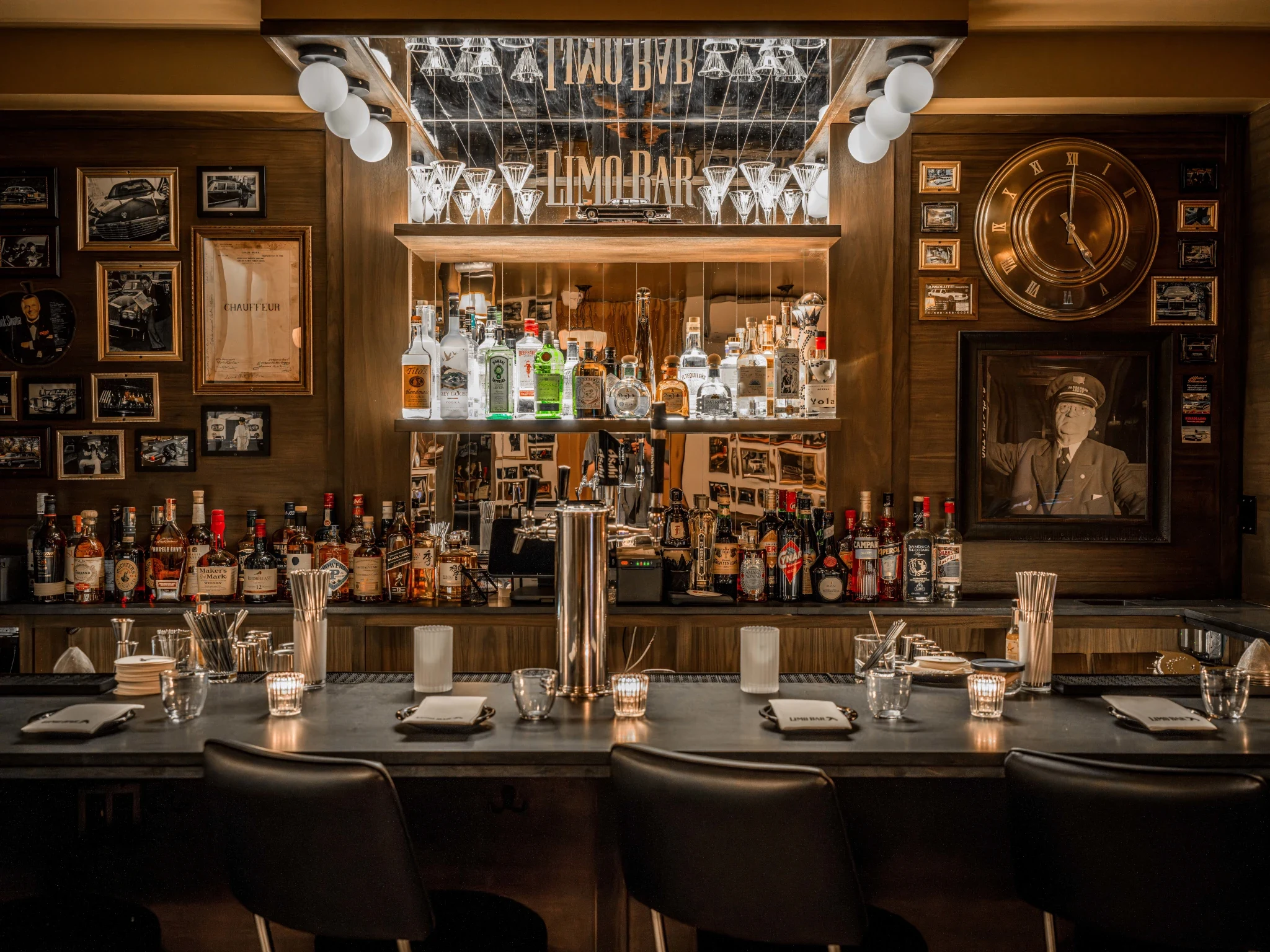
Roberts and Berry also included scans of vintage private car service brochures, automobile auction catalogues, paparazzi photographs of limousine moments, and personal photos of friends and family in limos. That last category matters. Personal photos keep the reference from becoming pure set dressing. A limousine can mean celebrity, airport pickup, prom night, wedding exit, late-night bridge crossing, or the borrowed feeling that the evening has gone larger than planned.
Berry's own explanation stays close to that sensation. "New York has this addictive ability to make you feel like you've made it, even when you're still on the way," he said. "When you're sitting at Limo Bar, it feels like you've made it, and that's what's so New York about it."
Roberts and Berry's design is also practical in the way good bar rooms are practical. Wraparound banquettes change how bodies sit together. Mirrors multiply movement. Privacy curtains make a public room feel partially held back. Wood paneling warms the light around cold glassware. None of that makes the drinks better by itself, but it changes the pace at which people drink them. A Martini does not live only in the mixing glass. It lives in the hand, the seat, the light, the distance between the bartender and the guest.
Alex Baker Keeps to Bar Dining
Alex Baker, formerly of Rebelle and Yves, created Limo Bar's food offering. Baker drew the menu from grand hotel and bar dining, according to The Spirits Business, with prawn cocktail, mozzarella sticks, club sandwiches, steak frites, and classic desserts among the options. That list keeps Baker's kitchen in conversation with the drinks rather than forcing the bar into a restaurant posture.
There is a reason steak frites and Martinis keep finding each other. Salt, fat, cold spirit, and a clean glass have shared bar grammar. Prawn cocktail carries the same logic from another angle: chilled seafood, sauce, acidity, and a drink built on temperature. Mozzarella sticks do less talking and more work. They are bar food because they can meet a drink without asking for silence.
Baker's background gives the food program a named hand, not an anonymous support system. In too many openings, the drink list receives the lineage while the kitchen gets described as an amenity. Here, Baker's role sits in the same field as Alexander's, Firmani's, Roberts's, Adelson's, and Berry's. Baker makes the club sandwich. Baker makes the dessert. Baker made the decision to draw from hotel and bar dining rather than chase a tasting-menu register.
For visitors, the practical read is simple: Baker built food for cocktails, dishes that can hold the table. The menu does not ask guests to choose between drinking and eating. It gives Alexander and Firmani's Martini section a kitchen counterpart, the kind of dishes that can arrive mid-conversation without breaking the room's rhythm.
What to Watch After Alexander and Firmani Open on June 11
Alexander and Firmani open Limo Bar in the East Village on June 11, 2026. The names attached to it will make the first nights crowded with attention: Ian Alexander and Mario Firmani from The Dead Rabbit; Reed Adelson from Virginia's; Jack Berry from Ray's and Original Henry Lambert's Beer; Alex Baker from Rebelle and Yves; Julie Roberts on the interiors; Colin Field as the origin point for the Clean Dirty Martini.
The better question comes after the first round. Can Alexander and Firmani keep the Clean Dirty Martini precise once the frozen orb becomes the drink everyone orders? Can they make a Pickle Martini, a Pornstar Martini, a Negroni, and a Bloody Mary feel like parts of one program rather than separate references? Can Roberts and Berry's room, dressed as a 1980s stretch limousine, become a place East Village drinkers use, not just a room they photograph once?
Those answers will come from the station. Watch Alexander and Firmani's Martini specs, Baker's bar-dining menu, and the way Roberts and Berry's banquettes handle the second month, when openings stop being news and become service. Alexander and Firmani arrive with lineage; what matters next is whether they can turn that lineage into a nightly method.