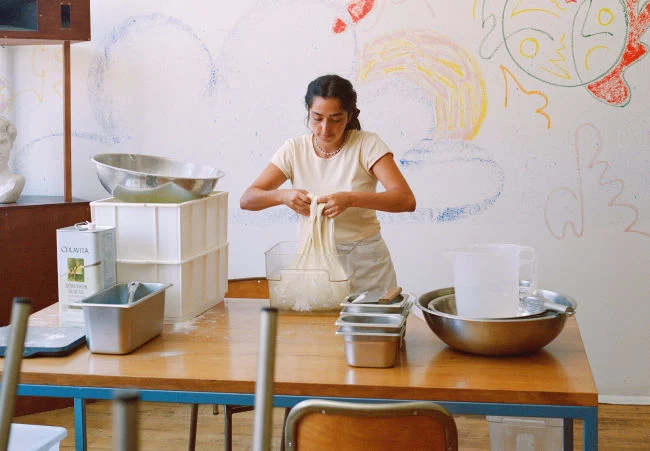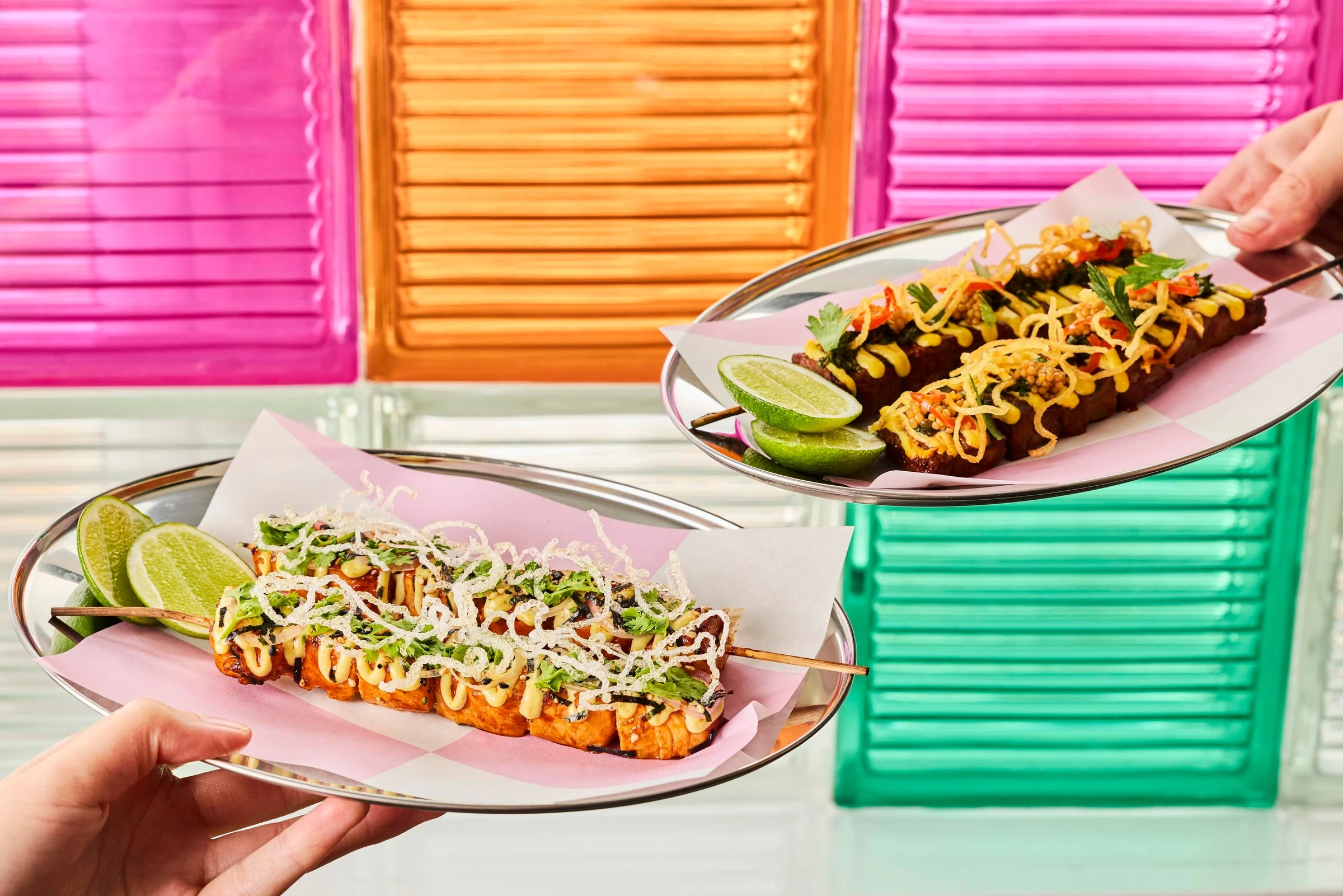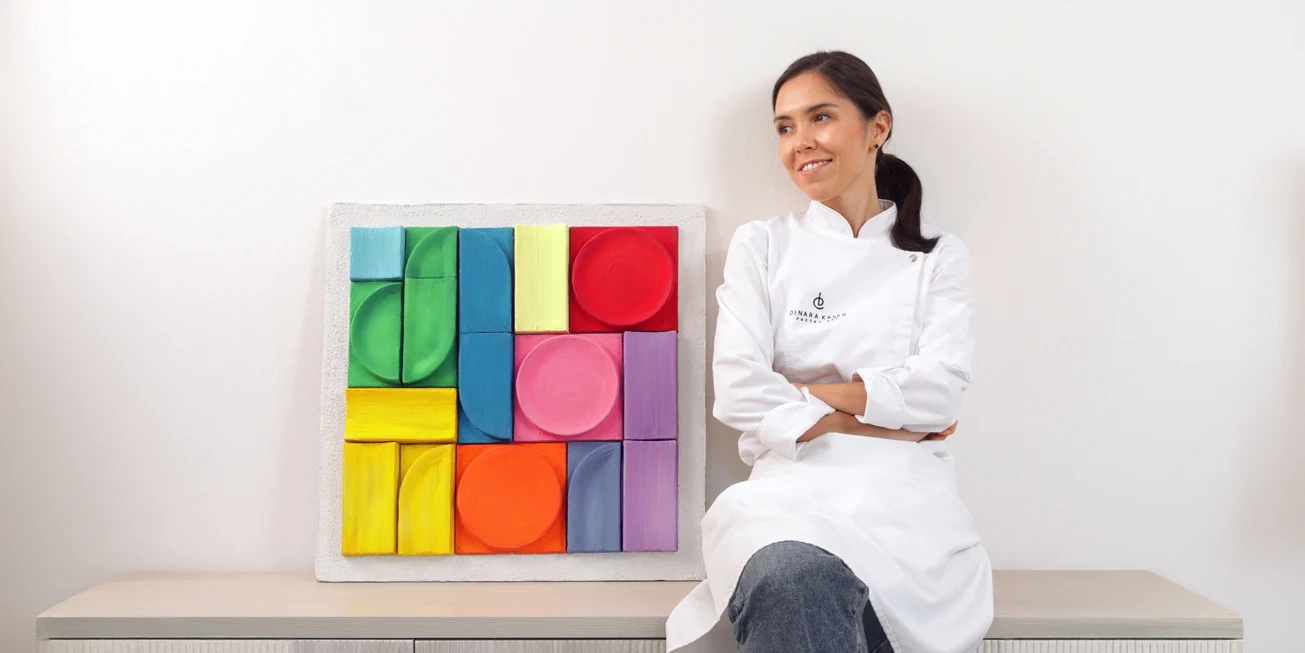
Lore Salas no longer begins by crossing egg, butter, gluten, or refined sugar off a formula. At Dates&Avocados in Barcelona, pastry chef Lore Salas starts with a texture, a flavor, or a sensation, then asks what flaxseed, aquafaba, nuts, plant-based drinks, fats, and dates can do. The public record of that method sharpened this season through an interview in DPAS magazine issue #523, published in excerpt by So Good Magazine, where Salas names the shift that separates her bench from the usual free-from brief.
That distinction matters because plant-based pastry often arrives in the dining room under a negative label. No dairy. No eggs. No gluten. No refined sugar. Salas has heard the language and understands why it exists; some guests need the information before they take a bite. But she does not want the absence to become the whole story. Her work at Dates&Avocados asks a harder question: what structure, flavor, and pleasure can a dessert carry when the recipe begins with the ingredients on the bench, not with the ingredients removed from it?
"I don't want someone to try a dessert thinking it's good "for being vegan" or "for being gluten-free." I want them to think it's delicious."1
Lore Salas, pastry chef, So Good Magazine
The Lore Salas Dates&Avocados Method: Build Flavor First
The clearest thing in the Lore Salas Dates&Avocados method is refusal. She refuses to let plant-based pastry remain a translation exercise. A traditional recipe can be treated as a map: replace the egg, replace the butter, replace the milk, then hope the new structure behaves like the old one. Salas worked through that phase early on, and then left it behind.
That change is not cosmetic. In classic pastry, egg can bind, aerate, emulsify, thicken, glaze, and set. Butter can tenderize, carry aroma, create lamination, and give the palate a particular melt. Gluten can give dough elasticity and chew, while dairy can soften acid, round bitterness, and support a cream. If the pastry chef thinks only in substitution, the method stays tied to the absent ingredient. The hand keeps reaching for the predecessor.
Salas reaches elsewhere. She names flaxseed, aquafaba, nuts, plant-based drinks, fats, and dates as ingredients whose behavior she studies directly. That phrase, behavior, belongs on the bench. Flaxseed changes when hydrated. Aquafaba changes when worked with air. Nuts carry fat, density, and their own grain. Dates bring sweetness, moisture, and a dark fruit character. Plant-based drinks do not all move the same way in a cream, batter, or frozen preparation. Fats vary in melt and mouthfeel. Salas starts there, with what each ingredient can contribute.
That is why Lore Salas Dates&Avocados is not best understood as a Barcelona address for dietary accommodation, though it can serve that need. It is a pastry practice built around available structure. The guest may ask whether the dessert contains gluten or dairy. The maker has already asked a different question: what should this spoonful feel like?
From Substitution to Sensation at the Bench
Salas describes the turn in plain terms. The early habit was a familiar one, one ingredient exchanged for another, the recipe held up like a pattern to be copied in another fabric. Then the pattern stopped leading the work.
"At first, I did think more about substitutions: this for this, the egg for this ingredient, the butter for another… But I haven't worked like that for years. Now I start with a texture, a flavor, or a sensation."2
Lore Salas, pastry chef, So Good Magazine
The sentence gives the method its order. Texture first, or flavor first, or sensation first. Not category first. Not restriction first. A cream might begin with the question of smoothness; a cake with crumb; a chilled dessert with how long the flavor should remain after the spoon leaves the mouth. The answer may involve nuts, dates, plant-based drinks, fats, aquafaba, flaxseed, or some combination whose success depends on handling rather than naming.
For a working pastry chef, this is the difference between copying a form and composing a structure. A plant-based cheesecake, tiramisu, or madeleine can satisfy a memory, and Salas names those sweets when speaking about people who have avoided them for years because of intolerance or because they know the aftermath will be uncomfortable. But memory alone does not finish the job. The dessert still has to carry its own texture. It still has to be eaten as dessert, not as an apology.
There is also a quiet discipline in rejecting the comfort of one-for-one logic. Substitution gives a recipe writer an apparent equation. Salas's method makes the maker responsible for the result at every stage, because the ingredient is not acting as a stand-in. It is acting as itself. Aquafaba is not egg white in costume. Flaxseed is not egg. Dates are not merely a route around refined sugar. Each ingredient brings a behavior and a limit, and the pastry chef has to learn both.
How Salas Constructs Texture Without Dairy or Eggs
The source material does not give Salas's ratios, temperatures, or resting times, and those omissions should stay visible. The important verified detail is not a hidden formula; it is her sequence of thought. She studies how flaxseed, aquafaba, nuts, plant-based drinks, fats, and dates behave, then looks for the right path toward the desired texture, flavor, or sensation.
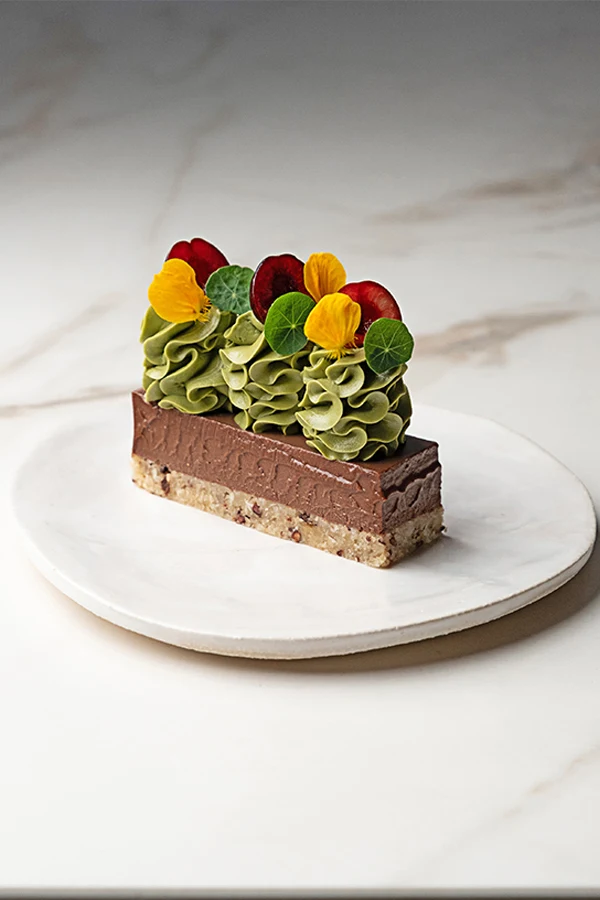
That language gives enough for another practitioner to understand the stakes. In pastry, texture is architecture. Remove dairy and eggs, and the familiar scaffolding changes. The pastry chef has to rebuild creaminess, lift, tenderness, chew, snap, and set through other materials. The work can fail in small ways before it fails loudly: a cream that tastes flat because the fat does not carry flavor; a batter that holds moisture but lacks structure; an aerated element that rises and then collapses; a base that sweetens but muddies the finish.
Salas's ingredient list suggests a bench organized around function. Flaxseed can enter the conversation when hydration and binding matter. Aquafaba belongs to the family of ingredients a pastry chef studies for foam and lightness. Nuts give body and fat, and they can shape both crumb and cream. Plant-based drinks change the liquid phase of a recipe, but their role depends on the larger method. Fats determine melt. Dates bring sweetness with texture and fruit. None of those ingredients solves plant-based pastry alone. Salas's point is that the maker has to know them well enough to stop asking them to impersonate something else.
This is where the Dates&Avocados practice becomes useful beyond Barcelona. The lesson is not that every pastry chef should use the same ingredients in the same way. It is that plant-based pastry improves when the maker stops apologizing for the pantry and starts treating it as a set of tools. A conventional pastry chef studies flour strength, butter temperature, egg behavior, sugar stages, and cream stability. Salas brings the same seriousness to plant-based and gluten-free work.
Pastry Held to the Standard of the Whole Meal
Salas also argues for dessert as part of the meal, not an exempt final course. The DPAS interview frames her approach through the idea that pastry is also food, and her answer widens the discipline. If a kitchen speaks about seasonal, local, organic, or more conscious ingredients through the savory courses, she sees no reason to abandon those demands when the menu reaches dessert.
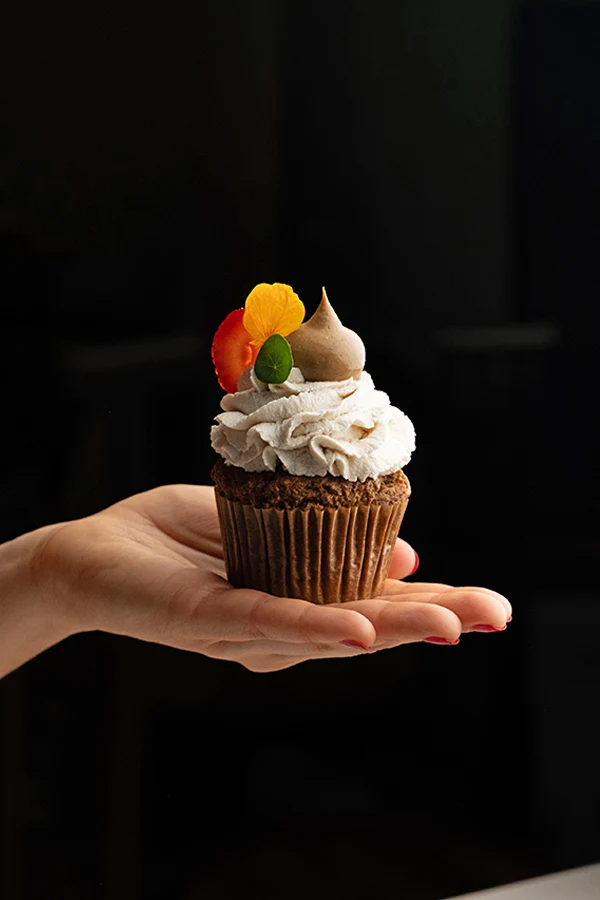
That position may sound obvious until the pass reaches the sweet station. Dessert can become spectacle, sugar, comfort, or finale, while the ingredient ethics of the earlier courses soften. Salas pushes against that break. Her view does not remove pleasure from pastry; it insists that pleasure and ingredient choice can sit on the same plate. Dessert enters the body too. It has to taste good, and it can also be made with ingredients that nourish.
This is a useful correction for plant-based pastry because the category is often asked to prove itself twice. First, it must reassure the person who cannot or does not eat gluten, dairy, eggs, or refined sugar. Second, it must persuade the person who arrived without any dietary need and may read the label as a warning. Salas wants the second guest to stop measuring the dessert on a reduced scale. Good for vegan is not the goal. Good is the goal.
At Dates&Avocados, that philosophy carries the business name into the method without turning it into branding language. Dates are one of the ingredients Salas names when describing how she works. The avocado in the name points toward the plant-based vocabulary of the kitchen, but the stronger signal is the ampersand: one thing placed beside another, a pantry assembled through relation. Nuts beside fats. Plant-based drinks beside texture. Flavor beside sensation. The method depends on connection, not omission.
Barcelona, DPAS, and a Pastry Conversation in Public
Lore Salas runs Dates&Avocados in Barcelona, and the city matters here as a working context rather than a decorative location. Barcelona diners are used to kitchens that speak in technique, product, and dietary range; a plant-based, gluten-free, healthy pastry practice has to meet people who may come with knowledge, skepticism, need, or curiosity. Salas does not answer that audience with a lecture. She answers with flavor.
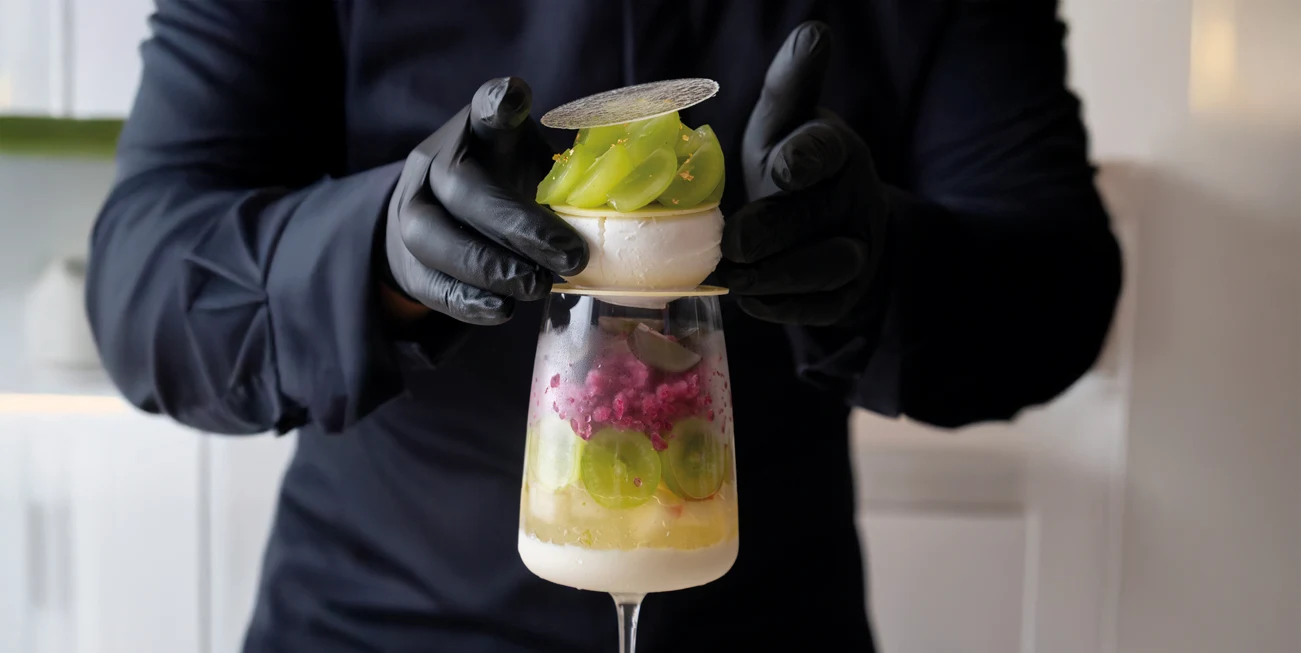
The DPAS magazine issue #523 interview gives her bench-side reasoning a public shape. DPAS is a Spanish-language pastry magazine, and the excerpt published by So Good Magazine places Salas inside a professional conversation about how contemporary pastry names itself. The questions put pressure on the vocabulary around plant-based work: should it be explained by what it lacks, or by what it contains? Should the recipe begin with direct substitution, or with the intended eating experience? Should dessert follow the same ingredient standards as the rest of the menu?
Salas answers by moving the emphasis from label to method. That is valuable for practitioners because it gives a way to critique plant-based pastry without condescension. The question is not whether a dessert has successfully hidden its restrictions. The question is whether the structure holds, whether the flavor arrives cleanly, whether the sensation matches the maker's intent, and whether the ingredients make sense as food.
For guests, the same shift changes how the dessert is received. Someone who has avoided cheesecake, tiramisu, or a madeleine for years because of an intolerance may encounter relief first. Someone who did not seek out a free-from dessert may encounter surprise first. Salas names both responses, but she gives the final authority to taste. Words can prepare a guest. Flavor has to finish the argument.
What to Watch Next From Lore Salas
No next opening, class, or release date has been announced in the available material. The next visible work, for now, is the DPAS issue #523 interview and the continuing practice of Dates&Avocados in Barcelona. That is enough to follow closely because Salas has identified a method other pastry chefs can test against their own bench: stop translating, start building.
The apprentices to watch, whether or not they stand in Salas's kitchen, are the makers who take that instruction seriously. They will not describe a dessert only by its exclusions. They will tell you what the flaxseed is doing, why the aquafaba belongs in the structure, how the nut base carries fat, where the dates sit in the sweetness, and what sensation the spoon should leave behind. That language is the real inheritance of this work.
Lore Salas Dates&Avocados gives plant-based pastry a useful standard: the dessert should not need a lowered bar to be praised. It should carry texture, flavor, pleasure, and ingredient intention in the same bite. Watch Salas's next public work for that order of thought, because the method is already clear from the bench.