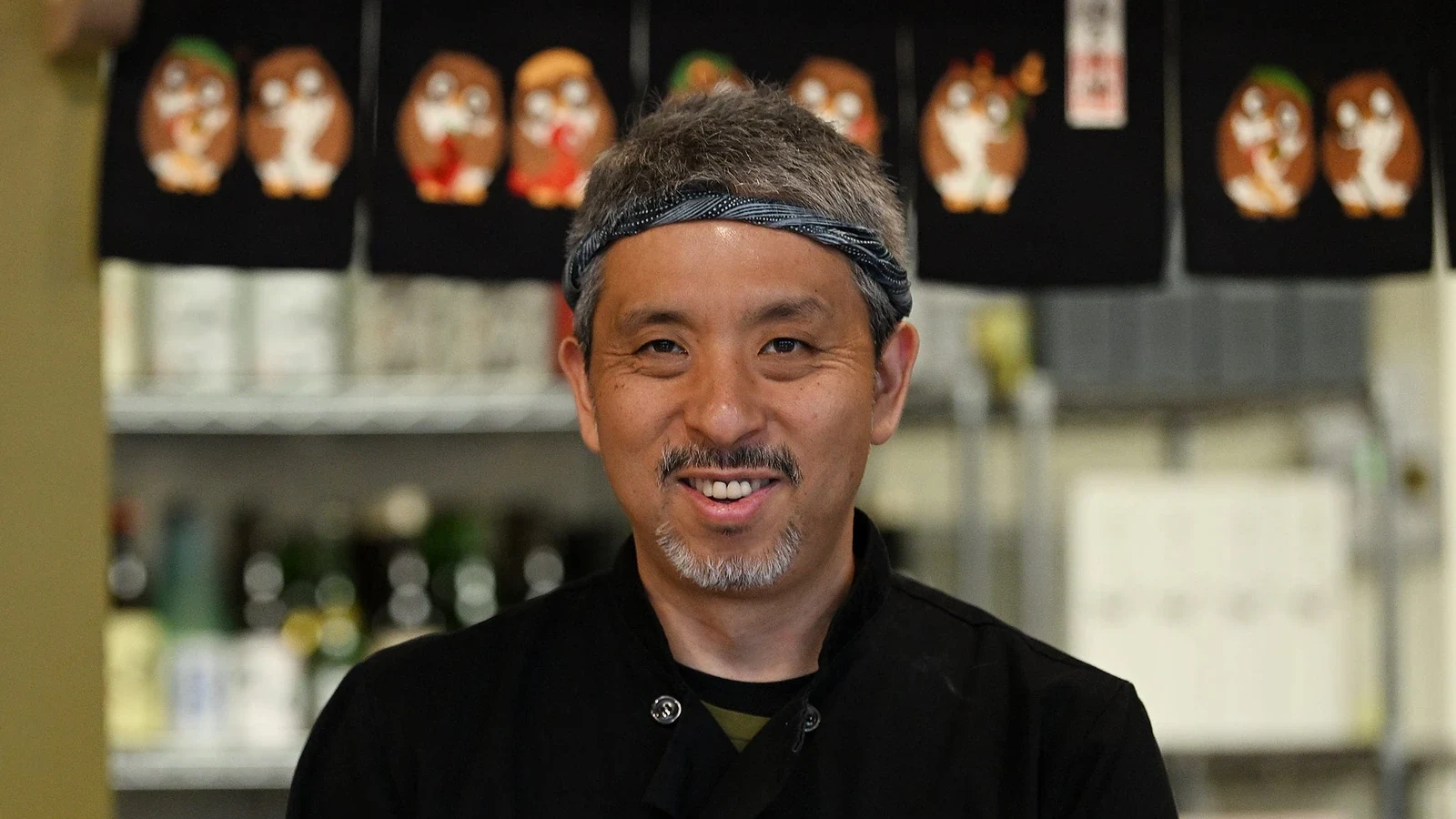
Hajime Sato has opened Sazanami at 10053 SW Nimbus Avenue in Beaverton, a 14-seat, reservation-only counter where he is now working with Oregon sea urchin, petrale sole, rockfish, Dungeness crab, spot prawns, clams, and Oregon-grown wasabi. Sato arrives after winning the 2024 James Beard Award for Best Chef: Great Lakes at Sozai in Clawson, Michigan, and after three decades of testing what American sushi can be when the expected fish come off the board.
Sato is not building a table-service restaurant dressed in omakase language. According to Eater Portland, Sazanami has no tables, only the counter, and he requires reservations without exception. The room holds 14 seats. The largest party he will accommodate is four. Nobody under 21 is permitted, reservation or not. Those restrictions shape his method: Sato is building the meal around the pass, the hands, and the exchange between chef and diner.
Why Sato's Arrival Matters Now
Sato enters the Portland area as several sushi and kaiseki-minded chefs are moving into sharper focus at once. Eater Portland notes that Ryan Roadhouse of Nodoguro recently took home a James Beard Award for his kaiseki-inspired tasting menus, and that Cody Auger of Nimblefish is preparing to open a small omakase counter in downtown Portland. Sato's work comes from a different bench.
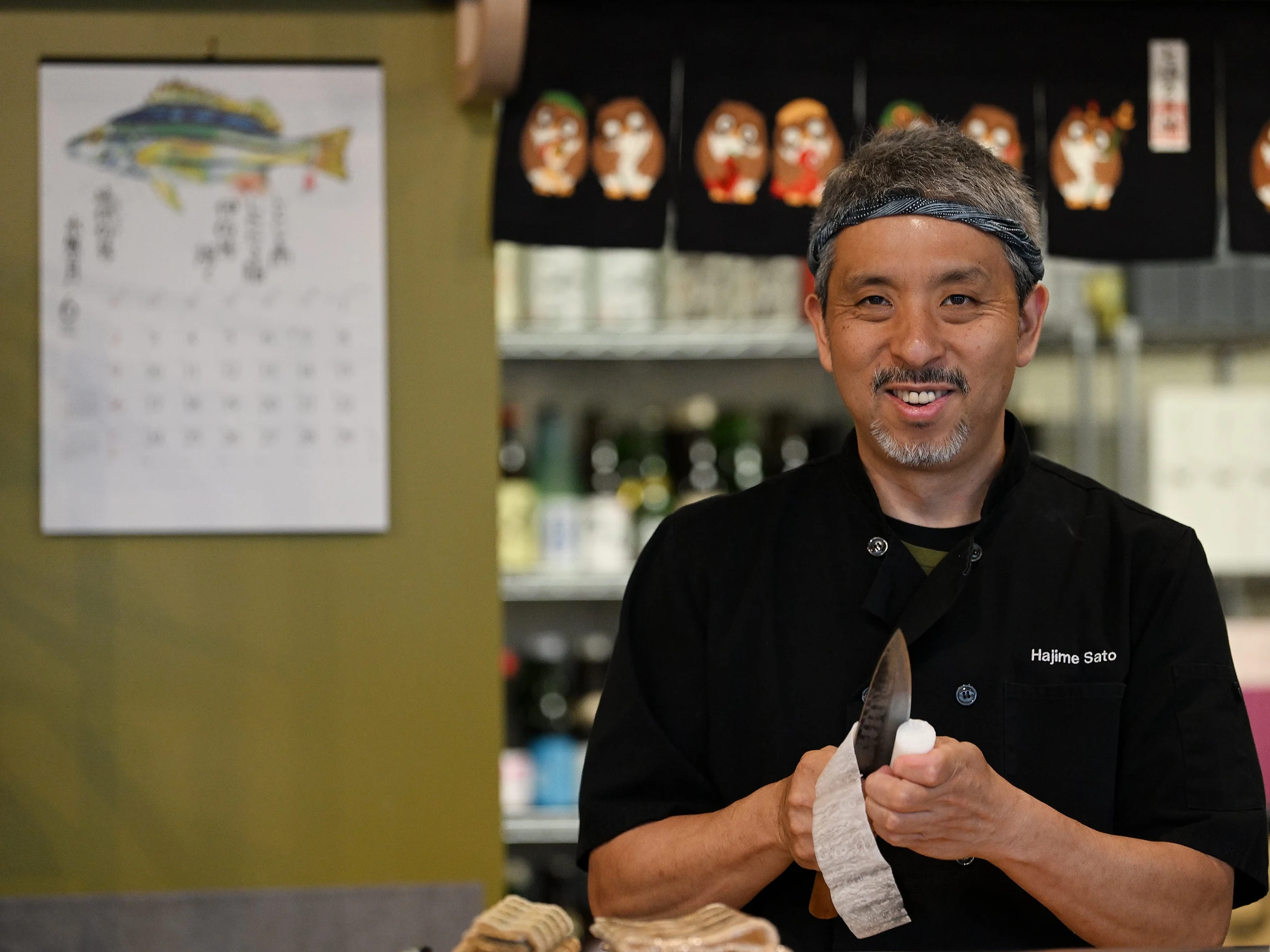
Sato is not entering the scene as a chef chasing a format. He has lived with the constraints of sustainable seafood since 2009, when he made Mashiko in West Seattle one of the first sushi restaurants in the country to commit entirely to serving sustainable seafood. That meant Sato refused fish that many guests expected to see on a sushi menu, including Atlantic salmon, freshwater eel, and bluefin tuna, according to the source article. A decision like that changes the station. Sato cannot lean on the usual luxury markers. His cut list, his sourcing calls, his conversation at the counter, all of it has to adjust.
Sato has also chosen to work west of Portland proper. The address, 10053 SW Nimbus Avenue, places his counter in a Beaverton shopping center rather than a downtown dining corridor. Eater Portland describes the restaurant as sitting between an H&R Block and a yarn shop. That detail matters. Sato has worked in West Seattle, Clawson, and now Beaverton, not only in the polished rooms where fine dining tends to explain itself before the first course lands. His counters have operated close to daily life.
What Sato Built Before Sazanami
Sato opened Mashiko in West Seattle in 1994. That gives him more than three decades in restaurant ownership, with the 2009 seafood decision sitting near the center of his lineage. The move was not a garnish on his program. Sato removed some of the most requested sushi fish from the menu and had to build trust course by course. At the counter, sustainability becomes practical before it becomes philosophical. The chef has to answer why a familiar ingredient is absent, then serve something that makes the absence make sense.
In 2019, after his wife was diagnosed with cancer, Sato sold Mashiko to three longtime employees and moved to Michigan while she underwent treatment, according to Eater Portland. The names of those employees are not given in the source, but the transfer itself says something about apprenticeship and continuity. Sato did not close the restaurant to protect the name. He handed the bench to people who had worked inside his method.
I sold [Mashiko] to my employees and they're still going in Seattle so I don't want to compete with them1
Hajime Sato, Chef
Sato opened Sozai in Clawson, Michigan in 2021, a 13-seat omakase counter in a Detroit suburb. There, he continued the same discipline with seafood sourcing rather than treating sustainability as a Seattle chapter. In 2024, he won the James Beard Award for Best Chef: Great Lakes. Sozai closed in spring 2024, and Sato later returned to the Pacific Northwest. Sazanami now becomes the next station in that line, not a restart.
That continuity matters for diners who follow makers across cities. A chef can open a new room and repeat old forms. Sato is doing something narrower and harder to fake: taking a sourcing ethic he tested at Mashiko and Sozai, then applying it to Oregon waters, Oregon suppliers, and a Beaverton counter where every guest sits within speaking distance of his knife.
How Sato Shapes the Counter Experience
The format at Sazanami is built around contact. Fourteen seats, no tables, reservation-only dining, and a maximum party size of four create a room where Sato's counter is not a design feature. It is his service model. Eater Portland reports that Sato sees Sazanami as closer to kappo-style counter dining than to a fixed tasting menu. The difference is not cosmetic. In kappo thinking, the chef cooks and serves from the counter, reading the guest and the progression as the meal moves.
That distinction will matter to anyone booking Sato expecting a straight procession of nigiri. The source article makes clear that diners should not expect only that rhythm from him. Sato's menu includes sushi, sashimi, and cooked dishes, with three paths available: Minato at $170, Chiso at $200, and a vegan option at $140. The prices define access, but the more important detail is the structure. Sato is leaving room for a meal that can move across raw, seasoned, and cooked preparations rather than treating nigiri as the only measure of seriousness.
The adults-only rule also changes the room. Sato allows nobody under 21, with no exceptions, according to Eater Portland. That is a hard house policy, not a suggestion about who might enjoy the meal. At a 14-seat counter, one disruptive booking changes the room for every diner and for the chef working across from them. Sato's rule protects the pace of the pass and the concentration of the station.
The maximum party size of four works the same way. A counter built for 14 cannot absorb a large group without becoming a different restaurant. Sato has chosen scarcity as a working condition. He has fewer seats to sell, fewer people to feed at once, and less room to hide behind service choreography. His knife work, his plating, his handoff, and his conversation happen bench-side.
How Sato Is Working Oregon Waters
Sato's Oregon list is long enough to read like a working map of the coast: sea urchin, petrale sole, salmon, rockfish, albacore, black cod, Dungeness crab, spot prawns, oysters, and clams. Eater Portland also reports that he has connected with Oregon-grown wasabi. For a sushi chef who has spent years rejecting default luxury fish, the local list is not a branding move. It is the raw material that lets his method continue in a new place.
The sourcing detail gives Sato his clearest Oregon signature at Sazanami. Many sushi counters in the United States still build status through fish flown from Japanese markets. Sato is interested in serving seafood tied to where the diner is sitting. That does not make his work easier. Local sourcing can narrow availability, require substitutions, and force him to explain why the best course that day might come from rockfish or petrale sole rather than from a species with more menu recognition.
This is where Sato's old Mashiko decision returns with a different coastline under it. In 2009, he removed Atlantic salmon, freshwater eel, and bluefin tuna from the expected sushi vocabulary at Mashiko. In Beaverton, he has an Oregon vocabulary to work with instead. Dungeness crab carries one kind of regional memory; spot prawns another. Oysters and clams move his meal toward the tide line. Oregon-grown wasabi gives his station a local accent in a place where even condiments often arrive through long supply chains.
Sato has also said he hopes to source and serve invasive green crab down the road, according to Eater Portland. That future detail belongs in the same frame as his past decisions. Sustainability at the counter is not only about saying no to a threatened fish. It can also mean finding culinary use for a species that creates pressure in local waters. If green crab eventually appears at Sazanami, the course will connect the diner's plate to a problem the coast is already carrying.
Booking Sato's Counter: Pricing, Reservations, and House Rules
Sato is working at 10053 SW Nimbus Avenue in Beaverton, and he requires reservations with no exceptions. Eater Portland reports that bookings can be made through the restaurant's online scheduling page. For diners used to calling day-of or walking into a sushi bar, Sato's counter will not work that way. Fourteen seats make planning part of the meal.
The three menu options set the decision before the diner arrives. Sato prices Minato at $170. He prices Chiso at $200. He prices the vegan menu at $140. The source article describes the first two as pescatarian menus, which is a useful detail for guests calibrating expectations around seafood without assuming meat will enter the progression. The vegan option also matters within Sato's broader practice, since a chef who has spent years rethinking sushi sourcing now has to build a counter experience without fish at all for that menu path.
The house rules are as important as the prices. Sato's counter is 21+ only. He cannot accommodate parties larger than four because of the counter-seating format. Those details will frustrate some diners, but they also state the scale of his work. A party of six would not simply take six seats; it would pull the room toward a group meal. A child at the counter would not simply occupy a chair; Sato's policy says the restaurant is not built for that mode of service.
For serious diners, the booking value is not only the James Beard credential. It is the chance to sit at the early Beaverton version of a counter where Sato is still translating Oregon supply into his own discipline. The Minato, Chiso, and vegan paths give a framework, but the draw is the maker within arm's reach, working through what local seafood can do under the pressure of omakase.
What to Watch as Sato Settles In
Sato opens into a regional moment with several named hands at work. Ryan Roadhouse has brought national attention to Nodoguro through kaiseki-inspired tasting menus. Cody Auger is preparing a small omakase counter for Nimblefish in downtown Portland. Sato brings the Mashiko and Sozai lineage to Beaverton, with sustainable seafood as the throughline rather than an afterthought.
The next thing to watch is Sato's supplier list. Watch whether Oregon sea urchin, petrale sole, rockfish, black cod, and spot prawns stay central as he settles into his rhythm. Watch whether invasive green crab reaches his menu, as he hopes. Those details will tell you more about Sato than any room description can.
Sato has built his career by making the constraint visible, then cooking inside it. At Sazanami, his constraint is clear: 14 seats, no tables, Oregon seafood, reservations only, adults only, and a chef who has already spent years asking American sushi diners to give up the expected fish. The Beaverton counter is now open; the work to follow is in Sato's cuts, his sourcing calls, and the conversations that happen across his pass.