How Shingo Gokan's decade of quiet mentorship and globe-spanning bar-building earned Sip & Guzzle the No. 1 spot on North America's 50 Best Bars.
HM
Director of Editorial Standards
Hugo Marchetti
Filed June 25, 2026
11 min read
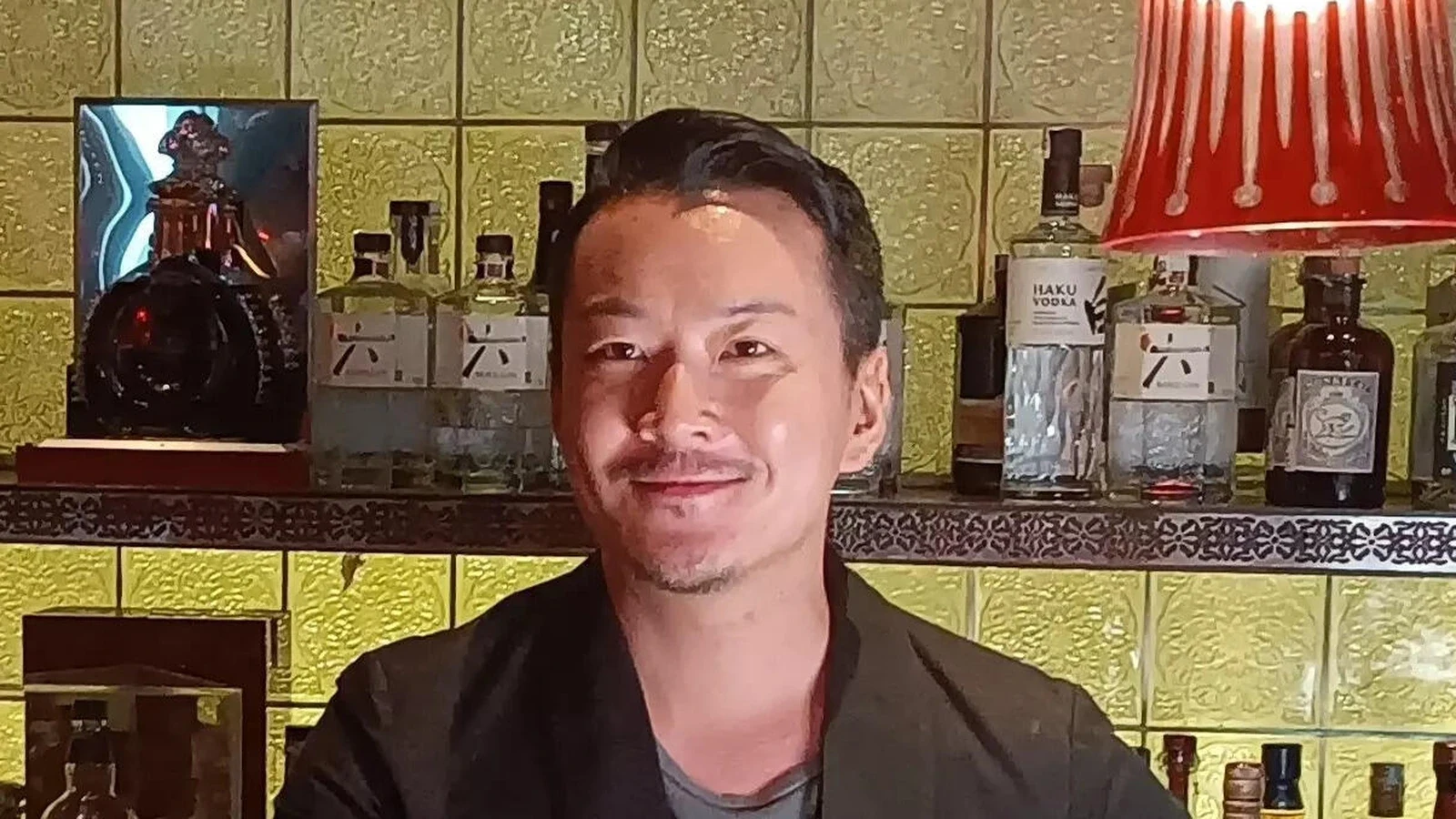
Shingo Gokan has around 50 awards to his name, a portfolio of 12 bars across four countries, and a decade behind the stick at one of New York's most influential rooms. When Sip & Guzzle, the bar he co-owns with Steve Schneider, took the top spot on North America's 50 Best Bars in April, his first instinct was not to talk about any of that.
He talked about the bar. "To be recognized as No. 1 among so many incredible bars that we truly admire is very meaningful," he told VinePair, "and it's something we don't take lightly." That instinct, to deflect toward the room and the people in it rather than the person behind it, is not modesty performed for an interviewer.
The Sunday letter
Get our new stories in your inbox every Sunday.
One email with our newest profiles and guides. See a sample before you subscribe.
It is the operating principle that has shaped every bar Gokan has built across two decades.
Sip & Guzzle, the New York bar Gokan co-owns with Schneider, formerly of Employees Only, claimed the top spot on the North America's 50 Best Bars list this year. The win is the clearest signal yet that Gokan's long-game approach to bar-building, rooted in consistency, mentorship, and a deliberate subordination of personal celebrity to the guest experience, has reached its fullest expression on the continent where his career first took shape.
From Kawasaki to Angel's Share: How Shingo Gokan Found His Calling
Gokan grew up in Kawasaki, the industrial city that sits between Tokyo and Yokohama, and started bartending at 18 at a local restaurant bar, teaching himself to make drinks by doing the work. He was good enough at it that two years later he was running the bar at a different local spot as head bartender. That early compression of learning, from novice to lead in two years, established a pattern: Gokan does not wait to be taught. He positions himself where the work is hardest and absorbs what he needs.
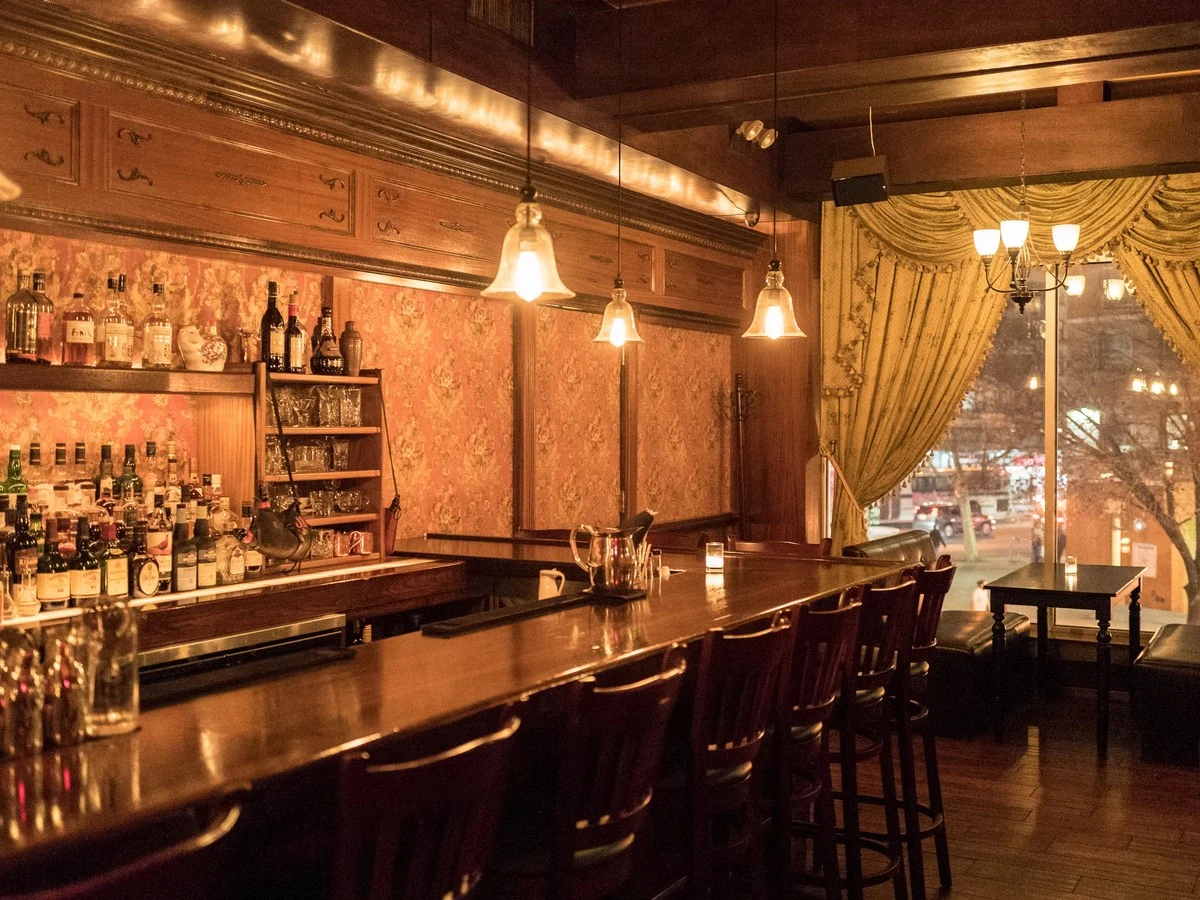
Angel's Share, an intimate bar in New York's East Village, features a long wooden bar and extensive bottle collection.
In December 2006, at 23, he moved to New York City without speaking a word of English. The bartending skills he had built in Japan were sharp enough to get him a job while he learned the language.
Six months after landing, he was behind the stick at Angel's Share, the quietly legendary East Village bar known for its unmarked door inside a Japanese restaurant on the second floor of a building on Stuyvesant Street.
Angel's Share was, through the late 1990s and into the 2010s, one of the few places in New York where Japanese bartending philosophy, precision, restraint, an almost ceremonial attention to the guest, met the American craft cocktail movement at its most serious. For Gokan, it was the right room at the right moment.
He spent approximately a decade there. "My experience at Angel's Share is arguably the most informative in my career," he has said. The bar gave him not just technique but a framework for thinking about what a bar program is for: not the expression of a single ego, but the cultivation of a culture that outlasts any one person's tenure at the station.
The Shingo Gokan Philosophy: Humility, Consistency, and the Bar as Identity
The philosophy Gokan developed at Angel's Share has a specific texture. It is not the humility of someone who underestimates their own ability. Gokan has been named Tales of the Cocktail's International Bartender of the Year (2017), ranked fifth on Drinks International's Bar World 100 list of the most influential figures in the bar industry (2022), and received Asia's 50 Best Bars' Altos Bartender's Bartender award in 2019 and its Roku Industry Icon award in 2021. He has accumulated around 50 awards for the bars he owns and operates in Japan and China alone. He knows exactly what he has built.
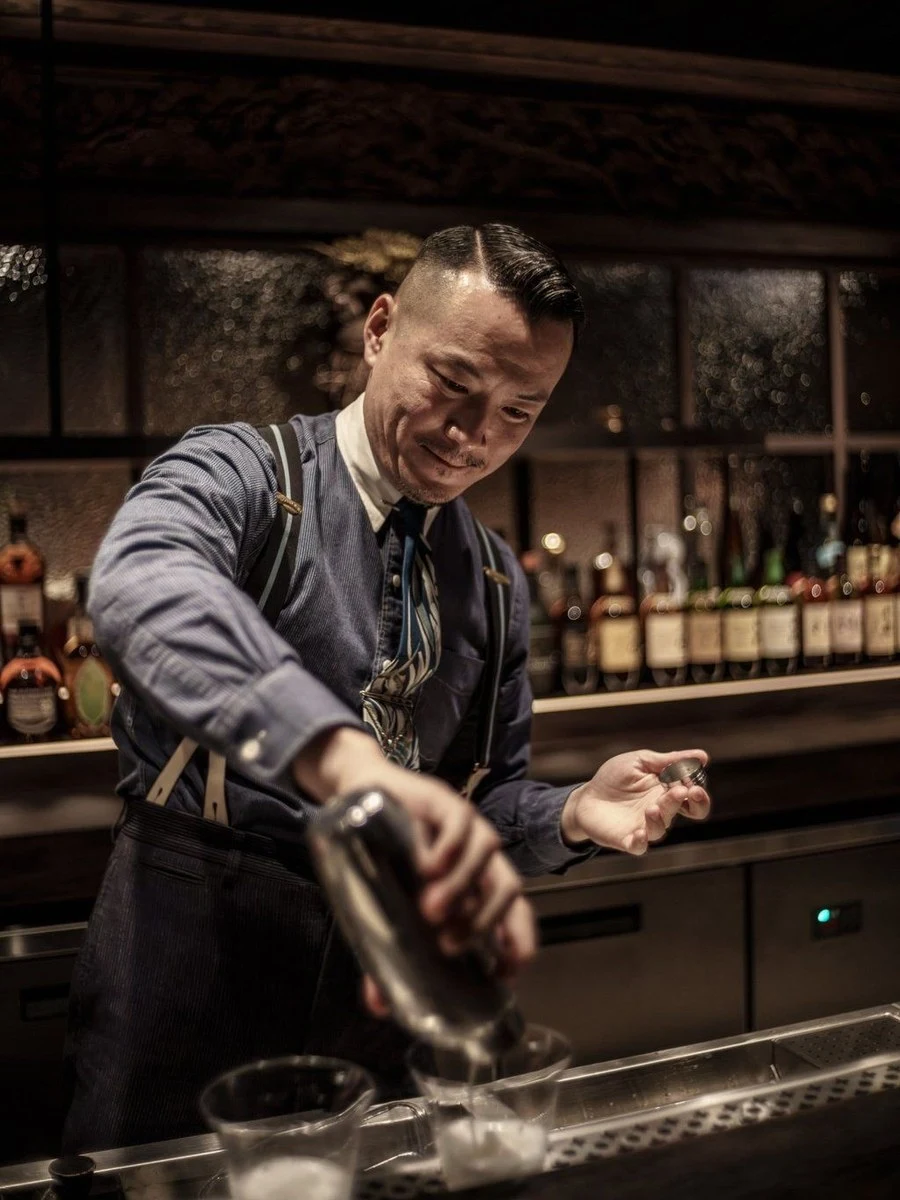
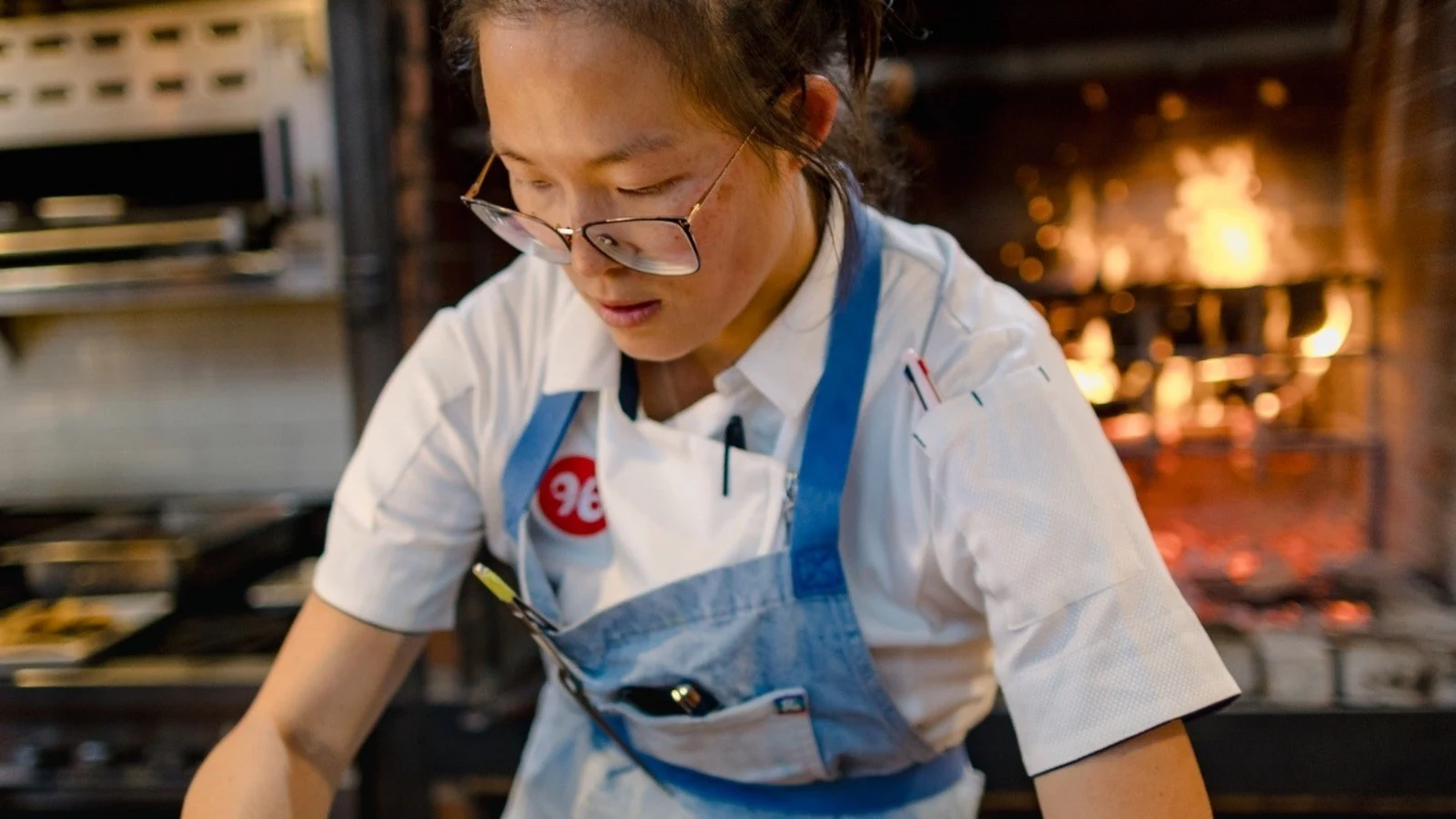
Shingo Gokan, the acclaimed bartender, meticulously prepares a drink behind a well-stocked bar.
The humility is structural. It is a decision about where to place the center of gravity in a bar. Gokan places it in the room, not behind the bar.
"I don't think it's particularly important for guests to know who I am. I'd rather guests simply enjoy the time they spend with us, the cocktails, the food, and the atmosphere. If they leave happy, that's what matters most."
, Shingo Gokan, bar owner and bartender, VinePair1
This is a considered rejection of the celebrity bartender model, in which the owner's name becomes the bar's primary draw and the program is built around the projection of a single personality. Gokan's model inverts that. The bar's identity is the product; the owner's identity is secondary. It is, in practice, a harder thing to build and a more durable one. Bars built around a personality tend to hollow out when that personality moves on. Bars built around a culture tend to compound.
Gokan is also clear-eyed about what the North America's 50 Best recognition demands in return. "This award has raised our profile without a doubt," he says, "but we just need to continue to deliver the quality of the product and the service that matches this recognition. Ultimately, consistency is what builds real credibility and connection over time." The award, in his framing, is not a destination. It is a new baseline.
Building a Global Bar Program: 12 Locations, 4 Countries, Around 50 Awards
After his decade at Angel's Share, Gokan built outward. He opened bars across Japan and China, accumulating the roughly 50 awards that now populate his record. The SG Club in Tokyo, a multi-level venue that Gokan has described as the blueprint for Sip & Guzzle's Tokyo-meets-New York concept, became the anchor of his Japanese program. Gokan spends about one-third of the year in Tokyo, and he is deliberate about what that time gives him. "By staying connected to Tokyo and expressing the current essence of Japan," he has said, "I believe I'm able to share a more authentic and evolving perspective through each bar."
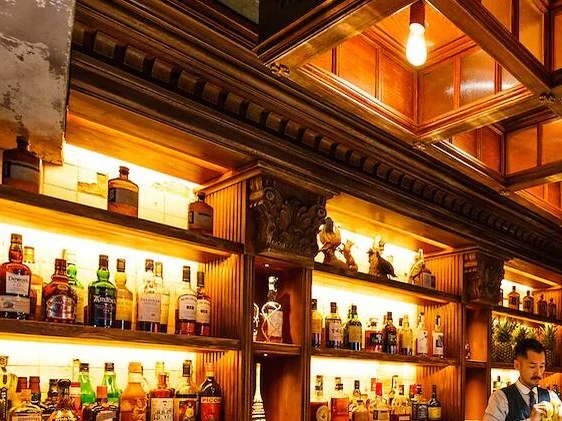
The SG Club: Shingo Gokan's blueprint for a global bar program, with shelves of spirits and ornate wooden details.
The SG Club's structure is worth understanding if you want to understand Sip & Guzzle. The "G" side of The SG Club was modeled, according to Gokan, on the high-volume controlled chaos of Employees Only, the West Village bar where Steve Schneider was building his own reputation at exactly the same time Gokan was at Angel's Share. Two bartenders, two well-regarded New York rooms, running parallel careers without yet knowing they would eventually build something together.
The partnership formed in 2018, when Gokan and Schneider opened The Odd Couple, an '80s-themed bar in Shanghai. The collaboration worked. When the time came to bring a new bar to New York, the two co-owners were the natural pairing. Gokan handles the "Sip" side of Sip & Guzzle; Schneider handles the "Guzzle." The division is not just organizational.
It reflects the two distinct bar cultures, Japanese precision and New York volume, that the room holds simultaneously. "The fact that we're the same age and both led teams in iconic bars in New York for about 10 years is remarkable," he says.
Stripped of those words: two people who each spent a decade leading the teams that defined their respective sides of the craft, then built something together from that shared foundation. "I've respected his style and work since those days, so I feel incredibly lucky to work with him now."
Gokan now oversees 12 locations across four countries. He is on the road for most of the year, moving between properties to ensure each venue maintains the standard the program demands. The scale is significant; the philosophy that runs through it is consistent. Every bar in the portfolio reflects the same conviction: the guest's experience is the point, and the owner's visibility is beside it.
Why Sip & Guzzle's North America's 50 Best Win Matters
Gokan has won awards before, many of them. But he is direct about what the North America's 50 Best No. 1 ranking means differently. "This one definitely has the biggest impact," he told VinePair. "I believe it's the most influential award both inside and outside the industry right now."
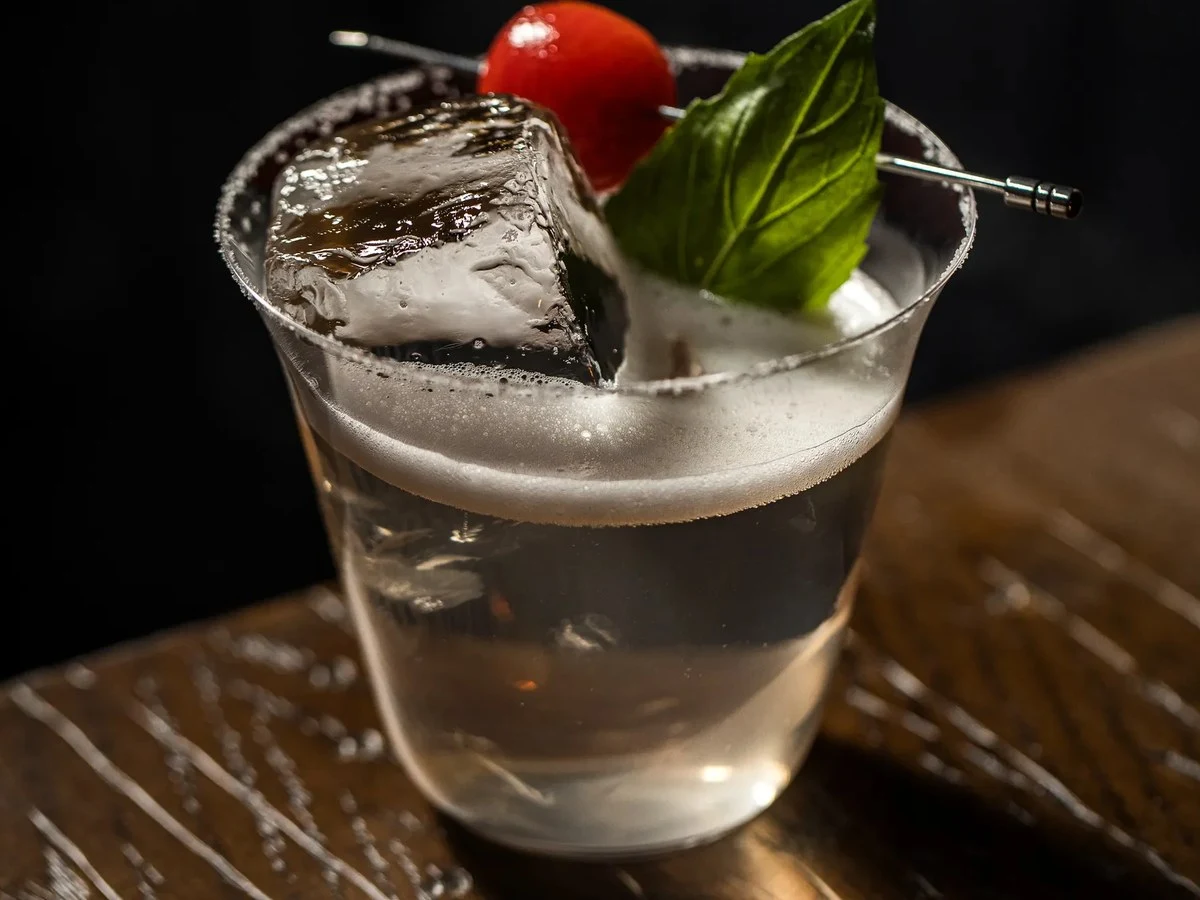
Sip & Guzzle's craft cocktail, representing the Tokyo-meets-New York drinks program.
The distinction he draws is between recognition that circulates within the trade and recognition that reaches the broader culture. Industry awards, competition titles, peer-voted honors: these matter to practitioners and they shape careers.
But the 50 Best lists, with their global reach and mainstream press coverage, carry the bar's name into rooms where it was not previously known.
For Gokan, whose work in Japan and China had been accumulating awards for years while his New York profile remained quieter than his peers', the North America's 50 Best top spot for Sip & Guzzle is the moment the American market catches up to what the rest of the world already knew.
For serious cocktail drinkers, the ranking is a signal worth acting on. Sip & Guzzle's concept, a Tokyo-meets-New York bar that holds two distinct drinking cultures in the same room, is not a gimmick. It is the product of Gokan's two decades of moving between those cities, absorbing what each one does best, and finding the point where they meet.
The bar's menu reflects that lineage. The precision of Japanese bartending, the hospitality culture that treats each drink as a considered act, sits alongside the energy and volume of a New York room that knows how to move.
That combination, built by two people who each spent a decade leading teams in the rooms that defined their respective sides of it, is what the judges recognized.
"This award has raised our profile without a doubt, but we just need to continue to deliver the quality of the product and the service that matches this recognition. Ultimately, consistency is what builds real credibility and connection over time."
, Shingo Gokan, bar owner and bartender, VinePair1
The win also matters for what it says about the direction of the American cocktail scene. Japanese bartending philosophy, built on restraint, technique, and an almost architectural attention to the guest's arc through the evening, has been influencing Western bar culture for years. Gokan has been one of its primary carriers, first at Angel's Share and now through a portfolio that spans continents. The North America's 50 Best top prize for Sip & Guzzle is the American market's clearest acknowledgment yet that this influence has moved from niche to central.
Mentorship as Legacy: The Next Generation Behind the Bar
The awards Gokan has collected are one measure of his career. The bartenders he has trained are another, and by his own account the more meaningful one.
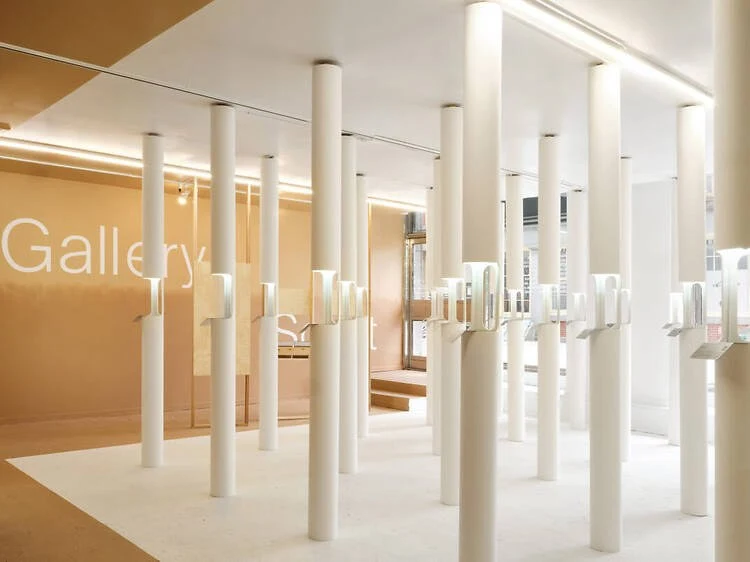
Double Chicken Please's gallery space, a testament to Shingo Gokan's mentorship legacy.
At Angel's Share, Gokan built what became one of the most generative bar teams in New York's recent history. GN Chan, who went on to co-found Double Chicken Please, trained under Gokan there. So did Takuma Watanabe, who now owns Martiny's. Both bars have become significant presences in New York's cocktail landscape in their own right. They are, in a direct sense, downstream of the culture Gokan built at Angel's Share across his decade at the bench.
"The bartenders I trained there are now making their mark all over the world from New York and Los Angeles to Bangkok and Cape Town," Gokan has said, "which makes me very proud. That experience shaped how I think about mentorship, culture, and building strong teams." The geography of that list is worth sitting with. A decade behind the bar at a single East Village address produced bartenders now working across four continents. That is not an accident of talent. It is the result of a deliberate investment in the people at the station beside him.
Gokan's approach to mentorship mirrors his approach to the guest experience: remove the ego from the center of the frame and let the work fill it. He does not talk about the bartenders he trained as extensions of his own legacy. He talks about them making their mark, as if the work belongs entirely to them now. Which, of course, it does. That is the point of training someone well.
He carries the same orientation into how he describes his own identity. For all the business infrastructure he now manages, 12 locations, partnerships across four countries, a global travel schedule that keeps him on the road for most of the year, Gokan does not reach for the title of entrepreneur or hospitality executive.
"I still refer to myself as a bartender," he has said. "At the core, my identity is still rooted behind the bar." It is a specific kind of conviction: that the discipline you learned first is the one that keeps everything else honest.
The next move for Gokan and Sip & Guzzle is, by his own framing, the same as the last one: show up, maintain the standard, and let the room do the work. Made By follows the people who shape what you eat and drink. Subscribe, and the next dispatch from the bench, the cellar, or the kitchen comes to you.
The Sunday letter
Get the next Made By guide in your inbox.
We send one email every Sunday morning with the guides and profiles we published that week.