1789
- 01CuisineModern French with Asian Influences
- 02CityBaiersbronn, Germany
- 03RecognitionOne Michelin Star
Six courses with Asian inflection
- 1 Michelin Star · Michelin Guide
- Michelin 1 Star · 2026
- Michelin 1 Star · 2025
- Michelin 1 Star · 2024
Precision carried to Tonbach
Seasonality comes first at 1789 in Baiersbronn, where the kitchen builds each plate by restraint rather than display. The restaurant holds one Michelin star, and the cooking carries modern French structure with Asian inflection. The grammar of the place is consistent: composed plates, named ingredients, and sauces or broths that support the centre rather than crowd it. Premium product is handled with minimal intervention, so a raw langoustine or a piece of Wagyu is asked to carry the course on its own texture. That is the whole argument of a six-course menu in a house this size, and it is why the room reads as a contemporary annexe rather than a second version of the older gastronomic dining rooms next door.
Six courses, two routes
The kitchen works through two six-course set menus, one built around fish and meat, the other vegetarian, with no à la carte alternative. That format gives the pass a narrow field and a clear rhythm. A 2025 sequence moves from Faroese salmon with imperial caviar, red beet, wasabi, and buttermilk to langoustine carpaccio with cucumber and bonito vinaigrette; later come Zander with pak choi and Tom Yam, corn-fed chicken with leek and shiitake, and a Cannolo dessert with Kalamansi, almond, rhubarb, nut butter, and raspberry. The vegetarian route answers with couscous, tofu dim sum, morels with potato, spinach, lotus root in dashi, red Thai curry, and Amatika chocolate brownie with mango and piña colada sorbet.
The signatures explain the method without needing much gloss. Langoustine is cut raw and thin, then given imperial caviar, cucumber, and bonito vinaigrette. Wagyu beef fillet is grilled and served with green asparagus, radish, shiso, and Asiajus, salted and little else. Wasabi, yuzu, shiso, dashi, shiitake, and Tom Yam are not used as a theme pasted over French cooking; they set acidity, salinity, perfume, and heat at measured points in the progression.
The room around the pass
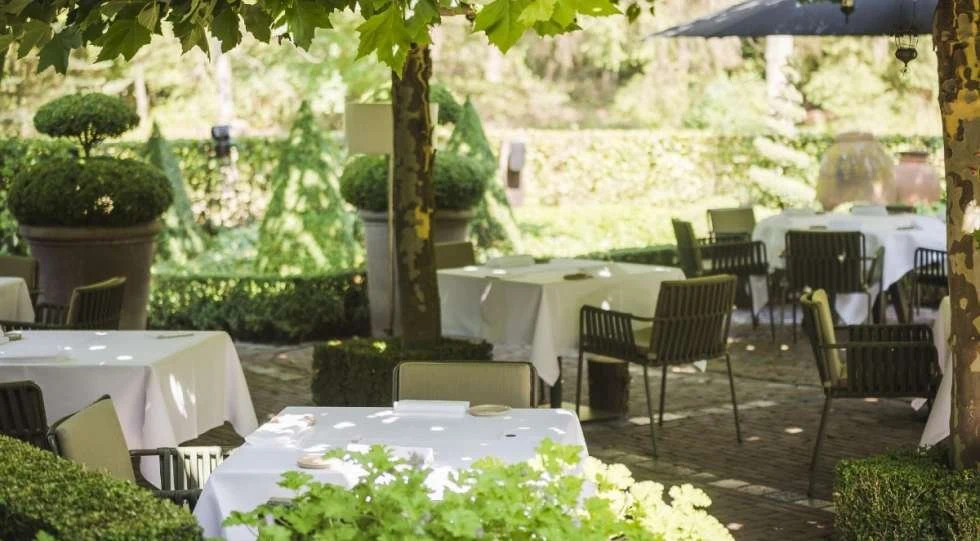
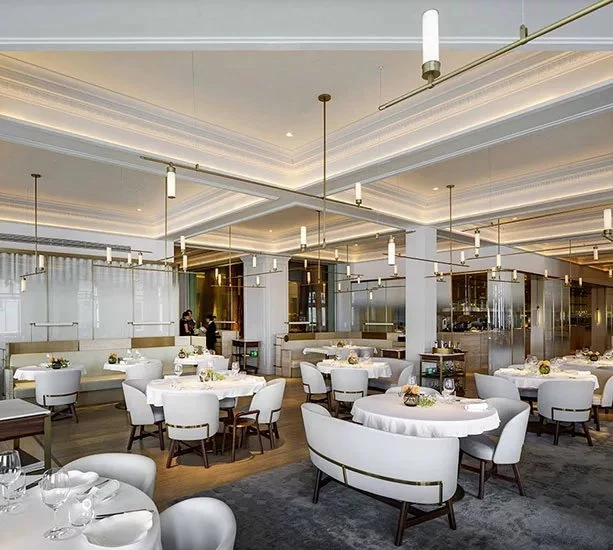
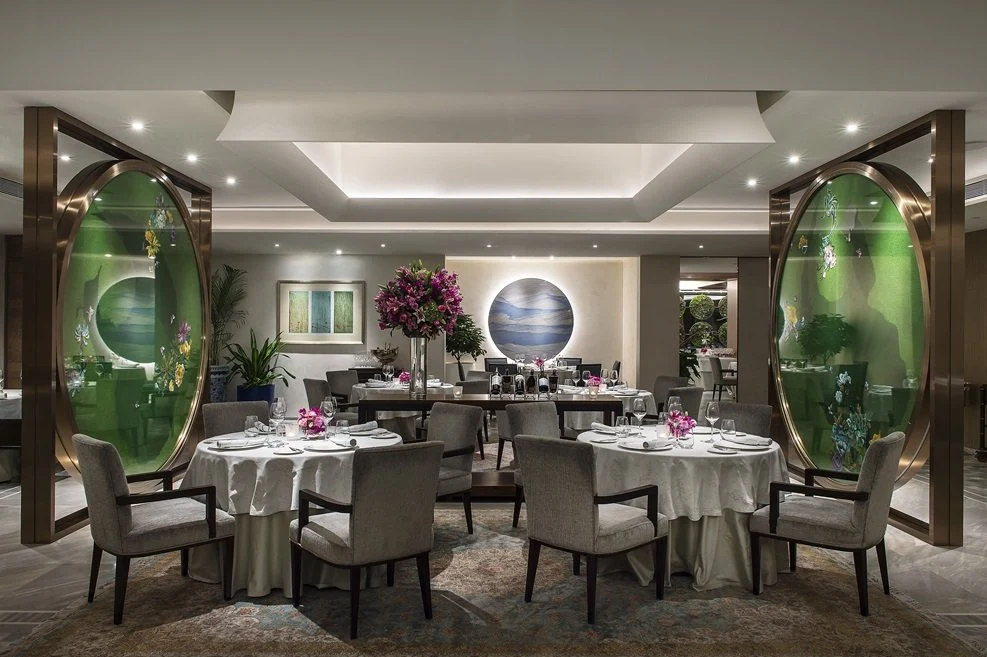
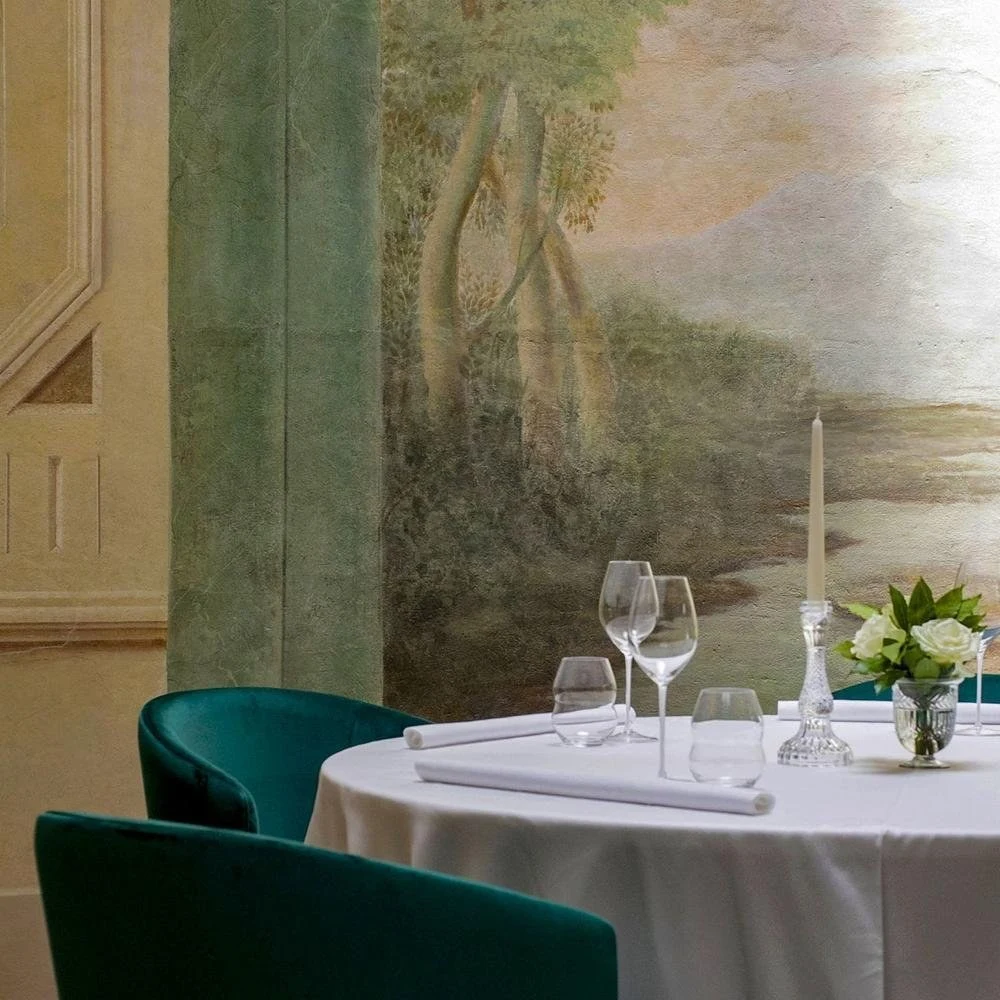
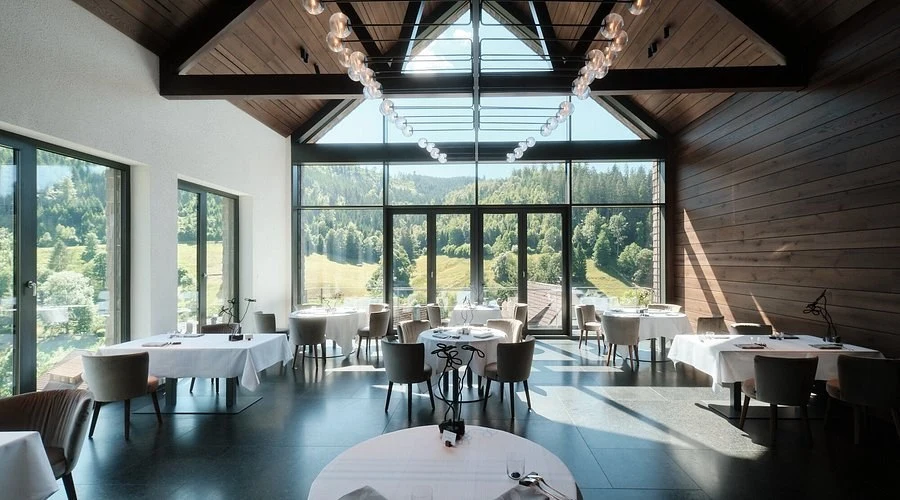
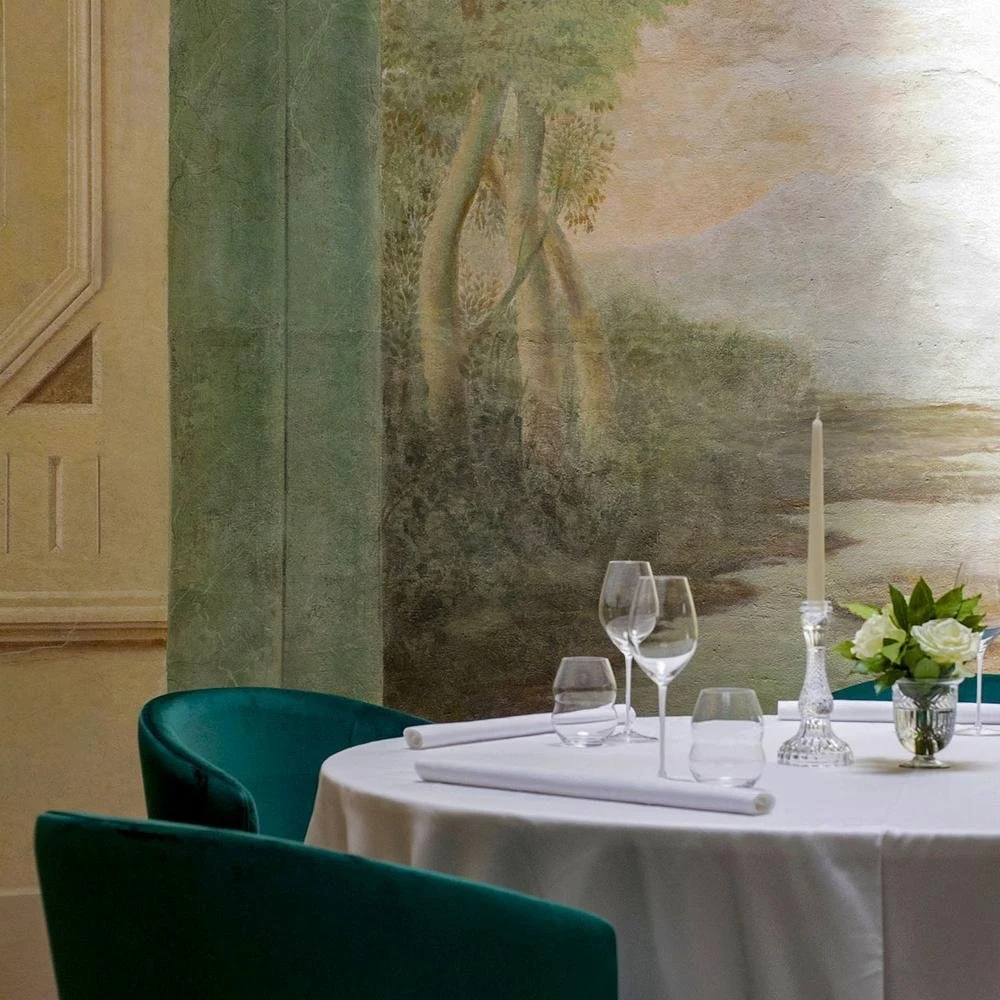
The room is intimate, minimalist, and quiet, with the kind of polish that lets service move without announcing itself. Guests sit in a modern dining room inside the larger Traube Tonbach house, close to the Black Forest but not dressed as rustic theatre, with the valley open beyond the windows. The design reads clean and composed, more Japanese-businesslike than grand hotel ceremonial, which suits a menu built from small decisions: the thickness of the langoustine slice, the restraint of salt on Wagyu, the way buttermilk softens beet and wasabi.
The wine program has the depth expected of the house, with pairings arranged around the six-course structure. In this room, the cellar's job is alignment. It has to meet caviar, dashi, Tom Yam, shiso, and Kalamansi without pulling the plate away from the bench.
A new room in an old house
The restaurant took shape after the hotel's 2020 fire and subsequent redesign, giving the Finkbeiner family's property a more contemporary dining register beside its long-established rooms. Hotel Traube Tonbach began in 1789 as a modest inn serving forest workers, about four kilometres from Baiersbronn inside what is now national park country, and the restaurant takes its name from that year. That history matters because 1789 is not trying to look old to borrow authority. It uses the date as lineage, then lets the kitchen speak in langoustine carpaccio, Wagyu beef fillet, and the quiet precision of the six-course menus.
Questions
Frequently asked
What kind of cooking is served at 1789?
1789 serves modern French cooking with Asian inflection. The kitchen builds composed plates through restraint, using ingredients such as wasabi, yuzu, shiso, dashi, shiitake, and Tom Yam to shape acidity, salinity, perfume, and heat.
What is the menu format?
The restaurant works through two six-course set menus, one based on fish and meat and one vegetarian. There is no à la carte alternative.
What are the signature dishes?
Langoustine carpaccio and Wagyu beef fillet are among the signature dishes. The langoustine is served raw and thin with imperial caviar, cucumber, and bonito vinaigrette, while the Wagyu comes with green asparagus, radish, shiso, and Asiajus.
What recognition does 1789 hold?
1789 holds one Michelin star.
How does booking work?
Reservation is essential, and bookings are taken through thefork.
The field
How it compares
| Place | Awards | Cuisine | Notes |
|---|---|---|---|
| 1789 | Michelin 1 Star | Modern French with Asian Influences | Tonbach, $$$$ |
| De Treeswijkhoeve | Michelin 2 Stars | Modern French with Asian Influences | Waalre |
| Jean Georges | · | Modern French with Asian Influences | Shanghai |
| Jing | Michelin 1 Star | Modern French with Asian Influences | Beijing |
| Neighborhood | Michelin 1 Star, World's 50 Best | Modern French with Asian Influences | Hong Kong |
| Restaurant Bareiss | Michelin 3 Stars | Neo-Classical French with Black Forest Influences | Baiersbronn |
| Schwarzwaldstube | Michelin 3 Stars, World's 50 Best | Modern French Fine Dining | Baiersbronn |
Similar places
Modern French with Asian Influences
De Treeswijkhoeve
Waalre, Netherlands
★★
Modern French with Asian Influences
Jean Georges
Shanghai, China
Modern French with Asian Influences
Jing
Beijing, China
★
Modern French with Asian Influences
Neighborhood
Hong Kong, Hong Kong
★ · 50 Best
Neo-Classical French with Black Forest Influences
Restaurant Bareiss
Baiersbronn, Germany
★★★
Modern French Fine Dining
Schwarzwaldstube
Baiersbronn, Germany
★★★ · 50 Best