- Michelin 1 Star · 2026
- Opinionated About Dining Top Restaurants in Japan Recommended · 2026
- Tabelog 100 #94: 3.9pts · 2025
- Opinionated About Dining Top Restaurants in Japan Ranked #557 · 2025
- Tabelog Bronze · 2025
- Michelin 1 Star · 2024
- Opinionated About Dining Top Restaurants in Japan Ranked #434 · 2024
- Opinionated About Dining Top Restaurants in Japan Recommended · 2023
Nishi-Shimbashi and the Counter Dining Tradition
The stretch of Tokyo between Shimbashi station and Toranomon has functioned as a professional and hospitality district since the postwar reconstruction era, and the dining rooms that developed here reflect that history. Unlike the more conspicuous restaurant clusters of Ginza or Roppongi, Nishi-Shimbashi built its reputation on rooms that serve regulars: senior business figures, neighbourhood professionals, and the kind of repeat clientele that sustains a counter-format restaurant through word of mouth rather than tourism. 新ばし 笹田, addressed at 1 Chome-23-7 in the Precious Court Toranomon building, sits squarely in that tradition.
This part of Minato City has seen considerable change in the past decade, with the Toranomon Hills development shifting the district's centre of gravity toward corporate hospitality and international-facing venues. Counter restaurants of the Nishi-Shimbashi type have, in that context, become more conspicuous by contrast: quieter, more fixed in character, and less oriented toward the spectacle-dining formats that newer towers in the area tend to attract. That tension gives restaurants like 新ばし 笹田 a specific kind of positioning, one that aligns more closely with the Ginza omakase tier than with the large-format venues a few blocks east.
The Room as the Argument
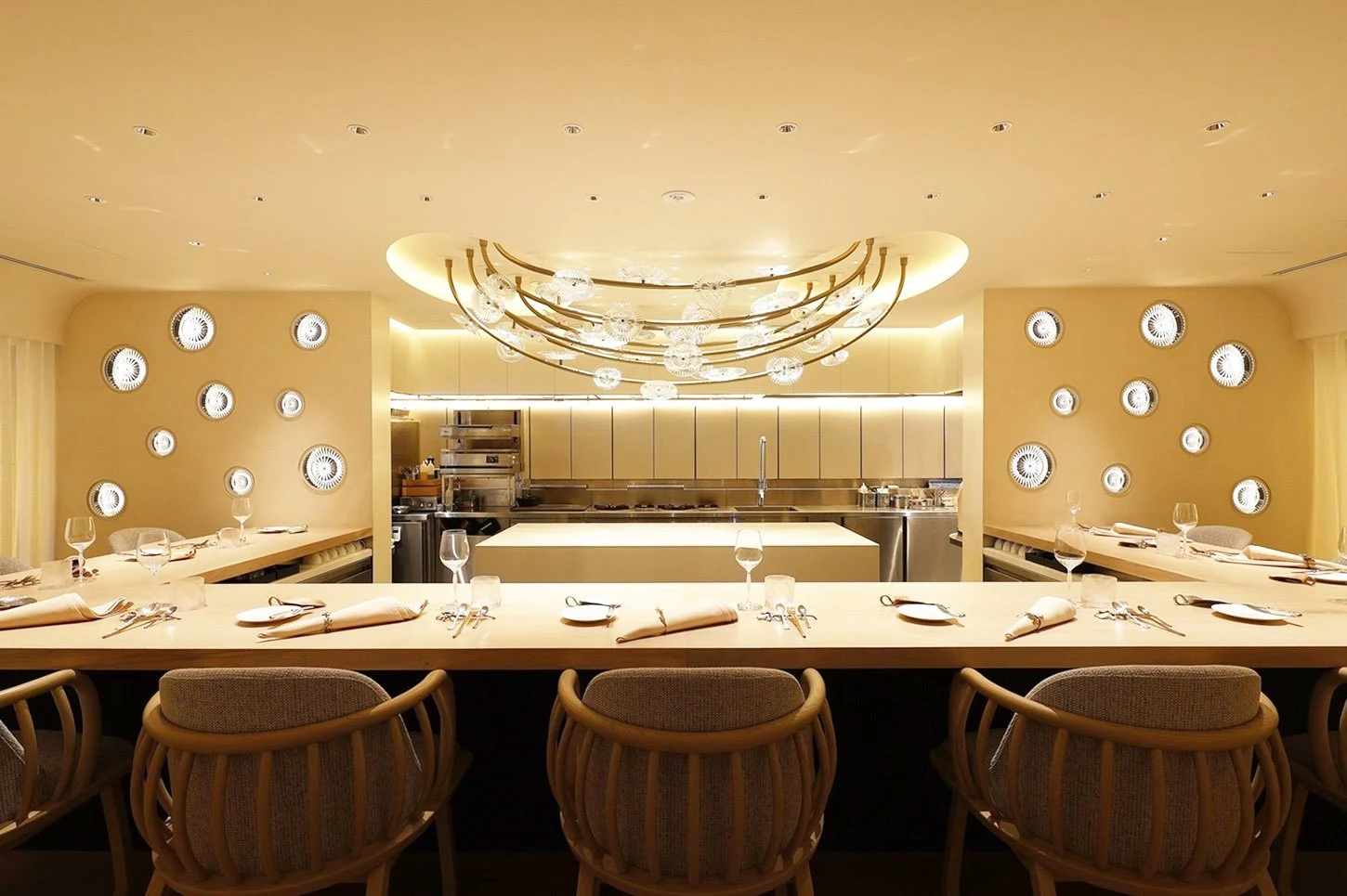
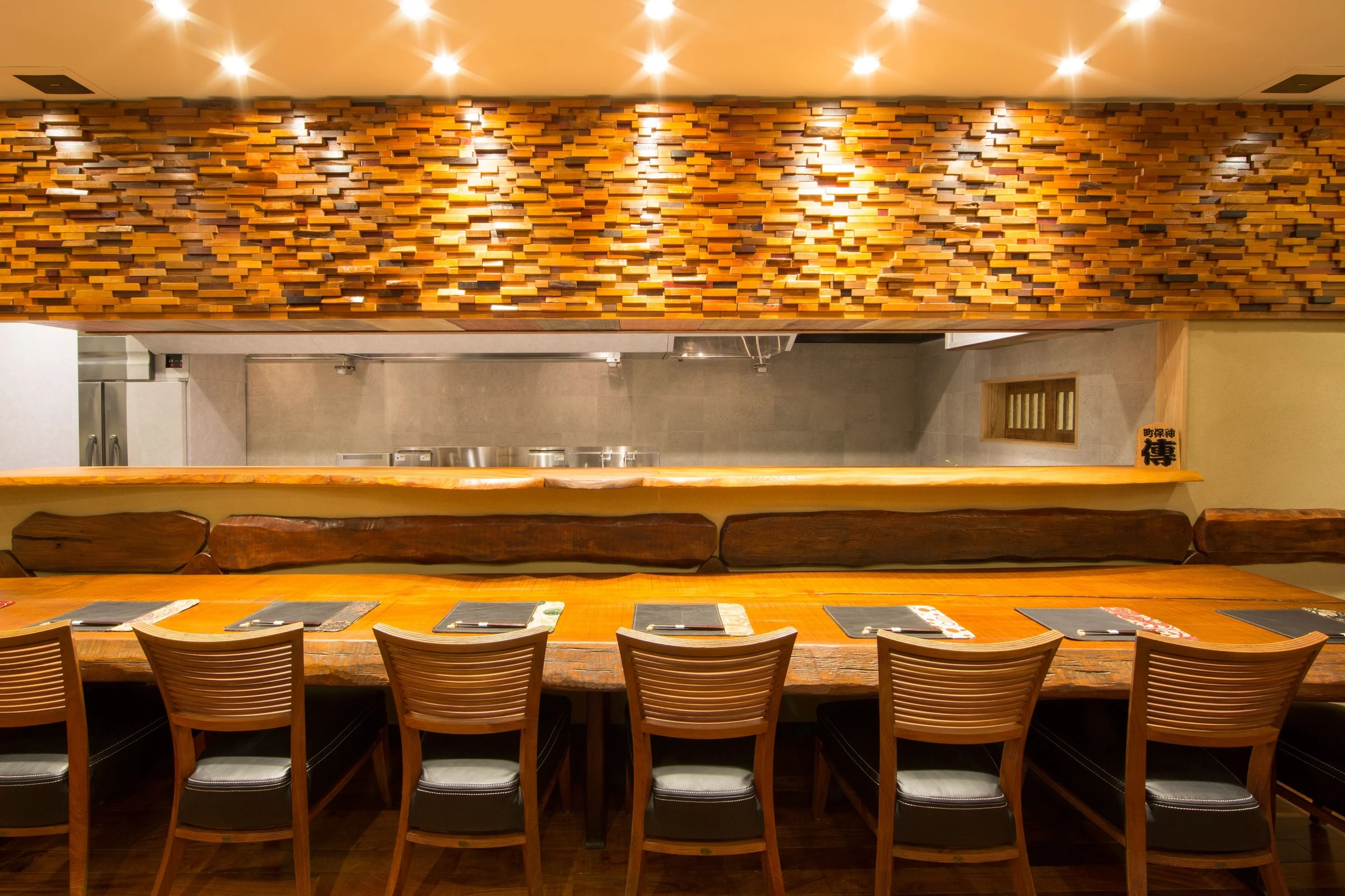
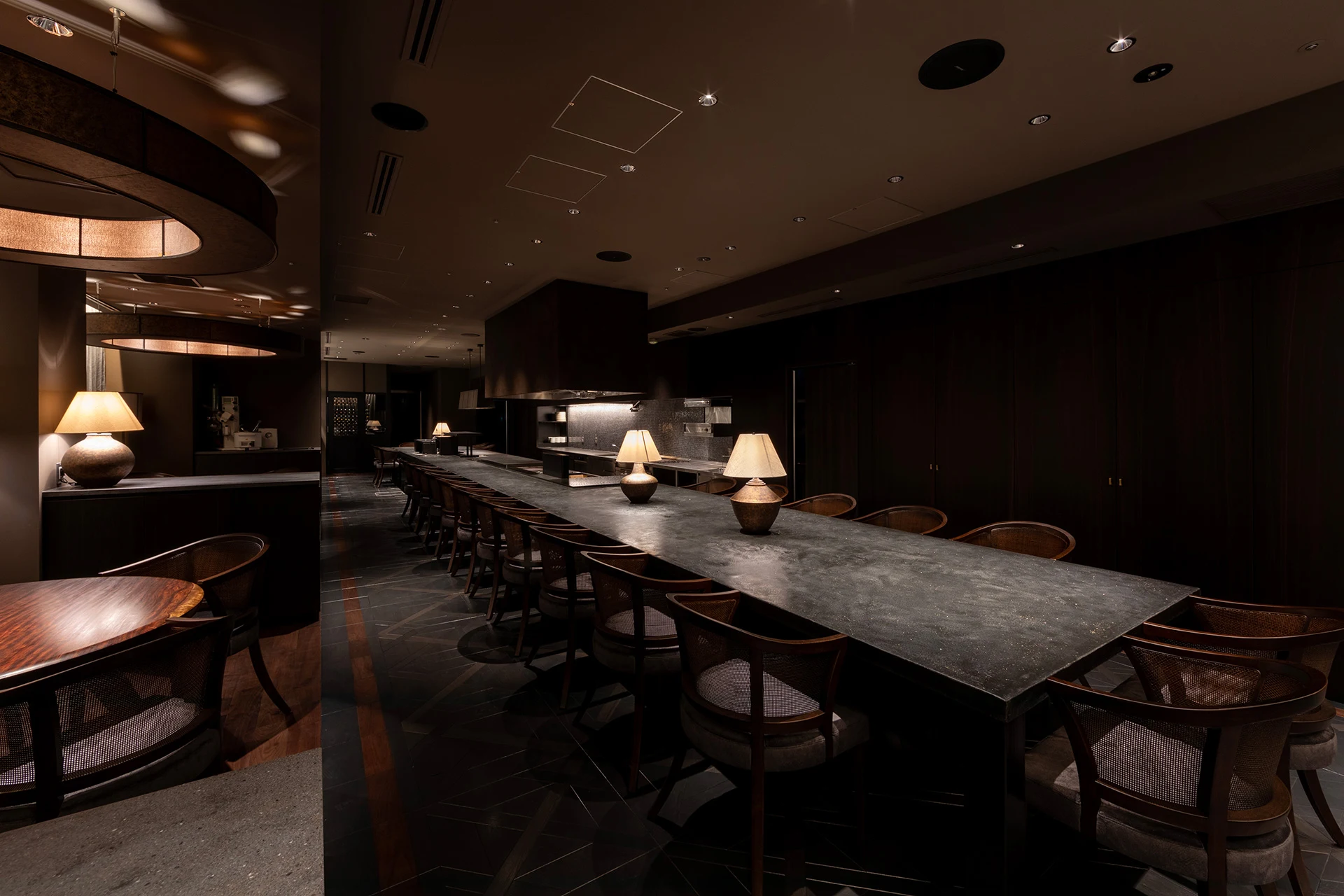
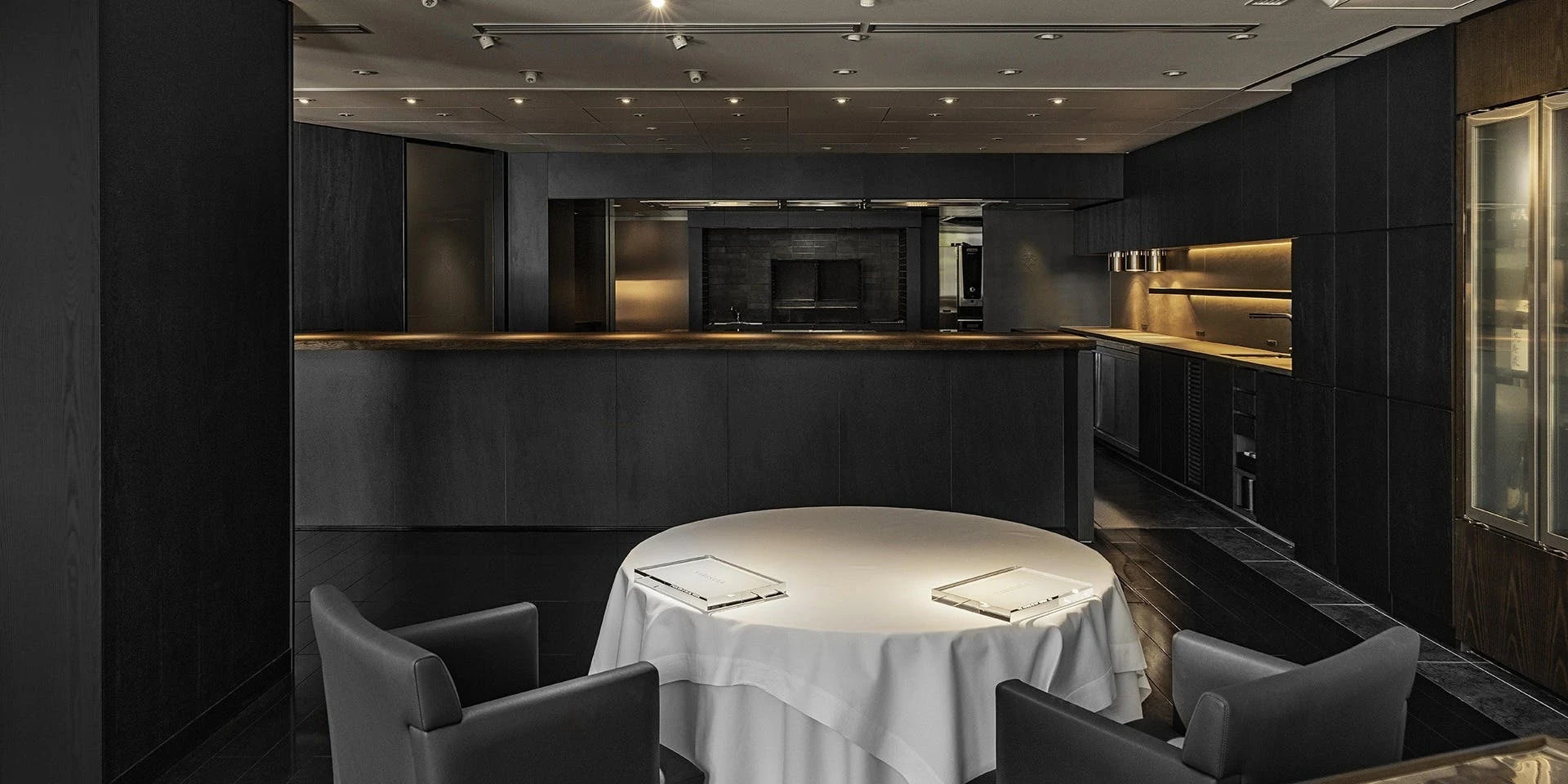
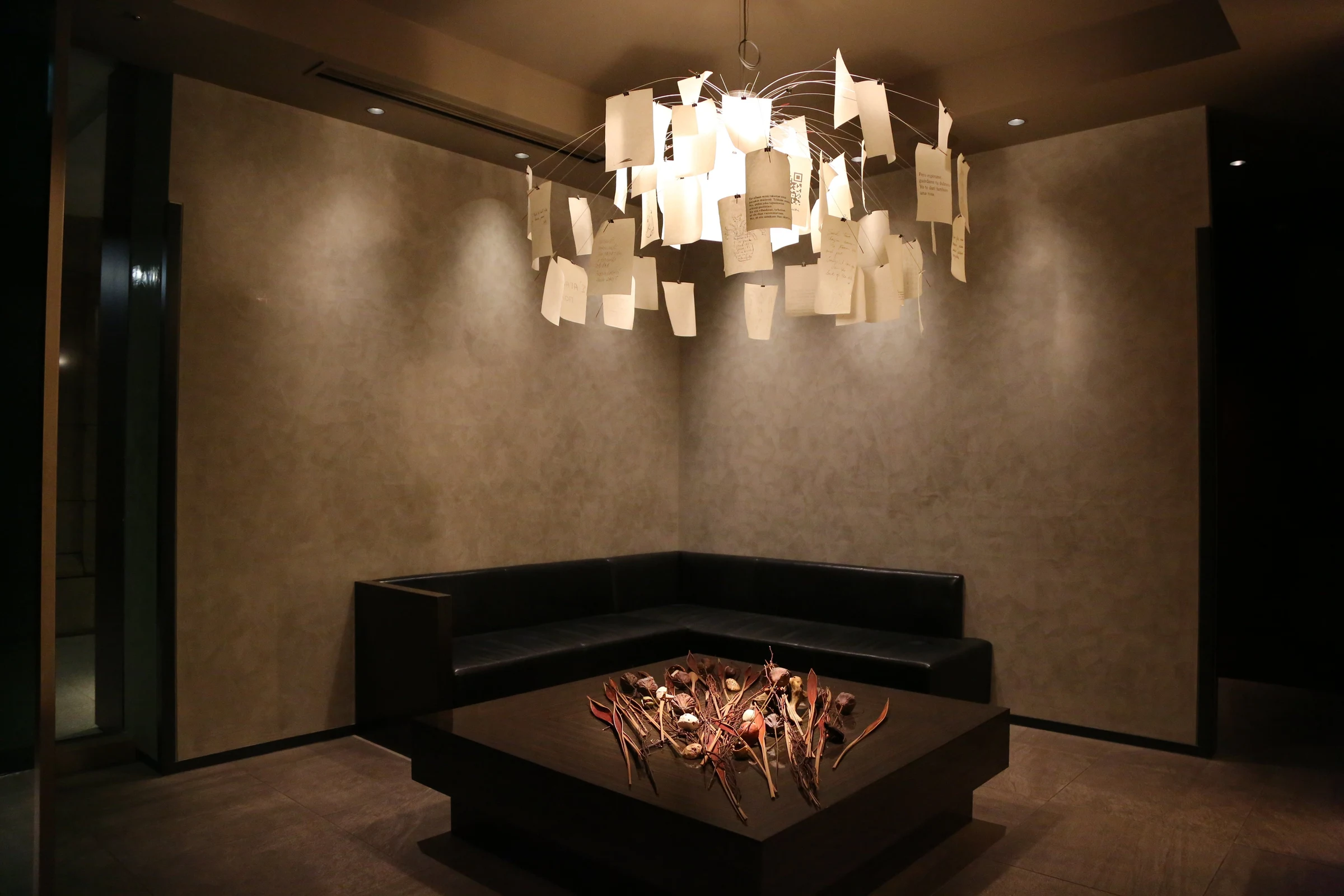
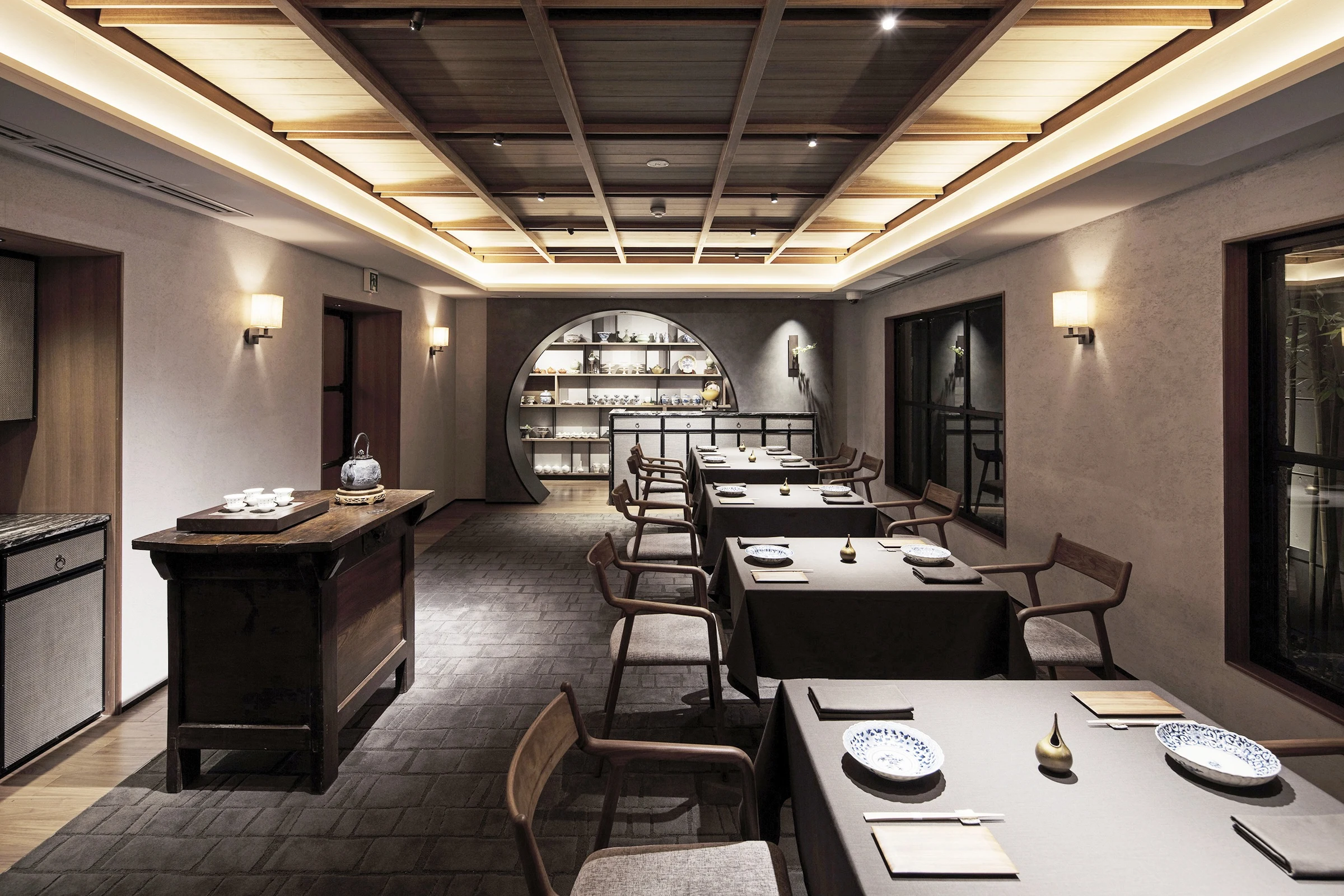
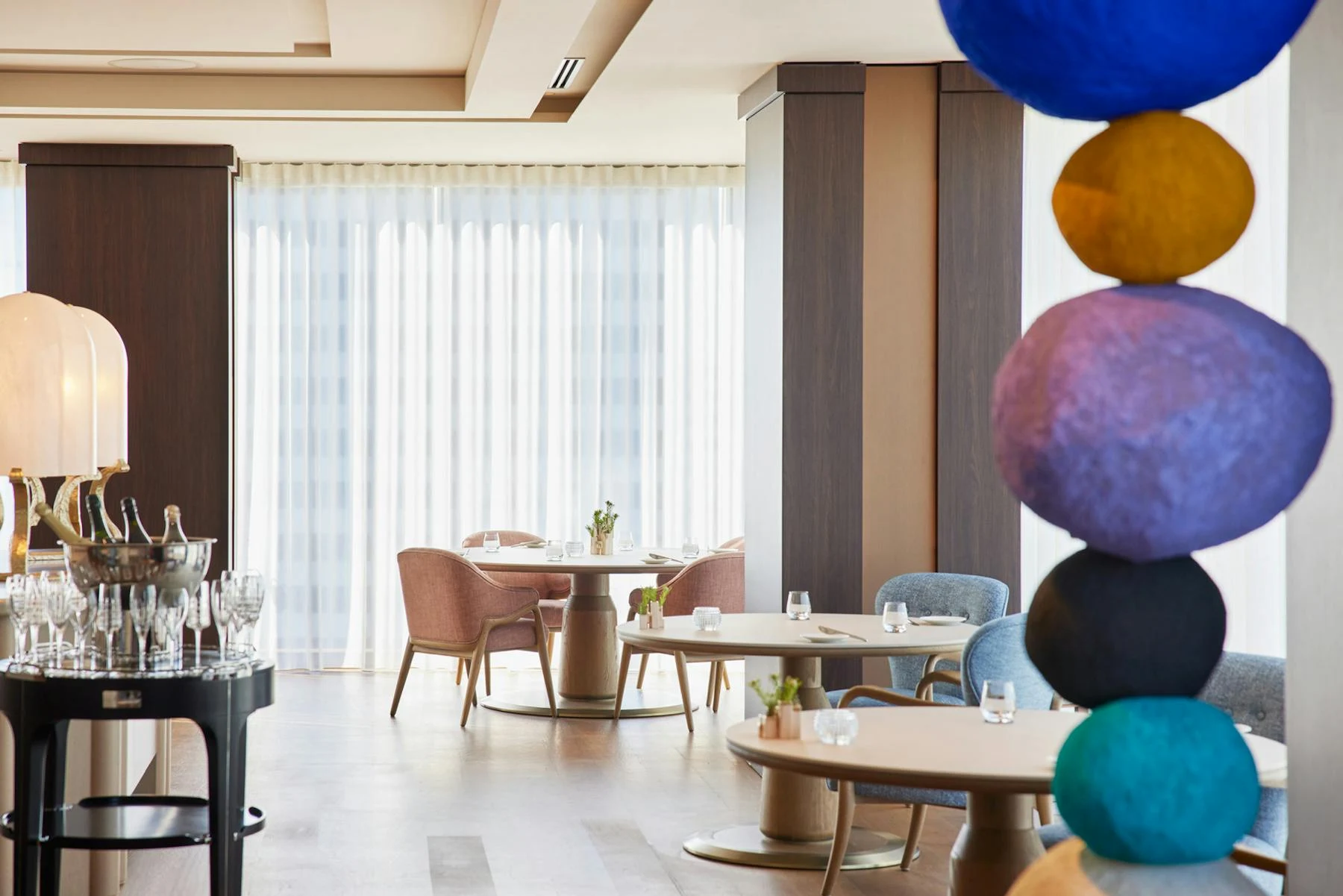
In Tokyo's premium counter restaurants, the physical container is rarely incidental. The room is the format: its dimensions determine seat count, the counter's depth sets the distance between chef and diner, and the materials, wood grain, ceramic surfaces, the quality of lacquerware, communicate the register of the meal before anything is served. This is a design tradition with deep roots in Japanese hospitality philosophy, where spatial restraint is understood as a form of attention rather than limitation.
Counter rooms of this type, common across the Shimbashi and Ginza corridors, tend toward compressed footprints. A room that seats eight to twelve diners at a single counter imposes a particular discipline: every element of the space is visible from every seat, and there is no back-of-house distance to hide behind. The counter format, as practised in this neighbourhood, is less a seating configuration than an architectural argument about the relationship between preparation and consumption. The room asks the diner to pay attention.
For comparable counter experiences in Tokyo's upper tier, Harutaka operates a similarly concentrated format, while RyuGin represents the kaiseki strand of the same counter-dining tradition. Both sit in the ¥¥¥¥ bracket and share the Shimbashi-to-Ginza axis as their competitive geography.
The Nishi-Shimbashi Dining Circuit
Minato City contains several distinct dining registers. The Toranomon corridor now draws international hotel restaurants and the French-leaning rooms that accompany them, a category well represented by L'Effervescence and Sézanne, both of which operate in the ¥¥¥¥ tier with strong Michelin records. The Nishi-Shimbashi pocket, by contrast, has preserved more of its pre-Toranomon-redevelopment character: smaller buildings, older tenant relationships, and a dining culture that does not rely on hotel foot traffic or online discovery.
That character shapes the competitive set for a restaurant like 新ばし 笹田. Its peers are not the large-format destinations in newly developed corridors, but the compact, reservation-dependent rooms that have operated in this district across multiple decades. Among newer entries into the innovative-dining space, Crony offers a point of comparison for how the neighbourhood's dining range has extended in recent years without displacing its older formats.
For those building a broader Japan itinerary, the logic of the Nishi-Shimbashi counter room extends to peer venues in other cities: Gion Sasaki in Kyoto and HAJIME in Osaka each represent the premium counter tradition in their respective cities, with comparable booking dynamics and spatial disciplines. Further afield, Goh in Fukuoka and akordu in Nara demonstrate how the counter format adapts across different regional contexts. Japan's broader dining circuit also includes rooms of this type in less-discussed cities: 一本木 肴川製 in Nanao, 夕仙山乃 in Sapporo, 湖隣庵 in Takashima, and 庄羽屋 in Nishikawa Machi. Outside Japan, the counter-dining parallel appears most clearly at Atomix in New York City, where the seated counter format frames a tasting experience with comparable intentionality, and at Le Bernardin, which represents the French-side equivalent of a room built around sustained precision over spectacle. Domestic comparisons include Birdland in Sakai and Bistro Ange in Toyohashi.
Planning Your Visit
Nishi-Shimbashi is a short walk from both Shimbashi Station (served by JR, Tokyo Metro Ginza Line, Yurikamome, and Toei Asakusa Line) and Toranomon Station on the Ginza Line, making access direct from most central Tokyo locations. The Precious Court Toranomon building at 1 Chome-23-7 is a small commercial address, which means the restaurant entrance may not be immediately visible from the street; allowing extra time to locate the building on a first visit is advisable.
Seasonal timing matters in this part of the city. Autumn and spring are the peak seasons for counter dining in Tokyo, when the gap between the city's food tourism demand and available reservation slots is widest. Rooms of this type typically operate on reservation-only formats, and the Shimbashi-Ginza corridor sees its highest competition for seats during those months. Reservations are essential, and booking well ahead is wise.
The Sunday letter
Get new places like 新ばし 笹田 every Sunday.
One email a week with the restaurants, bars and hotels we have just written up, and the people who run them.
One email a week. Unsubscribe from any issue.
Questions
Frequently asked
Who works at 新ばし 笹田?
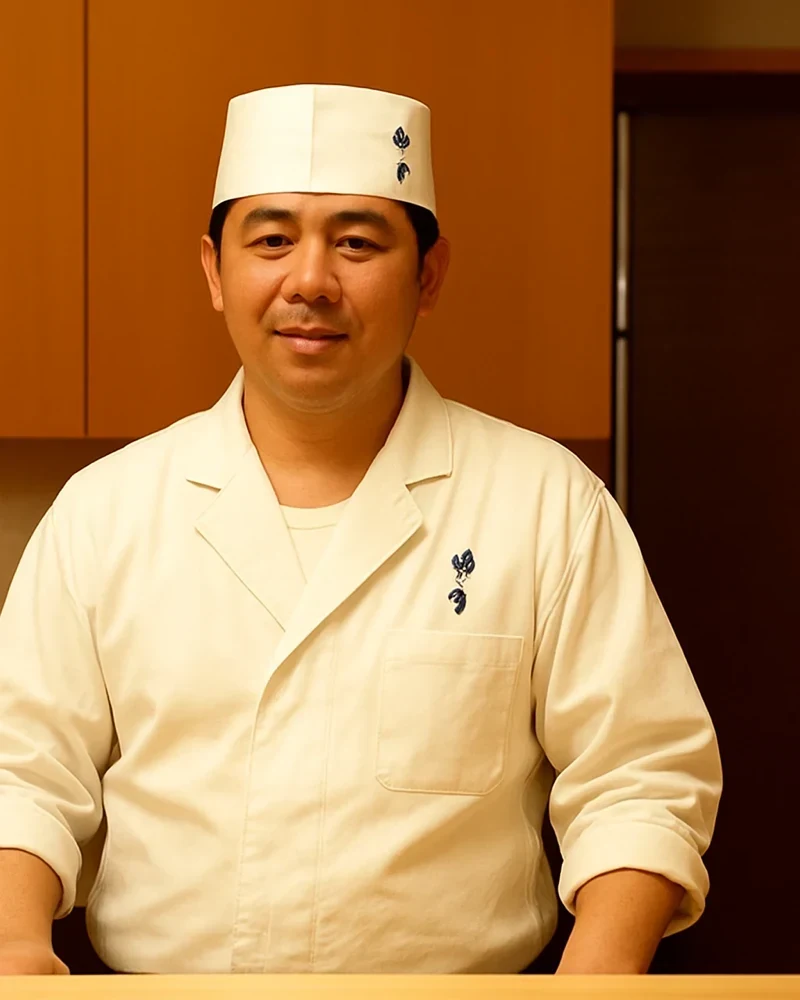
Made By profiles Hidenobu Sasada (Chef) at 新ばし 笹田.
How expensive is 新ばし 笹田?
新ばし 笹田 is listed at a price level of $$$.
Where is 新ばし 笹田 and what does it serve?
新ばし 笹田 is in Minato, Tokyo, serving Traditional Kappo Japanese.
The field
How it compares
| Place | Cuisine | Notes | Awards |
|---|---|---|---|
| 新ばし 笹田 | Traditional Kappo Japanese | Minato, $$$ | · |
| Den | Modern Japanese Kaiseki | Tokyo | Michelin 2 Stars, World's 50 Best |
| Florilège | Modern French-Japanese Plant-Based Fine Dining | Tokyo | Michelin 2 Stars, World's 50 Best |
| Narisawa | Modern Japanese Satoyama Fine Dining | Tokyo | Michelin 2 Stars, World's 50 Best |
| Quintessence | Modern French Fine Dining | Tokyo | Michelin 3 Stars |
| Sazenka | Modern Chinese Fine Dining | Tokyo | Michelin 3 Stars, World's 50 Best |
| Sézanne | Modern French Fine Dining | Tokyo | Michelin 3 Stars, World's 50 Best |
In residence
Similar places
Modern Japanese Kaiseki
Den
Tokyo, Japan
★★ · 50 Best
Modern French-Japanese Plant-Based Fine Dining
Florilège
Tokyo, Japan
★★ · 50 Best
Modern Japanese Satoyama Fine Dining
Narisawa
Tokyo, Japan
★★ · 50 Best
Modern French Fine Dining
Quintessence
Tokyo, Japan
★★★
Modern Chinese Fine Dining
Sazenka
Tokyo, Japan
★★★ · 50 Best
Modern French Fine Dining
Sézanne
Tokyo, Japan
★★★ · 50 Best
The Sunday letter
Get the next Made By story in your inbox.
We send one email every Sunday morning with the places and people we covered that week.
One email a week. Unsubscribe from any issue.