- Falstaff Winery - Listed · 2026
Approaching 4G Wines as a conventional Cape tasting stop misses the point. The mood is quiet, controlled and collector-facing: less cellar-door bustle, more private encounter with a wine project built around rarity, design and exacting selection. In a region where many estates sell the pleasure of place through lawns, lunches and open tasting flights, this address belongs to a narrower category, where the wine itself carries the hospitality brief.
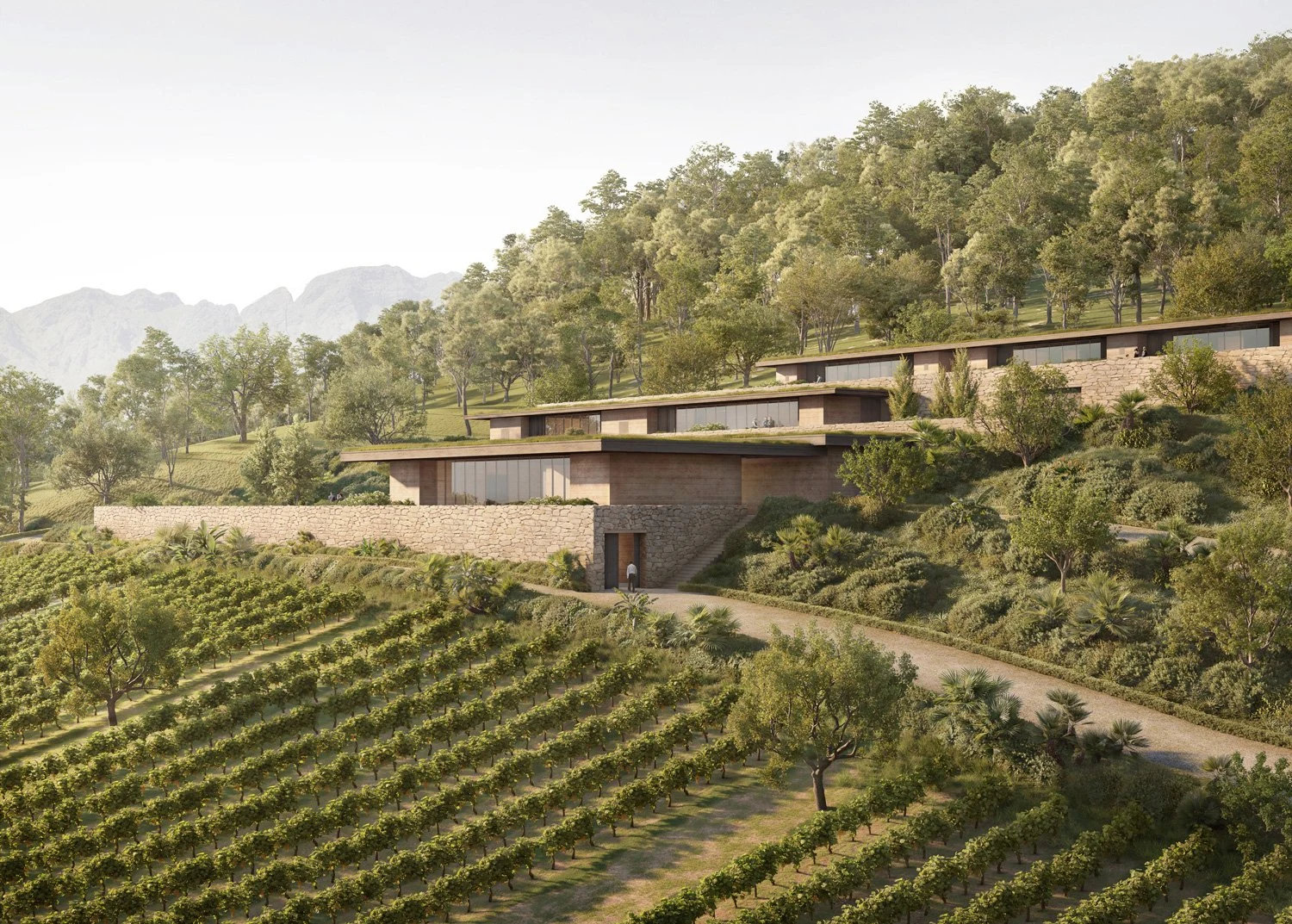
The setting is tied to the Western Cape rather than a single-vineyard claim. 4G works from selected parcels across the Cape, with a new architect-designed estate being developed in the mountainous Franschhoek Valley. That matters because the project’s central idea is not classical estate expression, but a composed Cape red assembled from multiple micro-sites. The result positions land and climate as components in a blend rather than as a single-origin signature.
A Cape red built from parcels rather than estate orthodoxy
South African fine wine has spent the past two decades arguing for precision: old-vine Chenin, maritime Pinot, granite-grown Syrah, high-altitude Cabernet. 4G enters that conversation from a different angle. Its focus is still red wine, but the method is deliberately composite, drawing from around fifteen selected vineyard parcels across the Western Cape and using berry-by-berry selection before fermentation. That approach treats the Cape as a palette of exposures, soils and ripening patterns, rather than a fixed vineyard address.
The flagship sits in the Bordeaux-blend-with-Syrah lane, using Cabernet Sauvignon, Merlot, Cabernet Franc, Petit Verdot and Syrah in varying proportions by vintage. The first vintage of the blend was 2010, following the project’s founding in 2009, so this is a relatively young entrant by Cape standards. Its ambition, however, is old-school in scale: to press a Cape red that can sit in the collector market on craft, scarcity and critical scrutiny rather than tourist familiarity.
That scarcity is not a decorative claim. Production is described as micro-scale, with the grand vin released at a maximum of 6,000 bottles per year, and total production across the flagship and The Echo of G. around 5,339 bottles. In practical collector terms, this moves the wine out of the normal tasting-room economy and into allocation logic. A waitlist is part of the experience, not an inconvenience attached to it.
The winemaking credentials sharpen the proposition. Dr Valérie Lavigne is named as winemaker, and the project’s founding story includes Bordeaux expertise through the late Professor Denis Dubourdieu. Those details are relevant not as romance, but because the wine’s competitive argument depends on technical discipline: selected parcels, old barrels, controlled extraction and blending decisions aimed at structure rather than simple ripeness.
Design, scarcity and the new luxury grammar of Cape wine
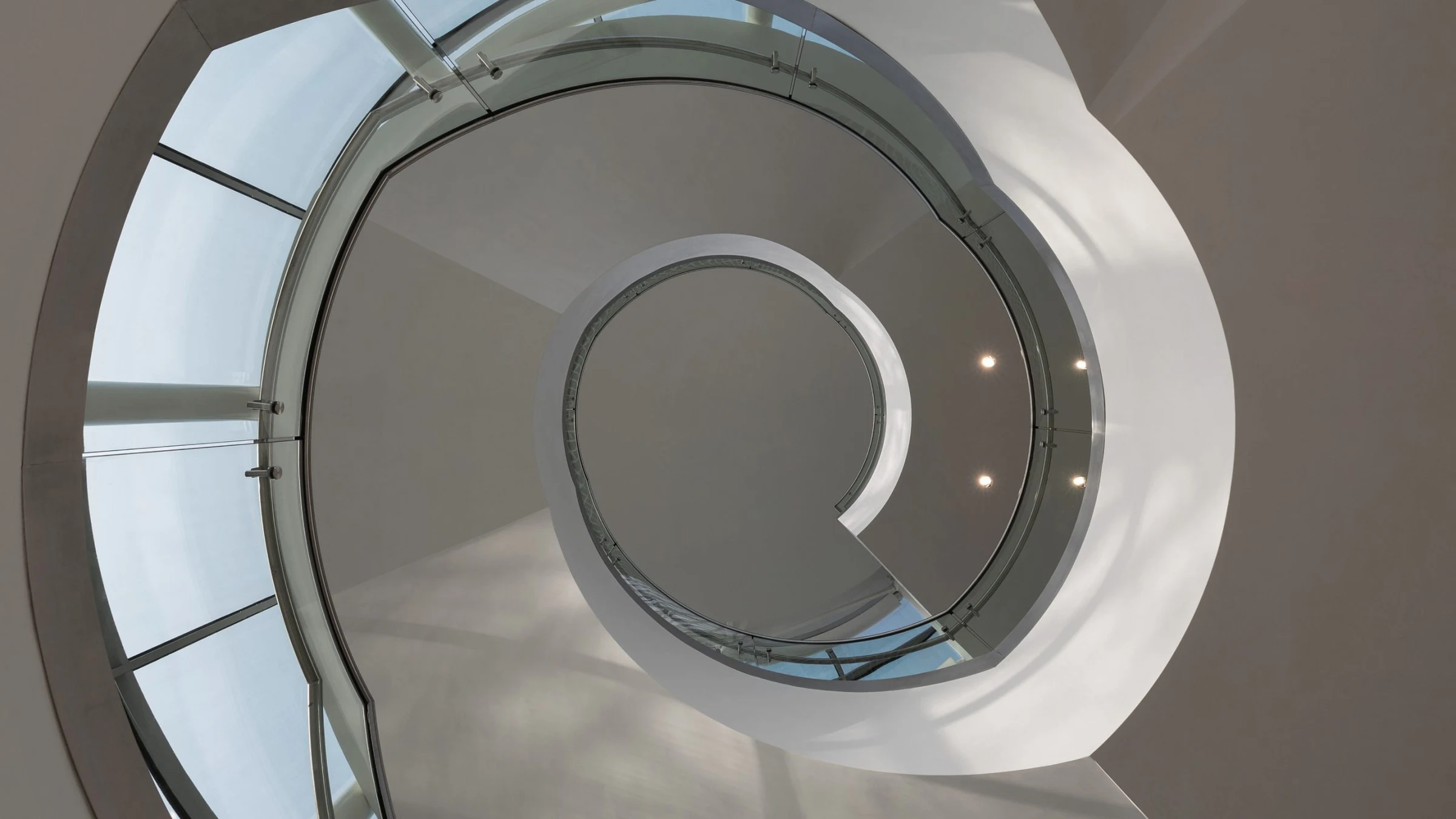
The Cape has many ways to perform luxury, from historic gabled estates to lunch-driven wine farms and architectural showpieces. 4G belongs to the last category, but with a stricter mood. Its future estate in Franschhoek is being developed with David Chipperfield Architects, a Pritzker Prize-winning practice, which places design at the centre of the experience rather than as decorative packaging. For a wine project built around art direction and precision, that architectural signal is part of the same language as the bottles, crates and labels.
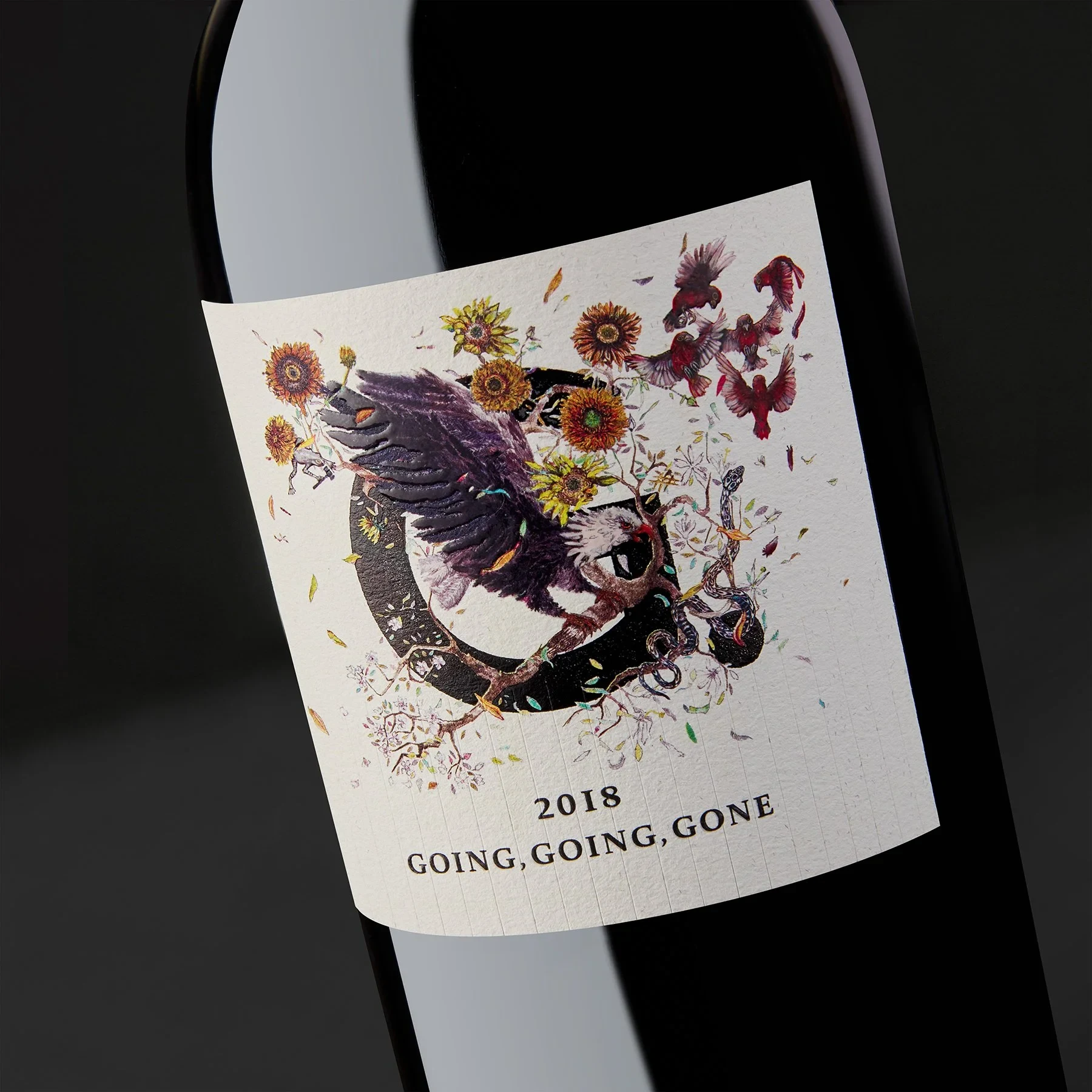
Portfolio is narrow. G. is the grand vin; The Echo of G. is the secondary label. That two-wine structure is common in luxury wine because it creates hierarchy without diluting the message. The 2017 G. Zwizzirön is associated with a 100-point score, and G. Going, Going, Gone 2018 has been cited for performance in a blind tasting at 67 Pall Mall in London against 100-point Parker wines. Those recognition points matter because the project is not trading on a centuries-old family estate narrative. It has to prove itself through the glass, through scarcity and through external comparison.
Terroir expression here is therefore indirect. Instead of asking one vineyard to speak, the blend asks the Western Cape to be edited. Cabernet-family varieties bring architecture; Syrah broadens the register; parcel selection gives the team the ability to adjust across vintage conditions. That is a modern, intervention-aware model of place: less pastoral purity, more disciplined composition.
Readers planning a wider Cape itinerary should treat this as the collector counterpoint to more public-facing wine travel. The broader regional map is useful: Our full Kapstadt wineries guide gives the city-level frame, while nearby Cape wine references include Sterhuis Wines and Terracura Wines. For a broader South African wine circuit, compare formats across A. A. Badenhorst Family Wines in Paardeberg, Aaldering Estate in Stellenbosch, Alheit Vineyards in Hermanus, Allée Bleue in Groot Drakenstein, Allesverloren in Riebeeck West and Anthonij Rupert in Franschhoek.
How to place it within a Cape trip
This is a private, collector-focused winery experience, not a drop-in afternoon with a tasting flight and a terrace table. The visit type is appointment only, the noise level is quiet, the dress code is smart casual and the price level sits at the luxury end. Food pairing is not part of the listed format, and the emphasis falls on private tasting, design and wine education rather than a restaurant-led estate day.
That makes it better suited to travellers who already understand Cape wine and want to see how the region’s luxury tier is changing. The useful comparison is not another named estate, but another model: public hospitality versus allocation culture. 4G Wines leans hard toward the latter. The bottle, the parcel selection and the scarcity are the experience.
For the rest of a Kapstadt itinerary, build around contrast. Use Our full Kapstadt restaurants guide for dining before or after a wine day, Our full Kapstadt hotels guide for sleep logistics, Our full Kapstadt bars guide for the city’s drinking culture beyond cellar doors and Our full Kapstadt experiences guide for non-wine planning. For readers tracking wine beyond South Africa, »der Steiner« Hans Steiner in Podersdorf am See and & Handwein in Mannheim show how smaller European producers frame place through different hospitality and production models.
Questions
Frequently asked
Who works at 4G Wines?
Made By profiles Valérie Lavigne (Winemaker) at 4G Wines.
How expensive is 4G Wines?
4G Wines is listed at a price level of $$$$.
The field
How it compares
| Place | Notes | Awards |
|---|---|---|
| 4G Wines | Franschhoek Valley, $$$$ | · |
| Bodegas Muga | Haro | World's 50 Best |
| BOND Winery | Napa | · |
| Château Lynch-Bages | Pauillac | · |
| Chateau Petrus | Pomerol | · |
| Sterhuis Wines | Kapstadt | · |
| Terracura Wines | Kapstadt | · |