99 sushi bar
- 01CuisineJapanese Sushi with Fusion
- 02CityMadrid, Spain
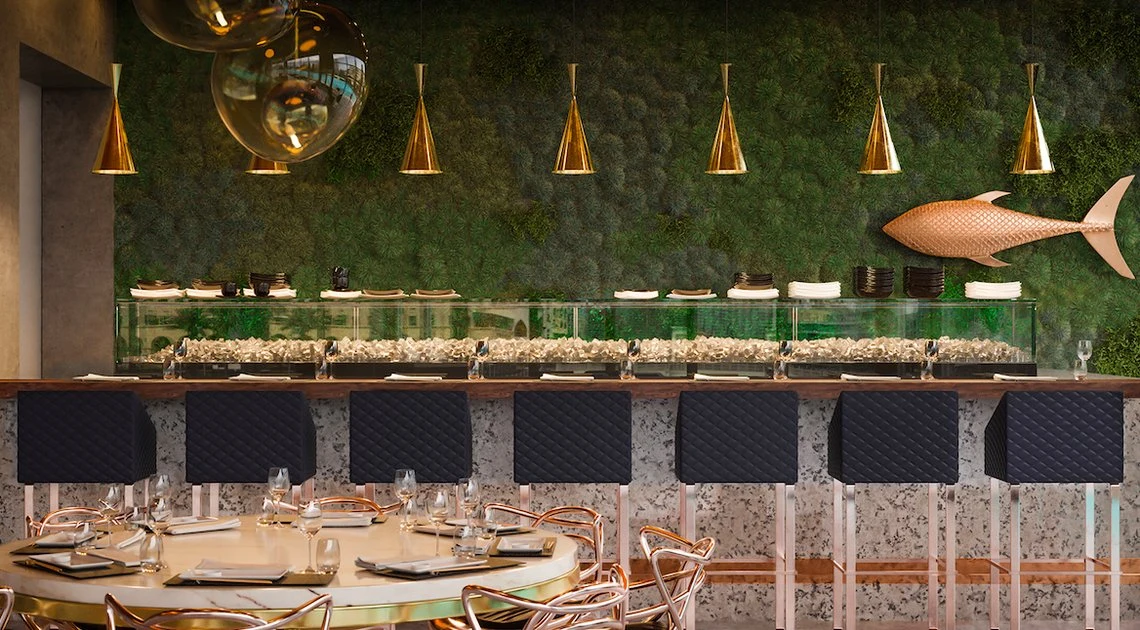
Nigiri cut at the bar
- Opinionated About Dining Top Restaurants in Europe Recommended · 2026
- Michelin Plate · 2026
- Michelin Plate · 2025
- Opinionated About Dining Top Restaurants in Europe Ranked #540 · 2025
- Michelin Plate · 2024
- Opinionated About Dining Top New Restaurants in Europe Recommended · 2023
Raw fish cut to the bar
The knife work at 99 sushi bar in Madrid begins close to the counter, where Iván Muñoz, Chef, works inside a house built around fish, rice and controlled fusion. His published cooking language is Madrid author cuisine, carried by inherited recipes, recognizable products and local memory, and that matters here because the room asks for a different kind of restraint. The menu gives him Japanese forms, then lets Spanish influence enter through product and seasoning rather than noise.
Muñoz is best known through Chirón, where the role of cocinero is tied to Madrid roots, La Mancha references and a personal hand on traditional recipes. At 99 sushi bar, the named brief is narrower: traditional Japanese sushi with fusion Spanish influences, using premium raw fish prepared at the bar. What can be seen in the work is the meeting point: authorial cooking disciplined by nigiri, maki, gunkan and small plates, with the product left visible.
Gunkan, maki and a cellar of references
The program moves through à la carte plates rather than a fixed procession, giving the bench room to repeat the same gesture under different pressures. Scallop nigiri, Alaskan king crab gunkan and toro tuna maki sit among the signatures; elsewhere the brand language includes flambé nigiri, tempura, tartars, warm nigiris and black cod with red miso. The Spanish influence comes through pairings and garnishes, through truffle, Iberian air dried beef, Arzúa cheese, red mojo, olive oil or pistachio, not through a rejection of the sushi form.
Measurement here belongs to the program. Half rolls of 4 pieces sit beside full rolls of 8, allowing the table to move across more cuts without turning the meal into a catalogue. The wine list runs to more than 300 references, a large cellar for a sushi counter, and its purpose is practical: pairing fatty tuna, shellfish, tempura and fermented soy with enough range to keep the palate clean. Since 2005, Grupo Bambú has used 99 Sushi Bar as its Madrid template for this style of Japanese haute cuisine, one built from raw material first, decoration second.
Red tones, bonsai and the quiet counter
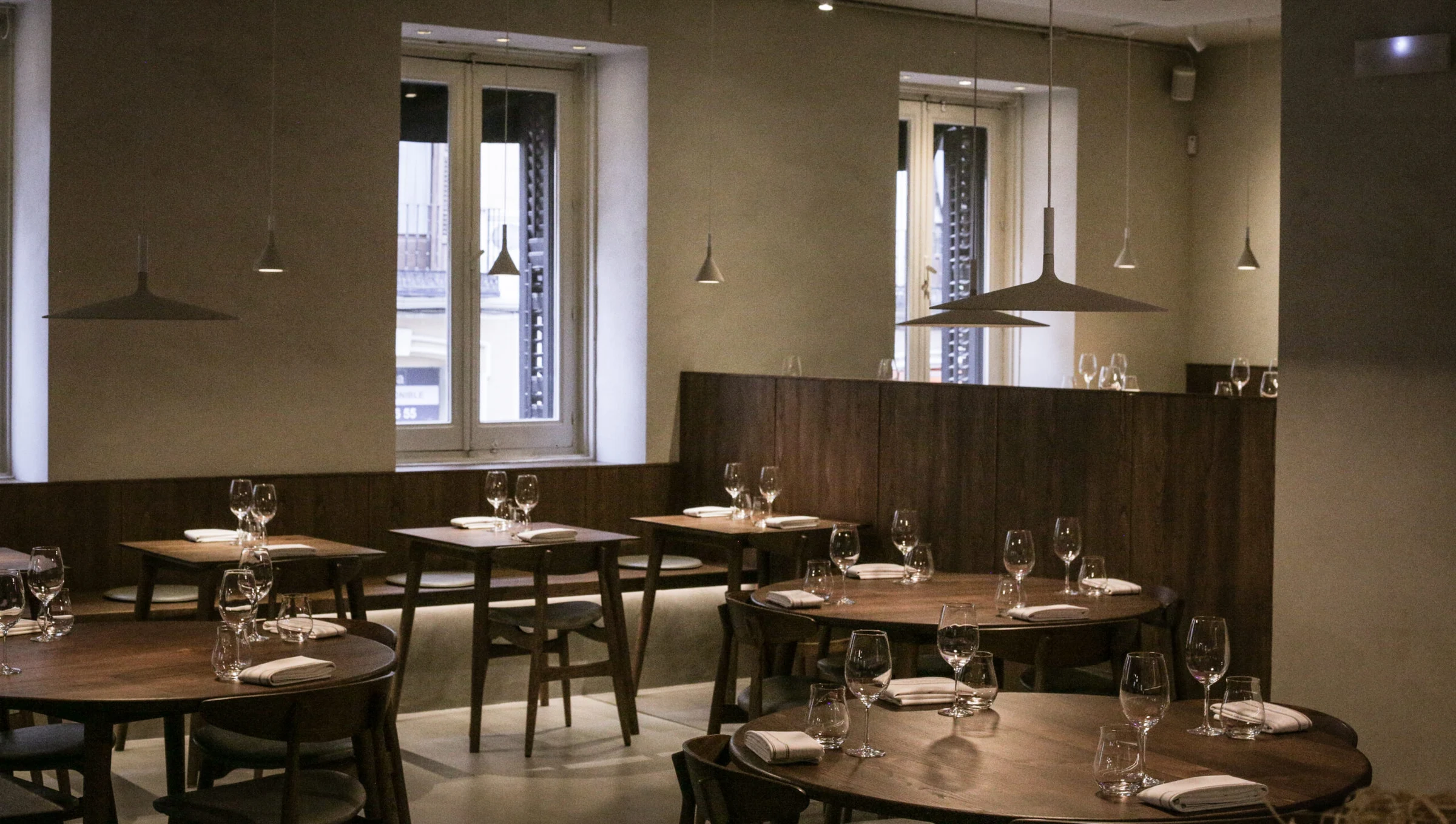
The room in Barrio de Salamanca keeps its voice low. Bonsais, red tones and polished decoration frame an intimate salon, but the most useful seat is still the one with a line to the bar, where rice, fish and garnish come together in a few movements.
It is a small room by temperament as much as capacity, made for concentration rather than spectacle. Alaskan king crab gunkan arrives as a compact construction, toro tuna maki carries fat against avocado, shiso, daikon and red tobiko, and scallop nigiri depends on the cut staying clean. The close work is the point. If the brand has grown across Madrid and beyond, this address still returns the eye to the counter, to the scallop nigiri and the hands that set it down.
Questions
Frequently asked
What kind of restaurant is 99 sushi bar?
99 sushi bar is a Japanese sushi restaurant with Spanish fusion influences. The menu uses Japanese forms and brings in Spanish product and seasoning rather than changing the shape of the dishes.
Who cooks at 99 sushi bar?
Iván Muñoz works at the counter at 99 sushi bar in Madrid. The page copy says the room is built around his approach to Japanese sushi with Spanish influence.
What is 99 sushi bar known for?
The restaurant is known for premium raw fish prepared at the bar, with signatures including scallop nigiri, Alaskan king crab gunkan and toro tuna maki. The wine list is also substantial, with more than 300 references.
What is the setting like?
99 sushi bar has an intimate room in Barrio de Salamanca with bonsais, red tones and polished decoration. The counter is the main point of focus.
Do you need to book?
Reservations are recommended at 99 sushi bar. The restaurant is open every day for lunch and dinner.
The field
How it compares
| Place | Cuisine | Notes | Awards |
|---|---|---|---|
| 99 sushi bar | Japanese Sushi with Fusion | Hispanoamerica, $$$ | · |
| Coque | Modern Spanish Fine Dining | Madrid | Michelin 2 Stars |
| Corral de la Morería | Modern Spanish Fine Dining with Flamenco | Madrid | Michelin 1 Star |
| Desde 1911 | Premium Seafood Fine Dining | Madrid | Michelin 1 Star |
| DiverXO | Avant-Garde Spanish Tasting Menu | Madrid | Michelin 3 Stars, World's 50 Best |
| DSTAgE | Avant-Garde Spanish Tasting Menus | Madrid | Michelin 2 Stars |
| Paco Roncero | Avant-Garde Spanish Fine Dining | Madrid | Michelin 2 Stars |
Similar places
Modern Spanish Fine Dining
Coque
Madrid, Spain
★★
Modern Spanish Fine Dining with Flamenco
Corral de la Morería
Madrid, Spain
★
Premium Seafood Fine Dining
Desde 1911
Madrid, Spain
★
Avant-Garde Spanish Tasting Menu
DiverXO
Madrid, Spain
★★★ · 50 Best
Avant-Garde Spanish Tasting Menus
DSTAgE
Madrid, Spain
★★
Avant-Garde Spanish Fine Dining
Paco Roncero
Madrid, Spain
★★