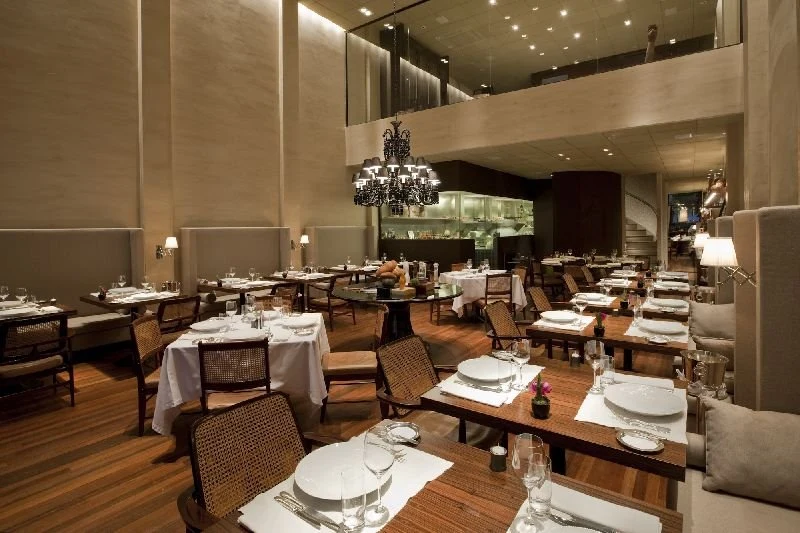
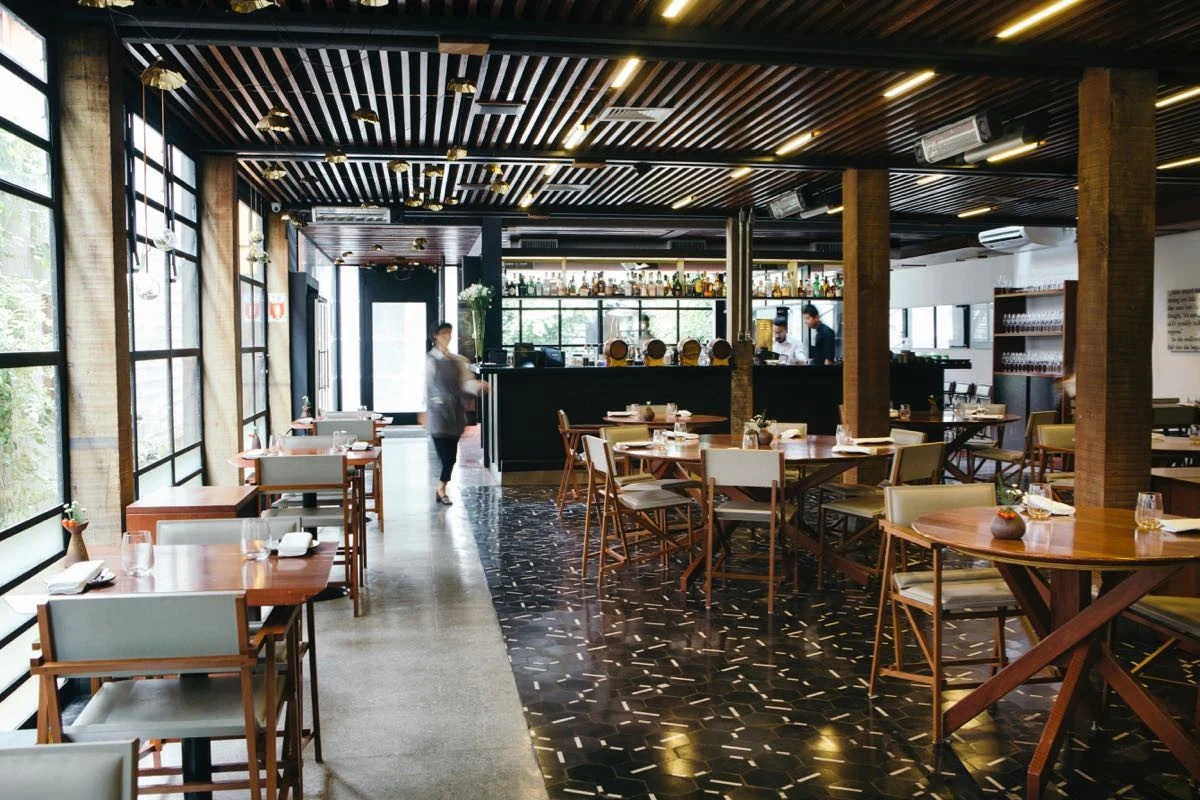
Ama.zo - Cozinha Peruana
In Residence
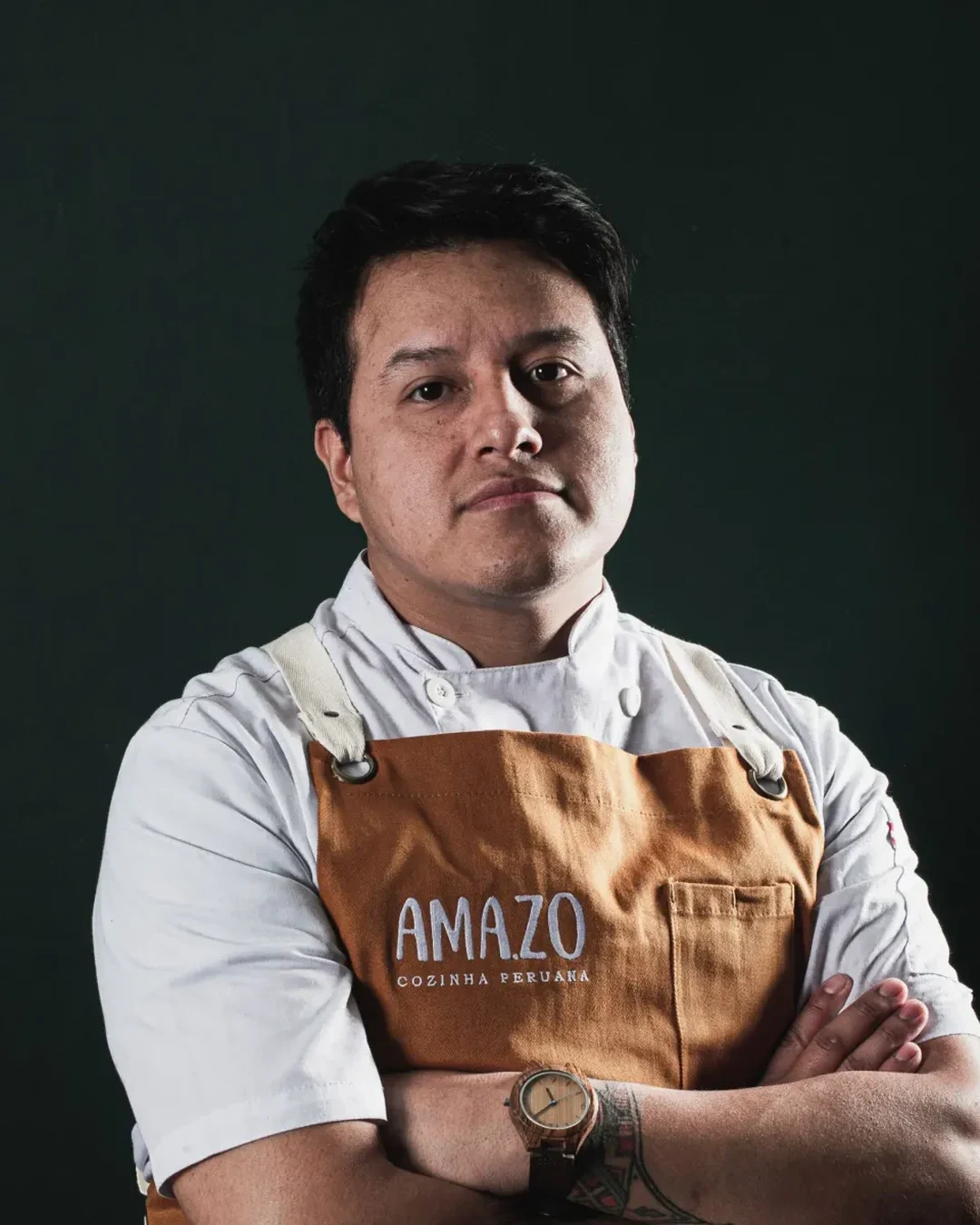
Enrique Paredes
Chef
- 01CuisineModern Peruvian with Amazonian Influences
- 02CitySão Paulo, Brazil
- Michelin Plate · 2026
- Michelin Plate · 2025
- We're Smart World 1 Radish · 2025
- Michelin Plate · 2024
Peruvian Cooking in the Campos Elíseos Context
São Paulo's dining scene has absorbed waves of immigrant cooking traditions across more than a century, and Peruvian cuisine is among the more recently visible additions. Where the city's Japanese and Italian inheritances are woven into everyday eating at every price point, Peruvian food sits in a narrower band: a handful of mid-range addresses competing for a growing audience that has already encountered the cuisine through the global cevichería wave. Campos Elíseos, a neighbourhood whose late-nineteenth-century grandeur has given way to a denser, more mixed urban character, does not usually draw dining tourists, which makes the presence of a Michelin-recognised Peruvian restaurant on Rua Guaianases a detail worth noting when you are mapping the city's restaurant geography.
Ama.zo Cozinha Peruana has held a Michelin Plate in both the 2024 and 2025 editions of the São Paulo guide, placing it in a comparable set that includes the city's most consistently regarded mid-market addresses. The Plate classification does not carry the star's weight in international shorthand, but within the guide's own logic it represents a meaningful threshold: the food is worth the visit. At the Ama.zo Pátio Higienópolis branch, the same kitchen identity reaches a different neighbourhood audience, though the Campos Elíseos address on Rua Guaianases, 1149 functions as the original point of reference.
The Market Logic Behind Peruvian Food
Peruvian cooking's claim to international attention rests, more than most national cuisines, on ingredient specificity. The cuisine's celebrated biodiversity argument, hundreds of potato varieties, dozens of chilli types, a Pacific coastline supplying fish at breakfast prices, is not merely a marketing position. It is the structural reason why the food tastes the way it does, and why transplanting it honestly is harder than transplanting, say, a French bistro format where imported technique can stand in for local sourcing.
The mercado logic transfers imperfectly to São Paulo, but it does transfer. Brazil's produce markets are among the more varied in South America, and São Paulo's CEAGESP complex and neighbourhood feiras run all week, giving a kitchen working in this register genuine raw material to operate with. Vegetables in this tradition are not the supporting cast: chuño-style preparations, ají amarillo pastes, huancaína-family sauces and the structural role of corn in its multiple forms all require sourcing discipline and daily freshness to read as the cuisine intends rather than as an approximation of it. At Ama.zo, the kitchen's emphasis on vegetables as central rather than peripheral elements is consistent with how serious Peruvian addresses approach ingredient hierarchy everywhere the cuisine has travelled.
Ama.zo's Michelin recognition in São Paulo suggests it is holding its own in a city where the bar for sustained attention from the guide is not low.
Where Ama.zo Sits in São Paulo's Broader Dining Field
The city's most scrutinised restaurants, D.O.M. and Tuju operating in the creative and modern Brazilian registers, Evvai at the contemporary Italian end, Maní in its Brazilian-international space, all sit at higher price tiers, typically $$$ or $$$$. Ama.zo at $$ is doing something structurally different: it is making a case for quality Peruvian cooking without the tasting-menu pricing architecture that has become the default format for restaurants seeking guide recognition in São Paulo. That positioning matters. The $$ bracket in a city of this size spans an enormous quality range, and Michelin's continued acknowledgement across two consecutive years indicates that Ama.zo is operating toward stronger examples from what that bracket can deliver.
The comparison to A Casa do Porco is instructive: that restaurant also operates at the $$ tier and has sustained Michelin attention through a combination of accessible pricing, high volume, and genuine culinary commitment. The model proves that guide recognition at the mid-market level is achievable in São Paulo when the kitchen is consistent. Ama.zo's consecutive Plates follow the same logic in a different culinary register.
For readers building a wider picture of Brazilian dining beyond São Paulo, Lasai in Rio de Janeiro, Manga in Salvador, and Orixás North Restaurant in Itacaré each demonstrate how regional Brazilian kitchens are developing their own distinct identities. Mina in Campos do Jordão, Primrose in Gramado, and Castelo Saint Andrews in Gramado extend the picture into the southern states.
Chef Enrique Paredes and the Kitchen's Orientation
Chef Enrique Paredes is Peruvian, a credential that matters in this context for reasons beyond biography. Peruvian chefs operating in diaspora kitchens have an advantage over non-Peruvian interpreters of the cuisine that is difficult to quantify but consistently observable: the flavour memory is calibrated differently, and the sourcing decisions that shape a dish's outcome reflect training rooted in the original ingredient set rather than in an approximated version of it. The kitchen's vegetable emphasis and what the available documentation describes as cooking without imposed limits suggest a pragmatic freedom rather than a rigid adherence to any single regional style within Peru. Given that Peruvian cooking encompasses coastal cevichería traditions, Andean hearth cooking, and the Amazonian ingredients now influencing the country's most forward-looking restaurants, a kitchen that does not restrict itself to one register can draw on a considerably wider palette of technique and flavour.
Visiting and Planning
Ama.zo Cozinha Peruana is located at Rua Guaianases, 1149 in Campos Elíseos. The $$ price positioning means a full meal here is accessible without the advance financial planning required at the city's starred addresses. Google's 4.6 rating across 2,484 reviews is a high-volume signal of consistent satisfaction. Reservations are recommended.
Questions
Frequently asked
Who works at Ama.zo - Cozinha Peruana?
Made By profiles Enrique Paredes (Chef) at Ama.zo - Cozinha Peruana.
How expensive is Ama.zo - Cozinha Peruana?
Ama.zo - Cozinha Peruana is listed at a price level of $$$.
Where is Ama.zo - Cozinha Peruana and what does it serve?
Ama.zo - Cozinha Peruana is in Santa Cecilia, São Paulo, serving Modern Peruvian with Amazonian Influences.
The field
How it compares
| Place | Cuisine | Notes | Awards |
|---|---|---|---|
| Ama.zo - Cozinha Peruana | Modern Peruvian with Amazonian Influences | Santa Cecilia, $$$ | · |
| A Casa do Porco | Modern Brazilian Pork-Centric | São Paulo | World's 50 Best |
| D.O.M. | Modern Brazilian Amazonian Fine Dining | São Paulo | Michelin 2 Stars, World's 50 Best |
| Evvai | Modern Italian-Brazilian Fusion | São Paulo | Michelin 3 Stars, World's 50 Best |
| Jun Sakamoto | Japanese Omakase | São Paulo | Michelin 1 Star |
| Maní | Modern Creative Brazilian | São Paulo | Michelin 1 Star, World's 50 Best |
| Tuju | Modern Brazilian Fine Dining | São Paulo | Michelin 3 Stars, World's 50 Best |
In residence
Similar places
Modern Brazilian Pork-Centric
A Casa do Porco
São Paulo, Brazil
50 Best
Modern Brazilian Amazonian Fine Dining
D.O.M.
São Paulo, Brazil
★★ · 50 Best
Modern Italian-Brazilian Fusion
Evvai
São Paulo, Brazil
★★★ · 50 Best
Japanese Omakase
Jun Sakamoto
São Paulo, Brazil
★
Modern Creative Brazilian
Maní
São Paulo, Brazil
★ · 50 Best
Modern Brazilian Fine Dining
Tuju
São Paulo, Brazil
★★★ · 50 Best