Jun Sakamoto

In Residence
Jun Sakamoto
Chef
- 01CuisineJapanese Omakase
- 02CitySão Paulo, Brazil
- 03RecognitionOne Michelin Star
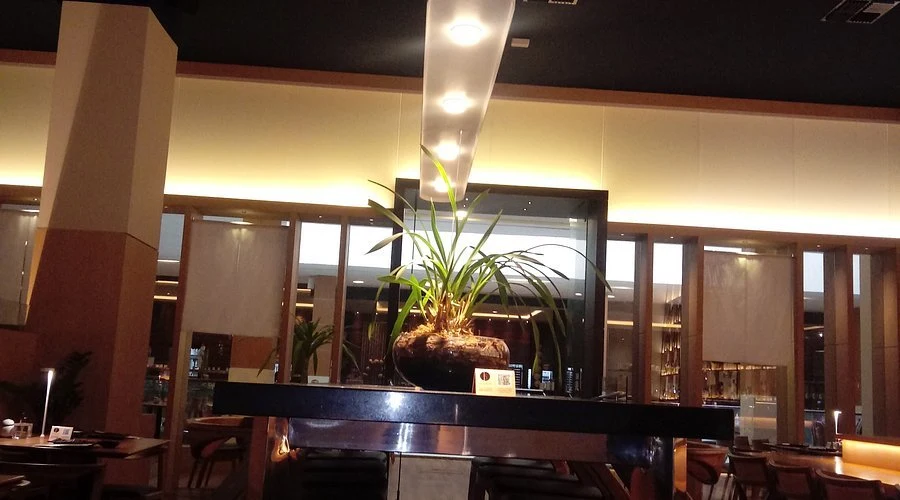
Where São Paulo's Japanese Dining Tradition Arrives at Its Sharpest Point
Pinheiros has long been the neighbourhood where São Paulo's most thoughtful dining happens at street level rather than atop a tower. The low-rise blocks around Rua Lisboa concentrate a disproportionate share of the city's serious cooking, and the dynamic that plays out here differs from the high-wattage address strategy common in Jardins or Itaim Bibi. Restaurants on this side of the city tend to earn their standing through repetition and longevity rather than opening-week press coverage. Jun Sakamoto fits that pattern. It has been refining its position in Brazilian Japanese cuisine for long enough that it no longer needs to announce itself: a Michelin star held across both 2024 and 2025, alongside appearances at positions 52 and 59 in Opinionated About Dining's South America ranking across consecutive years, represent the kind of sustained peer recognition that comes only from consistency.
The Evolution of a Sushi Counter in the Brazilian Context
To understand what Jun Sakamoto represents today, it helps to understand what high-end Japanese dining in Brazil looked like before it. São Paulo has the largest Japanese diaspora community outside Japan, and the city's sushi culture grew from that community outward, passing through phases of popularisation, of casual conveyor formats, and of mid-market rolls adapted to local palate preferences. The counter-format omakase, with its strict sequence of courses and its demand for quiet attention from the guest, arrived as a corrective movement, one that asserted Japanese technique and seasonal ingredient logic as the primary language rather than a cultural backdrop to something else.
The Sunday email
Read about the people behind restaurants like Jun Sakamoto in the Sunday email.
Every Sunday we send a lead story and up to four more about the chefs, winemakers, sommeliers and hoteliers behind the restaurants, bars, wineries and hotels we cover.
Recent stories
Free. One email a week, and you can unsubscribe from any issue.
Jun Sakamoto belongs to the generation of practitioners who drove that corrective shift. What distinguishes the current iteration of the restaurant from its earlier years is a tighter editorial control over the offer. São Paulo's leading omakase counters now operate closer to the international reference frame: small capacity, fixed evenings, no shortcuts on sourcing. The Michelin star re-awarded for 2025 confirms the guide's continued alignment with what is happening in Pinheiros on Tuesday through Saturday evenings.
The comparison relevant here is not with casual Japanese restaurants elsewhere in the city, but with the Michelin one-star tier that Jun Sakamoto occupies alongside peers such as Maní, a Brazilian-international kitchen operating at the same price point with its own star. Within that São Paulo tier, Jun Sakamoto occupies the only position held by a sushi-focused operation, which means it is competing less against its direct city neighbours and more against the standard set by serious Japanese counters internationally, including Masa in New York City and Sushi Masaki Saito in Toronto. That it holds its own in cross-continental peer rankings speaks to the depth of execution at Rua Lisboa, 55.
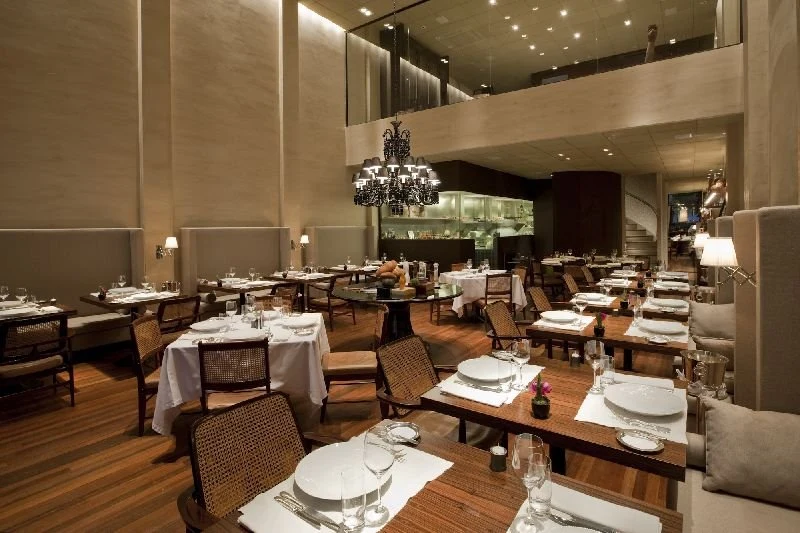
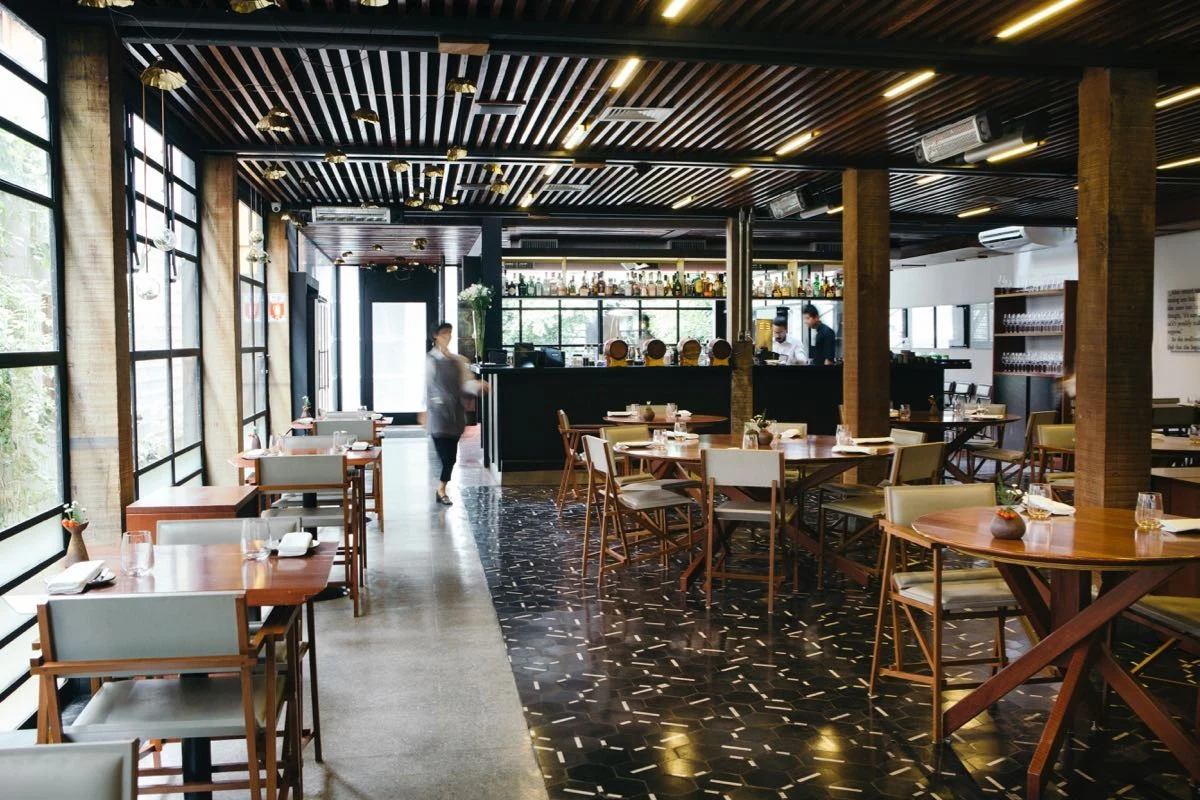
The Dining Room and What It Signals
Counter dining of this kind works differently from the multi-course tasting room format that defines places like D.O.M. or Evvai, both operating in the two-star bracket above Jun Sakamoto's tier. At those addresses, the architecture of the room is part of the experience, the plating expressive, the service highly choreographed. The sushi counter operates under a different contract with the guest: the chef's movements are the theatre, the fish is the décor, and the conversation, when it happens, is about what is in front of you rather than the room around you.
That narrowing of focus to the counter and the cutting board is a discipline, not a limitation. It concentrates the guest's attention and raises the stakes for every piece served. There is nowhere to hide behind a spectacular room or a complex sauce when the product is raw fish on formed rice. For a city whose dominant fine-dining culture leans toward complexity and creative layering, whether in the modern Brazilian cooking of Tuju or the seasonal-produce driven approach at Fame Osteria, Jun Sakamoto's directness sits as a kind of counterpoint: less mediation between ingredient and palate, more pressure on the ingredient itself.
South America's Fine-Dining Circuit and Jun Sakamoto's Place in It
When Opinionated About Dining places Jun Sakamoto at position 59 in its 2025 South America ranking (up from 52 in 2024, the year-on-year movement suggests ranking volatility rather than a directional slide), it is positioning the restaurant within a continent-wide conversation about where the most serious cooking is happening. That list is dominated by Brazilian addresses, with significant clusters in São Paulo, but also features relevant comparators from across the country: Lasai in Rio de Janeiro, Manu in Curitiba, and Manga in Salvador all represent different regional inflections of what premium dining looks like outside of São Paulo's centralised scene.
Within that wider Brazilian context, Jun Sakamoto is the clearest argument that Japanese technique, applied at a high level and sustained over time, belongs in the same conversation as the creative modern-Brazilian and international cuisine formats that dominate the country's critical discourse. The fact that the restaurant draws both recognition from a Latin America-focused guide like OAD and from the globally-aligned La Liste system suggests its positioning is not parochial.
Questions
Frequently asked
What recognition does Jun Sakamoto hold?
Jun Sakamoto holds 1 Michelin star.
Who works at Jun Sakamoto?
Made By profiles Jun Sakamoto (Chef) at Jun Sakamoto.
How expensive is Jun Sakamoto?
Jun Sakamoto is listed at a price level of $$$$.
Where is Jun Sakamoto and what does it serve?
Jun Sakamoto is in Jardim Paulista, São Paulo, serving Japanese Omakase.
The field
How it compares
| Place | Awards | Cuisine | Notes |
|---|---|---|---|
| Jun Sakamoto | Michelin 1 Star | Japanese Omakase | Jardim Paulista, $$$$ |
| A Casa do Porco | 50 Best | Modern Brazilian Pork-Centric | São Paulo |
| D.O.M. | Michelin 2 Stars, 50 Best | Modern Brazilian Amazonian Fine Dining | São Paulo |
| Evvai | Michelin 3 Stars, 50 Best | Modern Italian-Brazilian Fusion | São Paulo |
| Fasano | · | Classic Italian with Modern Touch | São Paulo |
| Maní | Michelin 1 Star, 50 Best | Modern Creative Brazilian | São Paulo |
| Tuju | Michelin 3 Stars, 50 Best | Modern Brazilian Fine Dining | São Paulo |
Similar places
Modern Brazilian Pork-Centric
A Casa do Porco
São Paulo, Brazil
50 Best
Modern Brazilian Amazonian Fine Dining
D.O.M.
São Paulo, Brazil
★★ · 50 Best
Modern Italian-Brazilian Fusion
Evvai
São Paulo, Brazil
★★★ · 50 Best
Classic Italian with Modern Touch
Fasano
São Paulo, Brazil
Modern Creative Brazilian
Maní
São Paulo, Brazil
★ · 50 Best
Modern Brazilian Fine Dining
Tuju
São Paulo, Brazil
★★★ · 50 Best
The Sunday email
Read about the people behind restaurants like Jun Sakamoto in the Sunday email.
Every Sunday we send a lead story and up to four more about the chefs, winemakers, sommeliers and hoteliers behind the restaurants, bars, wineries and hotels we cover.
Recent stories
Free. One email a week, and you can unsubscribe from any issue.