- Michelin Plate · 2026
- Tabelog 100 #84: 3.8pts · 2025
- Michelin Plate · 2025
- Michelin Plate · 2024
Where French Classicism Meets Japanese Seasonal Logic
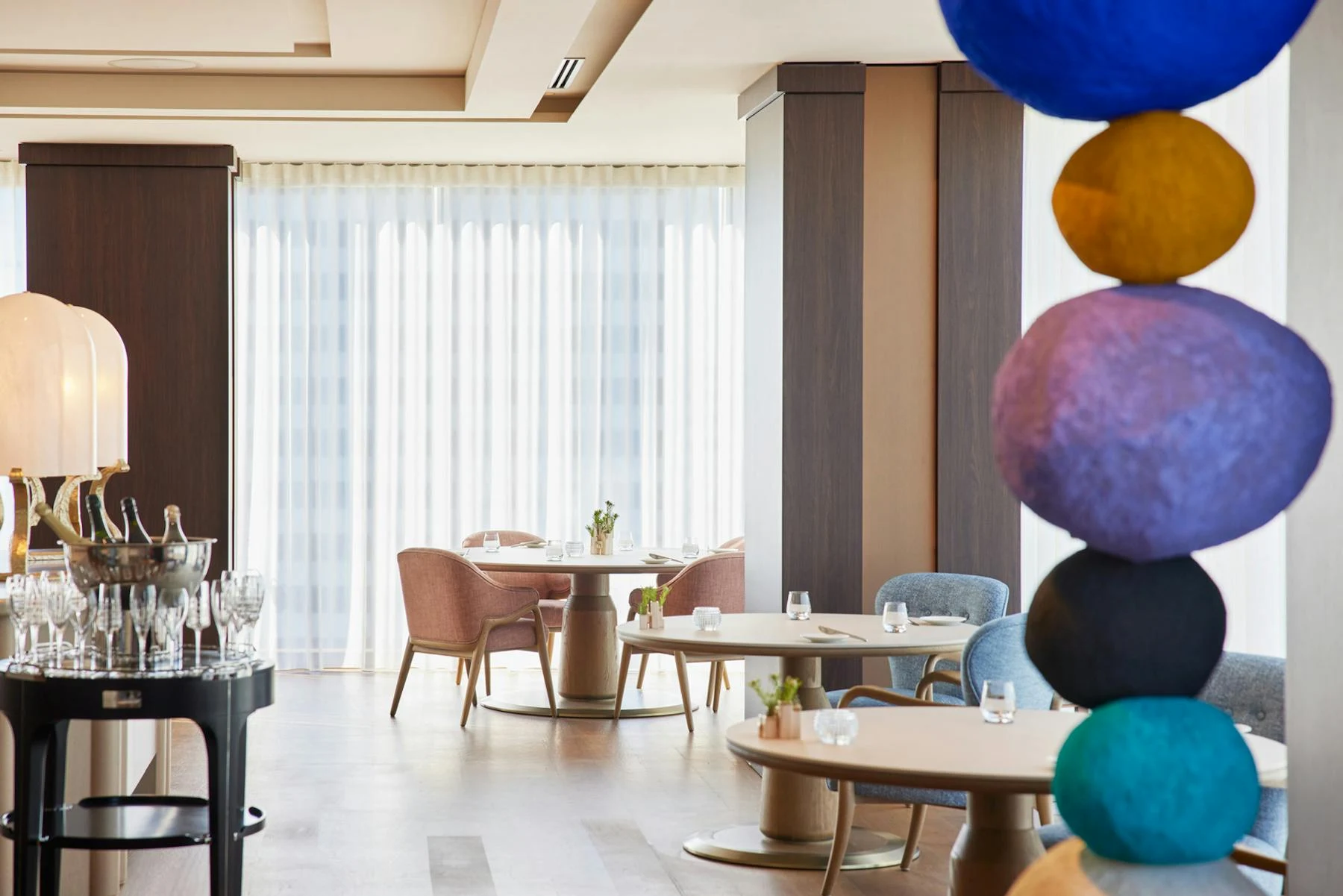
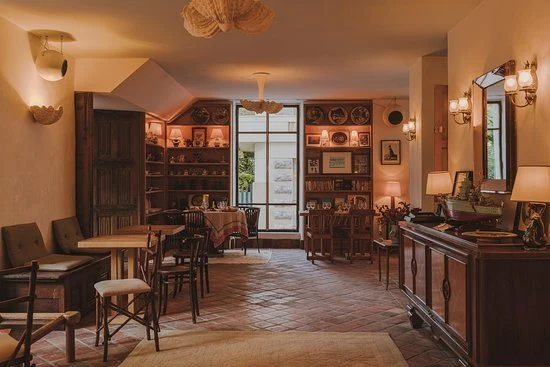
Hiroo occupies a particular register in Tokyo's dining geography. The neighbourhood sits south of Omotesando, quieter than either Ginza or Shinjuku, with a residential density that attracts long-running, intimate restaurants rather than destination flagships. Addresses here tend to draw regulars over tourists, and the dining rooms tend to be small enough that the kitchen's decisions are felt rather than diluted. AMOUR, on a side street in Hiroo's 1-chome, operates within this pattern: a Japanese French Kaiseki restaurant where the tension between classical European technique and the seasonal intelligence of Japanese ingredients is the central subject of every plate.
That tension is the defining creative problem of a broad tier of Tokyo's French kitchens, and how individual restaurants resolve it separates the interesting ones from the merely competent. The city now has a range of approaches: L'Effervescence at the three-star level deploys French structure with deep commitment to Japanese producers; Sézanne and ESqUISSE occupy upper brackets where French-trained chefs work within Tokyo's luxury dining circuit; Florilège has developed a more iconoclastic modern French voice; and Château Restaurant Joël Robuchon represents the formal grand-tradition end of the spectrum. AMOUR, priced at ¥¥¥ and carrying a Michelin Plate in both 2024 and 2025, sits in a different and arguably more interesting position: neither chasing the starred tier nor defaulting to bistro informality, but working a considered middle ground where the ingredient sourcing is the argument.
The Logic of the Menu
French cuisine's classical framework was built around European produce, and one of the quiet revolutions of Japanese-French cooking over the past two decades has been the systematic replacement of that ingredient base with Japan's own seasonal vocabulary. The results can be mechanical, a direct substitution that leaves the French scaffolding unchanged, or they can be generative, where the ingredient reshapes what the dish becomes. At AMOUR, the latter is the stated ambition.
The amuse-bouche signals the approach immediately. Seasonal vegetables are baked into pie crust and served in a basket of flowering plants, framing harvest produce not as a garnish to a French preparation but as the occasion for it. The presentation has the quality of a still life: the French technique (pastry, enclosure, controlled heat) used as a way of honouring the vegetable rather than processing it. Across the menu, this inversion of the conventional hierarchy between technique and ingredient is consistent.
The lobster bisque is the most frequently cited dish, and it illustrates the kitchen's method with particular clarity. Bisque is one of classical French cuisine's most technique-dependent preparations: the shell reduction, the cream structure, the seasoning balance are all products of accumulated European kitchen knowledge. Here, lily bulbs are introduced as an accent, contributing a subtle sweetness and a textural register that no French vegetable in the classical pantry would provide. The dish remains recognisably a bisque in structure; the lily bulbs shift its flavour identity toward something that has no direct European equivalent. This is the productive tension the kitchen is working with, and it is more difficult to execute well than either a purely French or a purely Japanese preparation would be.
Chef Goto's Route to Japanese Ingredients
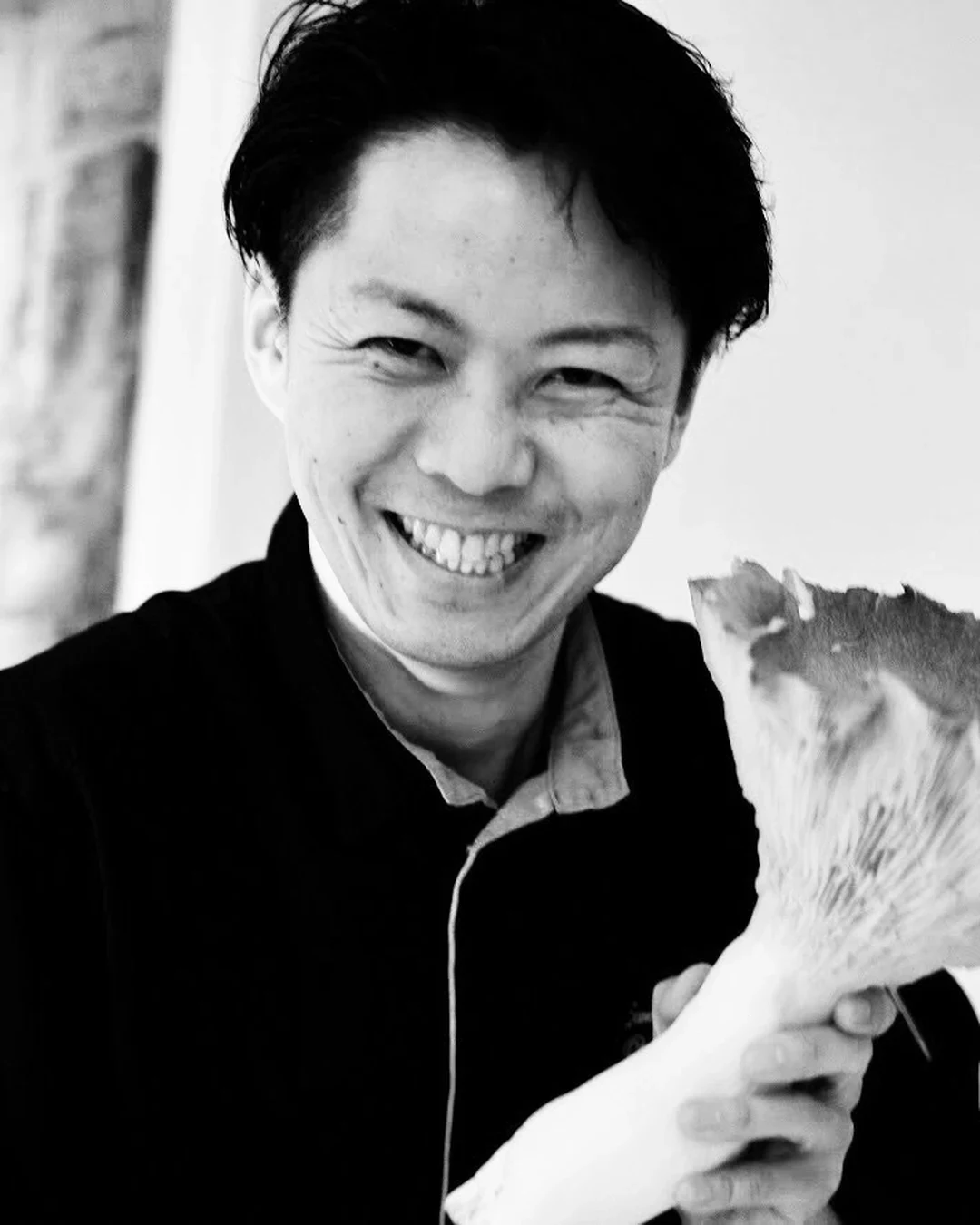
Biographical detail worth noting here is not the career trajectory in the conventional sense, but rather the inversion at its core. Chef Yusuke Goto's appreciation for Japanese ingredients developed through time spent in France, not in Japan. This is a reversal of the expected direction of culinary education, and it has a direct bearing on how AMOUR's menu reads. The perspective is that of someone who came to Japanese produce from the outside, which tends to produce a more selective, more deliberate use of those ingredients rather than a comprehensive seasonal program. The French techniques are not a borrowed framework; they are the primary language, and Japanese ingredients enter as the most interesting vocabulary available.
Where AMOUR Sits in Tokyo's French Tier
Tokyo's French restaurant market is not uniform. At its upper end, multi-starred addresses compete on a global credential basis; the Michelin three-star French kitchens in the city operate within a comparable set that includes comparable addresses in Paris, London, and New York. Further down the price range, French bistros and brasseries serve a largely local clientele with predictable seasonal menus. The middle ground, where AMOUR operates, is where the most editorially interesting work tends to happen: restaurants with enough ambition to develop a real culinary position, enough restraint to avoid the institutional weight of the starred tier, and enough specificity to distinguish themselves from each other.
A Michelin Plate across consecutive years signals that the Michelin Guide considers the cooking worth attention without placing it in the ranked-star competition. A Google rating of 4.7 from 157 reviews suggests a consistent kitchen appreciated by a smaller, engaged regular audience rather than a high-volume tourist trade. Both signals point in the same direction: a restaurant that has found a specific audience and serves it well.
For context within Japan's broader French cooking scene, it is worth noting that this Franco-Japanese synthesis appears across the country. HAJIME in Osaka and Gion Sasaki in Kyoto approach the question from different regional ingredient bases; akordu in Nara, Goh in Fukuoka, 1000 in Yokohama, and 6 in Okinawa each carry their own geographic logic. Internationally, the conversation about applying classical French structure to non-European ingredients has parallels at addresses like Hotel de Ville Crissier in Crissier and Les Amis in Singapore, where the tension between tradition and local produce is equally central.
Planning Your Visit
AMOUR is located at 1 Chome-6-13 Hiroo, Shibuya, Tokyo 150-0012, The restaurant opens for dinner from Monday through Friday and Saturday, running 6 to 10 pm on weeknights (closed Wednesday) and 6 to 10 pm on Saturday. Weekend lunch runs Saturday and Sunday from noon to 3 pm, with Sunday dinner from 6 to 10 pm. The price range sits at ¥¥¥, placing it below the multi-starred flagship tier but above casual bistro pricing, appropriate for a kitchen working at this level of ingredient sourcing and technique.
Questions
Frequently asked
Who works at AMOUR?
Made By profiles Yusuke Goto (Chef) at AMOUR.
How expensive is AMOUR?
AMOUR is listed at a price level of $$$$.
Where is AMOUR and what does it serve?
AMOUR is in Shibuya, Tokyo, serving Japanese French Kaiseki.
The field
How it compares
| Place | Cuisine | Notes | Awards |
|---|---|---|---|
| AMOUR | Japanese French Kaiseki | Shibuya, $$$$ | · |
| Den | Modern Japanese Kaiseki | Tokyo | Michelin 2 Stars, World's 50 Best |
| Florilège | Modern French-Japanese Plant-Based Fine Dining | Tokyo | Michelin 2 Stars, World's 50 Best |
| Narisawa | Modern Japanese Satoyama Fine Dining | Tokyo | Michelin 2 Stars, World's 50 Best |
| Quintessence | Modern French Fine Dining | Tokyo | Michelin 3 Stars |
| Sazenka | Modern Chinese Fine Dining | Tokyo | Michelin 3 Stars, World's 50 Best |
| Sézanne | Modern French Fine Dining | Tokyo | Michelin 3 Stars, World's 50 Best |
In residence
Similar places
Modern Japanese Kaiseki
Den
Tokyo, Japan
★★ · 50 Best
Modern French-Japanese Plant-Based Fine Dining
Florilège
Tokyo, Japan
★★ · 50 Best
Modern Japanese Satoyama Fine Dining
Narisawa
Tokyo, Japan
★★ · 50 Best
Modern French Fine Dining
Quintessence
Tokyo, Japan
★★★
Modern Chinese Fine Dining
Sazenka
Tokyo, Japan
★★★ · 50 Best
Modern French Fine Dining
Sézanne
Tokyo, Japan
★★★ · 50 Best