Apostelstube
In Residence
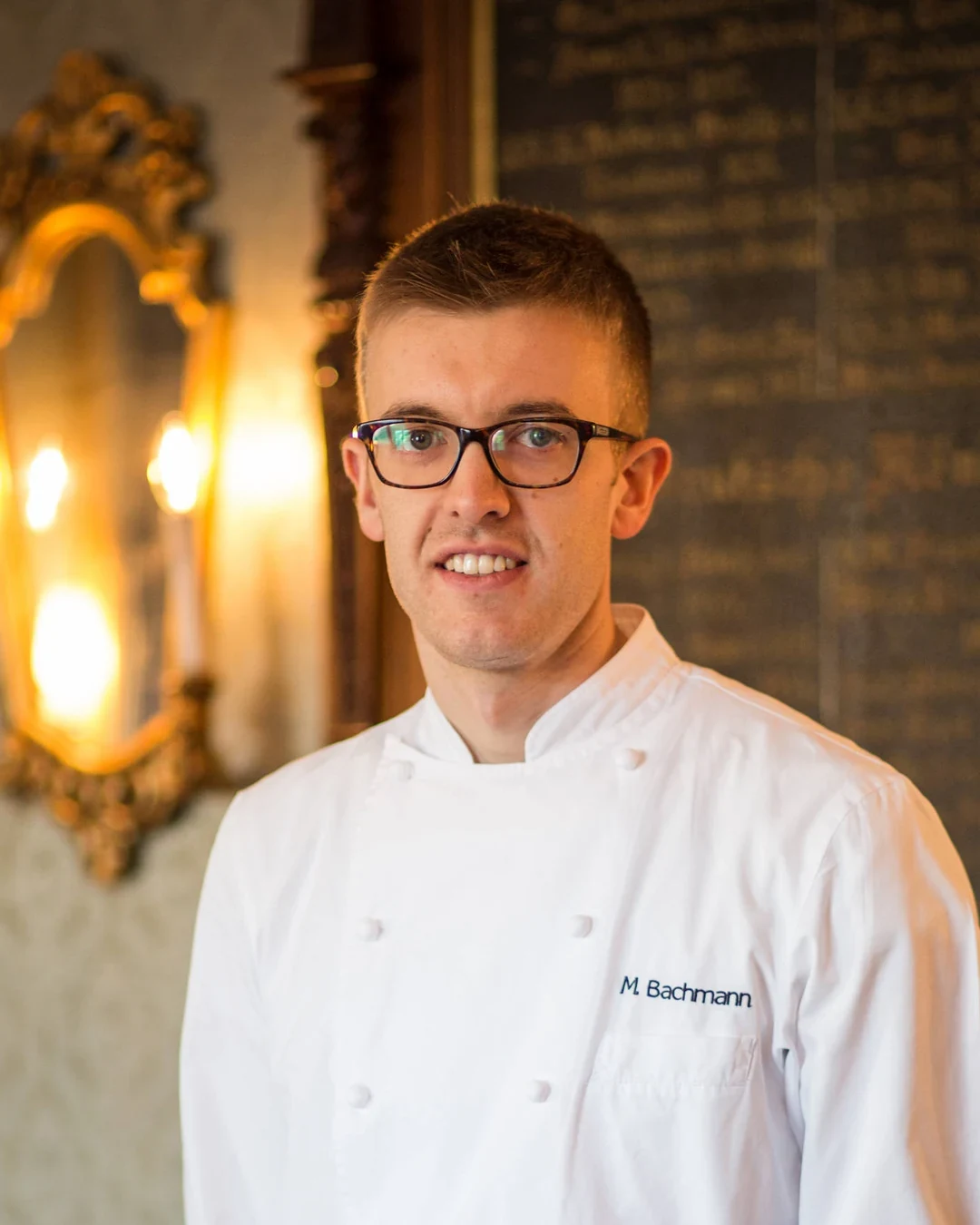
Mathias Bachmann
Chef
- 01CuisineContemporary Global Tasting Menu with Japanese Influences
- 02CityBrixen, Italy
- 03RecognitionOne Michelin Star
- 1 Michelin Star · Michelin Guide
- Michelin 1 Star · 2026
- Star Wine List · 2026
- Falstaff Restaurant - 96 Falstaff Points · 2026
- Michelin 1 Star · 2025
- Michelin 1 Star · 2024
Four Tables, Five Centuries: Dining at the Apostelstube
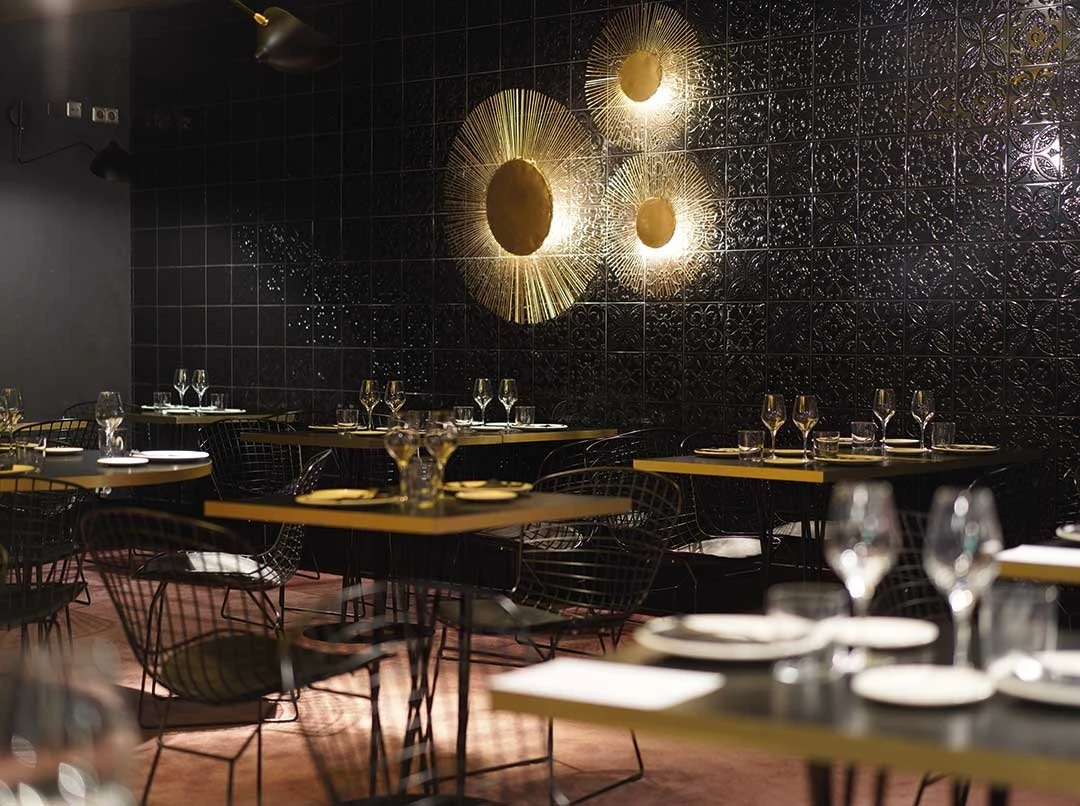
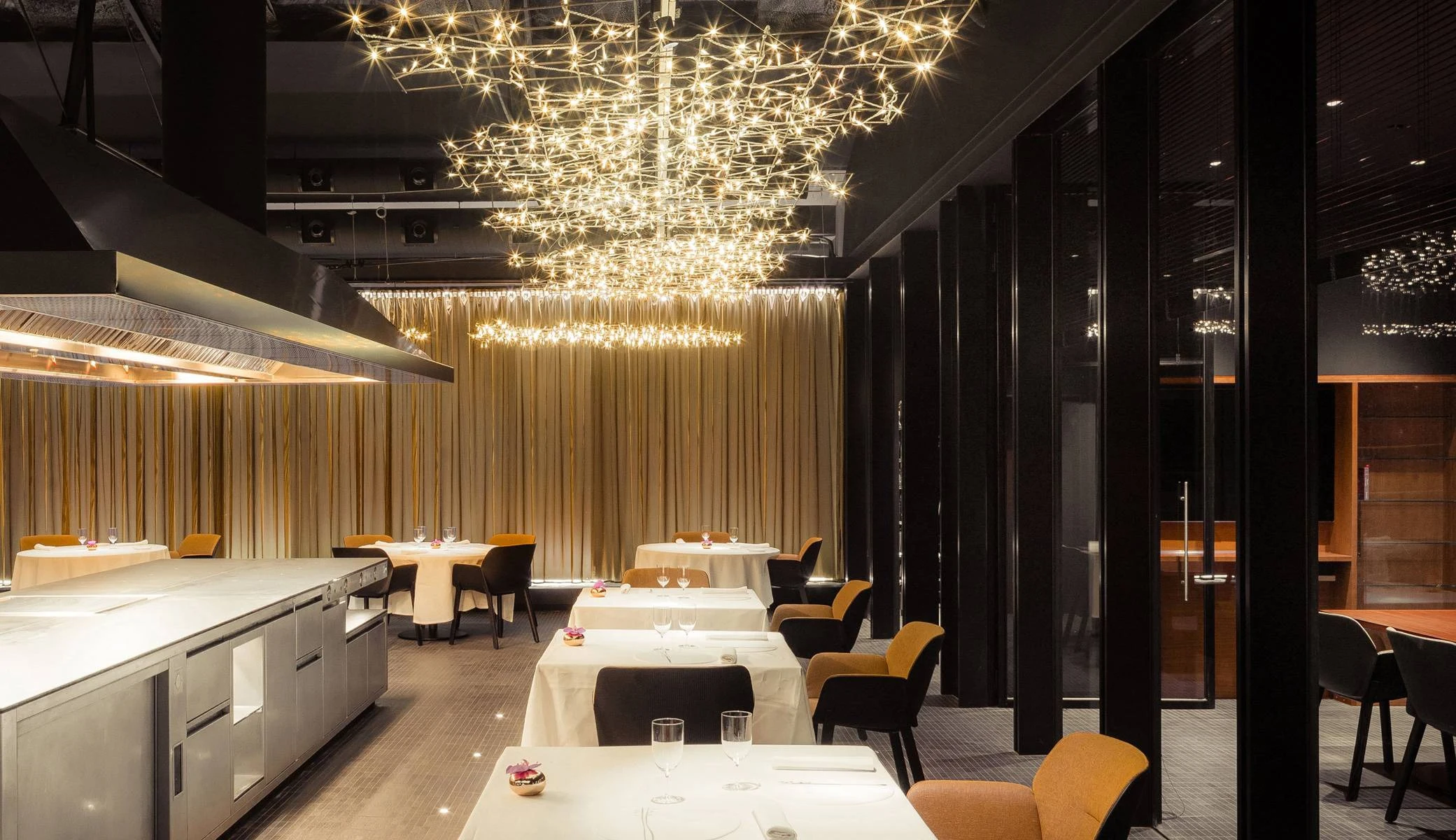
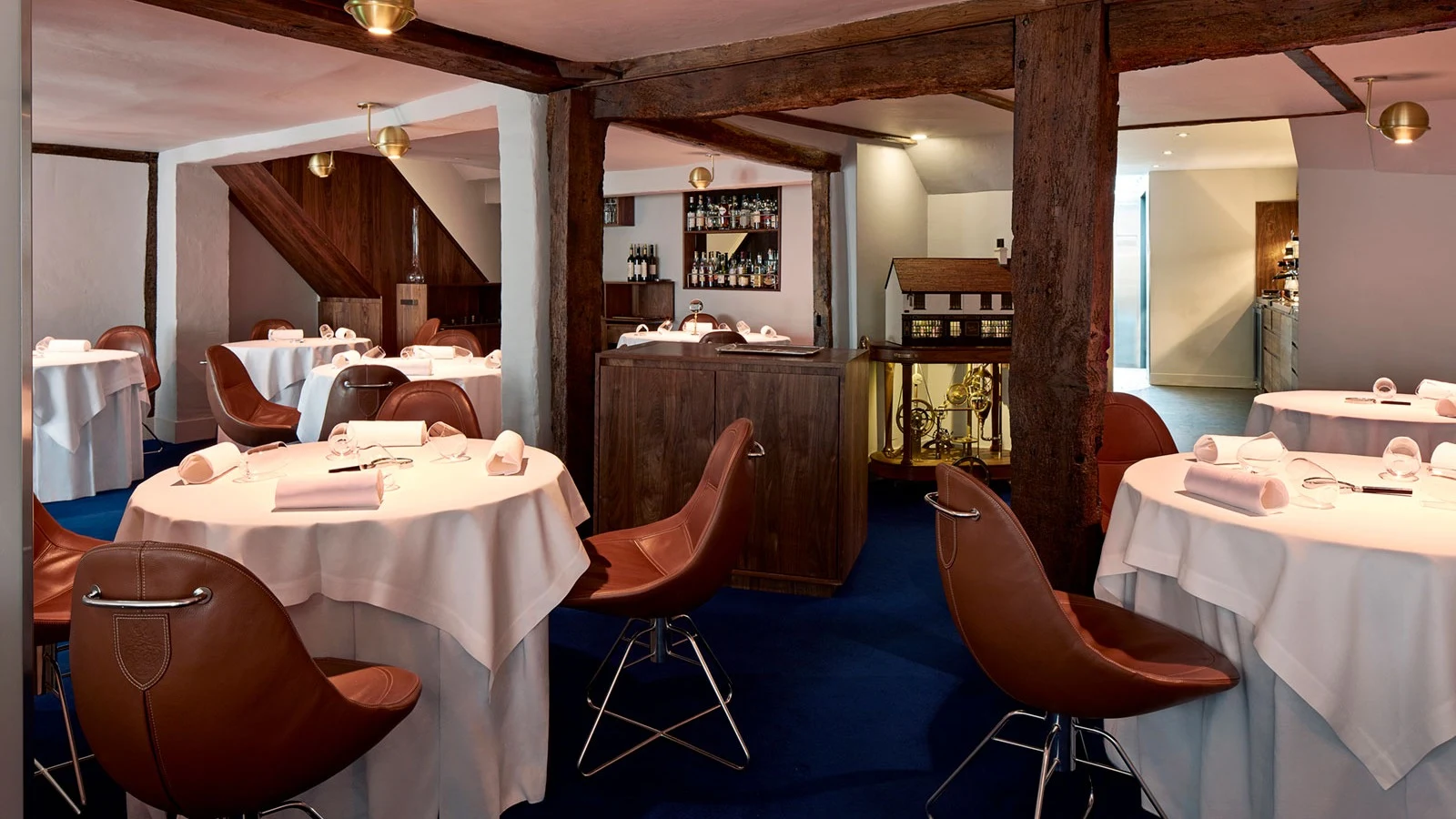
The building that houses Hotel Elephant on Via Rio Bianco has been receiving travellers since the late 1400s. What began as a roadside inn on the historic route through the Eisack Valley has passed through eight generations of the same family since 1773, accumulating the kind of institutional gravity that most European hospitality properties can only gesture toward. The Apostelstube, the hotel's Michelin-starred dining room, sits on the first floor of that structure. Twelve apostle statuettes line the walls, observing diners from their fixed positions across four tables. That is the entirety of the room's capacity: four tables, no more.
South Tyrol has quietly built one of Italy's most concentrated clusters of fine dining per capita, a fact that becomes less surprising when you consider the region's dual Alpine-Italian inheritance and the high-spending tourism infrastructure that supports it. Atelier Moessmer Norbert Niederkofler in Brunico represents the region's most celebrated expression of mountain-rooted cuisine, but Bressanone, the valley's cultural and ecclesiastical capital, has developed its own distinct fine-dining register. The Apostelstube sits at the top of that register locally, operating in a tier defined not by scale but by concentration: fewer covers, longer menus, deeper booking lead times.
The Format and What It Signals
Within Bressanone's dining scene, the price tier and format of the Apostelstube place it in an entirely different competitive bracket from the city's other strong options. Elephant, the hotel's companion restaurant, operates at the €€€ tier with a classical cuisine orientation. Alpenrose and Oste Scuro - Finsterwirt anchor the city's regional cuisine tradition at the €€ level, and Vitis offers regional cuisine at €€€. The Apostelstube, at €€€€ and with a single Michelin star confirmed in 2024, occupies a separate stratum entirely.
That four-table room is not incidental to the experience. In Italian fine dining, the shift toward smaller, more controlled formats has been a consistent theme across the past decade. Rooms of this size allow service teams to maintain a different rhythm than a conventional restaurant. At the Apostelstube, front-of-house responsibilities are handled by Michael and Eleonora, whose presence at this scale is less about efficiency and more about storytelling. The tale they tell of the elephant that once passed through Bressanone, connected to the hotel's name and history, is part of the fabric of an evening here. That kind of narrative integration is a feature of the intimate-format model rather than an exception to it.
A Tasting Menu Built on Cultural Collision
The culinary tradition most legible in the Apostelstube's menu architecture is not South Tyrolean, or at least not exclusively. Chef Mathias Bachmann works with ingredients and techniques drawn from across the world, with a pronounced lean toward Japan. That positioning places the Apostelstube within a broader tendency visible at the sharper end of creative European fine dining: the absorption of Japanese craft into a kitchen that retains its European and Alpine foundations.
This is not a new tension in Italian fine dining. Osteria Francescana in Modena built its international reputation partly through the productive friction between Italian tradition and outside reference. Piazza Duomo in Alba applies a similar logic to Piedmontese produce. At both ends of the creative spectrum in France, venues like Alléno Paris au Pavillon Ledoyen and Arpège demonstrate how a deeply-rooted culinary identity can remain coherent while absorbing external influence. The Apostelstube is working within that same tradition of purposeful cultural collision, filtered through an Alpine-Italian lens and compressed into a room barely large enough to seat sixteen people at capacity.
The tasting menu format itself is a deliberate constraint. In Italy's broader fine-dining field, venues such as Le Calandre in Rubano, Dal Pescatore in Runate, and Enrico Bartolini in Milan operate within this format because it allows a kitchen to control the full arc of an evening's flavour progression in a way that à la carte cannot. The Apostelstube's version is extensive. Enoteca Pinchiorri in Florence demonstrates how the format can become a setting for Italy's most serious wine programs alongside the food; whether the Apostelstube operates a comparable wine focus is not documented, but the Hotel Elephant's five-century hospitality background suggests a cellar with some depth.
Seasonal Rhythms and the Room's Shifting Register
The Apostelstube observes a clear seasonal division in how aperitifs are served: the hotel's garden in warmer months, the lounge on the first floor when temperatures drop or weather closes in. That detail matters as an indicator of format philosophy. Venues that extend the guest experience beyond the dining room itself, building a pre-dinner ritual into a separate space, tend to treat the full evening as a designed sequence rather than a meal with a table booking. The Apostelstube operates within that model.
Bressanone's position at altitude, in the narrowing valley below the Brenner Pass, means its seasons are pronounced. Summer brings extended daylight and garden use; autumn closes in relatively early. Visitors planning an evening at the Apostelstube in the warmer half of the year should expect the aperitif hour in the garden before dinner.
The Hotel Elephant Context
The Apostelstube cannot be understood apart from Hotel Elephant, and that relationship is worth examining as a format in itself. Across European fine dining, the relationship between a heritage hotel and its restaurant creates a specific set of expectations. Some of the strongest examples, from Switzerland through Austria and into northern Italy, involve properties where the accommodation and the table are equally weighted as reasons to visit. Hotel Elephant, with its documented family management since 1773 and its building dating to the 15th century, belongs to that category.
For guests staying in the hotel, the Apostelstube represents the apex of what the property offers at the table. The companion Elephant restaurant serves classical cuisine at a lower price tier, making the hotel's food and beverage offer unusually broad in range for a property of this type. Visitors to Bressanone who want to orient themselves across the city's full dining range can use our full Brixen restaurants guide, while those planning broader stays will find supporting resources in our full Brixen hotels guide, our full Brixen bars guide, our full Brixen wineries guide, and our full Brixen experiences guide.
Planning an Evening at the Apostelstube
Service runs Thursday through Sunday, 7:30 PM to 9:30 PM, with Monday, Tuesday, and Wednesday closed. That four-day operating window at a four-table room creates a meaningful booking constraint. At this format and star level in a city of Bressanone's size, advance reservation is not a suggestion. The address is Via Rio Bianco, 4, 39042 Bressanone, within the Hotel Elephant complex. No booking method, phone, or online reservation link is listed in publicly available records, which suggests contact through the hotel directly is the correct approach. Given the room's capacity and the operating schedule, weekend dates in high season should be treated as requiring significant lead time.
The €€€€ price tier positions this as one of the higher per-cover commitments in the broader South Tyrol fine-dining circuit, appropriate for a Michelin-starred tasting menu at this format scale. Google review data reflects a 4.9-star average across 27 reviews.
Questions
Frequently asked
What recognition does Apostelstube hold?
Apostelstube holds 1 Michelin star.
Who works at Apostelstube?
Made By profiles Mathias Bachmann (Chef) at Apostelstube.
How expensive is Apostelstube?
Apostelstube is listed at a price level of $$$$.
Where is Apostelstube and what does it serve?
Apostelstube is in Bressanone, Brixen, serving Contemporary Global Tasting Menu with Japanese Influences.
The field
How it compares
| Place | Awards | Cuisine | Notes |
|---|---|---|---|
| Apostelstube | Michelin 1 Star | Contemporary Global Tasting Menu with Japanese Influences | Bressanone, $$$$ |
| Casa Marcial | Michelin 3 Stars | Modern Asturian Fine Dining | Arriondas |
| Cocina Hermanos Torres | Michelin 3 Stars, World's 50 Best | Modern Spanish Fine Dining | Barcelona |
| focus ATELIER | Michelin 2 Stars | Modern French Fine Dining | Vitznau |
| Ricard Camarena | Michelin 2 Stars, World's 50 Best | Modern Vegetable-Focused Mediterranean Fine Dining | València |
| The Fat Duck | Michelin 3 Stars, World's 50 Best | Modern British Molecular Gastronomy | Bray |
| The Glenturret Lalique Restaurant | Michelin 2 Stars | Modern Scottish Fine Dining | Crieff |
In residence
Similar places
Modern Asturian Fine Dining
Casa Marcial
Arriondas, Spain
★★★
Modern Spanish Fine Dining
Cocina Hermanos Torres
Barcelona, Spain
★★★ · 50 Best
Modern French Fine Dining
focus ATELIER
Vitznau, Switzerland
★★
Modern Vegetable-Focused Mediterranean Fine Dining
Ricard Camarena
València, Spain
★★ · 50 Best
Modern British Molecular Gastronomy
The Fat Duck
Bray, United Kingdom
★★★ · 50 Best
Modern Scottish Fine Dining
The Glenturret Lalique Restaurant
Crieff, United Kingdom
★★