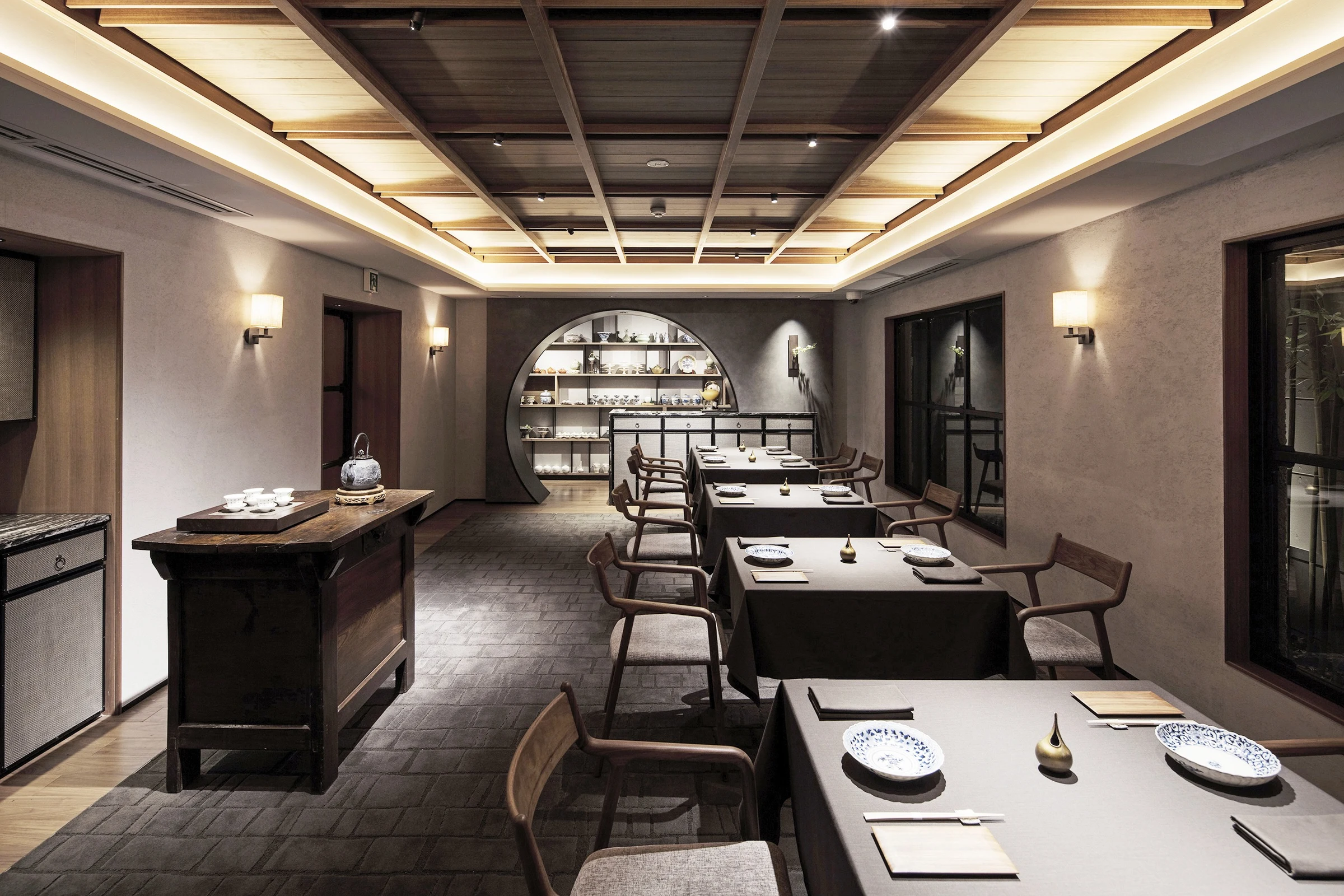
Aramaki
- 01CuisineSeasonal Yakitori Omakase
- 02CityTokyo, Japan
- Opinionated About Dining Top Restaurants in Japan Recommended · 2026
- Michelin Plate · 2026
- Michelin Plate · 2025
- Opinionated About Dining Top Restaurants in Japan Ranked #425 · 2025
- Tabelog 100 #14: 3.7pts · 2025
Higashi-Azabu and the Serious Yakitori Counter
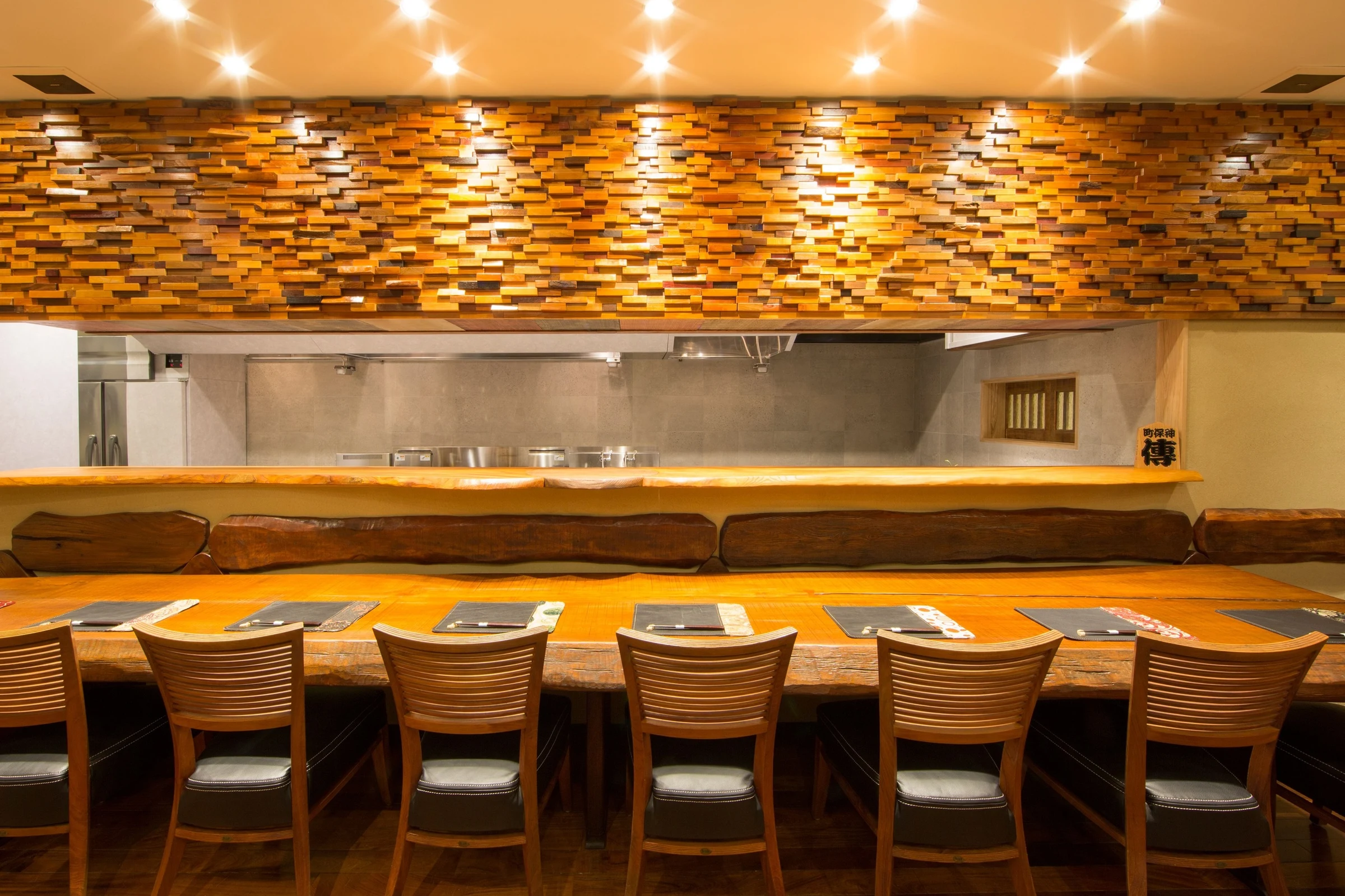
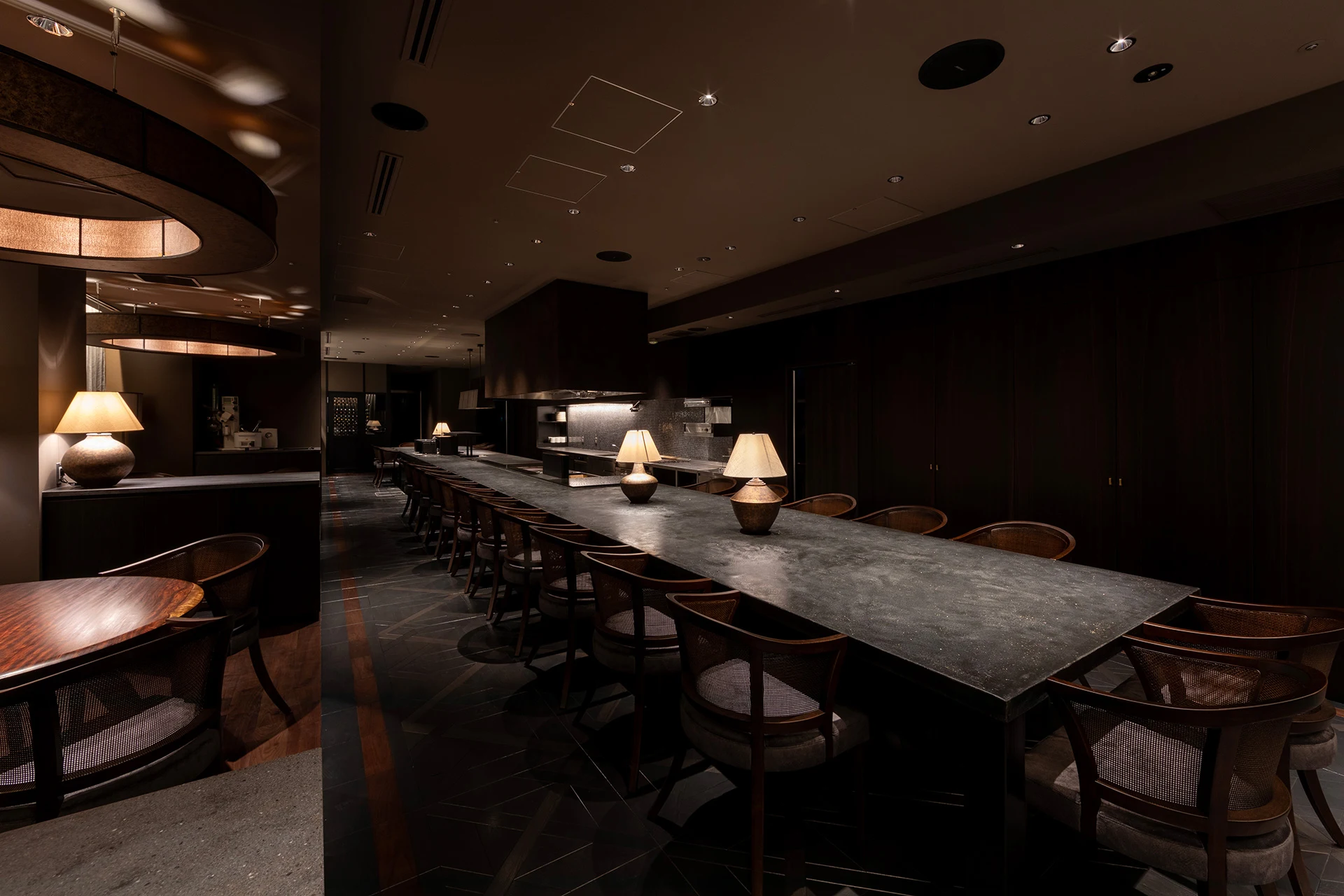
Minato Ward's quieter residential stretches have accumulated a particular kind of restaurant over the past decade: small, counter-format, format-serious, with no walk-in culture and a booking window that rewards planning. Higashi-Azabu, in particular, has proved hospitable to this model. The neighbourhood sits close enough to the Roppongi dining corridor to attract an international dining public, yet its low-rise blocks and apartment buildings give little away from street level. Aramaki, occupying space inside a residential building at 1 Chome-24-6 Azabu Heights, fits that template precisely. Approaching the address, you pass almost nothing that signals restaurant. That opacity is part of the point.
In Tokyo's premium yakitori tier, the counter format carries real meaning. Unlike the standing-room yakitori-ya that anchor the back alleys of Yurakucho or the casual chains that blanket the city's station basements, counters at this level ask for advance commitment, a fixed menu, and your complete attention to the sequence being set in front of you. The logic resembles an omakase sushi room more than a grill pub, and the pricing follows accordingly. Aramaki sits in the ¥¥¥ bracket, which in Tokyo yakitori terms marks a meaningful step above everyday grills while remaining below the ¥¥¥¥ category occupied by three-Michelin-star rooms like BIRD LAND and its peers. That positioning is what places it alongside the city's more considered yakitori propositions, including Yakitori Omino and Asagaya BIRD LAND, each of which operates on a similarly disciplined format.
How the Menu Progresses
The prix fixe structure at Aramaki is not merely a pricing convenience; it is the editorial logic of the meal. Chef Keisuke Aramaki organises the sitting as a deliberate arc from restraint to richness, which mirrors a broader tradition in high-end yakitori: salt-only seasoning in the first half allows the chicken's fat and fibre to speak without interference, while tare, the sweetened soy-based sauce built up over years of continuous use, arrives in the second half, where it coats richer cuts and amplifies rather than masks. This sequencing is a classic piece of yakitori craft, but executing it across an entire prix fixe sitting with sourced birds from multiple regional suppliers requires both technical consistency and advance ingredient planning.
Seasonal vegetables open the meal, arriving as composed arrangements rather than garnishes. This framing, vegetables as a first chapter, not a footnote, reflects training in the kaiseki tradition of beautiful presentation and seasonal punctuation. Between skewer courses, dishes such as wanmono with chicken-shinjo provide textural relief, moving the palate from smoke and char to something quieter and more broth-forward. The meal closes with takikomi-gohan, a steamed rice dish incorporating seasonal vegetables and minced chicken, a classic Japanese ending that consolidates the flavours of the preceding courses into a single, grounding bite. That closing rice is worth noting because it marks Aramaki as a restaurant operating in a specific cultural register: the meal as complete composition rather than a sequence of independent dishes.
Chicken sourcing spans multiple Japanese regions and breeds, which has become a marker of seriousness in this category. Japan's regional chicken market is varied, with birds from Miyazaki, Kyoto, Aichi, and elsewhere carrying meaningfully different fat content, texture, and flavour. A kitchen that draws from several of these sources simultaneously is making an argument for cut-by-cut specificity, pairing each part of the bird to the regional bird whose characteristics suit it. That argument is central to what separates a counted yakitori format from a high-volume grill.
The Booking Position
Aramaki holds a Michelin Plate recognition in the 2025 guide. For practical purposes, this matters. Counters with one or two Michelin stars in Tokyo can require reservation attempts months in advance, with third-party booking platforms and concierge relationships becoming near-essential. The Michelin Plate classification, combined with a ranking of 425th on Opinionated About Dining's 2025 Japan list, places Aramaki in a range that knowledgeable diners can approach with advance planning but without the system-gaming that a higher-starred room demands.
Reservations are essential, and the best approach is to arrange them well in advance. Reservations in this format almost always require a full party at booking rather than solo reservation flexibility, and prix fixe commitments are typically confirmed at the point of booking rather than on arrival. For those visiting Tokyo as part of a wider Japan itinerary, this is worth co-ordinating alongside higher-pressure bookings in Kyoto or Osaka, venues such as Gion Sasaki in Kyoto or HAJIME in Osaka will require earlier action, which makes Aramaki comparatively approachable within the same trip.
The dress code is smart casual. This is a counter format with a serious sequenced menu; the informal end of the dress spectrum would feel misjudged. For visitors using the evening as part of a broader Minato itinerary, the neighbourhood itself has options at various price levels, Aria di Takubo and 124. KAGURAZAKA represent different culinary traditions at comparable commitment levels, and exploring the city's bar scene after dinner is direct from this part of Minato.
Context Within the Yakitori Category
Yakitori as a fine-dining proposition has expanded across Japan in the past fifteen years, but the concentration of serious counters remains in Tokyo. The format has also spread to other cities: Ichimatsu in Osaka and Torisaki in Kyoto demonstrate that the chicken-counter format has found a foothold in the Kansai region, though Tokyo remains where the category's formal ambitions are most concentrated. Aramaki's prix fixe model, seasonal emphasis, and regional-sourcing approach are consistent with that Tokyo template, and its Opinionated About Dining placement confirms a position within the serious end of the field rather than the periphery.
Questions
Frequently asked
How expensive is Aramaki?
Aramaki is listed at a price level of $$$$.
Where is Aramaki and what does it serve?
Aramaki is in Minato, Tokyo, serving Seasonal Yakitori Omakase.
The field
How it compares
| Place | Cuisine | Notes | Awards |
|---|---|---|---|
| Aramaki | Seasonal Yakitori Omakase | Minato, $$$$ | · |
| Den | Modern Japanese Kaiseki | Tokyo | Michelin 2 Stars, World's 50 Best |
| Florilège | Modern French-Japanese Plant-Based Fine Dining | Tokyo | Michelin 2 Stars, World's 50 Best |
| Narisawa | Modern Japanese Satoyama Fine Dining | Tokyo | Michelin 2 Stars, World's 50 Best |
| Quintessence | Modern French Fine Dining | Tokyo | Michelin 3 Stars |
| Sazenka | Modern Chinese Fine Dining | Tokyo | Michelin 3 Stars, World's 50 Best |
| Sézanne | Modern French Fine Dining | Tokyo | Michelin 3 Stars, World's 50 Best |
Similar places
Modern Japanese Kaiseki
Den
Tokyo, Japan
★★ · 50 Best
Modern French-Japanese Plant-Based Fine Dining
Florilège
Tokyo, Japan
★★ · 50 Best
Modern Japanese Satoyama Fine Dining
Narisawa
Tokyo, Japan
★★ · 50 Best
Modern French Fine Dining
Quintessence
Tokyo, Japan
★★★
Modern Chinese Fine Dining
Sazenka
Tokyo, Japan
★★★ · 50 Best
Modern French Fine Dining
Sézanne
Tokyo, Japan
★★★ · 50 Best