Arnaldo Caprai sits at the centre of Montefalco's Sagrantino identity, holding a 2025 Pearl 2 Star Prestige award that places it among Umbria's most recognised estates. The winery operates from Località Torre on the hillside terrain that defines this appellation's distinctive tannic structure. For anyone tracing Italy's indigenous grape revival, this address in central Umbria is a primary reference point.
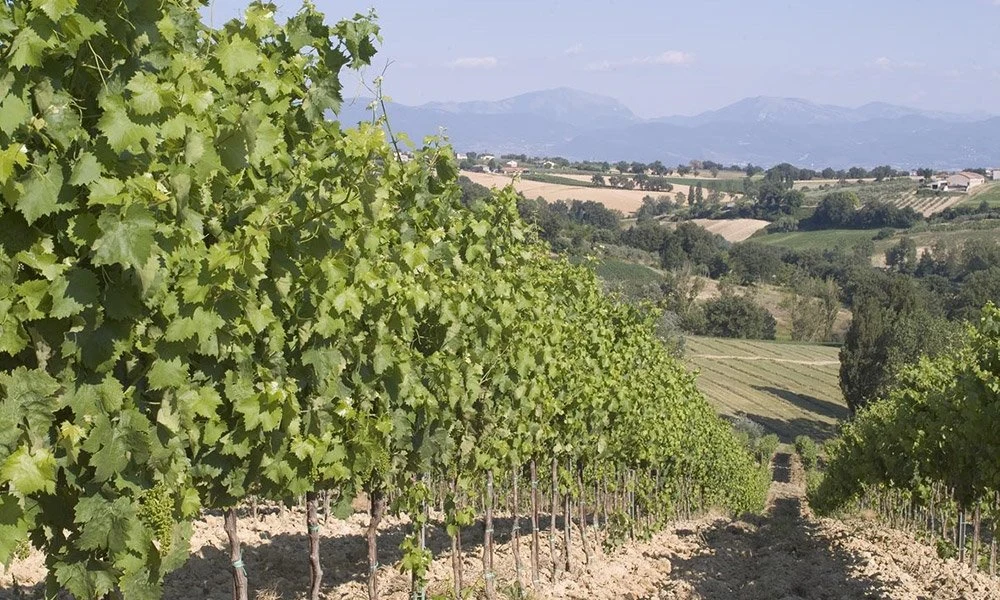
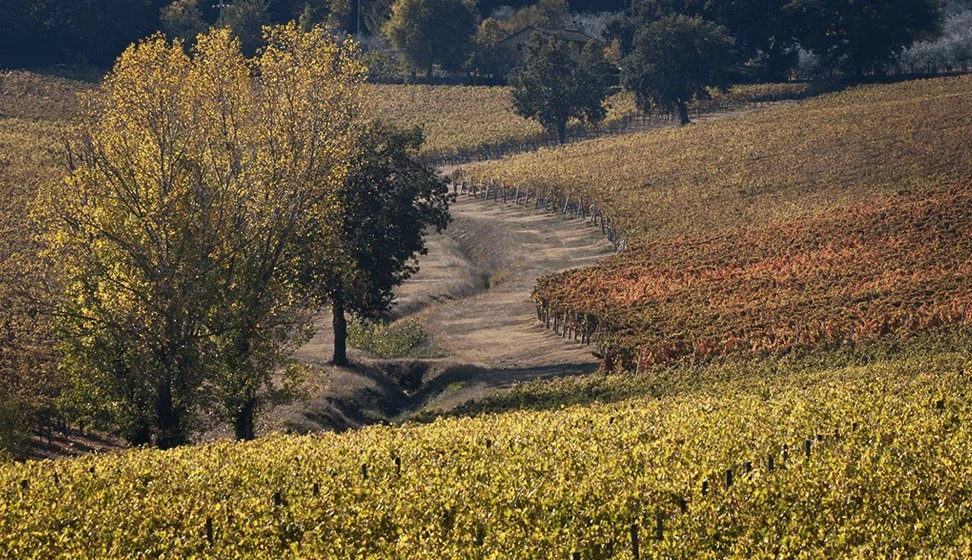
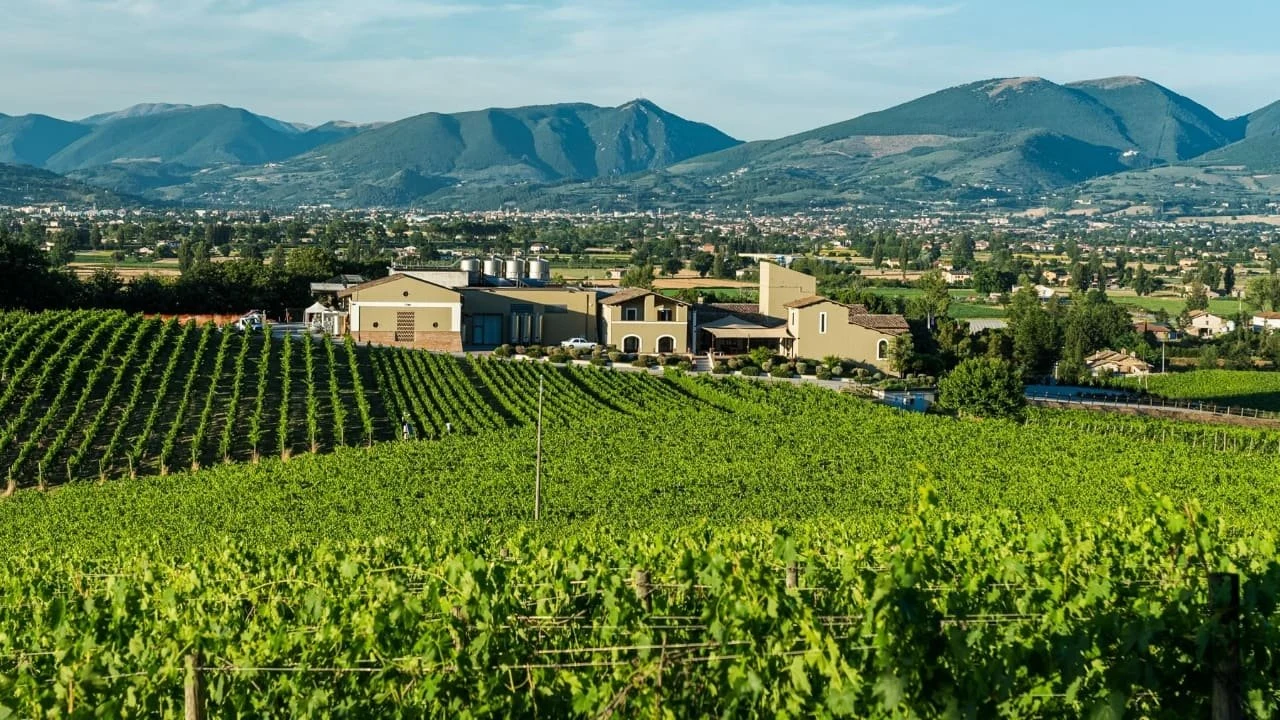
<h2>Where the Hillside Becomes the Wine</h2><p>Drive the ridge road above Montefalco on a clear afternoon and the logic of this appellation becomes immediately legible. The terrain tilts and corrugates in ways that create distinct microclimates within a few hundred metres of each other. Clay-rich soils hold moisture through dry summers; the altitude moderates what would otherwise be punishing heat on the valley floor. These are not decorative features of the countryside. They are the structural reasons why Sagrantino, one of Italy's most tannic and phenolically dense native varieties, reaches full expression here and, as yet, almost nowhere else. Arnaldo Caprai, operating from Località Torre at the edge of Montefalco's production zone, sits squarely inside this geographic argument.</p><p>The estate holds a 2025 Pearl 2 Star Prestige award, placing it within the upper tier of recognised Italian producers and in a comparable set that includes estates like <a href="https://www.enprimeurclub.com/wineries/lungarotti-torgiano-winery">Lungarotti in Torgiano</a> and <a href="https://www.enprimeurclub.com/wineries/castello-di-volpaia-radda-in-chianti-winery">Castello di Volpaia in Radda in Chianti</a>, properties where the relationship between a specific terroir and a specific grape variety is the organising principle of everything produced. Recognition at that level, in central Italy's increasingly competitive fine wine circuit, is not incidental. It reflects sustained consistency across vintages in a grape variety that punishes inconsistency harshly.</p><h2>Sagrantino and the Case for Difficult Grapes</h2><p>Italian wine's most interesting chapter of the last three decades is not Barolo's modernist-traditionalist debate, nor the expansion of Super Tuscans into international markets. It is the quieter, slower rehabilitation of obscure indigenous varieties that had survived in a handful of municipalities simply because no commercial logic ever prompted their replacement. Sagrantino is the clearest example. Grown almost exclusively in the Montefalco DOCG zone, it carries tannin levels that dwarf Nebbiolo and demand either substantial aging or careful extraction work to render drinkable. For decades, that difficulty kept it marginal. The appellation's reclassification to DOCG in 1992 was partly catalytic, providing the regulatory framework that encouraged serious investment.</p><p>Caprai's position in that story is well-documented in Italian wine circles. The estate's commitment to Sagrantino through the DOCG transition period, when commercial risk was real and critical appreciation for the variety was limited, helped establish the benchmark around which other producers subsequently oriented themselves. Today, Montefalco Sagrantino DOCG sits in a peer conversation with <a href="https://www.enprimeurclub.com/wineries/lenoteca-banfi">L'Enoteca Banfi in Montalcino</a> and, at longer range, with the kind of single-appellation focus that defines estates like <a href="https://www.enprimeurclub.com/wineries/aldo-conterno-monforte-dalba-winery">Aldo Conterno in Monforte d'Alba</a>. The comparison is instructive: all three represent estates that bet on a single geographic and varietal identity at a moment when diversification would have been the safer commercial choice.</p><p>The broader Italian context matters here. Across the peninsula, the premium wine tier has fractured between large production houses with multi-regional portfolios, think <a href="https://www.enprimeurclub.com/wineries/campari-milan-winery">Campari in Milan</a> operating at a different scale entirely, and single-appellation producers whose credibility rests on specificity. Caprai belongs firmly to the latter category. Its recognition signals that the specificity argument has been validated at a market level, not just an enthusiast level.</p><h2>Terroir Reading: What Montefalco's Soils Actually Do</h2><p>The Montefalco production zone occupies a compact area in the Spoleto Valley, with elevations ranging from roughly 220 to 500 metres. The soils shift from calcareous clay on the lower slopes to more complex silty and rocky compositions higher up. This variation is not merely academic. Sagrantino vinified from lower-altitude, clay-heavy parcels tends toward dense, extracted expression with deep colour and significant tannic mass. Higher-altitude fruit, where drainage is better and diurnal temperature swings are more pronounced, can produce wines with sharper acidity and more aromatic precision, though always within the variety's characteristically austere framework.</p><p>This is terrain that punishes shortcuts. Sagrantino's late-ripening cycle, combined with Montefalco's occasionally unpredictable autumn rainfall, means that vintage variation here is substantial, more so than in better-publicised Tuscan appellations where international variety plantings provide a buffer against difficult years. Estates that have operated through multiple decades, accumulating the site-specific knowledge that guides harvest timing and cellar decisions, carry a distinct advantage. That accumulated knowledge, rather than any single winemaking technique, is what separates the consistent producers from the erratic ones in this appellation. It is part of what the Pearl 2 Star Prestige recognition indexes.</p><p>For comparison within the Italian premium tier, estates like <a href="https://www.enprimeurclub.com/wineries/poggio-antico">Poggio Antico in Monte San Vito</a> face analogous challenges with Brunello di Montalcino, another high-tannin, long-aging Italian variety where terroir reading and patience in the cellar matter more than fashionable extraction techniques. The parallel is useful for placing Caprai's work in a national context.</p><h2>Visiting Montefalco: Practical Orientation</h2><p>Montefalco sits approximately 50 kilometres southeast of Perugia, accessible by road in under an hour from the regional capital. The town itself is compact and medieval, with a ring of walls that contains a centre navigable on foot. The broader Umbrian wine circuit, which includes <a href="https://www.enprimeurclub.com/wineries/lungarotti-torgiano-winery">Lungarotti in Torgiano</a> and several smaller producers, can be covered across two or three days based from Montefalco or Spoleto.</p><p>Caprai's estate address at Località Torre places it just outside the town walls, consistent with Montefalco's pattern of winery estates occupying the agricultural zone immediately surrounding the historic centre. Visiting during the harvest window, typically late September into October for Sagrantino, gives the clearest sense of why the appellation's producers treat vintage conditions as a defining variable. Spring visits, when vineyards are greening after pruning, offer a different perspective on how the landscape is organised around the vine.</p><p>Travellers moving through central Italy's wine circuit will find natural pairings with estates further north: <a href="https://www.enprimeurclub.com/wineries/ca-del-bosco-erbusco-winery">Ca' del Bosco in Erbusco</a> for Franciacorta; <a href="https://www.enprimeurclub.com/wineries/tenuta-brancalupo-montefalco-winery">Tenuta Brancalupo</a> for another perspective on Montefalco's production zone. Further south, <a href="https://www.enprimeurclub.com/wineries/planeta-menfi-winery">Planeta in Menfi</a> represents the Sicilian counterpart in the native-variety focus narrative. For spirits context within Italy's craft production landscape, <a href="https://www.enprimeurclub.com/wineries/distilleria-marzadro-nogaredo-winery">Distilleria Marzadro in Nogaredo</a>, <a href="https://www.enprimeurclub.com/wineries/distilleria-romano-levi-neive-winery">Distilleria Romano Levi in Neive</a>, and <a href="https://www.enprimeurclub.com/wineries/nonino-distillery-pavia-di-udine-winery">Nonino Distillery in Pavia di Udine</a> all operate within the same artisanal-premium register. International comparisons within the allocated-wine tier are also worth considering: <a href="https://www.enprimeurclub.com/wineries/accendo-cellars">Accendo Cellars in St. Helena</a> operates at a similar scale of prestige recognition, though in a very different varietal and regional context.</p>
Arnaldo Caprai has received recognition including: Pearl 2 Star Prestige (2025).
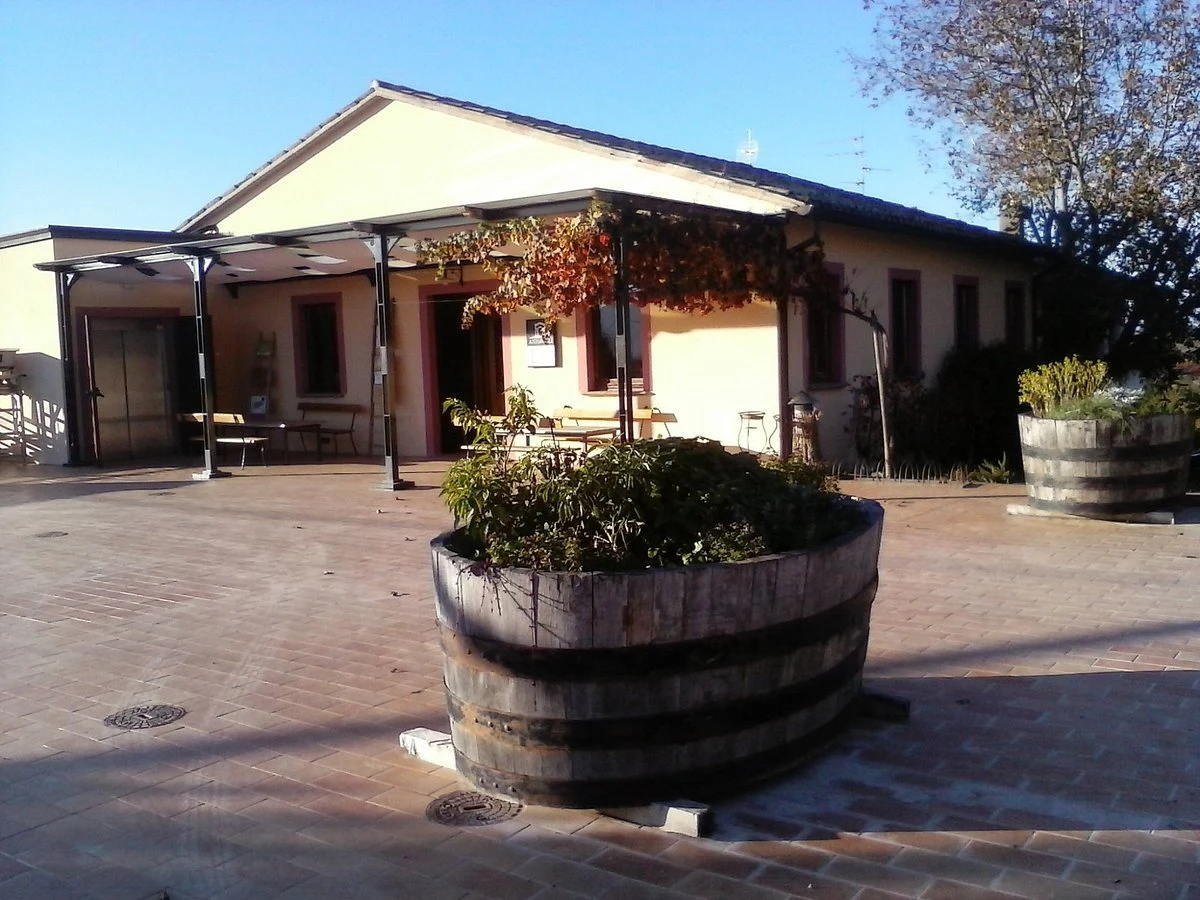
Arnaldo Caprai is located at Località Torre, 1, 06036 Montefalco PG, Montefalco.
Sagrantino di Montefalco is the grape that put this estate on the map and the category that earned its Pearl 2 Star Prestige recognition in 2025. Sagrantino carries some of the highest tannin levels of any Italian red variety, requiring significant ageing before it opens. Any visit to the estate should centre on tasting its expression of this grape across different vintages if the opportunity exists.
The estate's defining contribution is its role in rehabilitating Sagrantino as a serious fine wine variety at a time when the grape was in commercial decline. That historical position, combined with its current Pearl 2 Star Prestige rating (2025), places Arnaldo Caprai as a reference-point producer within the Montefalco appellation. It is not simply a winery to visit but a working argument for why difficult, tannic grapes deserve patience.
Arnaldo Caprai sits at Località Torre, 1 in Montefalco, and as a Pearl 2 Star Prestige estate it draws visitors year-round, particularly during harvest season in autumn. Contact details are not published in our current records, so booking through the estate's official channels or via a local concierge in Montefalco is the practical approach. Arriving without prior arrangement at a property of this standing is generally not advisable.
The Pearl 2 Star Prestige designation, awarded in 2025, places Arnaldo Caprai among a small tier of producers recognised for sustained quality at a prestige level. Within Umbria, the Montefalco zone has a far shorter international track record than Tuscany's established appellations, which makes that credential more significant as a signal of consistent output. For wine-focused travellers plotting an Umbrian itinerary from a base in Perugia or Spoleto, this rating offers a concrete reason to prioritise Caprai above the wider cluster of Montefalco producers.
Arnaldo Caprai rewards visitors who already have a working knowledge of Italian reds and want to understand a single appellation in depth rather than survey Tuscany's well-worn circuit. The estate's Pearl 2 Star Prestige credential (2025) signals a level of seriousness that suits those focused on production philosophy and terroir rather than a casual tasting drop-in. Montefalco itself is a small hilltop comune in Umbria, which means the trip has no ambient tourism infrastructure to fall back on if wine is not the primary interest.
Località Torre, 1, 06036 Montefalco PG
Montefalco