Askerne Estate Winery
- 01CityHavelock North, New Zealand

Askerne Estate Winery fits the relaxed Hawke’s Bay cellar-door tradition: estate-grown wines, a casual vineyard setting, and a format that works for mixed groups rather than formal collectors only. The Havelock North estate is strongest as a terroir-led stop, with Tuki Tuki Riverbed soils, coastal influence, and a broad portfolio spanning aromatic whites, reds, rosé, sparkling, and dessert wine.
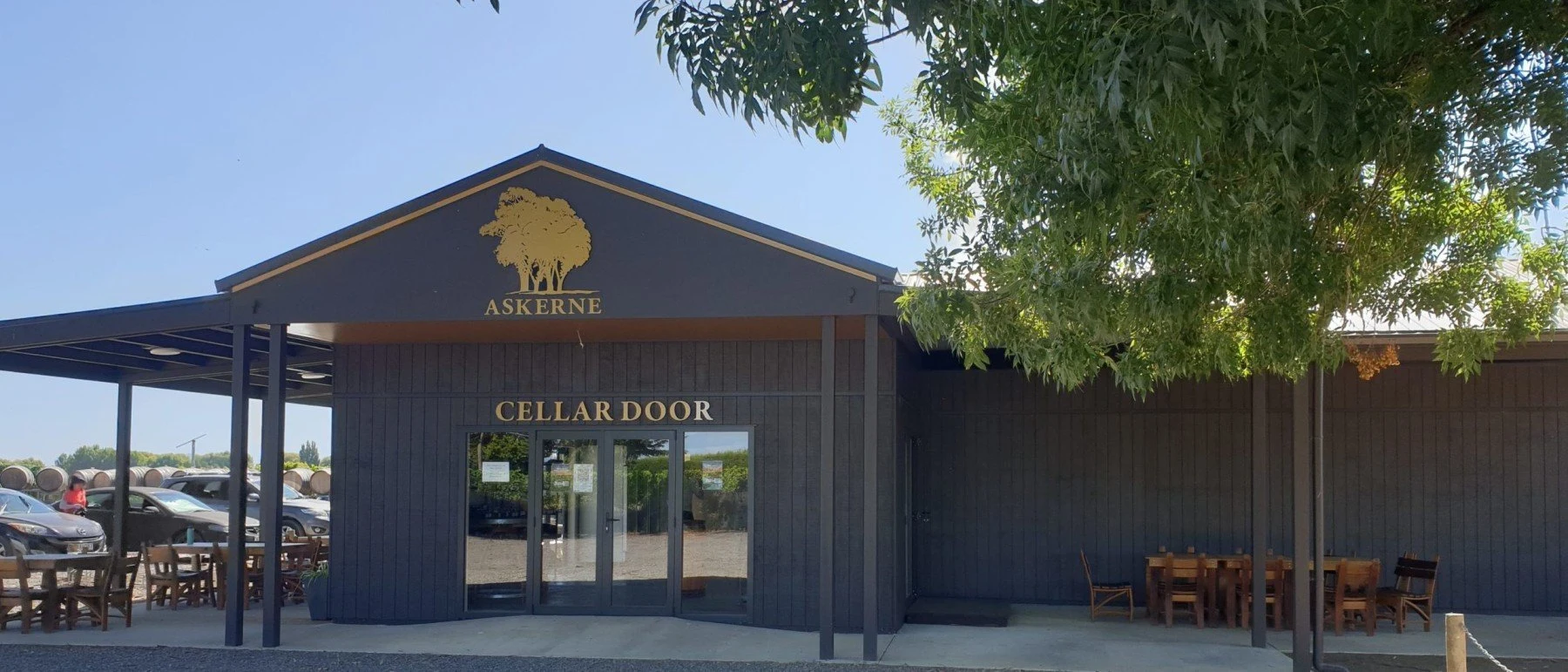
Vineyard cellar doors around Havelock North have a different rhythm from the appointment-heavy prestige rooms found in older wine regions. The encounter is less about ceremony and more about reading the land through a glass: warm Hawke’s Bay fruit, riverbed drainage, coastal moderation, and the practical hospitality of estates that expect families, dogs, and mixed groups to share the same space. Askerne Estate Winery belongs to that register, with a relaxed cellar-door setting in vineyard surroundings and a portfolio built from its own estate fruit.
Hawke’s Bay has long carried New Zealand’s case for warm-climate varieties. The region is associated with aromatic whites, Bordeaux-influenced reds, Syrah, Chardonnay, and late-harvest wines, a breadth that immediately separates it from regions defined by a single calling card. Around Havelock North, that breadth is not theoretical. Tastings often move across styles rather than narrowing quickly into one grape, which makes the area useful for travellers who want to understand why Hawke’s Bay occupies such a broad position in New Zealand wine.
Riverbed soils and a broad Hawke's Bay register
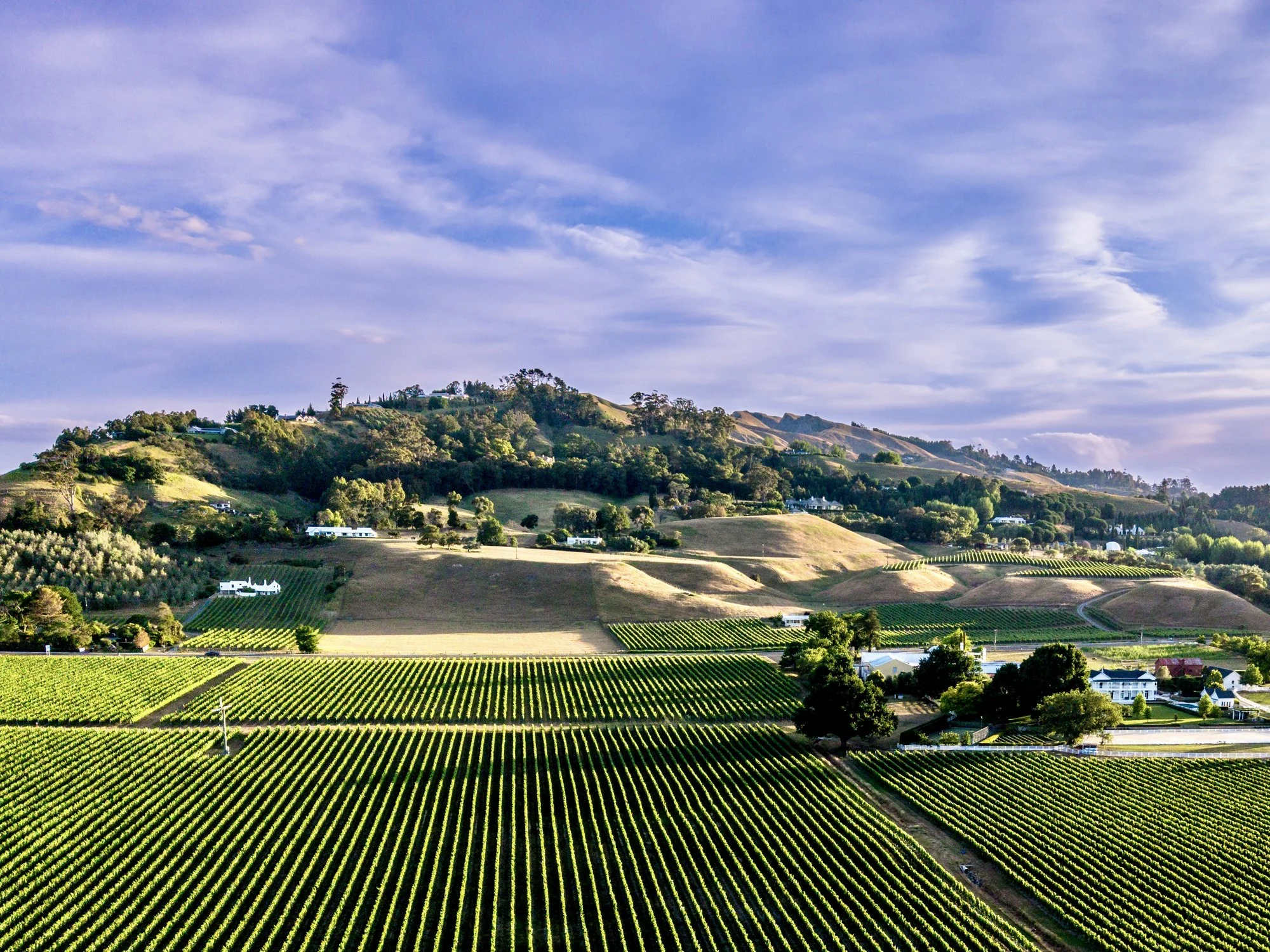
The estate’s core argument is place. Its vineyard expanded from an original 11.6-hectare Te Mata site to a single 20-hectare vineyard reclaimed from Tuki Tuki Riverbed land, where alluvial and gravelly soils give drainage and shape vine stress. Coastal influence moderates the growing season, while warm summers support a portfolio that moves from Sauvignon Blanc and Pinot Gris to Merlot, Syrah, Barbera, sparkling wine, and late-harvest Gewurztraminer. That range matters: it shows the Hawke’s Bay advantage as a mixed-variety region rather than a narrow stylistic zone.
Estate-grown sourcing gives the wines a coherent through-line. Fruit is not described as a regional blend assembled from distant parcels; the production model is based on control from vineyard to cellar. Annual production has been described in the 120–150 tonne range, roughly 16,000–20,000 cases, placing the operation at a scale where the cellar door can feel personal without being a hobby project. In visitor terms, that means the tasting is likely to be useful for both casual drinkers and travellers who want to track how site, variety, and cellar decisions connect.
The technical details reinforce that terroir-led reading. White wines may use whole-bunch pressing and barrel fermentation, with the 2024 Reserve Chardonnay noted for whole-bunch pressing, partial malolactic fermentation, lees ageing, and a 12-month oak programme. Red wines such as Cabernet Sauvignon and Bordeaux-style blends are described with longer oak ageing, including two-year barrel programmes. These are not decorative production notes; they explain why Hawke’s Bay Chardonnay and red blends often carry more structure than the leaner profiles associated with cooler New Zealand zones.
A cellar door built for tasting without ceremony
The hospitality format is deliberately unbuttoned. The cellar door is described as family-friendly, dog-friendly, wheelchair accessible, casual, and rustic, with guided structured tastings and self-paced flights across white, red, and mixed selections. That flexibility is part of the point. In a region where wine touring can quickly become a sequence of formal appointments, this style keeps the experience legible for groups with different levels of wine knowledge.
Food element follows the same logic. A “Build Your Own Picnic” format lets visitors assemble local cheeses, charcuterie, and deli items rather than committing to a restaurant-style pairing menu. It suits the estate’s broad portfolio: aromatic whites can sit beside lighter picnic choices, reds can carry richer items, and dessert wine has a clear place at the end of a tasting. The format is less theatrical than a degustation pairing, but it can be more useful for understanding how these wines behave in ordinary drinking conditions.
Several specific bottles give the portfolio its anchors. The 2024 Reserve Chardonnay has been rated 94/100 by Cameron Douglas MS, a useful external signal in a category where Hawke’s Bay competes seriously. The red range includes the 2023 Dr John Cabernet Sauvignon Cabernet Franc, while the 2024 Barbera points to the region’s capacity for less standard varieties. The 2023 Fleurty Rosé, non-vintage Brut, and 2019 Late Harvest Gewurztraminer round out a cellar-door lineup that covers summer drinking, structured reds, sparkling, and sweet wine without forcing the visitor into one house style.
How to read Askerne in a Havelock North wine day
Askerne Estate Winery is strongest when treated as a lens on Hawke’s Bay diversity rather than as a single-bottle destination. The estate’s founding in April 1993 by John and Kathryn Loughlin gives it three decades of continuity, while winemaker Cairn Coghill’s role in wines such as the Reserve Chardonnay adds a named production credential without turning the experience into a personality story. The more interesting frame is agricultural: reclaimed riverbed land, estate fruit, warm-season ripeness, and cellar choices that vary by variety.
For travellers building a Havelock North itinerary, the estate works well as a relaxed counterpoint to more formal wine programming. It also sits naturally within a broader local crawl: EP Club’s full Havelock North wineries guide maps the wider cellar-door scene, while the Havelock North restaurants guide, hotels guide, bars guide, and experiences guide help structure the rest of the day. Nearby regional reading can include Smith & Sheth, Te Mata, and Alpha Domus Winery in Hastings.
Viewed nationally, the contrast with other New Zealand wine regions is instructive. Central Otago-focused stops such as Akarua Winery in Nevis, Akitu in Wānaka, and Amisfield Wine in Queenstown read differently from Hawke’s Bay’s warmer, broader model. South Island producers such as Alan McCorkindale Limited in Christchurch and Allan Scott Family Winemakers in Blenheim widen that comparison again, while European references like »der Steiner« Hans Steiner in Podersdorf am See and & Handwein in Mannheim show how different climates frame cellar-door expectations. Askerne’s value is clearer against that spread: it offers Hawke’s Bay in a direct, approachable form, with enough production substance to reward close attention.
Questions
Frequently asked
What's the vibe at Askerne Estate Winery?
Expect a casual cellar-door setting in Havelock North, with a family-owned feel rather than formal tasting-room theater. The $$ price range points to an accessible visit, and the address places it squarely in Hawke’s Bay wine country.
Is Askerne Estate Winery expensive?
Pricing at Askerne Estate Winery is listed as $$.
Where do I go for Askerne Estate Winery?
Askerne Estate Winery is located at Havelock North, Neuseeland, Havelock North.
Why do people go to Askerne Estate Winery?
People go for Hawke’s Bay context: a boutique estate in Havelock North with a vineyard shaped by riverbed soils and a tasting room built for easy, low-pressure stops. The draw is the setting and the regional wine focus, not a restaurant-style program.
The field
How it compares
| Place | Notes | Awards |
|---|---|---|
| Askerne Estate Winery | Havelock North, $$ | · |
| Domaine Arnaud Ente | Meursault | · |
| Quinta do Crasto | Sabrosa | World's 50 Best |
| Champagne Salon | Le Mesnil-sur-Oger | · |
| The Macallan | Aberlour | · |
| Domaine du Clos de Tart | Morey-Saint-Denis | · |
| Domaine Leflaive | Puligny-Montrachet | · |