August
In Residence
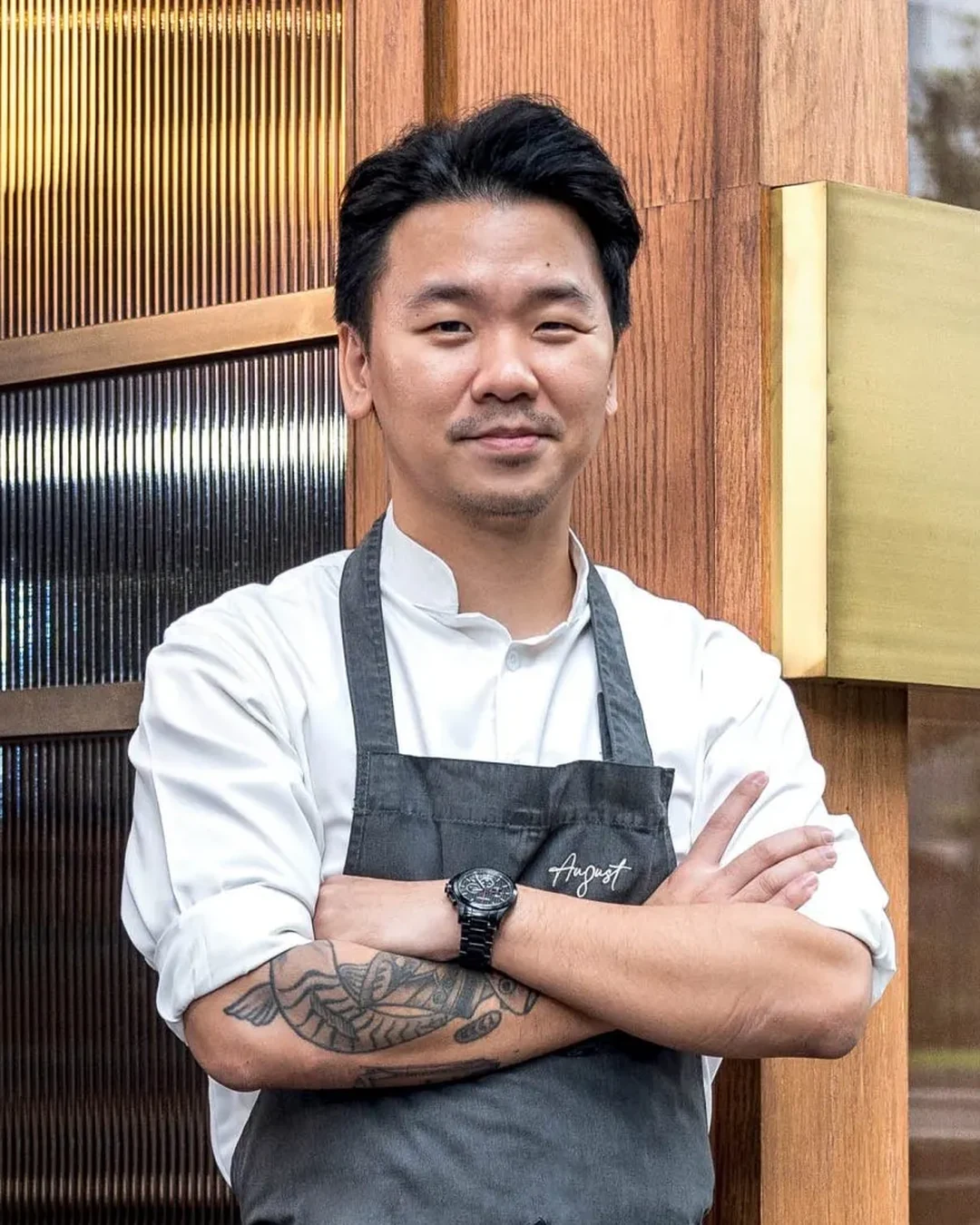
Hans Christian
Chef
- 01CuisineModern Indonesian Fusion
- 02CityJakarta, Indonesia
- 03RecognitionWorld's 50 Best — No. 42
- World's 50 Best · #42 · World's 50 Best Restaurants
- World's 50 Best Asia's Best Restaurants #42 · 2026
- Opinionated About Dining Top Restaurants in Asia Recommended · 2026
- Tatler Listed in Best Restaurants Asia-Pacific · 2025
- The Best Chef One Knife · 2025
A Different Register in the Sudirman Corridor
Jakarta's central business district runs fast and loud. Sequis Tower sits along Jalan Jenderal Sudirman, one of the city's primary commercial arteries, and the ground floor of that building is where August operates, a counter against type, offering a format built for slowness inside one of the capital's most high-velocity neighbourhoods. That tension is not incidental. Jakarta's serious dining scene has long clustered around areas like Kemang, Menteng, and the southern suburbs, where residential density and leisure time align more naturally with long tasting-menu sittings. That a 16-course format has taken root in a Sudirman tower reflects something broader: the business lunch culture here has matured, and so has the appetite for serious cooking among the city's working professional class.
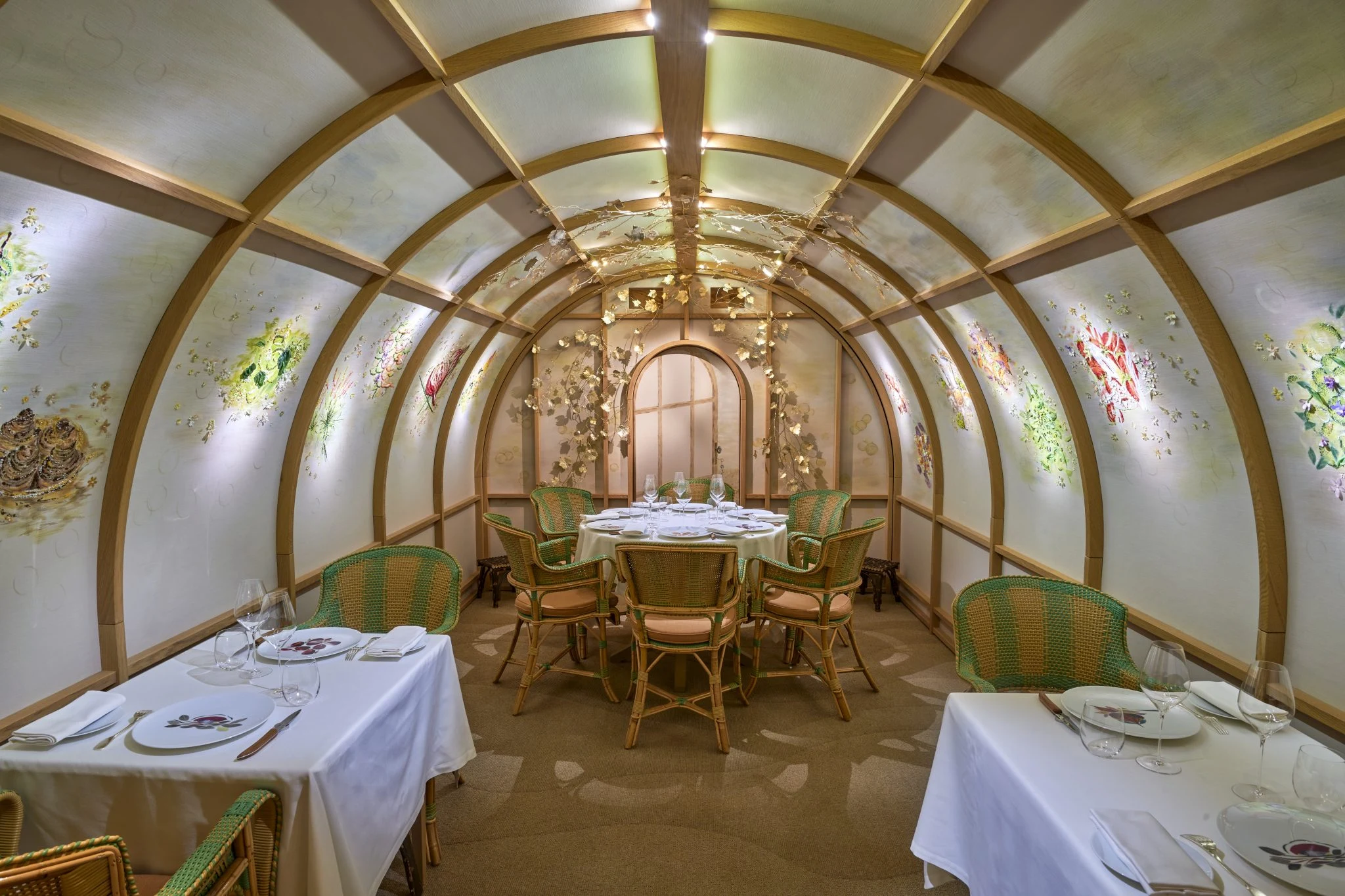
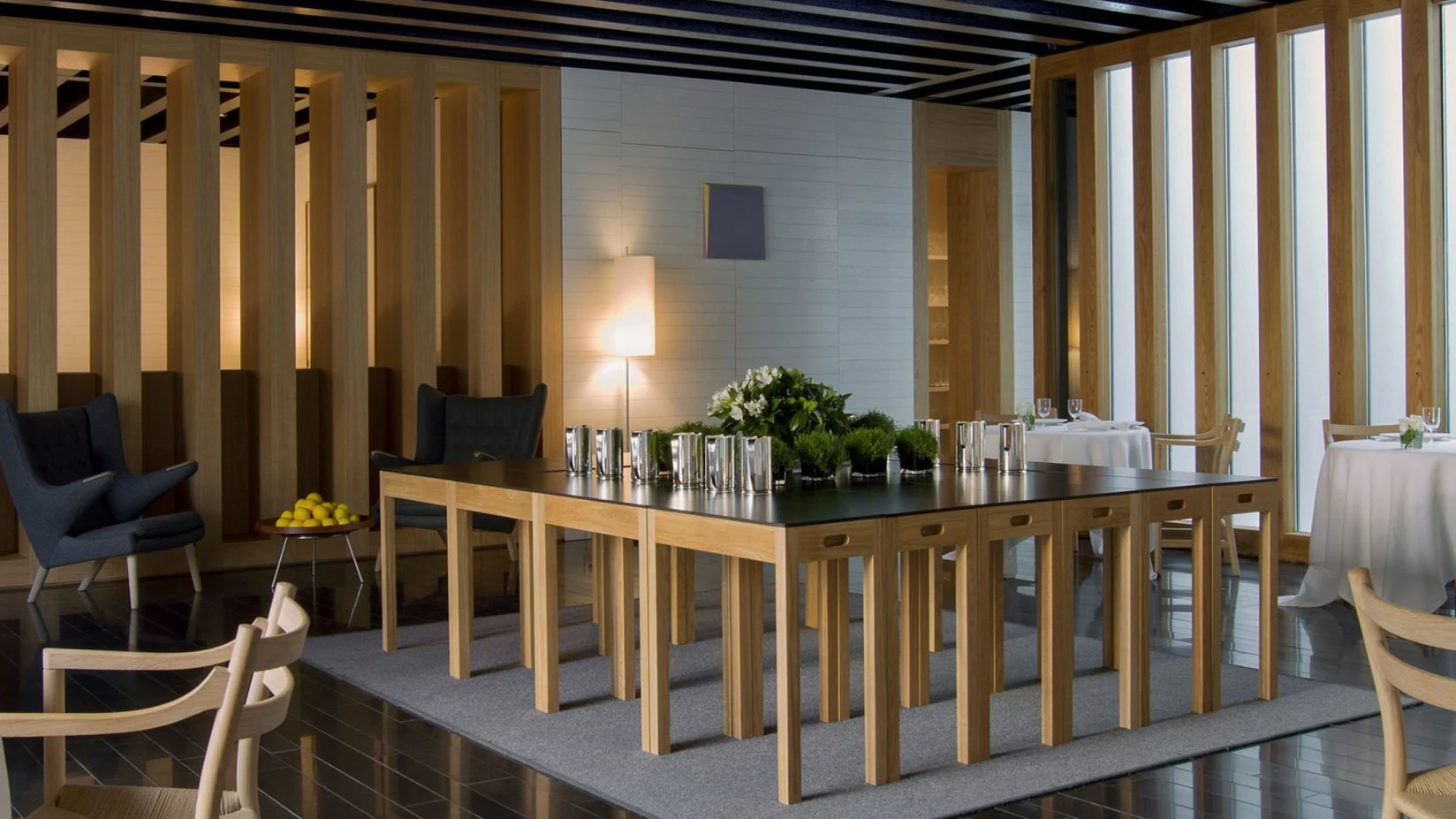
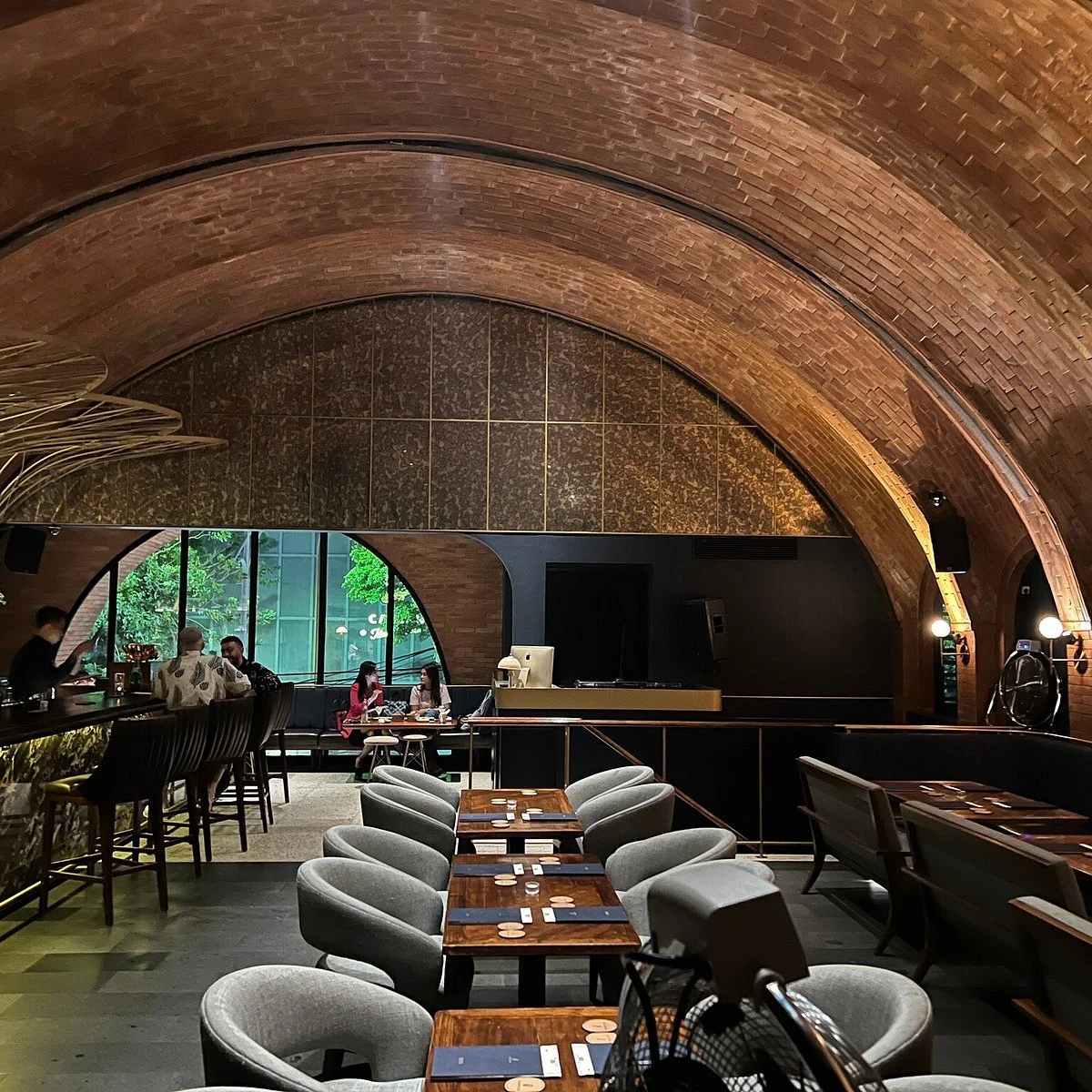
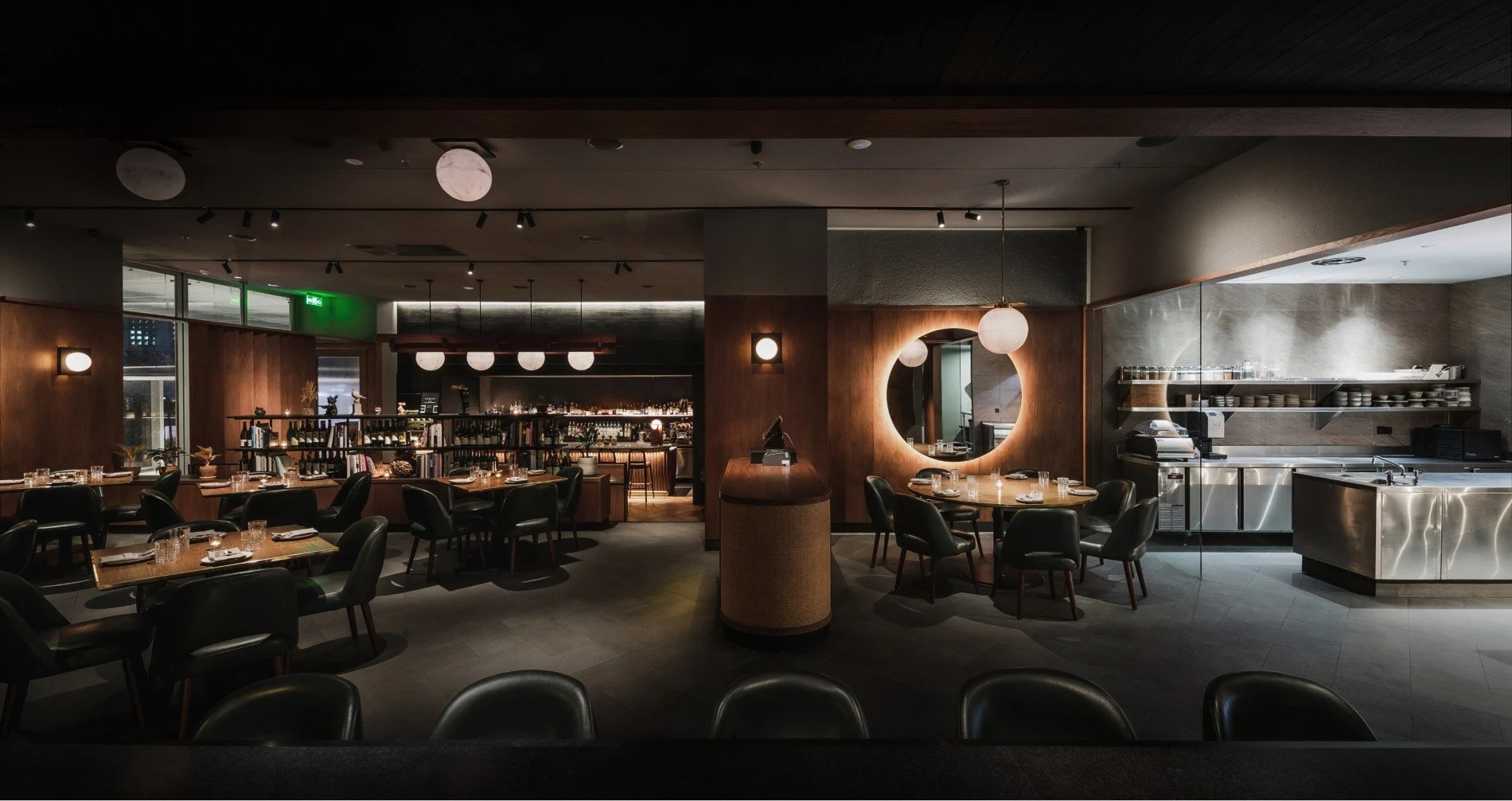
The room reads against the glass-and-steel exterior. Soft colour tones, an unhurried atmosphere, and a spatial arrangement that encourages conversation rather than spectacle mark August out from the style-forward dining rooms that have proliferated across Jakarta's newer restaurant generation. For a comparative sense of scale: Kaum operates a more expressive, communal format drawing on broader Indonesian heritage dining traditions, while Meatguy Steakhouse sits firmly in the meat-led, high-energy category that also does strong business in this corridor. August occupies a different position entirely: structured, quiet, and tasting-menu-only in its ambitions.
The 16-Course Format and What It Signals
Across Asia's more considered dining rooms, the extended tasting menu has become a specific statement about pacing and editorial control. Atomix in New York City uses a similar course-count logic to build cumulative narrative through Korean culinary heritage. Lazy Bear in San Francisco uses it to foreground hyper-local Northern California sourcing. August's 16-course format places it in that broader tradition of kitchens that use extended menus not as a luxury signal but as the primary structure through which a specific ingredient philosophy becomes legible.
At August, that philosophy centres on Indonesia's spice palette and locally sourced produce. The archipelago's pantry is among the most complex in the world, centuries of trade, agriculture, and regional tradition have produced a material vocabulary that few kitchens have the training or patience to deploy rigorously. Chef Hans Christian's menu treats this palette as its primary creative constraint. Each course functions as a proposition about what Indonesian ingredients can do within a contemporary fine dining grammar, rather than as a reconstruction of a particular regional dish tradition. The distinction matters: it separates the format from the museum-piece tendency in some Indonesian restaurants, where heritage becomes a kind of display rather than a living culinary argument.
For context on how Indonesian fine dining is handling this question across the country's restaurant centres, Locavore NXT in Ubud has built its reputation on a similar locally-sourced-ingredient commitment in a Balinese context, while Kahyangan in Gondangdia operates a different register of Indonesian cooking within Jakarta itself. Sarong Bali in Canggu and Rumari in Jimbaran represent the Bali end of the premium Indonesian dining spectrum, each handling the archipelago's ingredient diversity through a different interpretive lens.
Hans Christian and the Chef's Background
The format a kitchen commits to is, in significant part, a product of where its chef was trained and what culinary problems they have decided are worth solving. Chef Hans Christian leads the kitchen at August, and the 16-course menu's structure reflects a sensibility shaped by exposure to tasting-menu discipline, the kind of format logic that European fine dining codified over decades and that has since migrated into Asia's most technically ambitious restaurants.
The comparison set for that training lineage runs through kitchens like Le Bernardin in New York City, where French technique and product clarity define the standard, and operations like Alain Ducasse at Louis XV in Monte Carlo, which represents the European benchmark for ingredient-led luxury cooking. 8 1/2 Otto e Mezzo Bombana in Hong Kong is a relevant regional reference point for how European-trained discipline translates into an Asian dining context. Emeril's in New Orleans offers a different model entirely, the chef as regional advocate using a specific American pantry, which resonates with what August is attempting from the Indonesian ingredient perspective.
What matters at a restaurant like August is not the biographical arc of the chef's career in isolation, but what that arc has produced in terms of a working method. The 16-course format, the local sourcing commitment, and the spice-palette focus are all evidence of a kitchen that has decided its job is translation: taking Indonesia's ingredient depth and making it speak a contemporary fine dining language that international guests and domestically sophisticated diners can both follow.
The Room, the Service, and the Pace
The soft interior tones at August serve a practical function beyond aesthetics. In a tasting-menu format, the room's atmosphere is part of the food's delivery mechanism. Long formats require that the room not compete with the plate, that the visual and acoustic environment supports concentration on what's being eaten and said. The calm register that August maintains is consistent with how the better multi-course formats in this region approach room design. The Legian in Seminyak applies a similar atmospheric restraint in a resort context; in a city tower block, achieving the same effect requires more deliberate engineering.
The hospitality approach at August is described as warm rather than formal, the kind of service that recognises a 16-course meal as a significant time commitment and treats the guest's comfort across that arc as part of its responsibility. This is worth noting because the formality gradient in Jakarta's fine dining rooms has historically skewed toward stiff European-style service, a hangover from the international hotel dining rooms that defined the city's premium dining tier for decades. A more relaxed but attentive posture, aligned with a menu that draws on local culinary identity rather than imported luxury codes, represents a coherent service philosophy.
Planning Your Visit
August sits at the ground floor of Sequis Tower at Jalan Jenderal Sudirman Kav. 71, in the heart of Jakarta's Sudirman-SCBD commercial zone. The location makes it convenient for guests staying in nearby business hotels or attending meetings in the district, though the 16-course format means a lunchtime booking requires a genuinely clear afternoon. Given the course count and the type of cooking on offer, this is a dinner-primary destination for most visitors; the pace of service and the menu's ambition reward an evening commitment rather than a working-day time slot.
Reservations are advisable well in advance, particularly for weekend sittings, where demand from Jakarta's dining-aware professional population competes with tourist interest in the city's more considered restaurants. For broader orientation on where August fits within Jakarta's dining offer, see our full Jakarta restaurants guide. If you're building an itinerary around serious dining in the city, our Jakarta hotels guide covers accommodation options by area and tier. Supplementary resources include our Jakarta bars guide, our Jakarta wineries guide, and our Jakarta experiences guide for a full picture of what the capital offers beyond the table.
Questions
Frequently asked
What recognition does August hold?
August holds a place on the World's 50 Best list at number 42.
Who works at August?
Made By profiles Hans Christian (Chef) at August.
How expensive is August?
August is listed at a price level of $$$.
Where is August and what does it serve?
August is in Senayan, Jakarta, serving Modern Indonesian Fusion.
The field
How it compares
| Place | Awards | Cuisine | Notes |
|---|---|---|---|
| August | World's 50 Best #42 | Modern Indonesian Fusion | Senayan, $$$ |
| Arpège | Michelin 3 Stars, World's 50 Best | Vegetable-Focused French Fine Dining | Paris |
| Atrio | Michelin 3 Stars | Modern Spanish Fine Dining with Iberian Pork Focus | Cáceres |
| Emeril’s | Michelin 2 Stars, World's 50 Best | Modern Creole-Cajun Fine Dining | New Orleans |
| PANTJA | · | Modern Asian Farm-to-Table with Open-Fire Cooking | Jakarta |
| Sorn | Michelin 3 Stars, World's 50 Best | Fine Southern Thai | Bangkok |
| The Chairman | Michelin 1 Star, World's 50 Best | Traditional Cantonese | Hong Kong |
In residence
Similar places
Vegetable-Focused French Fine Dining
Arpège
Paris, France
★★★ · 50 Best
Modern Spanish Fine Dining with Iberian Pork Focus
Atrio
Cáceres, Spain
★★★
Modern Creole-Cajun Fine Dining
Emeril’s
New Orleans, United States
★★ · 50 Best
Modern Asian Farm-to-Table with Open-Fire Cooking
PANTJA
Jakarta, Indonesia
Fine Southern Thai
Sorn
Bangkok, Thailand
★★★ · 50 Best
Traditional Cantonese
The Chairman
Hong Kong, Hong Kong
★ · 50 Best