Nebbiolo from seven estate plots
- Falstaff Winery - Listed · 2026
Nebbiolo first, cellar second
Nebbiolo sets the pace for Eugenio Bocchino, winemaker at Azienda Agricola Eugenio Bocchino in La Morra, Italy, before the cellar asks for anything from the fruit. His work stays close to one address and one discipline: estate wine from a small family farm in Frazione Santa Maria, within the Barolo DOCG landscape. The house began in 1996, but the register is older than that date, shaped by Nebbiolo, Barbera, a light hand in the cellar, and the decision to keep the scale human. Bocchino works with Cinzia in a structure that has not been built around movement from one post to the next. The continuity matters because the wines are read through that fixed frame: natural wine, biodynamic farming, and a producer whose name remains tied to the same azienda. The estate’s signature bottles give that frame a vocabulary. Barolo ‘Lu’ carries its own named place in the range; Barolo del Comune broadens the expression; Langhe Roccabella Nebbiolo and Tom Barbera d'Alba keep the work inside Piedmont’s familiar red register without widening it into a catalogue.
Seven plots under a light hand
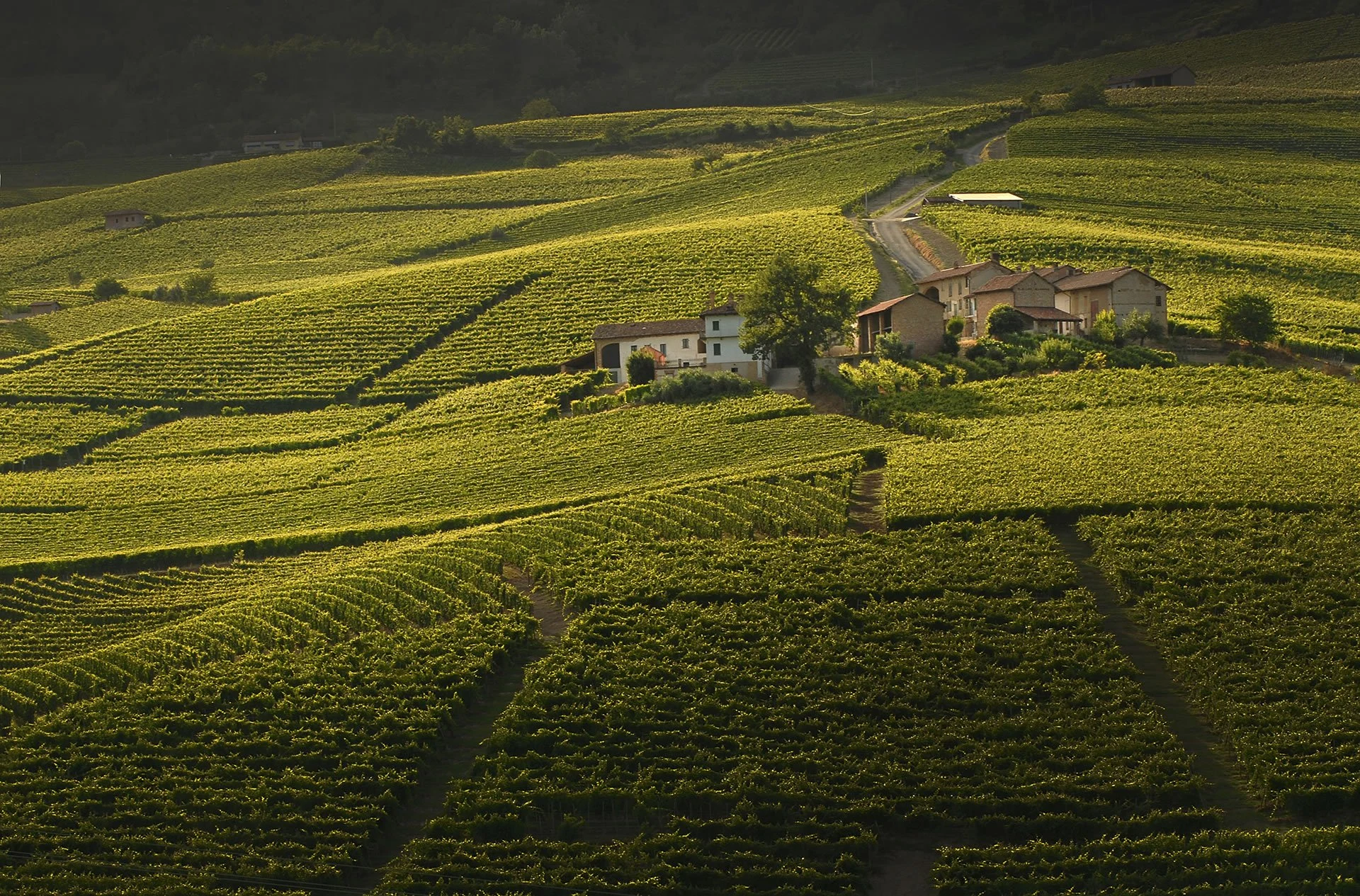
The farm works 5.5 hectares across seven plots in La Morra, Verduno, Roddi, and Alba, with Nebbiolo at the center and Barbera held in a smaller role. That spread gives Bocchino different soils and exposures to read from the vineyard before he makes any cellar decision. La Morra’s Tortonian sandy marls are part of the estate’s language, bringing perfume and a softer fruit line to the Barolo base; other holdings extend the range of structure and tone without changing the central grape. The farming is described through biodynamic, organic, natural, and raw methods, a set of choices that keeps the vineyard rather than the cellar in front. For Barolo, the discipline is also legal and temporal: at least 38 months of aging, with a minimum of 18 months in wood. The house works in a traditional style, favoring the slow development of Nebbiolo over the polish of new oak. The cellar’s job is restraint.
A quiet room around the barrels
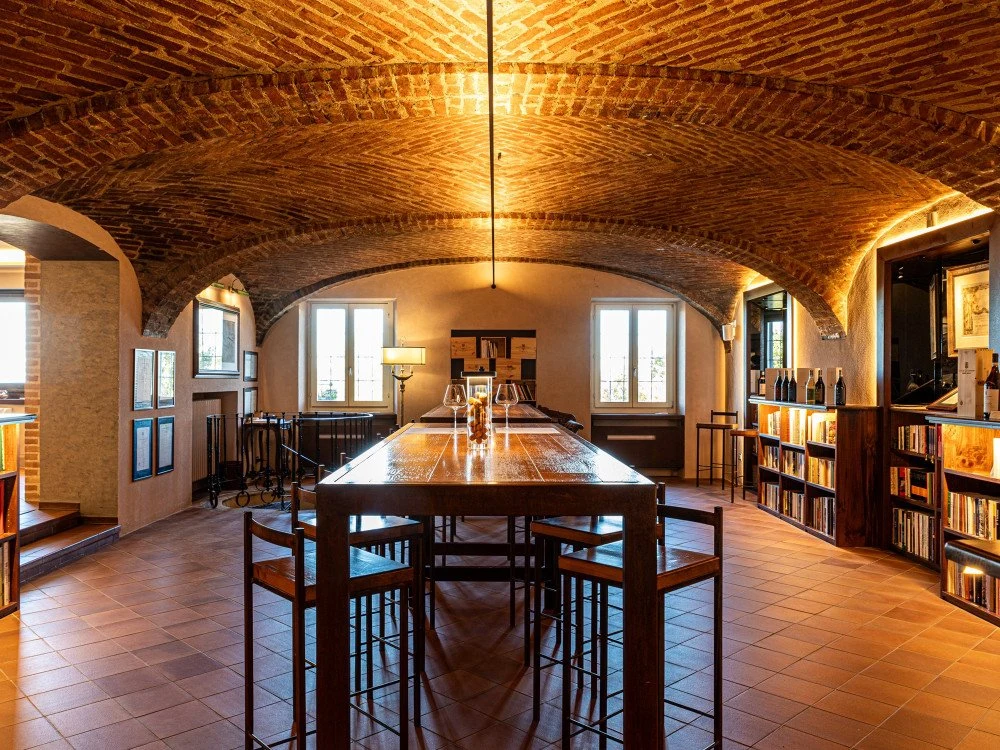
The tasting room and cellar do not pull the estate away from production. They bring the visitor toward it. The atmosphere is quiet, rustic, and close to the barrel room, with the work of tasting set beside the work of making rather than staged apart from it. In La Morra, that matters: the wines can be complex without weight, built for age but not for volume in the glass. The room follows the same idea. It is intimate and cellar-focused, a place where the conversation returns to vineyard, cask, and vintage instead of spectacle. The counterpoint is in the bottles themselves, especially when Barolo ‘Lu’ and Barolo del Comune are poured side by side from the Bocchino range.
Questions
Frequently asked
Who is behind Azienda Agricola Eugenio Bocchino?
Eugenio Bocchino is the winemaker at Azienda Agricola Eugenio Bocchino in La Morra, and he works there with Cinzia.
What is the estate known for?
The estate makes natural Barolo from a small family farm in Frazione Santa Maria, within the Barolo DOCG landscape, with Nebbiolo at the centre and Barbera in a smaller role.
What kind of farming and cellar work does the winery use?
The farm is described as biodynamic, organic, natural, and raw, and the cellar work is intentionally restrained, with a traditional approach that favours slow development over new oak polish.
Can visitors drop in for a tasting?
Visits are by appointment only, and the tasting room is quiet, rustic, and close to the barrel room.
What wines are part of the range?
The range includes Barolo ‘Lu’, Barolo del Comune, Langhe Roccabella Nebbiolo, and Tom Barbera d'Alba.
The field
How it compares
| Place | Notes |
|---|---|
| Azienda Agricola Eugenio Bocchino | Frazione Santa Maria Serra, $$$ |
| Cascina Rocca – Franco Molino | La Morra |
| Negretti | La Morra |
| Oddero | La Morra |
| Poderi Gianni Gagliardo | La Morra |
| Rocche Costamagna | La Morra |
| Trediberri | La Morra |