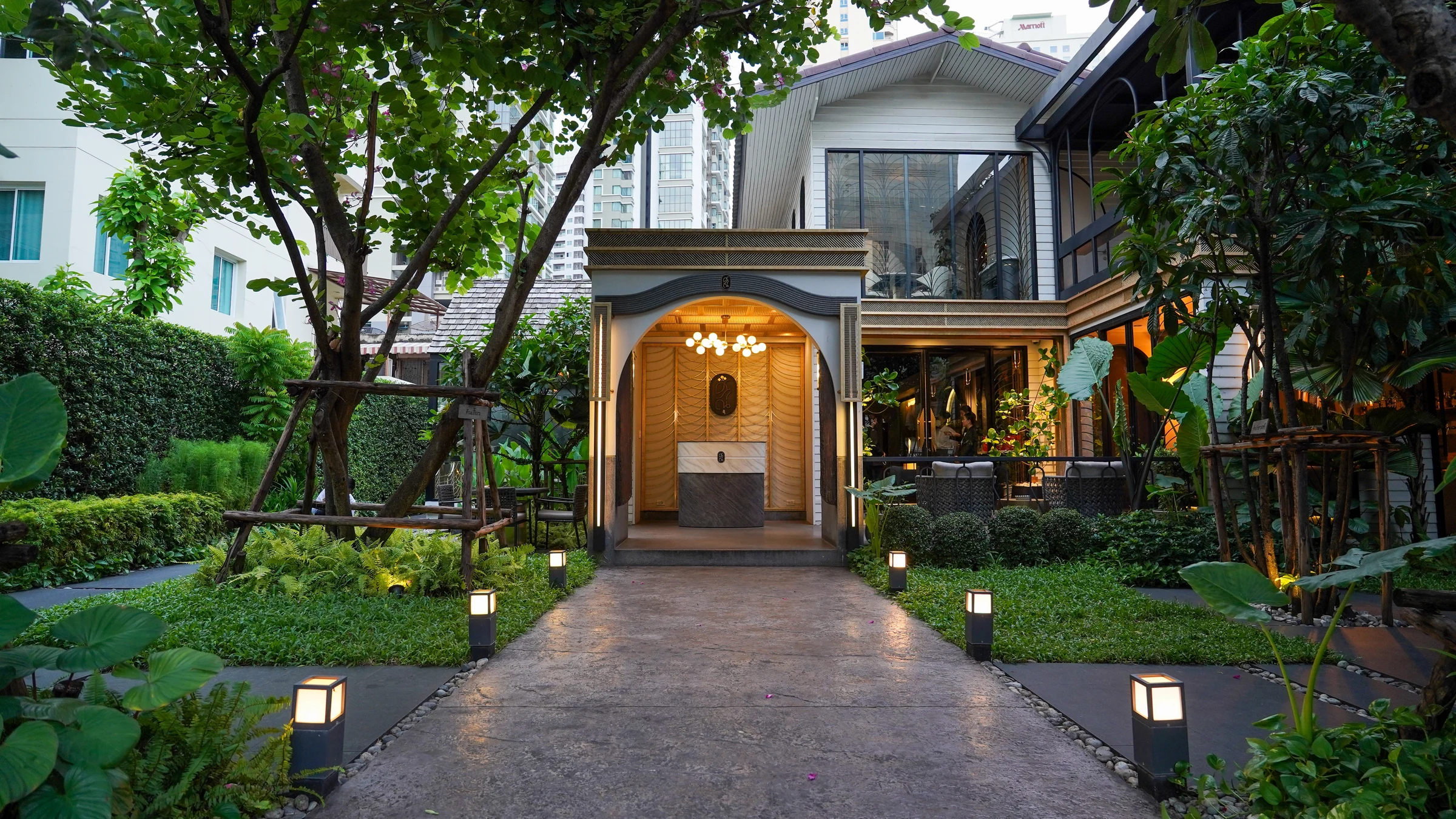
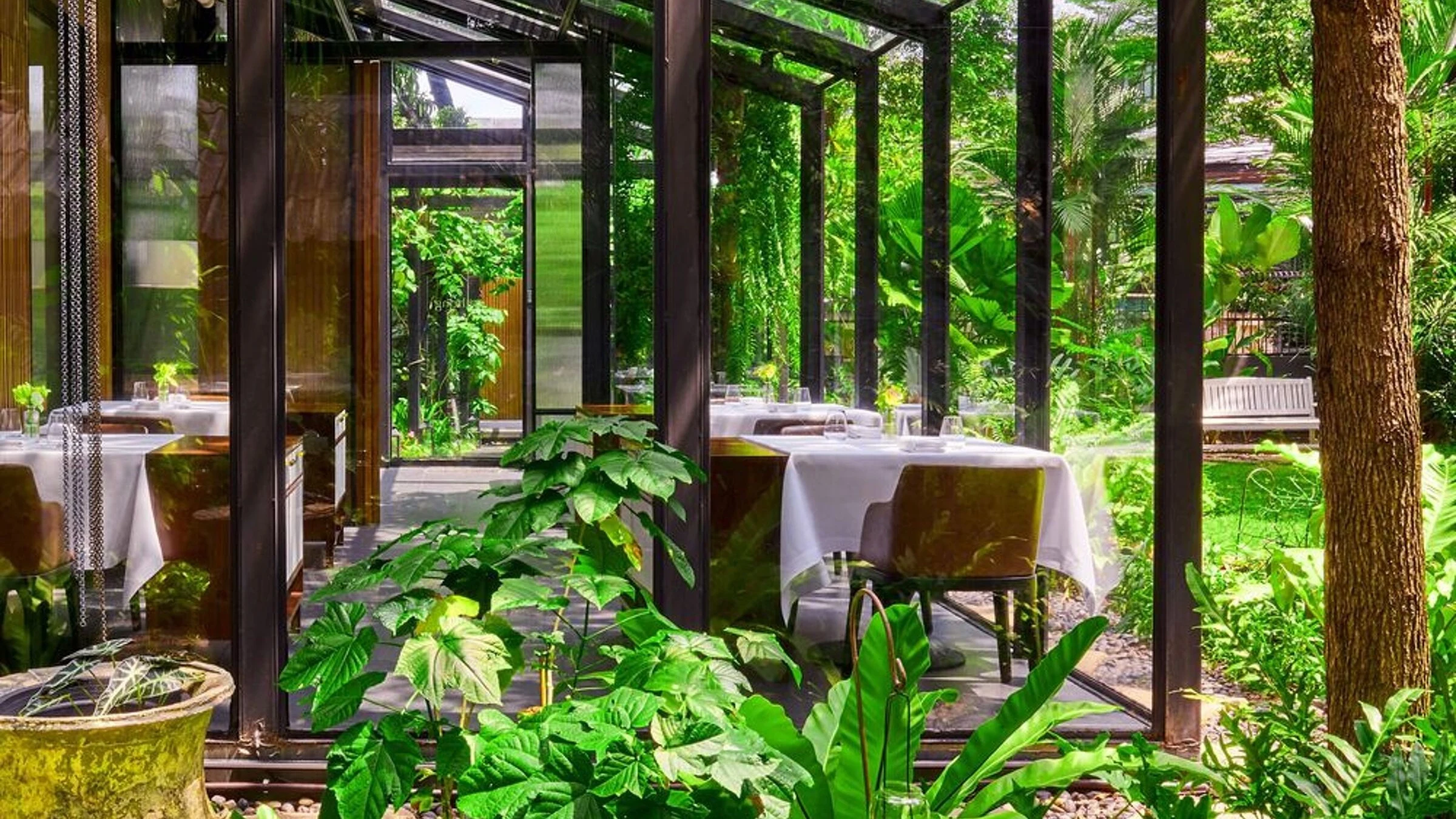
Baan Somtum
- 01CuisineAuthentic Isaan Thai Somtum
- 02CityBangkok, Thailand

From the people index
Recommended by
One trusted voice points here.
Where Isan Cooking Meets Bangkok's Serious Dining Circuit
Bangkok's dining scene has, over the past decade, split decisively between two poles: the international fine-dining tier represented by restaurants like Sorn (Southern Thai), Baan Tepa (Thai contemporary), and Sühring (German), where tasting menus run deep into four-figure baht territory, and a more grounded tier where regional Thai traditions are treated with equivalent seriousness but without the ceremony. Baan Somtum on Thanon Si Wiang in Bang Rak is an Authentic Isaan Thai Somtum restaurant, with a casual dress code, recommended reservations, and a price level around $15 per person.
Isan food, which traces its roots to the northeastern plateau bordering Laos and Cambodia, has historically been the food of migration, carried into Bangkok by laborers, vendors, and families who brought their fermented flavors and pounding mortars with them. What places like Baan Somtum represent is the formalization of that tradition within a permanent restaurant context, where the dish is treated as the architecture around which a meal is constructed. Across Thailand, you'll find similarly intentional regional expressions at venues like Ayutthayarom in Phra Nakhon Si Ayutthaya and Baan Heng in Khon Kaen, where the regional cooking of each area is given the same focal treatment.
The Architecture of a Som Tum Meal
The tasting progression at a restaurant built around som tum follows a logic that differs from a Western multi-course structure. Rather than a linear movement from lighter to richer, an Isan meal tends to operate through contrast and rhythm: the sharp, sour, and fermented punctuated by the smoky and the starchy. Som tum itself arrives in variations that range from the relatively clean central-Thai style, dressed with lime, palm sugar, dried shrimp, and fish sauce, to the more aggressive northeastern versions that introduce pla ra, the fermented fish paste that gives the dish a depth and funk that Western palates often need a moment to recalibrate around.
That progression matters because the rest of the table is built to support it. Grilled meats, particularly gai yang (marinated grilled chicken) and mu ping (pork skewers), serve as anchors of fat and smoke against the acid of the papaya. Sticky rice, eaten by hand and rolled into small balls, is the textural constant that moves through every course, absorbing the surrounding sauces and acting as the connective tissue of the meal. Larb, the chopped meat salad dressed with toasted rice powder and fresh herbs, sits toward the center of the progression, bridging the rawness of the papaya salad and the density of the grilled proteins. The meal ends not with sweetness in the European sense but with a kind of satiation built from layers of heat, fermentation, and starch.
Understanding this sequence is what separates an informed visit from an arbitrary one. At venues like Baan Chik Pork Noodles in Udon Thani, that regional logic is embedded in the menu without explanation. Bangkok restaurants that import those traditions need to make the same implicit contract with their diners.
Bang Rak as a Dining Address
The Bang Rak district has evolved considerably from its earlier identity as the neighborhood of the old commercial riverfront. Today it sits between the dense hospitality corridor of Silom and the riverside, absorbing foot traffic from business travelers, long-stay expatriates, and local workers who know the area's side streets better than any guidebook does. Thanon Si Wiang is a short street that runs through that residential-commercial mix, giving restaurants on it a neighborhood quality that contrasts with the more performed atmospheres of venues along Silom proper.
That logistical positioning is relevant because Isan food in Bangkok operates leading as a meal eaten in context, not as a destination destination. The neighborhood around it, with its mix of street vendors and office buildings, reinforces rather than contradicts the food's origins.
Regional Thai Cooking Across the Country
The commitment to Isan cooking at this Bangkok address connects to a broader pattern of regional specificity across Thailand's restaurant scene. In Phuket, PRU in Phuket applies a farm-to-table framework to southern ingredients. In Ko Samui, Baan Suan Lung Khai anchors itself to local produce and southern island cooking. In Nakhon Ratchasima, Banmai Chay Nam works from the northeastern tradition on its home ground. The consistent thread is that Thai regional cooking is no longer treated as secondary to a cosmopolitan fine-dining identity; it has developed its own vocabulary of critical attention. Venues like AKKEE in Pak Kret and Banrimbung in Nakhon Pathom reinforce this pattern at the edges of Bangkok's metropolitan spread. Even internationally, the shift toward regional specificity over generalized national cuisine is visible at venues like Le Bernardin in New York City and Lazy Bear in San Francisco, where a singular culinary focus drives the entire program. Anuwat in Phang Nga similarly draws on the specific ingredient traditions of its coastline rather than defaulting to a pan-Thai menu. And at The Spa in Lamai Beach, the surrounding environment shapes the offering in a parallel way. Baan Somtum's positioning in Bangkok participates in exactly that shift, bringing the pounded, fermented, and grilled logic of the northeast into a permanent city address.
Planning a Visit
Booking is recommended, especially on weekends or for groups.
Questions
Frequently asked
How expensive is Baan Somtum?
Baan Somtum is listed at a price level of $$.
Where is Baan Somtum and what does it serve?
Baan Somtum is in Bang Rak Khwaeng, Bangkok, serving Authentic Isaan Thai Somtum.
The field
How it compares
| Place | Cuisine | Notes | Awards |
|---|---|---|---|
| Baan Somtum | Authentic Isaan Thai Somtum | Bang Rak Khwaeng, $$ | · |
| Baan Tepa | Creative Thai Fine Dining | Bangkok | Michelin 2 Stars, World's 50 Best |
| Gaa | Modern Indian Fine Dining with Thai Influences | Bangkok | Michelin 2 Stars, World's 50 Best |
| Gaggan Anand | Progressive Indian | Bangkok | Michelin 1 Star, World's 50 Best |
| Potong | Progressive Thai-Chinese Fine Dining | Bangkok | Michelin 1 Star, World's 50 Best |
| Sorn | Fine Southern Thai | Bangkok | Michelin 3 Stars, World's 50 Best |
| Sühring | Modern German Fine Dining | Bangkok | Michelin 3 Stars, World's 50 Best |
Similar places
Creative Thai Fine Dining
Baan Tepa
Bangkok, Thailand
★★ · 50 Best
Modern Indian Fine Dining with Thai Influences
Gaa
Bangkok, Thailand
★★ · 50 Best
Progressive Indian
Gaggan Anand
Bangkok, Thailand
★ · 50 Best
Progressive Thai-Chinese Fine Dining
Potong
Bangkok, Thailand
★ · 50 Best
Fine Southern Thai
Sorn
Bangkok, Thailand
★★★ · 50 Best
Modern German Fine Dining
Sühring
Bangkok, Thailand
★★★ · 50 Best