- Opinionated About Dining Casual in Japan Ranked #47 · 2026
- Michelin Plate · 2026
- Michelin Plate · 2025
- Opinionated About Dining Casual in Japan Ranked #47 · 2025
- Tabelog 100 #79: 3.9pts · 2025
- Opinionated About Dining Casual in Japan Ranked #52 · 2024
- Michelin Plate · 2024
- Opinionated About Dining Casual in Japan Ranked #40 · 2023
A Different Frequency in Ginza
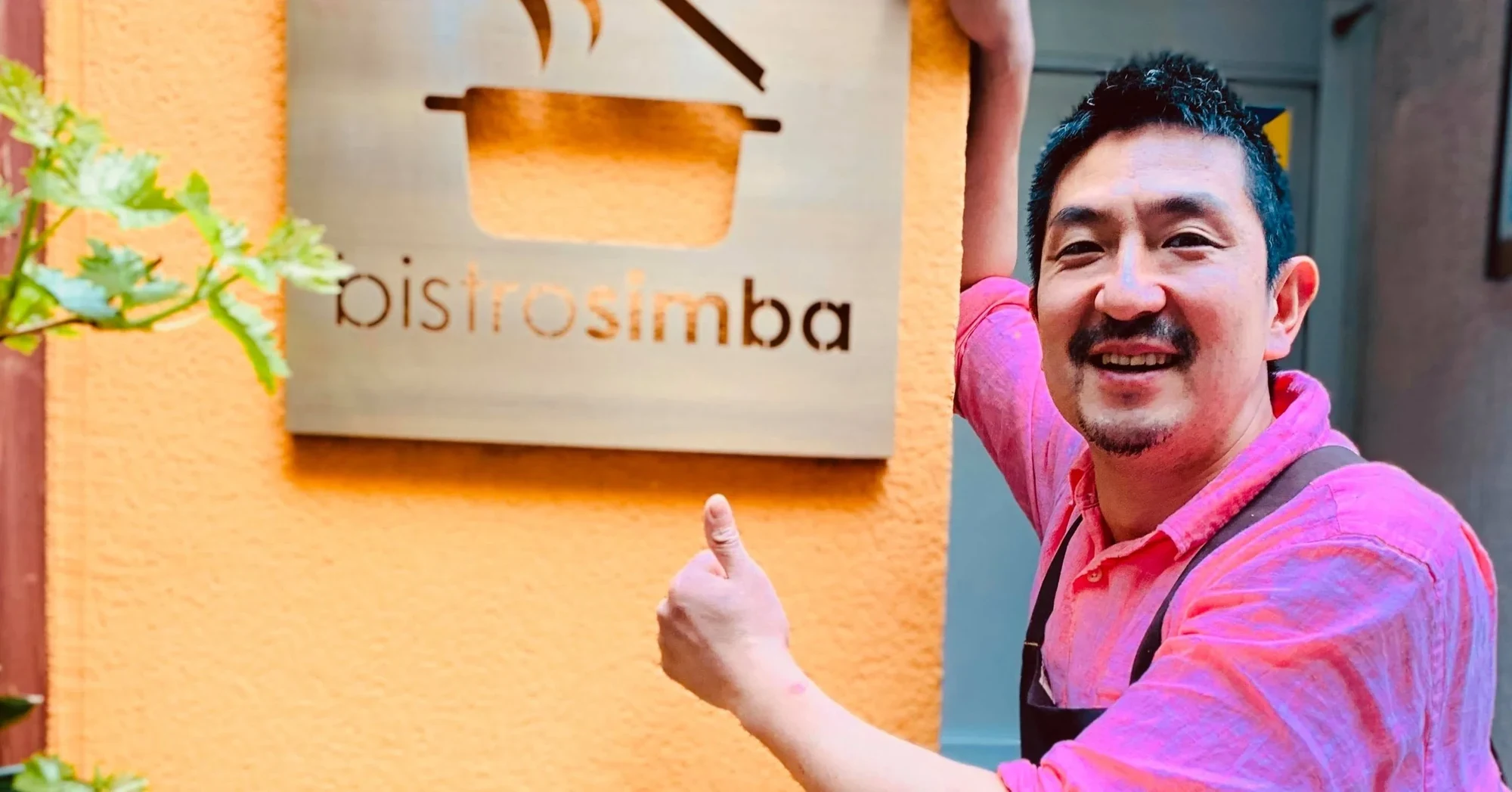
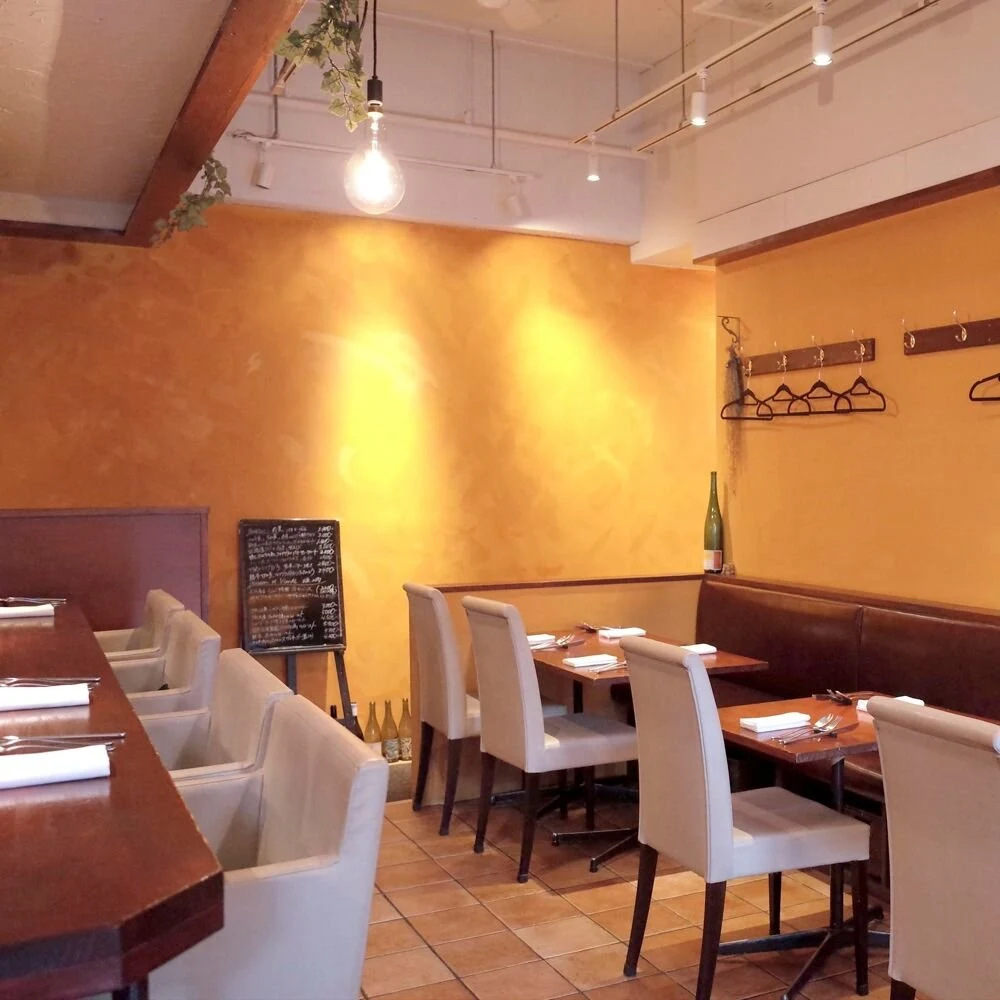
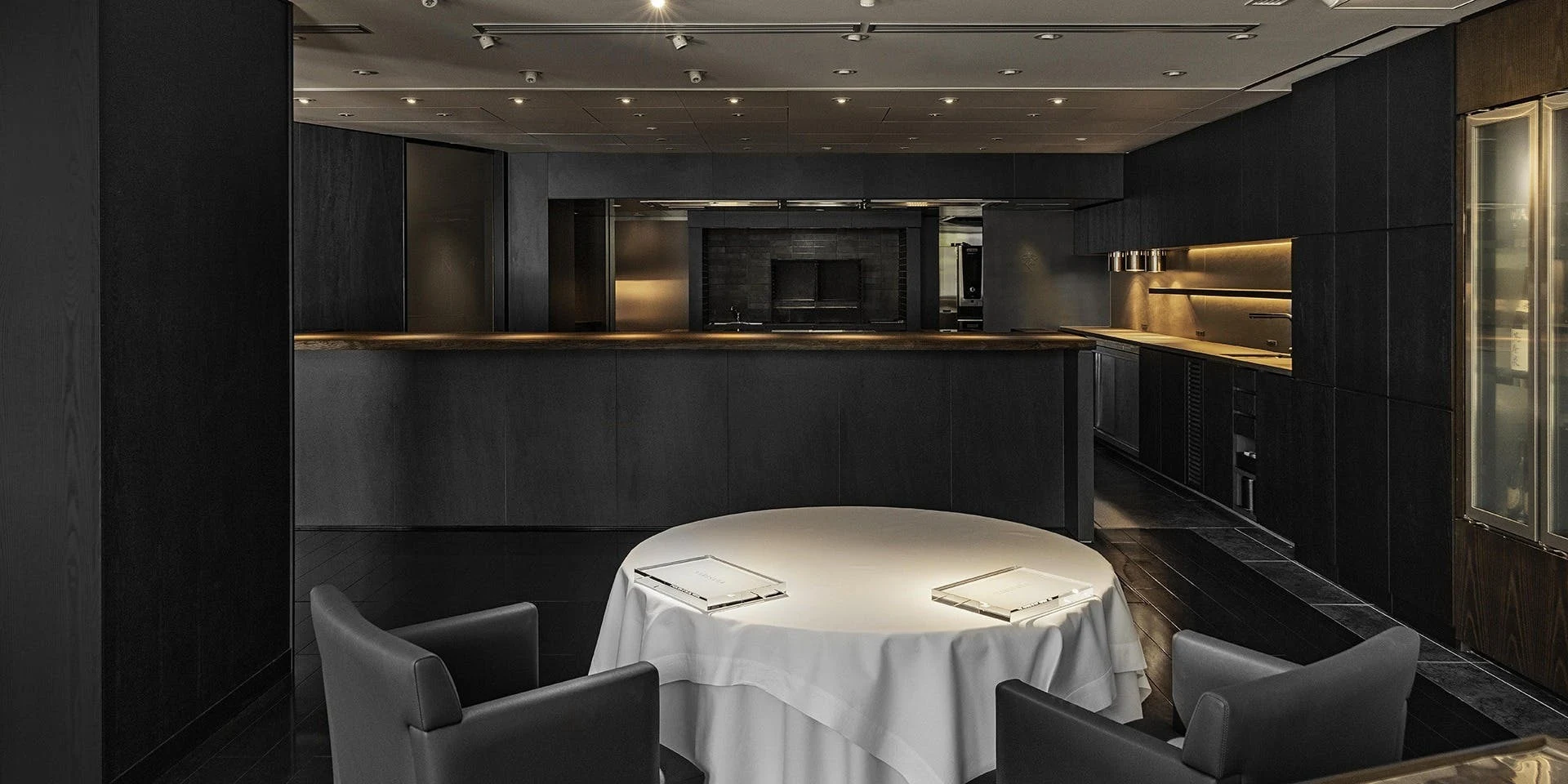
Ginza's dining identity is built on precision and formality. The neighbourhood's upper tier runs to multi-course kaiseki, omakase sushi counters commanding five-figure bills, and French gastronomic rooms where the service alone accounts for a third of the experience. Walk into Bistro Simba on a Friday evening and the register shifts completely. The room operates at the tempo of a well-worn Paris bistro: unhurried, conversational, oriented around the glass rather than the ceremony. That contrast with its surroundings is not accidental, it is the entire point.
The address sits in Chome-27-8 of the 1 Chome district, placing it within the broader Ginza footprint where neighbours like MAISON MARUNOUCHI and the city's multi-starred French rooms set the dominant tone. Within that context, Bistro Simba reads as a deliberate counter-position: a ¥¥ price point against a neighbourhood of ¥¥¥¥ flagships, informal seating against stiff-backed dining rooms, organic natural wine against curated cellar books running to hundreds of labels. For the Tokyo diner who has done the gastronomic circuit at L'Effervescence or Sézanne, this is a different kind of evening.
The Sunday letter
Find new places through the people who run them.
Our Sunday email brings you the chefs, winemakers and hoteliers behind our newest stories. See a sample before you subscribe.
See a sample of the Sunday emailOne email a week. Unsubscribe from any issue.
Bistronomy, Transported
The cooking philosophy here traces directly to a specific moment in Paris dining history. The bistronomy wave of the early 2000s emerged when a generation of formally trained French chefs decided that their skills were wasted on tablecloths and tasting menus. They opened small, informal rooms, kept prices low, and applied gastronomic precision to classic bistro dishes. The result was a genre that Tokyo absorbed enthusiastically, and chef Yuji Kikuchi's connection to it is direct: he trained in Paris during that period and returned to Japan carrying the method.
That lineage matters to how the food reads. Bistro fare in this tradition is not simplified cooking, it is technically capable cooking applied to unglamorous material. The French canon of strong preparations, the flavour-first mentality, the insistence that a well-made bouillabaisse or a properly executed Paris-Brest needs no fine-dining scaffolding to justify itself: these are the underlying principles. The name Simba is itself an encoded statement of intent, built as an anagram referencing the words simple, saveur (flavour), and simpatico. The philosophy is compressed into the branding.
Within Tokyo's broader French dining tier, this positions Bistro Simba in a different competitive set than the city's high-end French rooms. It sits closer in spirit to the contemporary neo-bistro movement that has produced some of Europe's most interesting mid-tier restaurants, a format that Tokyo has adopted with particular rigour. Compare that approach with the kaiseki discipline at RyuGin or the austere seasonal focus at Harutaka and the structural difference is clear: bistronomy trades seasonal austerity for ingredient generosity, favouring depth of flavour over minimalism.
The Organic Wine Argument
The wine programme is not supplementary here, it functions as a co-equal element of the experience. Natural and organic wine has moved from niche positioning to a mainstream offering across Tokyo's mid-market dining, but the commitment at Bistro Simba predates that mainstreaming. The pairing of bistro cooking with natural wine is a logical one: both traditions share an orientation toward transparency, minimal intervention, and the primacy of the raw material over technical manipulation. A glass-forward, producer-led list fits the casual register of the room better than a sommelier-presented cellar selection ever would.
For diners accustomed to Tokyo's comprehensive sake programmes or the deep cellar books at multi-starred French addresses, a natural wine focus represents a genuine shift in drinking register. It also aligns with the broader positioning of the restaurant as a place oriented around conviviality rather than connoisseurship, where the wine is in the glass before the food arrives and stays that way through the meal.
Recognition and Peer Position
The awards record offers a precise map of where Bistro Simba sits in Tokyo's dining hierarchy. Recognition in 2024 signals kitchen quality without placing the restaurant in the stratosphere of the city's starred French rooms. The Opinionated About Dining ranking in the Casual Japan category is a more specific calibration: #52 in 2024, placing it consistently within Tokyo's casual dining offers.5 across 280 reviews adds a further data point from a less curated but high-volume source.
The OAD Casual Japan list is worth treating seriously as a competitive frame. The list captures precisely the segment that Bistro Simba occupies: technically capable restaurants operating outside the formal fine-dining register, where food quality is high but the experience is built around accessibility rather than ceremony. Comparable casual French operations in other Japanese cities, including HAJIME in Osaka and the broader casual tier documented in Gion Sasaki's Kyoto context, confirm that Japan's casual French dining scene is genuinely competitive at this level.
For international context, the neo-bistro format Bistro Simba represents has strong counterparts in places like Bouchon Bistro in Napa and Bouchon Racine in London, both operating within the same French bistro tradition at a mid-market price register. Across those cities, the bistronomy format has proven its durability as a dining category precisely because it offers something the fine-dining tier cannot: a meal that is technically considered but socially relaxed.
Planning a Visit
Bistro Simba opens Wednesday through Friday from 5:30 pm to 11 pm, with Saturday hours matching that window. Sunday runs an earlier service, 3 pm to 9 pm, making it one of the few options in this part of Ginza for a late-afternoon meal. Monday and Tuesday are closed. The $120 price point places it within Ginza's usually expensive dining ecology, and reservations are recommended. For first-time visitors working through the city's French dining range, Bistro Simba sits at a complementary point to the formal addresses: it is where you go when the format matters as much as the food.
For those travelling the wider Kansai and Kyushu circuit, comparable casual and mid-tier dining at akordu in Nara, Goh in Fukuoka, 1000 in Yokohama, and 6 in Okinawa rounds out a picture of how Japan's non-formal dining tier is operating across the archipelago.
What People Recommend at Bistro Simba
The dishes most closely associated with the kitchen here reflect the bistronomy tradition in concrete form. The bouillabaisse is prepared with a depth of shellfish flavour that connects directly to classic Provençal method, while the Paris-Brest, a choux pastry filled with praline cream, represents the French patisserie tradition applied without modification. Both dishes carry an explicit connection to Kikuchi's time in Paris and to the mentors he trained under there. These are the preparations that anchor the menu's identity and the ones that returning guests cite most often. For the organic wine, the approach is to drink whatever the room recommends by the glass: the list is curated around natural producers and changes with availability rather than following a fixed cellar structure.
Questions
Frequently asked
Who works at bistro simba?
Made By profiles Yuji Kikuchi (Chef) at bistro simba.
How expensive is bistro simba?
bistro simba is listed at a price level of $$$.
Where is bistro simba and what does it serve?
bistro simba is in Chūō, Tokyo, serving Modern French Bistro.
The field
How it compares
| Place | Cuisine | Notes | Awards |
|---|---|---|---|
| bistro simba | Modern French Bistro | Chūō, $$$ | · |
| Den | Modern Japanese Kaiseki | Tokyo | Michelin 2 Stars, World's 50 Best |
| Florilège | Modern French-Japanese Plant-Based Fine Dining | Tokyo | Michelin 2 Stars, World's 50 Best |
| Narisawa | Modern Japanese Satoyama Fine Dining | Tokyo | Michelin 2 Stars, World's 50 Best |
| Quintessence | Modern French Fine Dining | Tokyo | Michelin 3 Stars |
| Sazenka | Modern Chinese Fine Dining | Tokyo | Michelin 3 Stars, World's 50 Best |
| Sézanne | Modern French Fine Dining | Tokyo | Michelin 3 Stars, World's 50 Best |
In residence
Similar places
Modern Japanese Kaiseki
Den
Tokyo, Japan
★★ · 50 Best
Modern French-Japanese Plant-Based Fine Dining
Florilège
Tokyo, Japan
★★ · 50 Best
Modern Japanese Satoyama Fine Dining
Narisawa
Tokyo, Japan
★★ · 50 Best
Modern French Fine Dining
Quintessence
Tokyo, Japan
★★★
Modern Chinese Fine Dining
Sazenka
Tokyo, Japan
★★★ · 50 Best
Modern French Fine Dining
Sézanne
Tokyo, Japan
★★★ · 50 Best
The Sunday letter
Get the next Made By story in your inbox.
We send one email every Sunday morning with the places and people we covered that week.
See a sample of the Sunday emailOne email a week. Unsubscribe from any issue.