Blackbelly Market
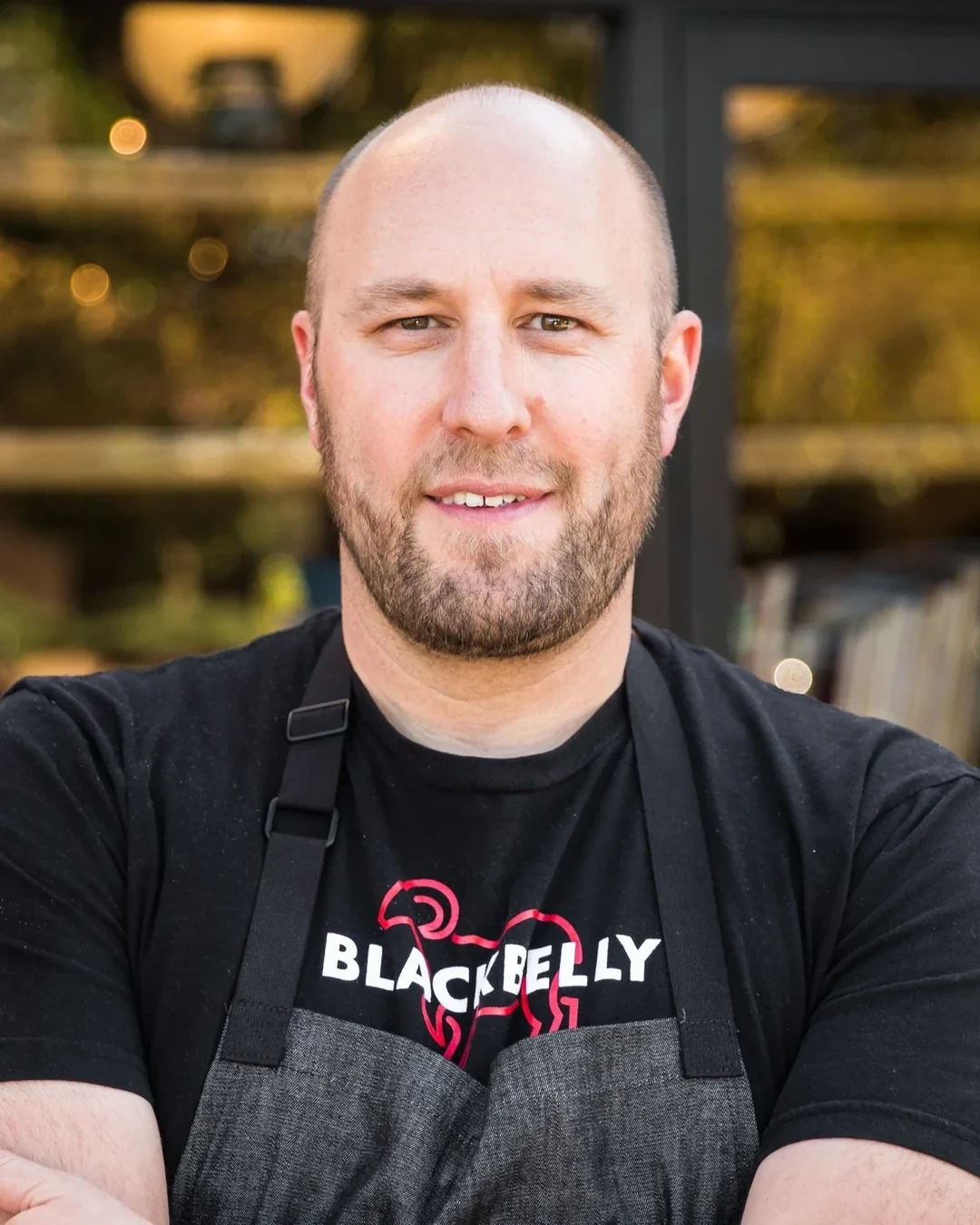
In Residence
Hosea Rosenberg
Chef
- 01CuisineAmerican Farm-to-Table Steakhouse
- 02CityBoulder, United States
- 03RecognitionJames Beard Award
- James Beard Winner · James Beard Foundation
- Michelin Plate · 2025
- James Beard Award Semi Finalist · 2025
- Michelin Plate · 2024
Where the Butchery Shapes the Menu
Blackbelly Market is an American Farm-to-Table Steakhouse in Boulder, Colorado, at 1606 Conestoga St Suite 1, priced around $60 per person. Walk into Blackbelly Market on Conestoga Street and the first thing that registers is the glass-walled butchery room along the back wall. It is not decorative. The cuts produced there move directly onto the menu, framing what you eat around what the butcher has prepared rather than the other way around. That inversion is worth paying attention to, because it places Blackbelly in a specific corner of American dining that has grown considerably over the past decade: restaurants where production, the curing, the breaking down, the fermentation, happens on-site and shapes the menu from the inside out.
Boulder's Approach to American Fine Dining
Boulder has developed a fine dining tier that operates differently from Denver, drawing on a smaller but engaged local audience and a food culture shaped by proximity to farms rather than proximity to urban restaurant capital. At the upper end, Frasca Food & Wine holds a Michelin star and defines a European-inflected pole of the market. Flagstaff House represents a longer-standing American fine dining tradition, prix-fixe in structure and formal in register. Blackbelly occupies a different position: informal enough to sit at a counter facing an open kitchen, or at the bar, yet precise enough to earn a Michelin Plate in 2024. That recognition signals a kitchen operating at a level the Guide considers notable.
That placement matters for context. The Guide applies it selectively to restaurants where cooking quality is considered notable. For a city of Boulder's size, having multiple venues at that standard, including Bramble & Hare and Basta working the same general territory, reflects a depth that a city this size rarely sustains. Santo adds another dimension to the scene. See our full Boulder restaurants guide for a broader map of where the city's dining sits by category and price.
In-House Production as a Culinary Framework
A kitchen's authority comes from control over its ingredients. What Blackbelly does is apply that logic not through a locked tasting menu format but through its butchery and charcuterie program, which functions as the connective tissue across the whole menu. The charcuterie boards arrive with duck rillette, pork terrine, headcheese, and saucisson, a spread that reflects a classical European charcuterie tradition translated through an American kitchen. The koji-cured pork takes that further, applying a Japanese fermentation technique to the same protein-forward philosophy, producing depth of flavor that direct curing alone would not achieve.
That combination, French charcuterie method, Japanese koji technique, American ingredient sourcing, is characteristic of how a generation of American restaurants have approached menu development since the early 2010s. Lazy Bear in San Francisco built an entire format around that kind of cross-reference. Le Bernardin in New York City and Emeril's in New Orleans represent earlier models, where a single strong tradition anchors the kitchen. Blackbelly sits closer to the pluralist approach: technique is borrowed where it serves the ingredient, not where it signals affiliation with a particular culinary nationality.
Reading the Menu
The agnolotti made from caramelized onion dough served in a mushroom brodo is the most technically specific dish in the public record. Filled pasta in a clear broth is a Northern Italian format, brodo is stock, and agnolotti in brodo is Piedmontese in origin, but using caramelized onion in the dough itself shifts the flavor architecture of the dish from savory-clean to savory-sweet at the pasta level, before the broth registers. That kind of intervention at the dough stage, rather than the filling, reflects a kitchen thinking about how components interact sequentially rather than simultaneously.
Elsewhere on the menu, the donuts function as the kind of dessert that communicates a kitchen's register better than any savory course. The chocolate hazelnut cream version, finished with hazelnut caramel and milk chocolate-hazelnut topping, is a layered composition, not a simple sugar course. Blackbelly's willingness to finish with a made-from-scratch pastry component at that level of detail tracks with what separates kitchens that are serious about the full arc of a meal from those that trail off after the protein course.
The Room and How to Use It
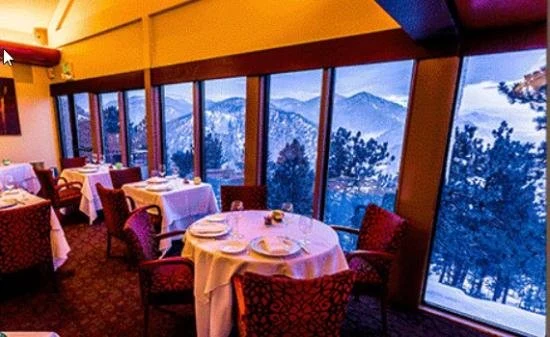
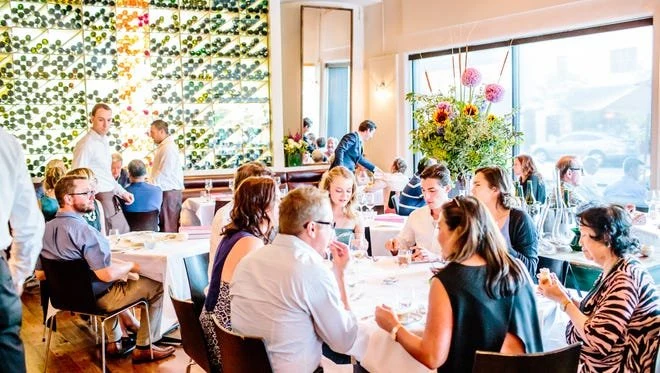
The space offers three distinct positions: counter seating facing the open kitchen, bar seating in a well-stocked bar area, and dark polished wood tables in the dining room proper. Each suits a different visit. The counter is the right choice for anyone who wants to watch the kitchen work and understand how the menu is assembled in real time. The bar is suited to a shorter visit, a board, a cocktail, and the donuts, without committing to a full meal. The tables provide the conventional dining context if that is what the occasion requires.
At the $$$ price point, Blackbelly prices above Basta's $$ tier and at parity with Boulder Dushanbe Tea House in the same bracket. For Boulder, that puts it in the range where the meal functions as an occasion rather than a casual dinner, though the room's lack of formality makes it accessible for either purpose.
Planning Your Visit
Blackbelly Market is at 1606 Conestoga Street, Suite 1, Boulder, CO 80301. The price point suggests that a full dinner with drinks will land around the upper range of Boulder's restaurant spend. Given the kitchen's approach, the most complete read on what Blackbelly does comes from a full meal at the dining room tables rather than a bar visit, though the bar route is a reasonable introduction before committing. Reservations are recommended. Boulder's dining scene is small enough that advance booking is sensible, and the combination of recognition and limited capacity creates demand that walk-in availability does not reliably absorb.
Questions
Frequently asked
What recognition does Blackbelly Market hold?
Blackbelly Market holds a James Beard award.
Who works at Blackbelly Market?
Made By profiles Hosea Rosenberg (Chef) at Blackbelly Market.
How expensive is Blackbelly Market?
Blackbelly Market is listed at a price level of $$$.
Where is Blackbelly Market and what does it serve?
Blackbelly Market is in East Boulder, Boulder, serving American Farm-to-Table Steakhouse.
The field
How it compares
| Place | Awards | Cuisine | Notes |
|---|---|---|---|
| Blackbelly Market | James Beard | American Farm-to-Table Steakhouse | East Boulder, $$$ |
| Burnt Ends | Michelin 1 Star, World's 50 Best | Modern Australian Barbecue | Singapore |
| Flagstaff House | · | Modern American Fine Dining | Boulder |
| Frasca Food & Wine | Michelin 1 Star | Friulian Italian Fine Dining | Boulder |
| Gaggan Anand | Michelin 1 Star, World's 50 Best | Progressive Indian | Bangkok |
| Piazza Duomo | Michelin 3 Stars, World's 50 Best | Modern Piedmontese Fine Dining | Alba |
| Pierre Gagnaire | Michelin 3 Stars, World's 50 Best | Avant-Garde French Fine Dining | Paris |
In residence
Similar places
Modern Australian Barbecue
Burnt Ends
Singapore, Singapore
★ · 50 Best
Modern American Fine Dining
Flagstaff House
Boulder, United States
Friulian Italian Fine Dining
Frasca Food & Wine
Boulder, United States
★
Progressive Indian
Gaggan Anand
Bangkok, Thailand
★ · 50 Best
Modern Piedmontese Fine Dining
Piazza Duomo
Alba, Italy
★★★ · 50 Best
Avant-Garde French Fine Dining
Pierre Gagnaire
Paris, France
★★★ · 50 Best