Estate wine, one pairing standard
Reading the meal from the cellar
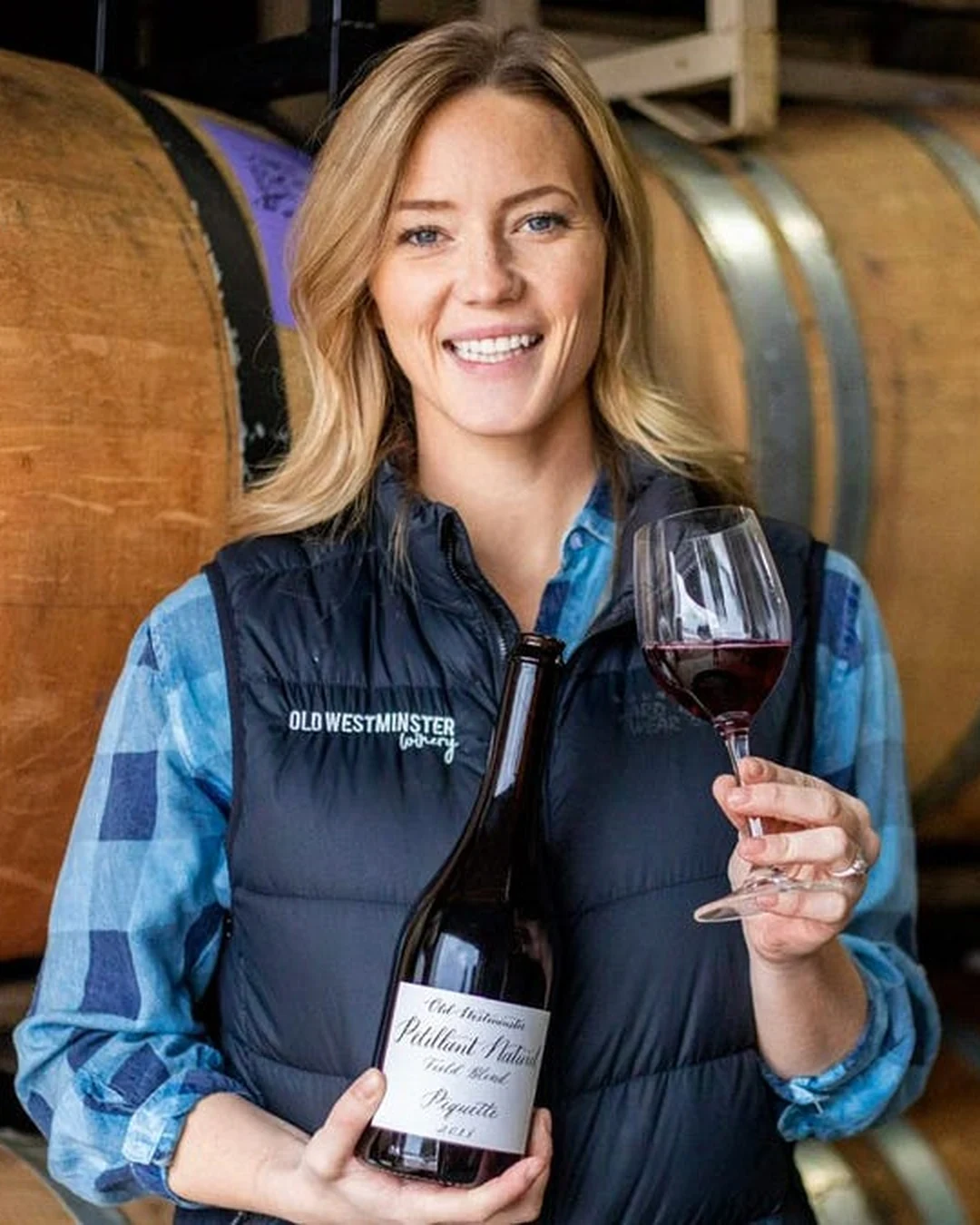
The pairings begin as a cellar decision, not a flourish. Lisa Hinton, winemaker at Burnt Hill Farm in Clarksburg, works with estate wines and nonalcoholic pours as parts of the same table. Her station here follows a longer discipline: since 2011, she has also made wine at Old Westminster Winery, a tenure built on repetition, tasting, adjustment, and the quiet judgment that production work asks of the hands. Burnt Hill Farm gives that practice a second address, with a different farm around it and the same essential point of view. The wine has to belong to the site, and the pour has to make sense with the food in front of it. That sounds simple until the nonalcoholic side enters the same standard. Hinton treats those pairings as part of the program rather than an accommodation beside it, which means acidity, texture, aroma, and sequence all have to carry weight. The role is not presented as a performance of authorship. It is steadier than that. One craft, two posts, and a cellar mind trained on coherence.
A farm program with living soil
Burnt Hill Farm works from a 117-acre regenerative polyculture farm, with honeybees, sheep, and hogs in the broader agricultural system. The setting matters because the estate wines do not arrive as isolated bottles; they sit inside a farm that also feeds the kitchen. The stated philosophy is regenerative, and the sourcing language around the place points to organic and biodynamic practice. Vines, animals, insects, pasture, and table share the same hill. Hinton’s work as winemaker has to meet that whole field of inputs without turning the glass into a lecture. The estate wine program and the nonalcoholic pairings ask the same question from different materials.
The hill, the cellar, the table
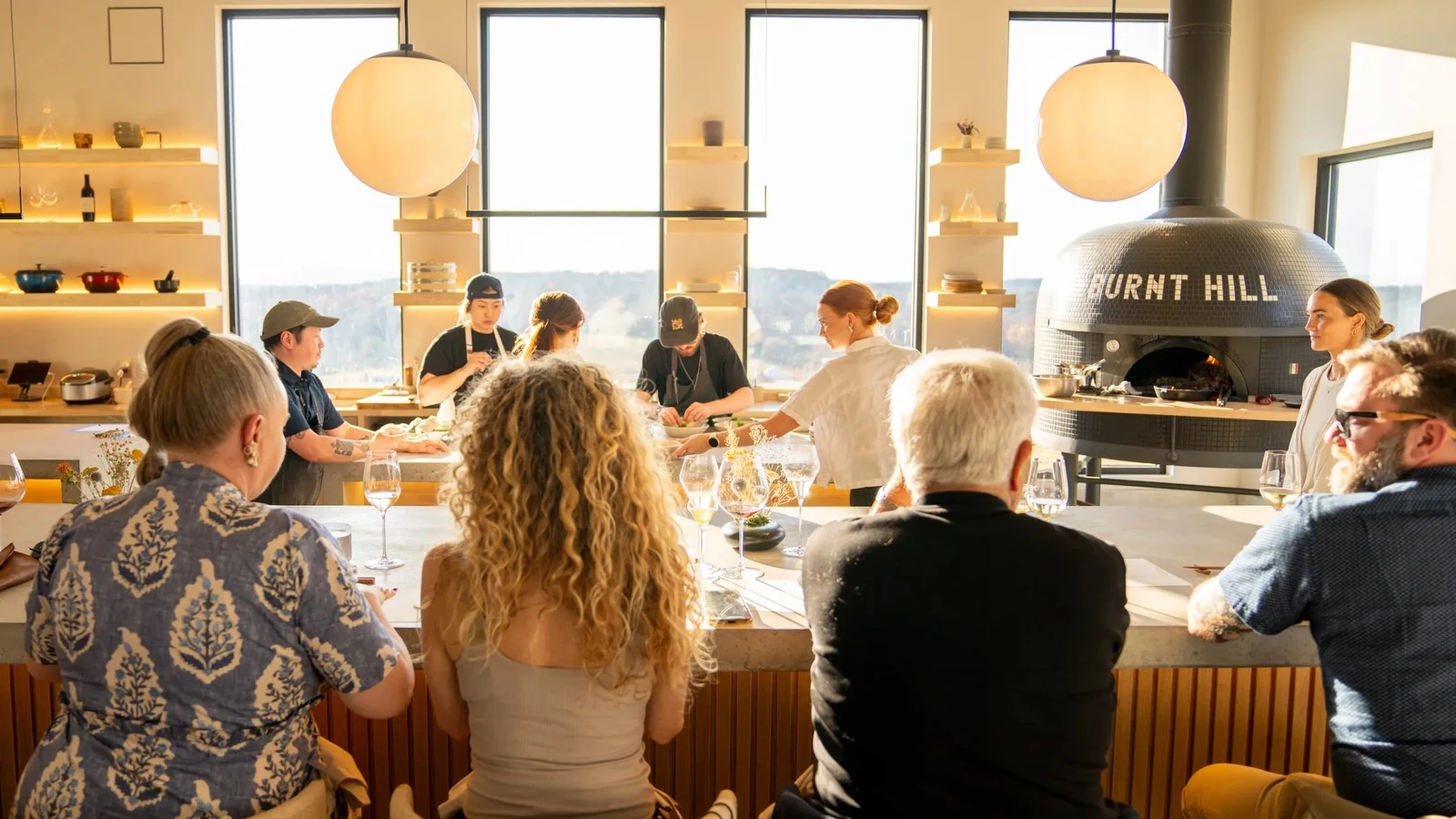
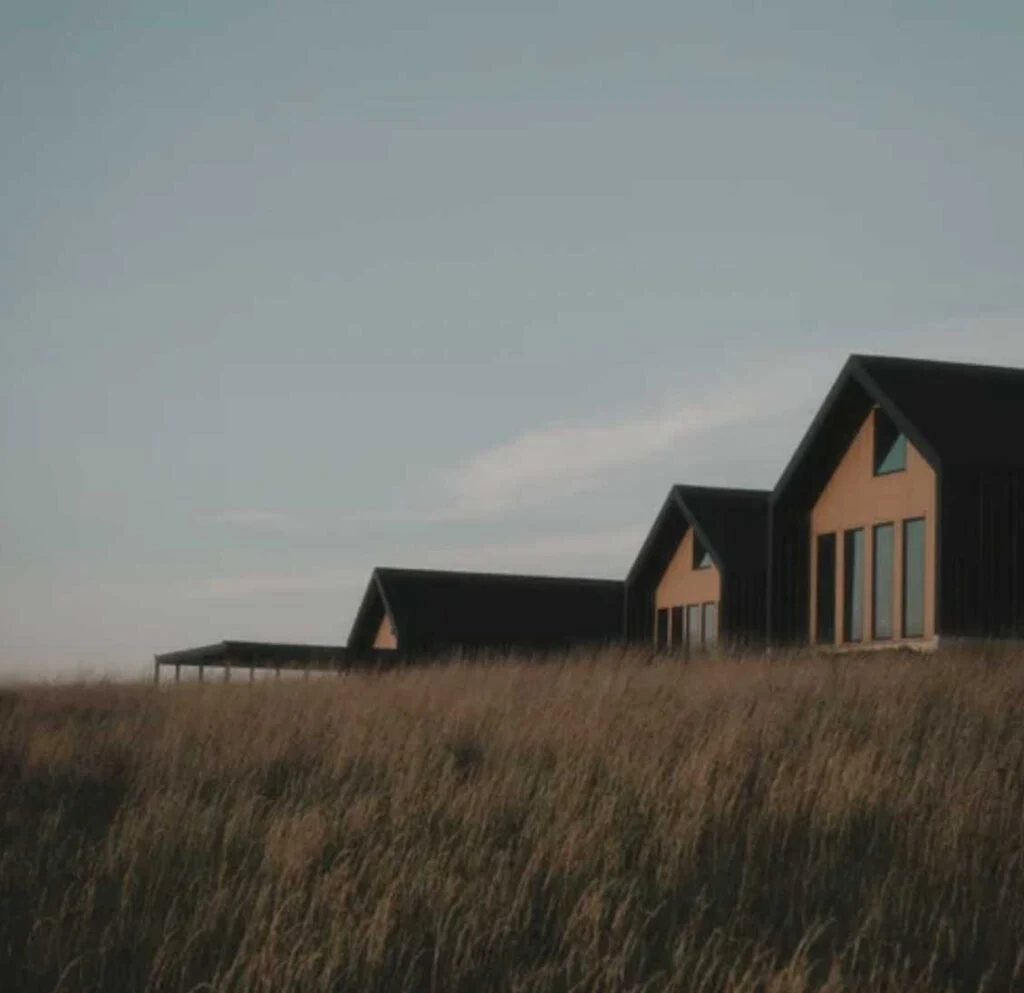
The room at Burnt Hill Farm looks outward to a sun-drenched hill and the Appalachian Mountains, with the pace of a small estate rather than a large production house. Quiet is part of the texture. The farm’s beauty is not polished away; it comes through in the cultivated slope, the sense of animals nearby, and the table’s patience with the landscape around it. This is a place where the cellar and kitchen read as adjacent disciplines. Wine moves from the estate into the meal, and the nonalcoholic pairings keep pace beside it. The room asks for lingering because the farm gives the meal a wider frame. Nothing needs to announce itself loudly when the hill is doing that much work.
One standard across the glass
The clearest thing to follow at Burnt Hill Farm is the equal seriousness of the pours. Hinton’s next move is not a named release or a public handoff, and at the table Lisa Hinton holds estate wine and nonalcoholic pairings to one standard.
Questions
Frequently asked
Who makes the wine at Burnt Hill Farm?
Lisa Hinton is the winemaker at Burnt Hill Farm in Clarksburg, and she works with estate wines as well as nonalcoholic pours.
What kind of place is Burnt Hill Farm?
Burnt Hill Farm is a winery set on a 117-acre regenerative polyculture farm in Clarksburg, with honeybees, sheep, and hogs as part of the wider agricultural system.
What is the approach to pairings here?
The pairings are built from the cellar outward, and Lisa Hinton treats estate wines and nonalcoholic pours as part of the same table, with acidity, texture, aroma, and sequence all carrying weight.
Is booking required at Burnt Hill Farm?
Reservation is essential at Burnt Hill Farm.
What should visitors expect from the setting?
The room looks out toward a sun-drenched hill and the Appalachian Mountains, and the farm setting is part of the experience rather than something kept at a distance.
The field
How it compares
| Place | Notes | Awards |
|---|---|---|
| Burnt Hill Farm | Washington, $$$ | · |
| Ardbeg | Port Ellen | · |
| Bodegas Salentein | Tunuyán | World's 50 Best |
| Champagne Salon | Le Mesnil-sur-Oger | · |
| Domaine des Comtes Lafon | Meursault | · |
| Harlan Estate | Napa | · |
| Quinta do Crasto | Sabrosa | World's 50 Best |