Café de Altamira
- 01CuisineModern Galician Market Cuisine
- 02CitySantiago de Compostela, Spain
- Michelin Bib Gourmand · Michelin Guide
- Michelin Bib Gourmand · 2026
- Michelin Bib Gourmand · 2025
- Michelin Bib Gourmand · 2024
Market Proximity as Kitchen Policy
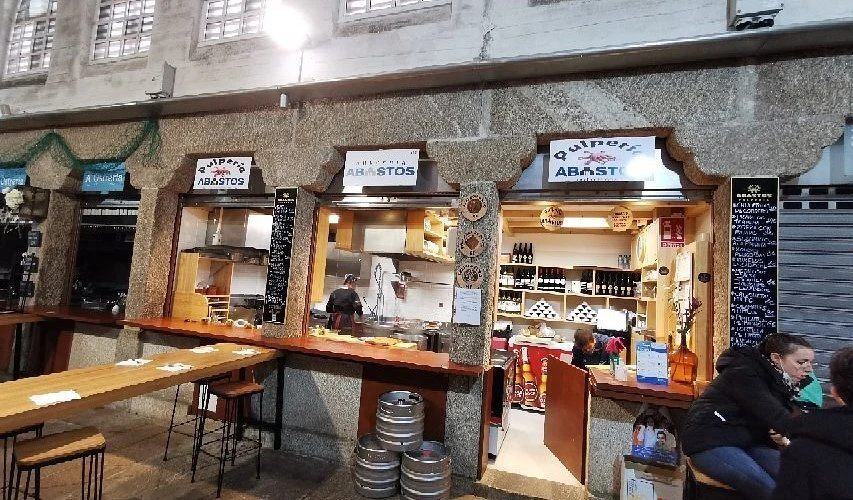
In Santiago de Compostela, the relationship between the Mercado de Abastos and the restaurants that surround it shapes the city's dining character more than any single chef or trend. The market, housed in an early twentieth-century stone arcade, is the nervous centre of Galician produce: percebes pulled from the Costa da Morte, lacón from local smallholdings, vegetables grown in the rain-drenched valleys around the Ría de Muros e Noia. Restaurants positioned close to it, and willing to let that proximity govern their menus, operate differently from kitchens that source through regional distributors. Café de Altamira sits directly adjacent to this market on Rúa das Ameas, and the strapline it has chosen, "the flavour of the market", is a structural commitment, not a branding phrase.
That adjacency shows up in the kitchen's approach: what arrives each morning at the stalls shapes what appears on the plate that evening. Traditional Galician cuisine, at its core, has always followed this logic, but the discipline required to maintain it in a hotel-adjacent restaurant operating across multiple menu formats is not trivial. Café de Altamira manages it while holding a 2025 Michelin Bib Gourmand, the Guide's recognition for cooking that delivers notable quality at moderate prices. That combination of market discipline and accessible pricing is a tighter needle to thread than either factor alone.
What the Bib Gourmand Actually Signals
Michelin's Bib Gourmand category, introduced in 1997, identifies restaurants where the inspectors find above-average cooking without the price pressure of the starred tier. In Spain's more competitive dining cities, Bib Gourmand status can mean a long-established neighbourhood spot or a technically ambitious kitchen keeping prices in check through lean operations. In Santiago de Compostela, where the dining scene skews toward pilgrim-economy volume on one end and serious regional cooking on the other, the designation carries particular weight.
Café de Altamira's 2025 Bib Gourmand places it in a different competitive tier from the starred addresses in the city. A Tafona (Contemporary) holds a Michelin star and prices accordingly at €€€€. Café de Altamira's €€ price range puts it in conversation with places like A Maceta (Fusion), though its Michelin recognition distinguishes it within that bracket. For context on how Spain's broader Michelin ecosystem distributes, the country's starred restaurants include El Celler de Can Roca in Girona, Arzak in San Sebastián, and DiverXO in Madrid, a different register entirely. The Bib Gourmand exists precisely to map the space between volume dining and that upper tier, and Café de Altamira occupies that space with a Google rating of 4.4 from 760 reviews, suggesting consistent execution rather than occasional brilliance.
The Room: Rustic Framework, Deliberate Choices
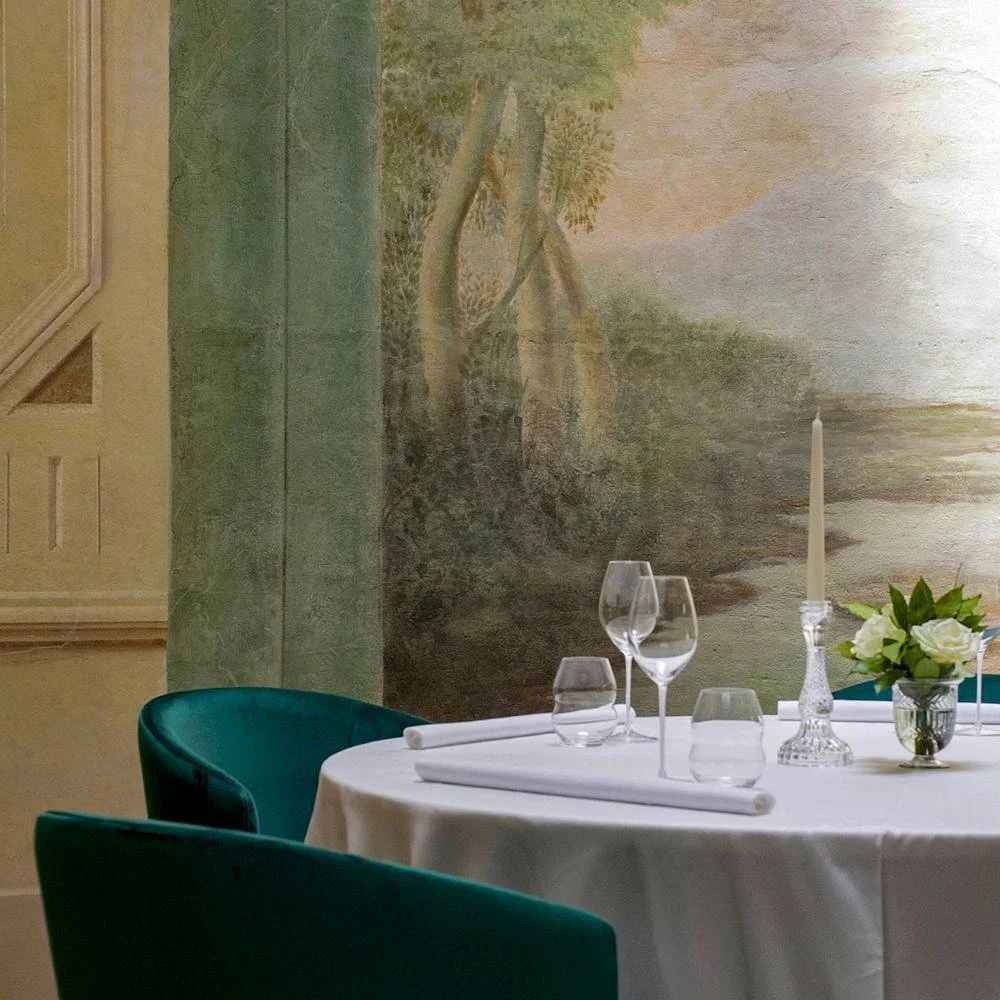
The physical environment at Café de Altamira is worth addressing separately, because it does real work. The restaurant operates from the Pazo de Altamira, a historic building on Rúa das Ameas, but runs with its own entrance and independent management, a separation that matters both operationally and in terms of atmosphere. Hotel restaurants that feel like hotel restaurants rarely develop the local regulars that sustain a kitchen at the level needed for Michelin recognition. The independent entrance signals that this is not a hotel amenity; it is a restaurant that happens to share a building.
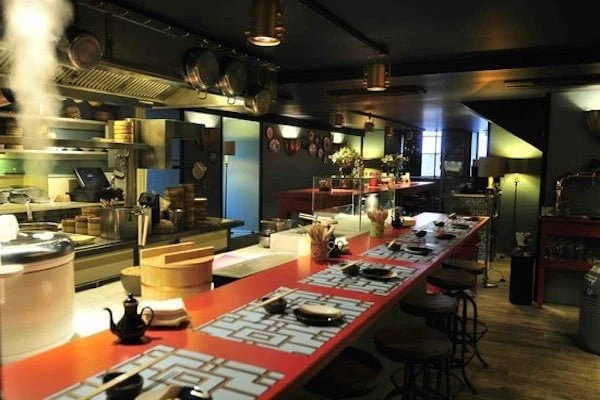
Inside, hanging light bulbs, unconventional bottle racks, and tableware from Sargadelos, the Galician ceramics manufacturer whose blue-and-white pieces carry regional cultural weight, create a room that reads as rustic without being themed. The large tables are configured for sharing, which aligns with the way Galician food tends to work: dishes arriving across the table rather than plated for individual consumption. The design is specific enough to place the room in its city and region rather than in an interchangeable European bistro template.
The Menu: Two Formats, One Logic
The kitchen offers both à la carte and two tasting menus, the Ameas and the Altamira. The tasting menu format has become a default for ambitious Spanish restaurants across price points, from the elaborate multi-hour sequences at addresses like Azurmendi in Larrabetzu and Aponiente in El Puerto de Santa María down to the more compact, market-led formats that suit a Bib Gourmand kitchen. Offering two menu lengths alongside à la carte allows the restaurant to serve both guests who want a structured progression through the kitchen's current thinking and those who want to eat around the menu at their own pace.
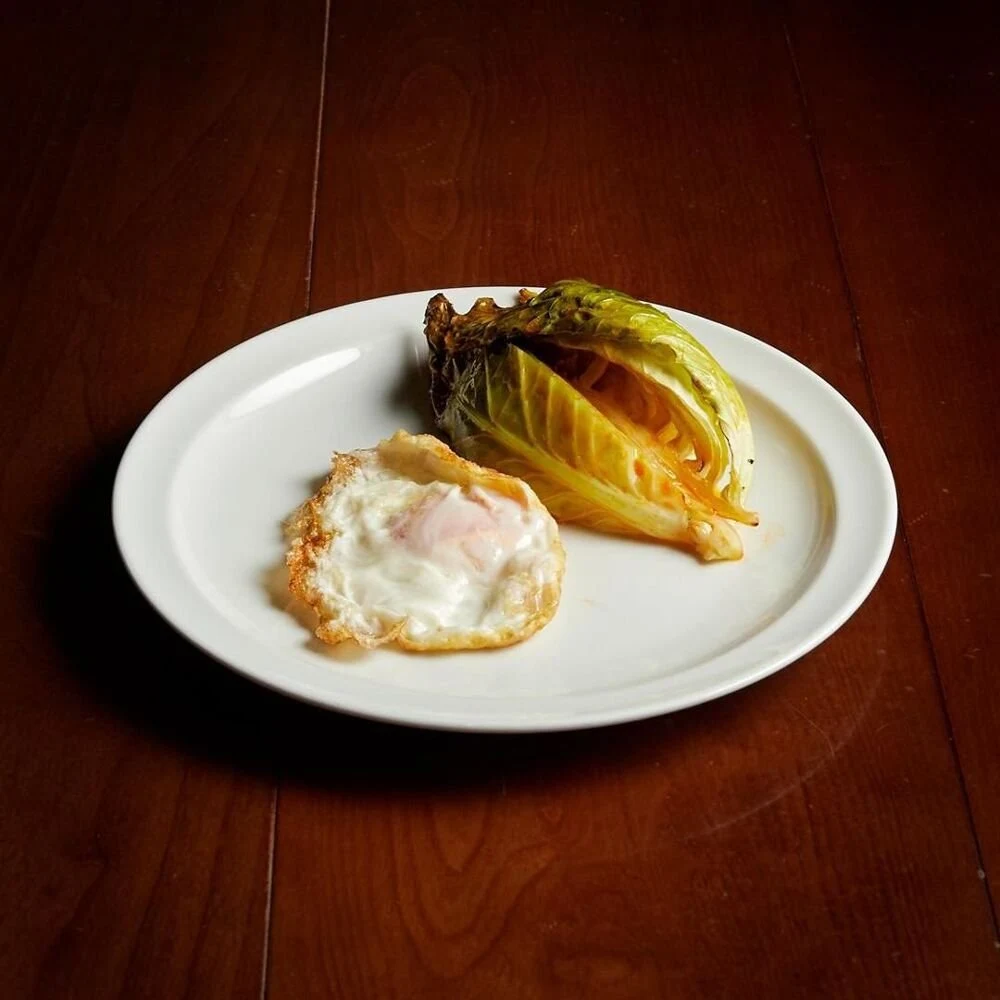
Chef Franck Baranger leads the kitchen. The approach Michelin's inspectors noted leans toward pleasantly updated traditional cooking: Galician cuisine as the foundation, with technique and flavour pairings that give classical dishes contemporary legibility without erasing their regional character. A lightly roasted mackerel paired with ajoblanco and cherry-ponzu tomato illustrates how the kitchen works. Ajoblanco, the Andalusian cold almond-and-garlic soup, arriving alongside ponzu-inflected tomatoes and Atlantic mackerel, is a dish that moves across Spanish and Japanese reference points without abandoning its Galician produce base. That kind of lateral thinking, applied to market-fresh ingredients, is what produces Bib Gourmand results rather than a more conservative treatment of regional classics.
For comparison within the €€ tier in Santiago, A Viaxe (Fusion) takes a different approach to updated cooking, while A Horta d'Obradoiro (Regional Cuisine) stays closer to traditional Galician frameworks. The range of interpretive angles available in Santiago at this price tier reflects a city where the pilgrimage economy has historically demanded volume, but where a younger generation of restaurants has pushed toward specificity and technique.
Placing It in the City's Dining Pattern
Santiago de Compostela's dining scene carries an unusual tension: the city receives hundreds of thousands of visitors annually along the Camino routes, but its food culture is grounded in Galician agricultural and maritime identity that predates the pilgrimage economy by centuries. Restaurants that manage to serve both pilgrim traffic and local regulars without compromising on ingredients or technique occupy a particular niche. Café de Altamira's market-adjacency and Michelin recognition suggest it has found that niche at the €€ price point.
For context on the wider Santiago table, Don Quijote represents a different tradition in the city's dining mix. Elsewhere in Spain, the tradition of market-rooted traditional cooking operating at accessible prices has produced similarly decorated results at venues like Auga in Gijón and, in a French-regional parallel, Auberge Grand'Maison in Mûr-de-Bretagne, both of which show how seriously Michelin weighs the Bib Gourmand category within the cooking traditions it covers. Cocina Hermanos Torres in Barcelona demonstrates what the starred tier looks like when the same market-commitment logic scales up into a more technically ambitious kitchen.
Planning Your Visit
The restaurant sits at Rúa das Ameas, 9, in the old city of Santiago de Compostela, a short walk from the cathedral quarter and directly beside the Mercado de Abastos. The €€ pricing and Bib Gourmand status make advance booking advisable, particularly at weekends and during peak pilgrimage season from spring through early autumn, when Santiago's visitor numbers peak sharply. The sharing-table format means the room works for groups, though the à la carte option gives solo diners or couples more flexibility than a tasting menu commitment requires.
Questions
Frequently asked
What recognition does Café de Altamira hold?
Café de Altamira holds a Michelin Bib Gourmand.
How expensive is Café de Altamira?
Café de Altamira is listed at a price level of $$.
Where is Café de Altamira and what does it serve?
Café de Altamira is in Mercado de Abastos, Santiago de Compostela, serving Modern Galician Market Cuisine.
The field
How it compares
| Place | Cuisine | Notes | Awards |
|---|---|---|---|
| Café de Altamira | Modern Galician Market Cuisine | Mercado de Abastos, $$ | · |
| A Tafona | Modern Galician Fine Dining | Santiago de Compostela | Michelin 1 Star |
| Abastos 2.0 - Mesas | Modern Galician Market Cuisine | Santiago de Compostela | · |
| Anaco | Contemporary Galician Seasonal Cuisine | Santiago de Compostela | · |
| Casa Marcelo | Modern Galician-Japanese Fusion Tasting Menu | Santiago de Compostela | Michelin 1 Star |
| Osteria Francescana | Avant-Garde Italian Contemporary | Modena | Michelin 3 Stars, World's 50 Best |
| Per Se | French Fine Dining Tasting Menu | New York City | Michelin 3 Stars, World's 50 Best |
Similar places
Modern Galician Fine Dining
A Tafona
Santiago de Compostela, Spain
★
Modern Galician Market Cuisine
Abastos 2.0 - Mesas
Santiago de Compostela, Spain
Contemporary Galician Seasonal Cuisine
Anaco
Santiago de Compostela, Spain
Modern Galician-Japanese Fusion Tasting Menu
Casa Marcelo
Santiago de Compostela, Spain
★
Avant-Garde Italian Contemporary
Osteria Francescana
Modena, Italy
★★★ · 50 Best
French Fine Dining Tasting Menu
Per Se
New York City, United States
★★★ · 50 Best