Rue de Grenelle and the Weight of the 7th
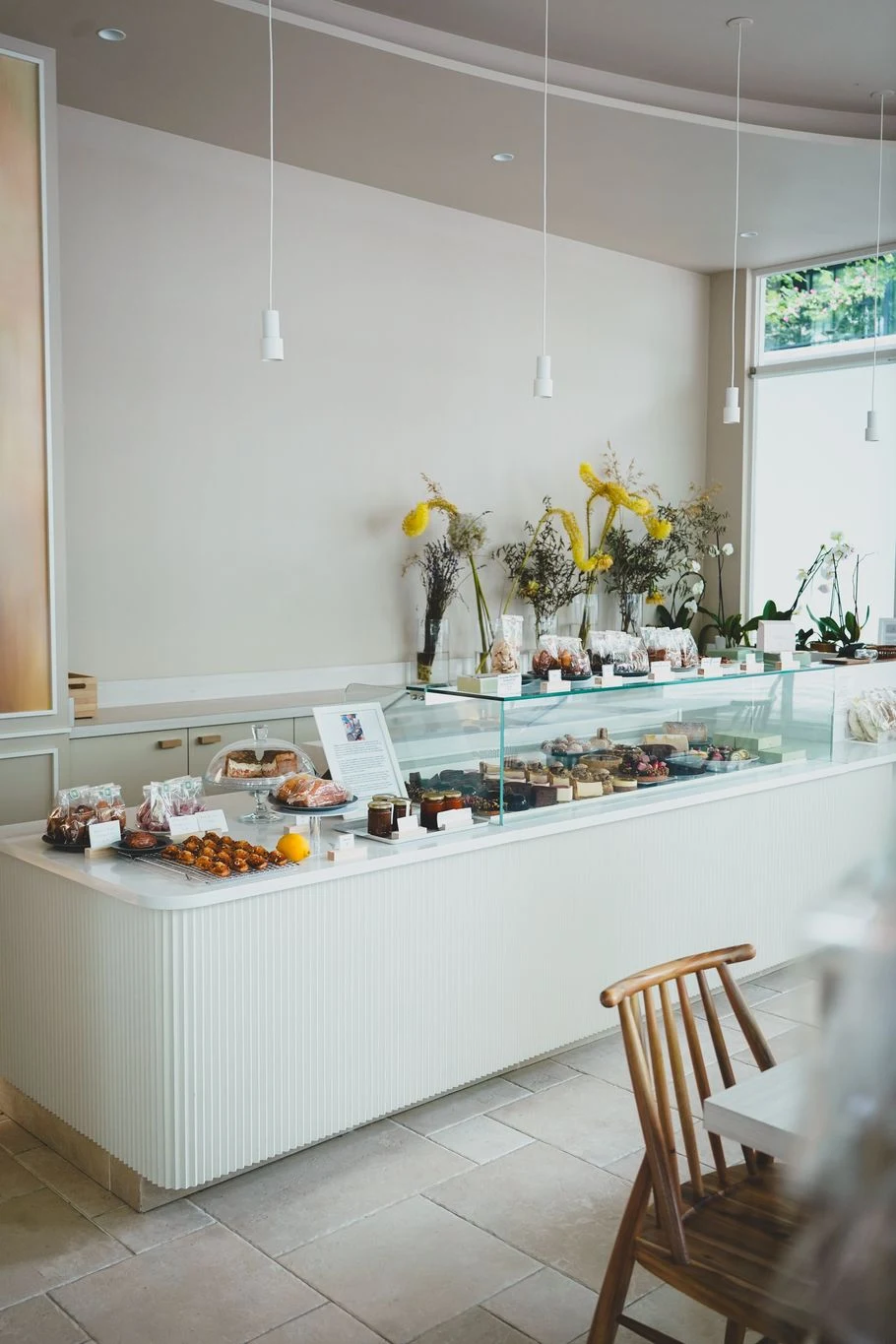
The 7th arrondissement carries a particular kind of pressure. Flanked by ministerial buildings and the Musée d'Orsay, it is a neighbourhood where formality runs deep and casual commerce feels out of place. Rue de Grenelle, which cuts through its residential core, is lined with the kind of addresses that do not need to advertise, the quality is assumed. Café Pierre Hermé at numbers 53 to 57 sits inside that register.
Parisian pâtisserie has, over the past two decades, split into distinct tiers. At the mass-market end, chain operations and supermarket offshoots service daily croissant demand. At the specialist end, a smaller group of maisons, Pierre Hermé among them, operate with the rigor more commonly associated with fine dining kitchens: precise temperature control, sourcing documentation, and menus that rotate with the logic of a seasonal restaurant rather than the inertia of a traditional boulangerie. The café on Rue de Grenelle is the sit-down expression of that upper tier.
The Logic of the Café Format
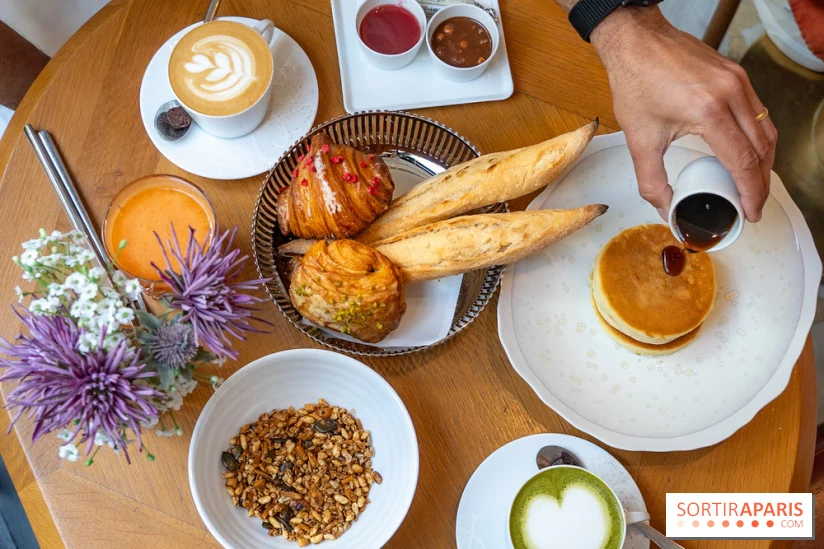
In the broader context of how luxury pastry houses have extended their offer, the café model represents a specific strategic and experiential shift. Rather than a counter transaction, select, pay, leave, the café format introduces pacing, service, and sequence. The same macaron or tarte that a visitor might pick up in a paper bag at another location arrives here within a framework that more closely resembles a tasting than a purchase. This distinction matters. It changes how the product is received and, arguably, how it is understood.
France's top-tier pastry institutions have generally moved in one of two directions when opening café annexes: toward a simplified, accessible format aimed at capturing tourist footfall, or toward a more considered sit-down model that protects the house's technical reputation. The Rue de Grenelle address belongs to the latter category. The neighbourhood itself enforces a certain discipline, the clientele arriving on this street is not primarily driven by impulse.
Precision as a Team Sport
At the level Pierre Hermé occupies, the product is the result of a team apparatus, not a solitary vision. In a café setting, this is especially visible: the front-of-house role carries more weight than it does at a counter, because the service team is responsible for contextualising what arrives at the table.
This is the dynamic that separates a well-run café from a retail extension. When service staff can speak to provenance, to the logic of a flavour combination, to why a particular texture was chosen, the visit becomes educational in the way that a good wine pairing at a starred restaurant is educational. It does not require lectures. It requires that the people at the table know what they are presenting. In French pâtisserie at this level, that institutional knowledge is built into the training structure of the house.
The same collaborative logic applies across France's most enduring table operations. Troisgros in Ouches, Bras in Laguiole, and Auberge de l'Ill in Illhaeusern each sustain their reputation not through a single individual but through institutional continuity, the ability to transfer standards across generations of staff. A café bearing a maison's name operates under the same obligation.
Where Hermé Sits in the Paris Pastry Conversation
Pierre Hermé's position in French pâtisserie is a matter of documented record rather than editorial opinion. The house is frequently cited alongside Ladurée and Fauchon as one of the defining names in contemporary French confectionery, though the comparison is instructive: where Ladurée trades heavily on heritage and Fauchon on scale, Hermé's international reputation rests more squarely on technical invention. The flavour combinations associated with the house, in particular the Ispahan, built on rose, raspberry, and lychee, have influenced the vocabulary of pastry internationally in the way that specific dishes at Mirazur or Flocons de Sel have shaped regional fine dining conversation.
Compared to the €€€€ tier occupied by Paris table restaurants like Kei, L'Ambroisie, or Le Cinq, a café visit prices at a fraction of the outlay for a tasting menu while accessing some of the same technical rigour at the product level. That is a meaningful proposition for a visitor whose itinerary cannot accommodate multiple tasting-format evenings but who wants at least one encounter with Parisian craft at its most considered.
Internationally, the comparison point shifts. The discipline applied to a Pierre Hermé macaron is not dissimilar in spirit to the sourcing and preparation standards at Le Bernardin in New York, different product, different category, but the same institutional commitment to craft as a non-negotiable baseline. Café formats that carry a maison's full reputation across the counter take that commitment seriously or they dilute the house's standing.
The Broader French Pastry Context
France's decorated restaurant circuit, from Paul Bocuse's Auberge du Pont de Collonges to Les Prés d'Eugénie, from Georges Blanc in Vonnas to Auberge du Vieux Puits in the Aude, has long demonstrated that French culinary authority is not confined to Paris. But Paris remains the city where the density of serious operations creates the most demanding competitive environment. A pâtisserie operating at the top of that market must continually justify its position, because the alternatives at every price point are formidable. The Rue de Grenelle address exists inside that competitive context, not above it.
Café Pierre Hermé functions as a complement to that circuit, an afternoon anchor that does not require a reservation weeks in advance but rewards the same attention that a visitor would bring to a starred dinner. The format is lower-commitment; the quality benchmark is not.
The Rue de Grenelle café works from the same premise, applied to pâtisserie in a city that has been refining the form for generations. And further afield, La Table du Castellet in the Var shows how a southern French address can hold its own in the national conversation, evidence that the standards Hermé maintains in Paris are tested against a wide field.
Planning Your Visit
The Rue de Grenelle address (53 to 57, 75007) is accessible from the Rue du Bac Métro station on line 12. The 7th arrondissement is most animated on weekday mornings and weekend afternoons; midweek visits typically see shorter waits. As a café rather than a reservation-based restaurant, the experience is walk-in by nature, though peak weekend hours on Rue de Grenelle can mean a queue. Visiting at mid-morning on a weekday sits inside the sweet spot between opening freshness and pre-lunch rush. The café is closed on Mondays and is open Tuesday to Thursday from 11 AM to 7 PM, Friday from 11 AM to 8 PM, Saturday from 10 AM to 8 PM, and Sunday from 10 AM to 7 PM.
Quick reference: Café Pierre Hermé, 53 to 57 Rue de Grenelle, 75007 Paris. Walk-in format. Nearest Métro: Rue du Bac (line 12).
Questions
Frequently asked
Who works at Café Pierre Hermé?
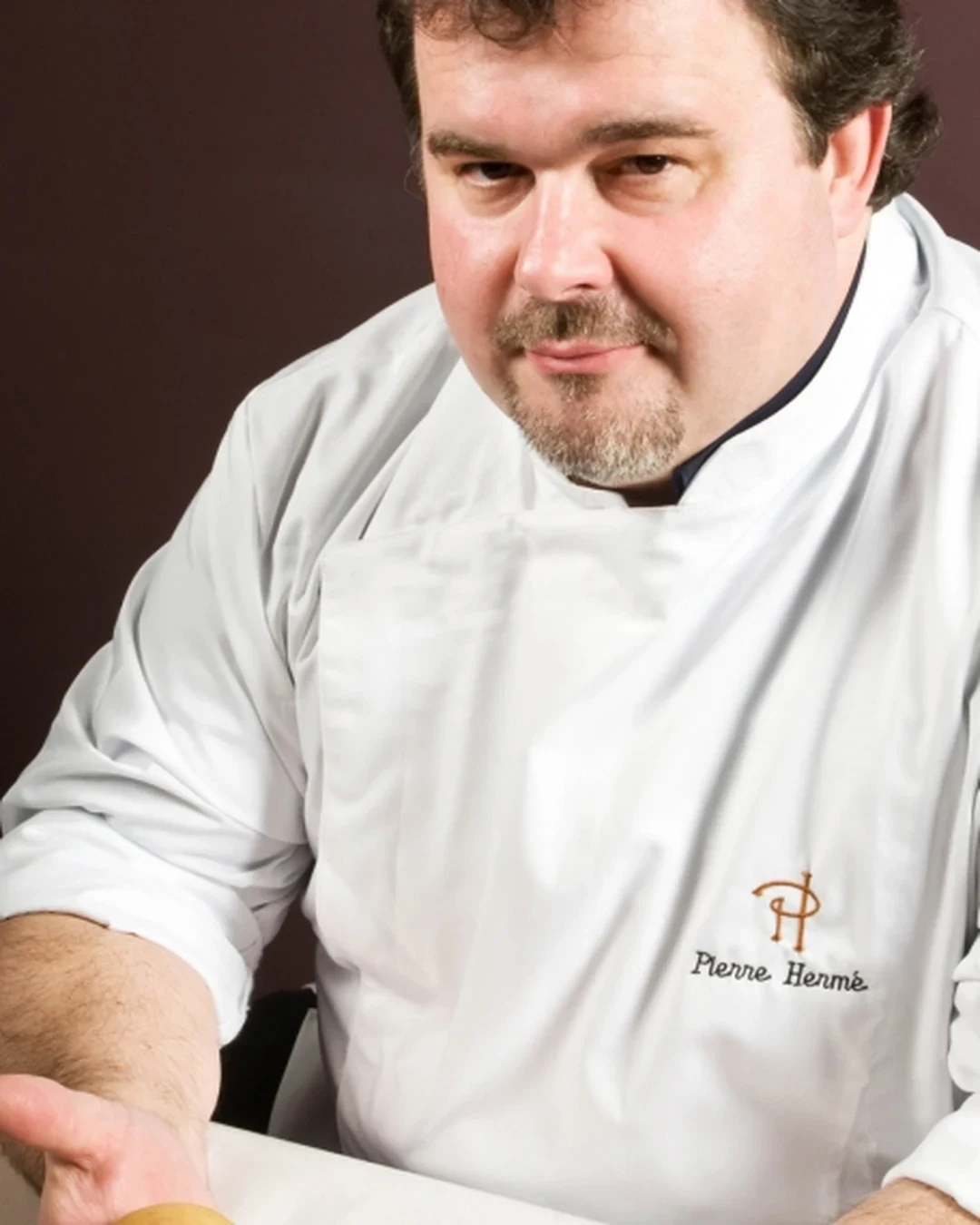
Made By profiles Pierre Hermé (Chef) at Café Pierre Hermé.
How expensive is Café Pierre Hermé?
Café Pierre Hermé is listed at a price level of $$$.
The field
How it compares
| Place | Notes |
|---|---|
| Café Pierre Hermé | $$$ |
| Chambelland | Paris |
| Des Gâteaux et du Pain | Paris |
| Mamiche | Paris |
| Mandipili | Paris |
| Pâtisserie Toshiya Takatsuka | Paris |
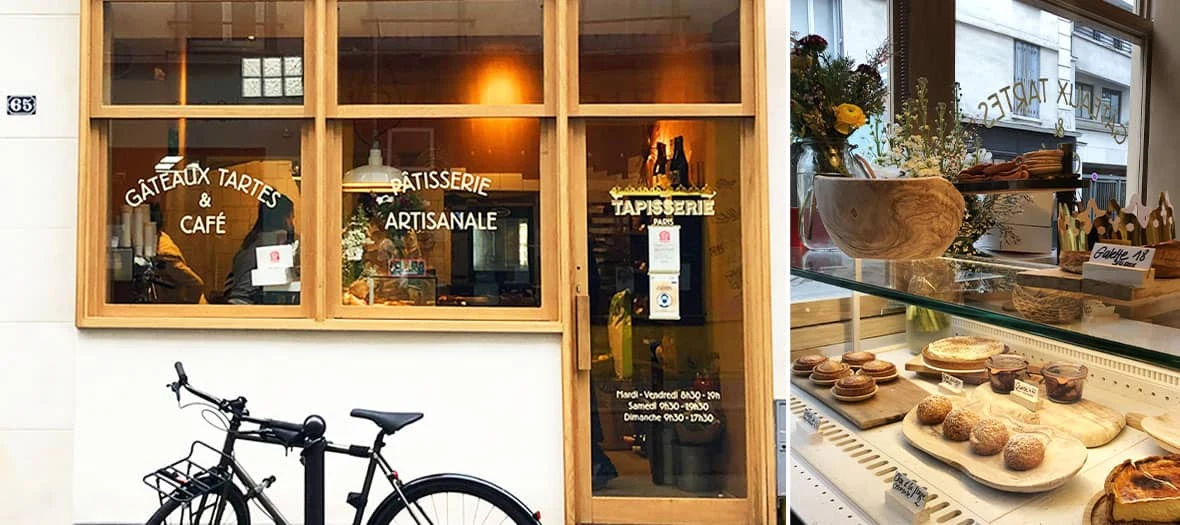
| Tapisserie | Paris |