- Michelin Bib Gourmand · Michelin Guide
- Macarfi 7.5 Food Rating · 2026
- Michelin Bib Gourmand · 2026
- Michelin Bib Gourmand · 2025
- Michelin Bib Gourmand · 2024
A Stone House at the Edge of the Pyrenees
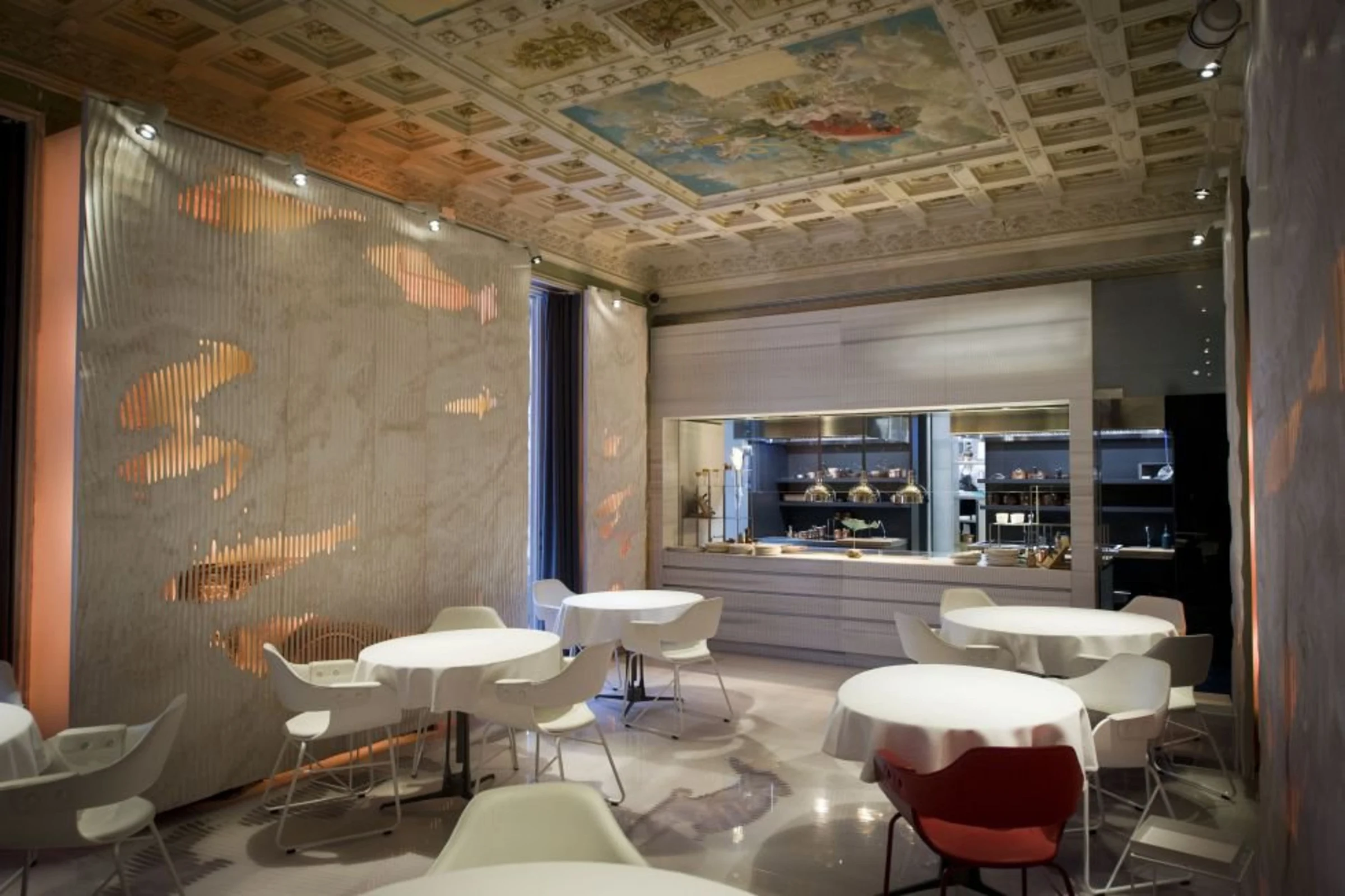
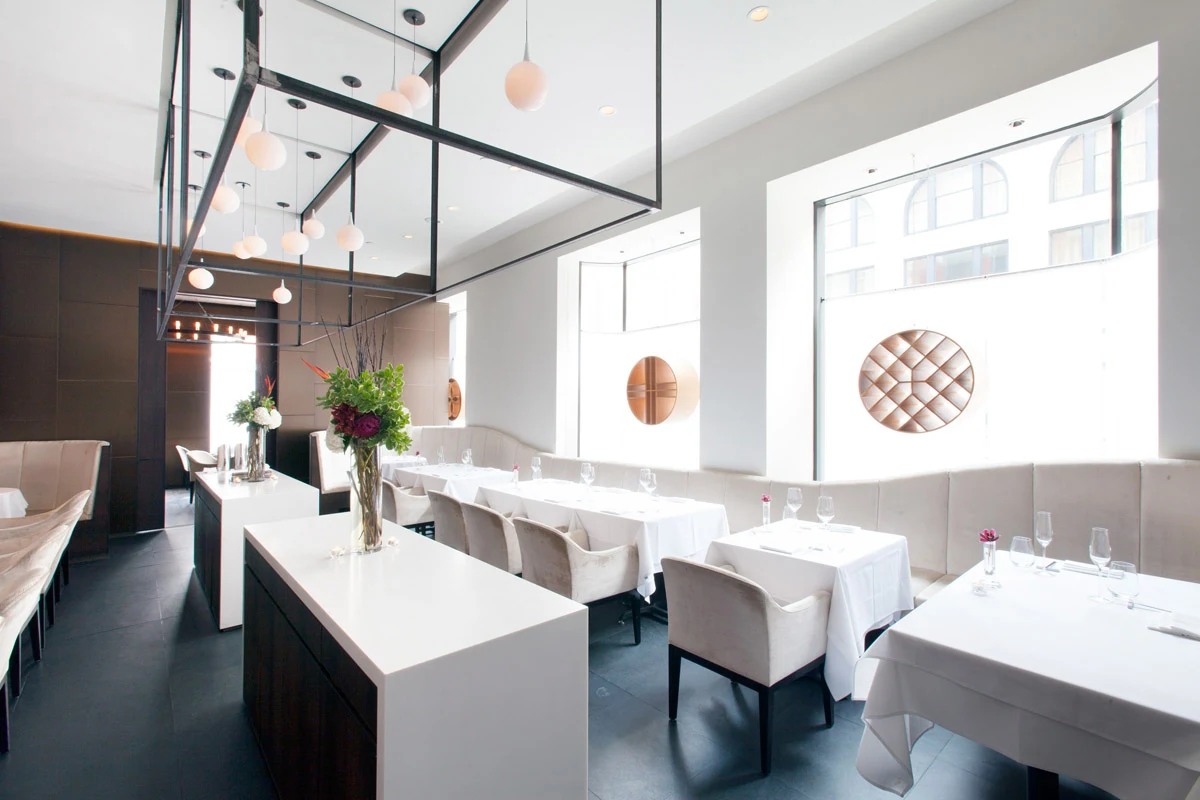
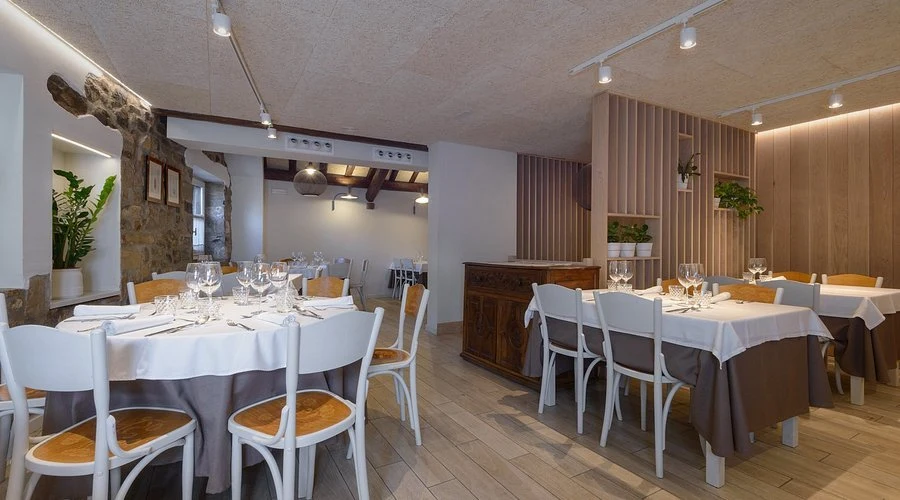
The village of Hecho sits in the western Aragonese Pyrenees, in a valley where the architecture runs to thick stone walls and heavy timber beams. The building that houses Canteré fits that pattern exactly: a traditional chesa, the regional term for the farmstead-style houses particular to the Hecho and Ansó valleys, with an old vine climbing the façade in a way that signals age and rootedness before you've crossed the threshold. You pass through a public bar on the ground floor, the kind of space where locals take their coffee and where the atmosphere is entirely unperformed, before climbing upstairs to a dining room that reads as something more considered: bright, spare, with a minimum of furniture and lighting that has been thought about. The rustic-contemporary register here is not a design affectation but a functional description of what the room actually is.
That combination, a genuinely historic building used as the setting for cooking that takes local tradition seriously while updating it with technical precision, is the pattern that earns Michelin's Bib Gourmand year after year. The Bib Gourmand confirms that Canteré continues to sit in the tier of restaurants where the quality-to-price relationship is the story, not an afterthought. At the €€ price point, it occupies a different position from Spain's high-end tasting-menu circuit. Restaurants like DiverXO in Madrid, Arzak in San Sebastián, or Azurmendi in Larrabetzu operate at €€€€ and make a different kind of argument about what a meal can be. Canteré makes a quieter argument: that a village restaurant with serious seasonal sourcing and a focused menu can justify a journey of its own.
The Kitchen's Orientation: Seasonal, Local, and Grounded in Tradition
Head chef Daniel del Prado runs a kitchen that positions itself explicitly within the Aragonese mountain food tradition, then brings that tradition forward through contemporary technique. The menu changes to follow what the valley and its surroundings produce, which in this part of the Pyrenees means a larder shaped by altitude and season: wild mushrooms in autumn, game through the colder months, and the particular rhythms of a mountain agricultural economy that have not been entirely smoothed out by supply chains.
That seasonal commitment is not decorative. Canteré's food-themed events, one focused on wild mushrooms and another on game, are among the more popular dates in the restaurant's calendar and draw visitors who plan trips around them. This kind of ingredient-driven programming is common in Basque and Navarrese gastronomy but less frequent in Aragon, where the regional kitchen has historically been less internationally prominent despite a strong local larder. García's kitchen is part of a smaller movement of Aragonese chefs working to sharpen that profile.
The comparison set here is not the three-Michelin-star restaurants of Spain's better-known food cities. A more useful frame is the tier of regionally grounded, Bib Gourmand-level restaurants that have made remote or overlooked locations into destinations: Auga in Gijón or Auberge Grand'Maison in Mûr-de-Bretagne operate within a similar logic, where the kitchen's authority derives from depth of local knowledge rather than from metropolitan scale or creative provocation.
Format and Structure: How the Week Works
Canteré operates on a schedule that is tight by any standard. The restaurant opens on Wednesday from 12 to 12:30 AM, with the rest of the week closed. That structure is not unusual for a serious restaurant in a small village with a small team, but it is essential planning information. If you are travelling to Hecho specifically to eat here, the timing of your visit needs to be fixed around those windows before anything else is arranged.
The seven-course tasting menu is the lunchtime format. The evening à la carte offers more flexibility, with the Michelin record singling out an organic egg flan with banana and muscovado crumble as a dish worth noting from the tasting menu. Given the seasonal sourcing, specific dishes will shift across the year, so the tasting menu is the more reliable structure for a first visit. The à la carte in the evening suits those who want to eat more selectively or who are staying in the area and returning more than once.
Hecho is a small village and Canteré is the kind of restaurant that justifies an overnight stay rather than a day trip for those coming from distance. For accommodation, our full Hecho hotels guide covers the options in the valley. For drinking before or after, our full Hecho bars guide maps the local options. Those who want to spend more time in the area can find further context in our Hecho experiences guide and our Hecho wineries guide.
Where Canteré Sits in the Wider Spanish Restaurant Picture
Spain's most discussed restaurants tend to cluster in a small number of cities and coastal areas. The three-star circuit runs through San Sebastián, Barcelona, Madrid, and a handful of Basque and Catalan towns. El Celler de Can Roca in Girona, Martín Berasategui in Lasarte-Oria, Cocina Hermanos Torres in Barcelona, Mugaritz in Errenteria, Quique Dacosta in Dénia, Aponiente in El Puerto de Santa María, Ricard Camarena in València, and Atrio in Cáceres all sit in that conversation. Canteré does not compete in that register and does not need to.
What Canteré represents is a different proposition: a kitchen with Michelin recognition working at a price point that remains genuinely accessible, in a location that requires intentional travel, producing food that is rooted in a specific geography. That combination is increasingly rare as recognition tends to push restaurants either upmarket or toward urban centres.6 across 812 reviews for a restaurant open only one day a week in a mountain village says something about the consistency of the experience and the loyalty it generates among those who make the trip.
For those building an itinerary around serious regional eating in northern Spain, Canteré belongs in the planning alongside the better-known stops. Our full Hecho restaurants guide gives a complete picture of the valley's eating options and helps frame how Canteré sits within them.
Questions
Frequently asked
What recognition does Canteré hold?
Canteré holds a Michelin Bib Gourmand.
Who works at Canteré?
Made By profiles Daniel del Prado (Chef) at Canteré.
How expensive is Canteré?
Canteré is listed at a price level of $$.
Where is Canteré and what does it serve?
Canteré is in Hecho, Hecho, serving Modern Pyrenean Mediterranean.
The field
How it compares
| Place | Cuisine | Notes | Awards |
|---|---|---|---|
| Canteré | Modern Pyrenean Mediterranean | Hecho, $$ | · |
| Alkimia | Modern Catalan Fine Dining | Barcelona | Michelin 1 Star |
| Casa Marcial | Modern Asturian Fine Dining | Arriondas | Michelin 3 Stars |
| Cocina Hermanos Torres | Modern Spanish Fine Dining | Barcelona | Michelin 3 Stars, World's 50 Best |
| Jungsik New York | Modern Korean Fine Dining | New York City | Michelin 3 Stars, World's 50 Best |
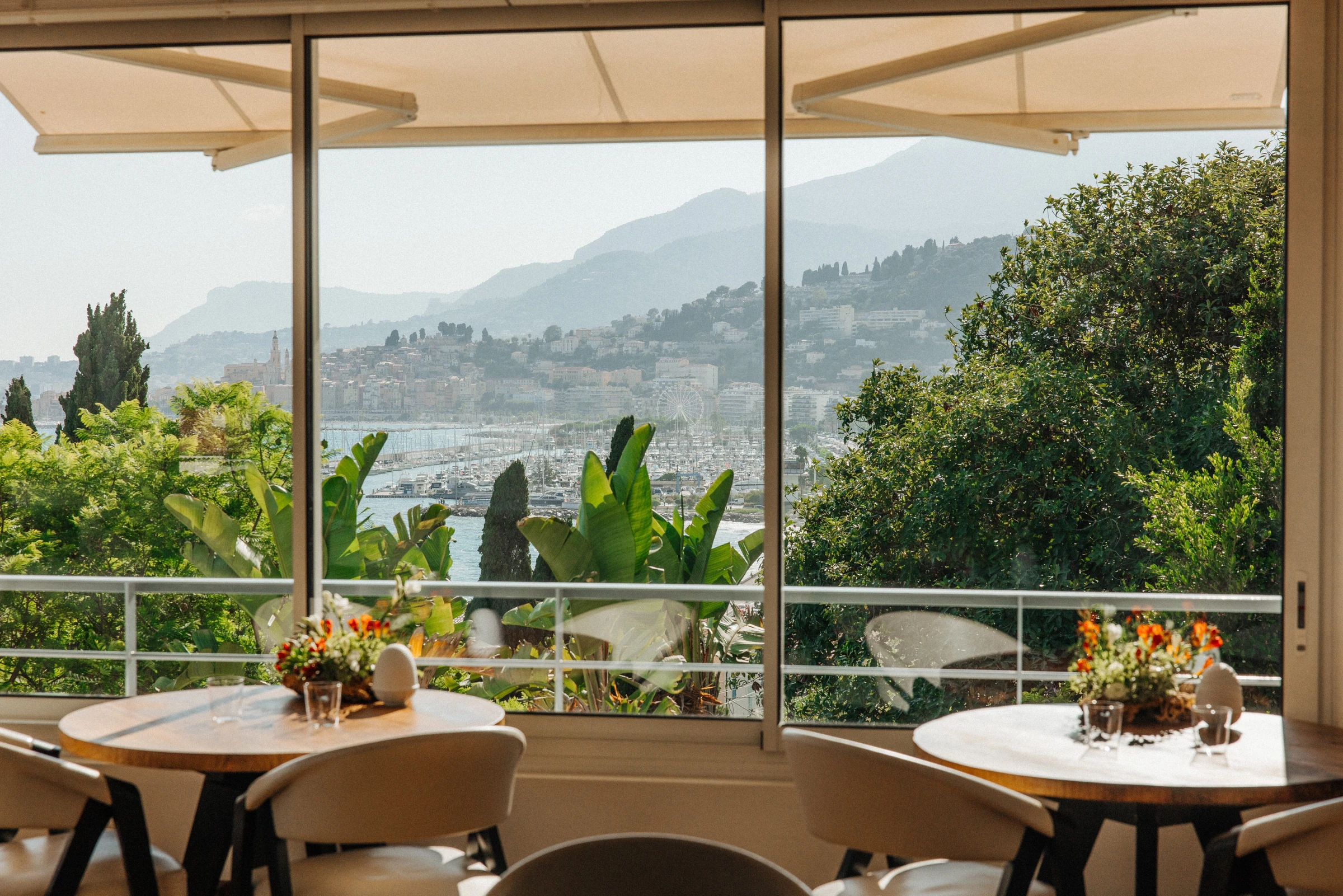
| Mirazur | Modern French Fine Dining | Menton | Michelin 3 Stars, World's 50 Best |
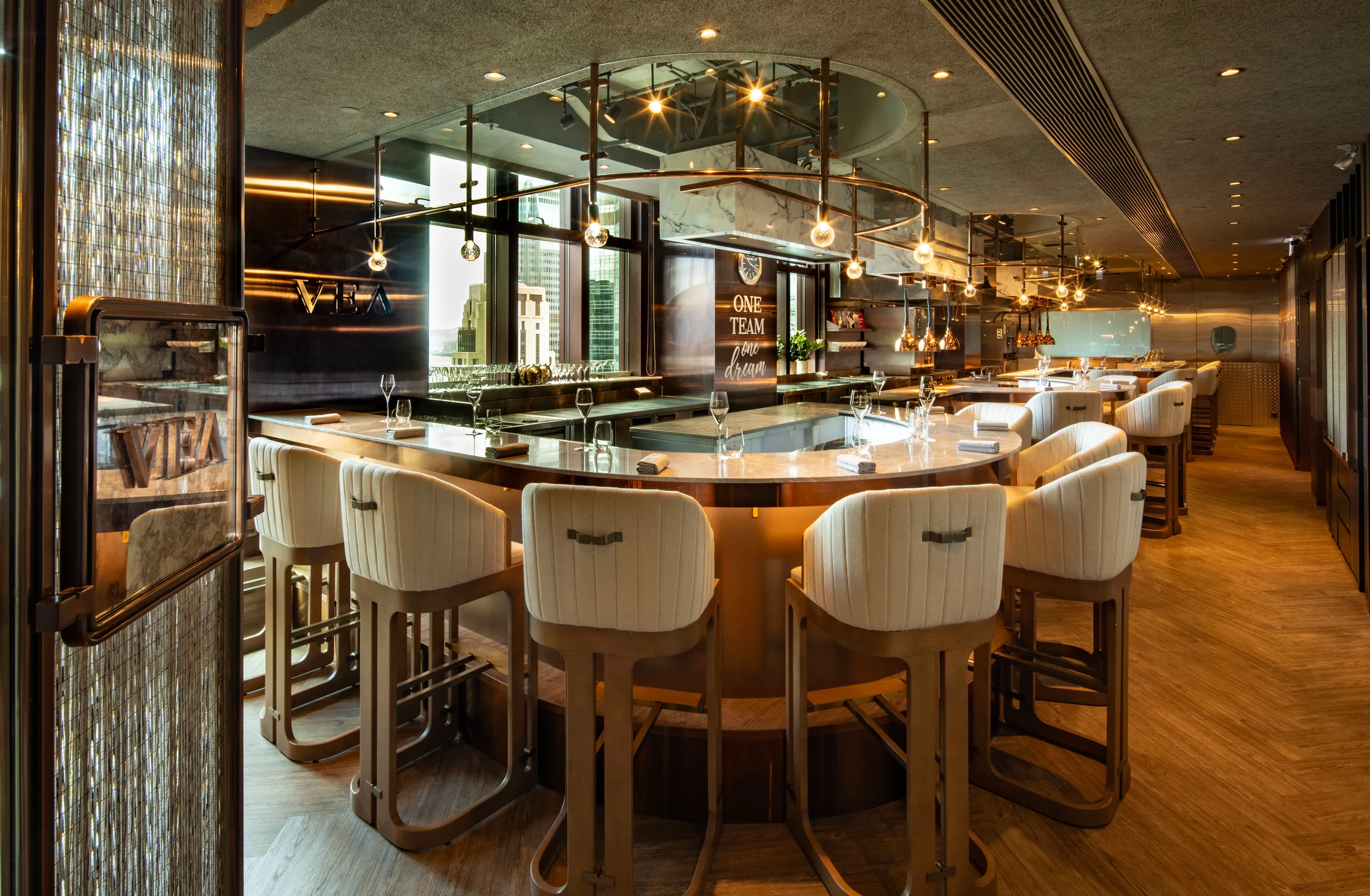
| Vea | Modern Chinese-French Fusion | Hong Kong | Michelin 1 Star, World's 50 Best |
In residence
Similar places
Modern Catalan Fine Dining
Alkimia
Barcelona, Spain
★
Modern Asturian Fine Dining
Casa Marcial
Arriondas, Spain
★★★
Modern Spanish Fine Dining
Cocina Hermanos Torres
Barcelona, Spain
★★★ · 50 Best
Modern Korean Fine Dining
Jungsik New York
New York City, United States
★★★ · 50 Best
Modern French Fine Dining
Mirazur
Menton, France
★★★ · 50 Best
Modern Chinese-French Fusion
Vea
Hong Kong, Hong Kong
★ · 50 Best