
Foot-stomped Prünent, mountain Nebbiolo
- Falstaff Winery - Listed · 2026
Foot-stomped Prünent in the Alpine cellar
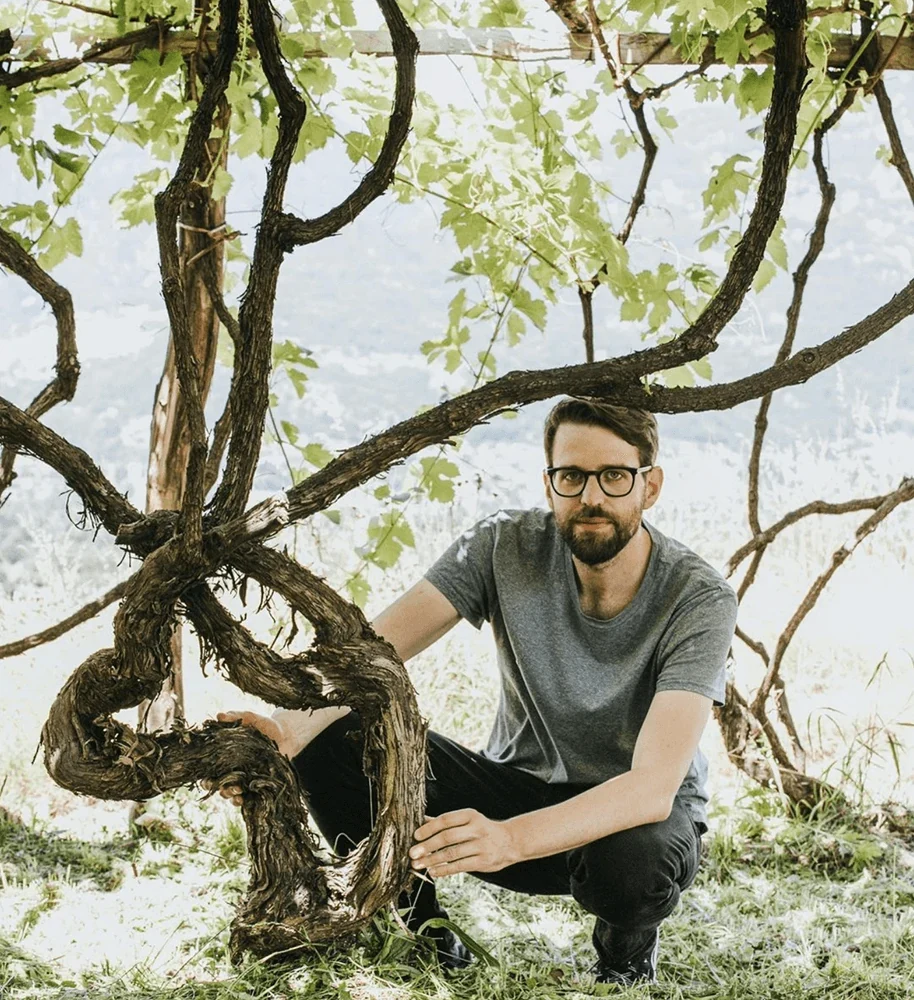
Foot-stomping keeps extraction close to the body and the grape; Marco Garrone, winemaker at Cantine Garrone in Domodossola, carries that cellar rhythm into Prünent from the Valli Ossolane. The family cellar began in 1921 with Luigi Garrone, along a steep mountain path in Val d’Ossola, and the present work reads as continuation rather than departure. In the 1990s, the Garrone family chose to put its weight behind local wine production, not as a museum exercise, but as a working discipline of fruit handling, fermentation, and patience.
Marco’s role sits inside that inheritance. The house vocabulary is built around Prünent, the local name for ancient Nebbiolo, with Croatina and Chardonnay also in the frame. The region’s scale matters: Cantine Garrone owns 3.5 hectares and works with growers across another 7.5 hectares, a practical alliance in a valley where vine holdings are small, steep, and scattered. Around 15,000 bottles come from that work each year. The family also helped press for the Valli Ossolane DOC, established in 2009, giving formal shape to a place that had long carried its own language in the glass.
Ten to twelve days on skins
The red wines begin with a direct gesture. Grapes are foot-stomped, then left to ferment naturally on skins for 10–12 days. That duration gives color and grip without pushing the fruit away from its mountain line. Extraction stays tactile; the hands and feet remain close to the material. In a cellar built around Prünent, that restraint is not a stylistic flourish. It is the method that lets altitude, acidity, and tannin keep their order.
Munaloss shows the clearest version of the choice. The wine sees no oak and spends one year in stainless steel, a frame that leaves Alpine freshness in view. Other named wines, including Cà d’Maté, Prünent, Diecibrente, and Cantine Garrone Prünent Alto 2016, extend the house vocabulary through related expressions of the same valley. Some vineyards sit around 500 meters above sea level, with pergola-trained vines part of the old local grammar. The work is sustainable and dry-farmed, and the cellar avoids covering origin when time can clarify it.
Corten tile near Domodossola
The tasting room and enoteca sit just outside the center of Domodossola, with the green rise of Val d’Ossola close by and the cellar’s mountain identity carried into a contemporary room. BBMDS design studio shaped the space with Caesar porcelain tiles from the Trace collection, using the warm Corten metal-effect hue across open, clean surfaces. It is not a rustic performance of Alpine wine. The room is design-forward, warm, and conversational, built for Prünent to be tasted without theatrical framing.
The counter holds the same tension as the vineyards: old material, present tense. Bottles of Munaloss, Cà d’Maté, Prünent, and Diecibrente bring the cellar’s work into the room, while the bar gives the valley a public face near Domodossola. The thing that anchors the house is a glass of Prünent from Cantine Garrone.
Questions
Frequently asked
Who is behind Cantine Garrone?
Marco Garrone is the winemaker at Cantine Garrone in Domodossola. The family cellar began in 1921 with Luigi Garrone in Val d’Ossola, and the present work continues that inheritance.
What wines is the house known for?
Cantine Garrone is built around Prünent, the local name for ancient Nebbiolo. Croatina and Chardonnay are also part of the range, alongside wines such as Munaloss, Cà d’Maté, Prünent, Diecibrente, and Cantine Garrone Prünent Alto 2016.
How is the wine made?
The red wines begin with foot-stomping, then ferment naturally on skins for 10 to 12 days. Munaloss sees no oak and spends one year in stainless steel.
What is the setting like near the cellar?
The tasting room and enoteca sit just outside the center of Domodossola, close to Val d’Ossola. BBMDS design studio shaped the room with Caesar porcelain tiles in a Corten metal-effect finish, giving it a contemporary look.
Is booking recommended?
Yes, reservations are recommended.
The field
How it compares
| Place | Notes | Awards |
|---|---|---|
| Cantine Garrone | Val d'Ossola / near Domodossola center, $$$ | · |
| Catena Zapata | Agrelo | World's 50 Best |
| Domaine Clarence Dillon | Pessac | · |
| Domaine du Clos de Tart | Morey-Saint-Denis | · |
| Herdade do Esporão | Reguengos de Monsaraz | World's 50 Best |
| Screaming Eagle | Napa | · |
| Viña VIK | San Vicente De Tagua Tagua | World's 50 Best |