David Nieuwoudt, winemaker at Cape Wine Makers Guild in Olive Grove, works within a peer-led auction body for rare South African lots.
The tasting bench is set for comparison before it is set for pleasure. David Nieuwoudt, winemaker at Cape Wine Makers Guild in Olive Grove, brings an Elsenburg agricultural training to a room where wines are measured against peers as much as against vintage. His route has stayed close to production: early work as winemaker at Lievland wine estate, long stewardship at Dwarsrivier / Cederberg Private Cellar since 1996, ownership and winemaking at Cederberg Cellar, and membership in the Guild. That sequence matters because this is not a cellar built around one family name or one block of vines. It is an association of South African winemakers who make rare, small lots for auction, with the Guild acting as a professional body, tasting table, and standard-setting forum. Nieuwoudt’s place inside it reads as peer recognition, but also as a continuation of the same farming discipline that sits behind Ghost Corner Sauvignon Blanc, Ghost Corner The Bowline, Five Generations Chenin Blanc, Cederberg Shiraz 2002, and Driehoek 2014 Shiraz.
The method here is collective, not anonymous. Guild wines come from member cellars across South Africa, with each winemaker responsible for the farming decisions, cellar choices, élevage, and final bottle that carries their name into the annual auction. The association itself began in 1982, and its work still turns on technical tasting, benchmarking, and knowledge shared between people who already have time on the tools. Some wines draw on estate fruit, others on trusted growers; some reds may see open-top fermenters, while other lots rely on closed tanks and tighter temperature control. Barrel programs vary by cellar, with French oak, American oak, and local South African barrels all part of the wider conversation. The useful constant is scale. These are not volume wines from a single industrial line. They are limited auction lots, still red, still white, and sparkling, made to test an idea or sharpen a known strength rather than fill a broad range.
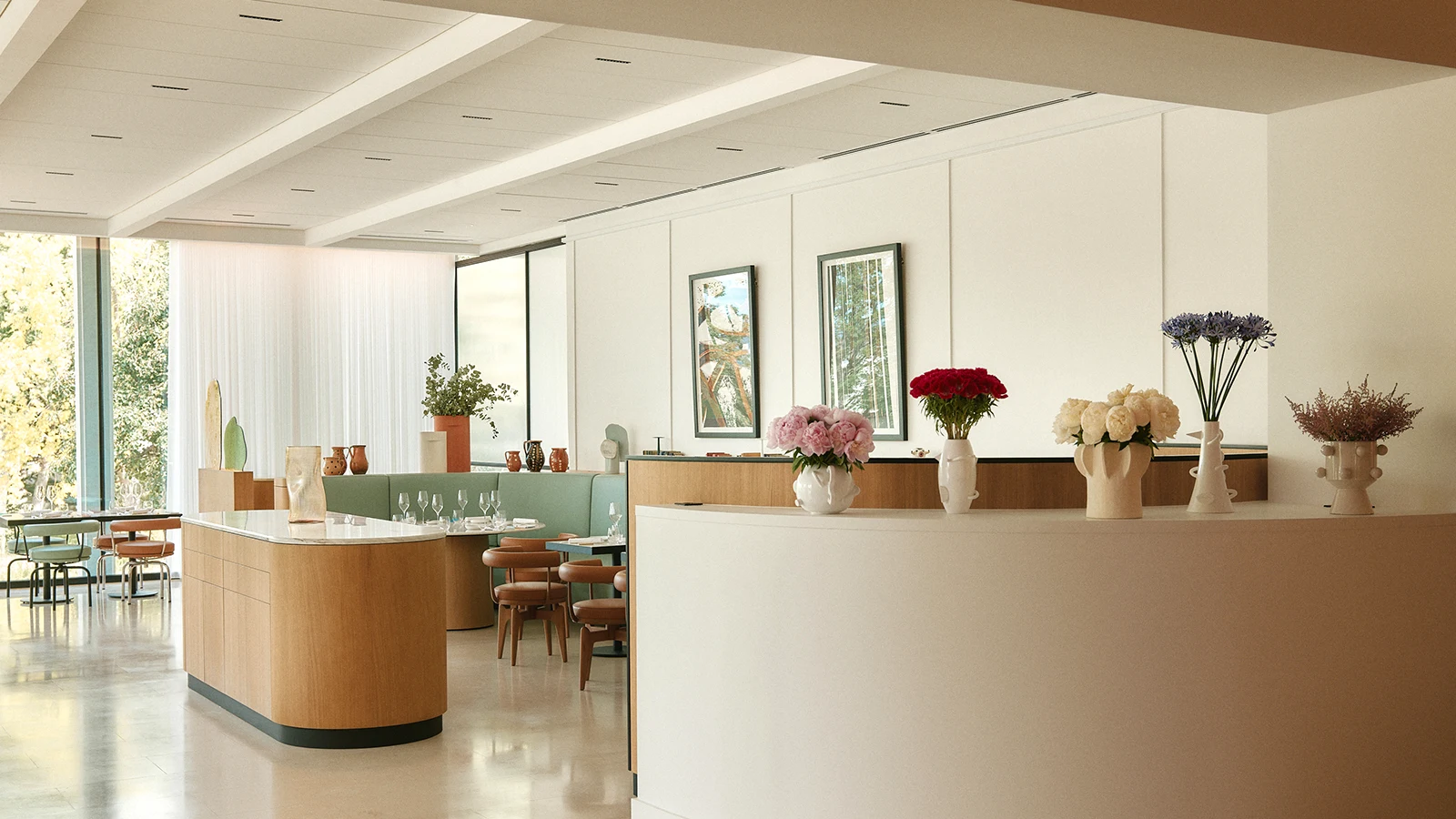
Olive Grove gives the Guild a base rather than a vineyard view. The setting is office and industrial estate, quiet, practical, and closer to administration than to a traditional tasting room with rows outside the door. Guest-facing tastings usually happen through partner venues, formal seated tastings, guided tastings, masterclasses, and auction occasions where the winemakers can pour and speak from the work. That distance from the usual estate choreography suits the institution. The room is professional and scholarly without becoming cold; the attention sits on glassware, sequence, note-taking, and the small corrections that happen when one maker tastes beside another. In that context, Nieuwoudt’s agricultural base is not background biography. It is part of how the Guild reads wine: from soil and weather into fermentation, then back through the hands that decided when to pick.
The Guild matters because it gathers individual cellars into a shared discipline without flattening their differences. Its auction wines give collectors a narrow view into experiments, single-site choices, and member signatures that may not appear in regular estate portfolios. Its training and youth-focused work keep the bench from becoming closed to the next generation. For Nieuwoudt, the continuing thread is clear enough: vineyard, cellar, peer table, and the auction bottle. The name to keep beside that thread is Five Generations Chenin Blanc.
Olive Grove, iTjhingalanga Kapa, Südafrika
Olive Grove