- Falstaff Winery - Listed · 2026
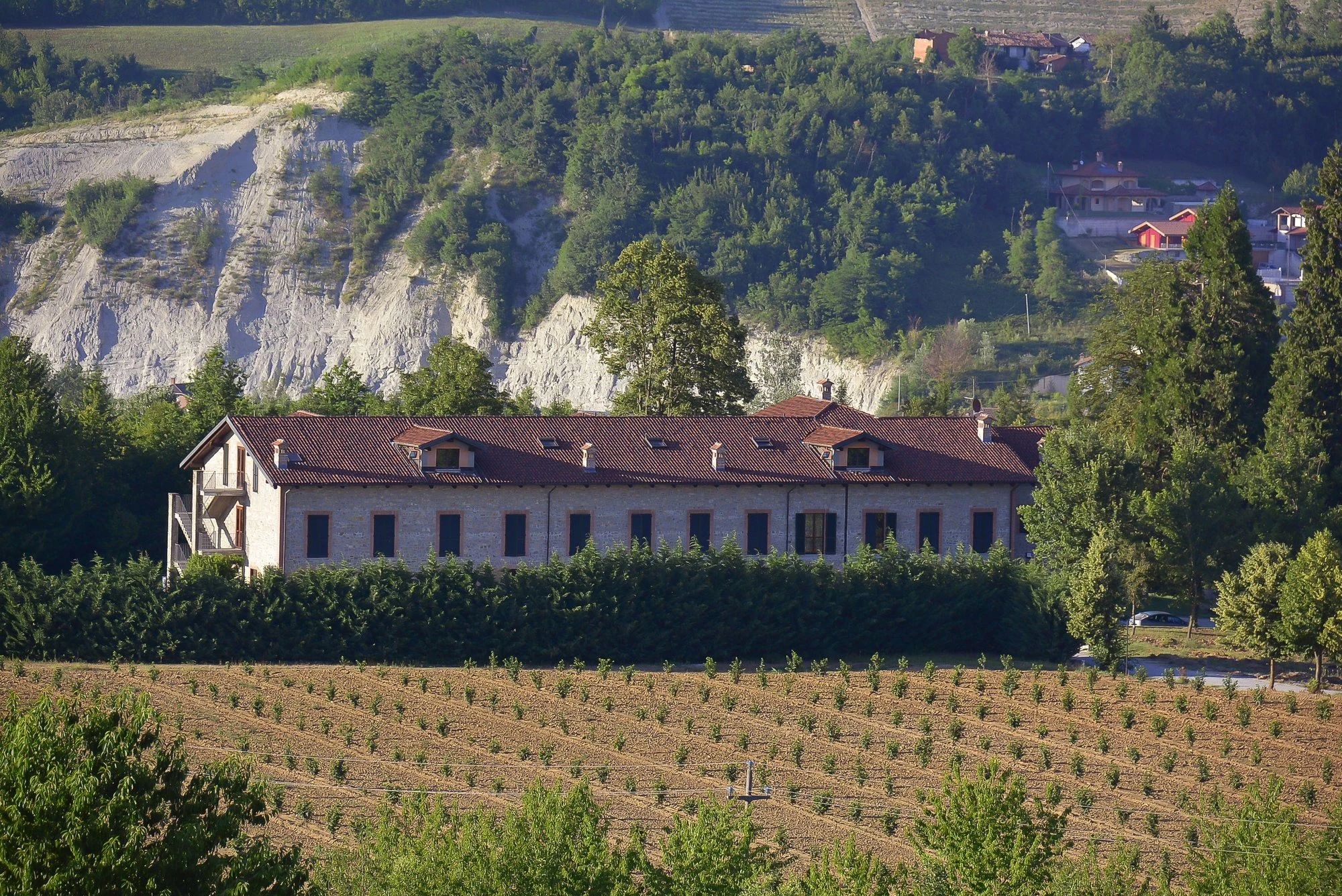
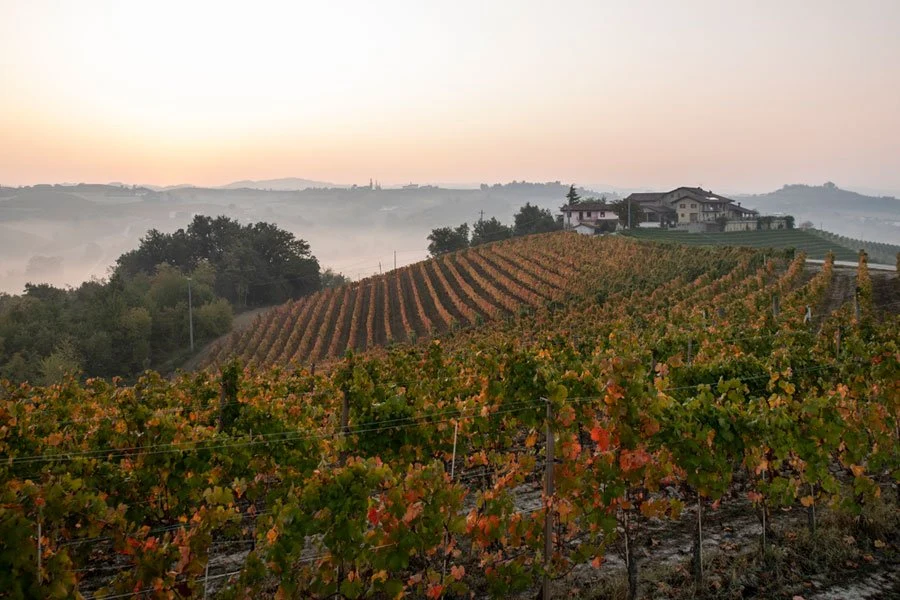
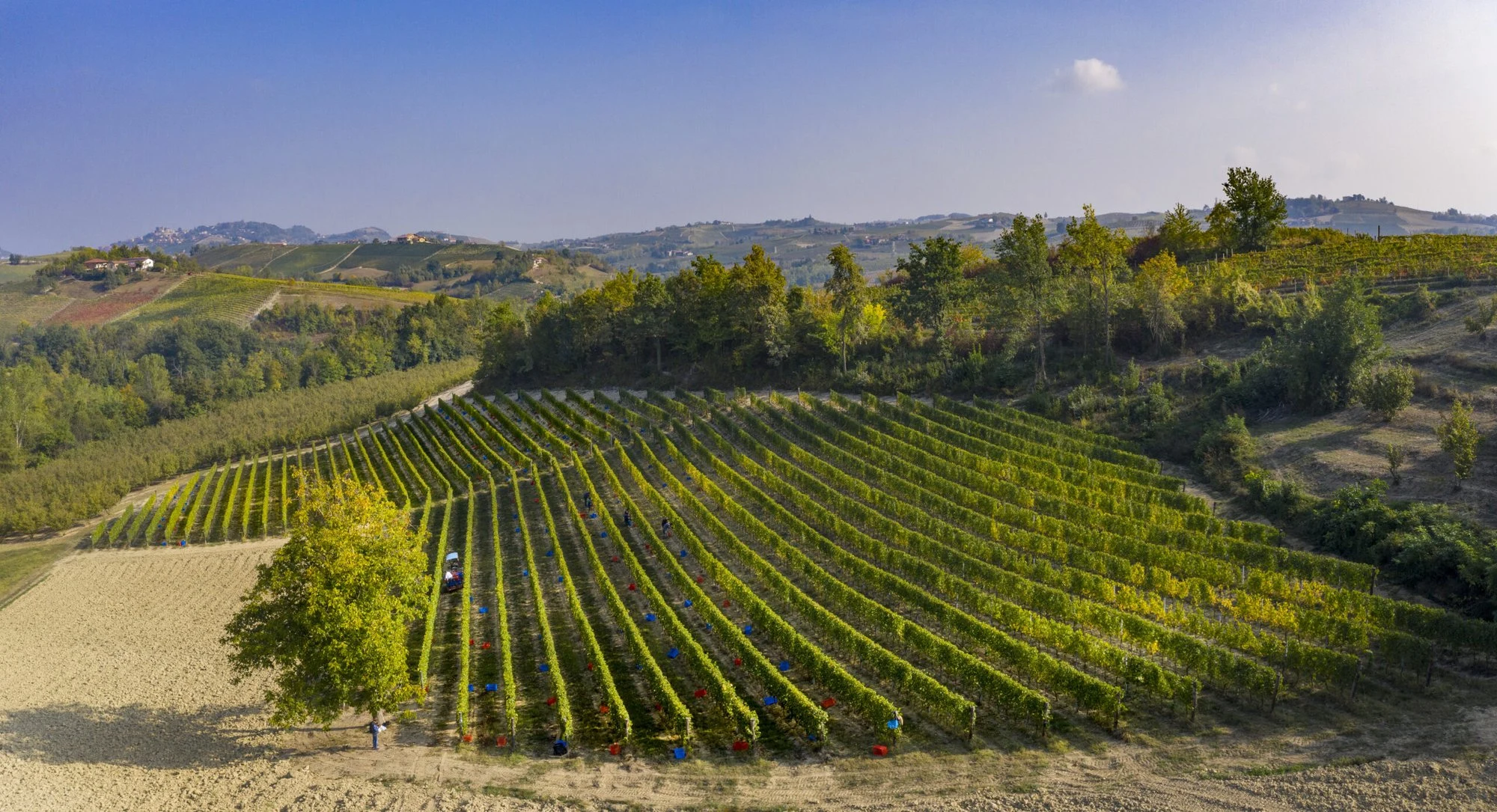
The approach to Cascina Corte is defined less by grand cellar architecture than by the quiet grammar of Langhe farming: vineyard rows, an old farmhouse restored with natural materials, and the scale of a family estate rather than a destination complex. In Dogliani, where Dolcetto carries more cultural weight than it does in many international cellars, that restraint matters. The surrounding San Luigi hills give the experience its frame, and the wines make more sense when read through that slope-and-soil context rather than as isolated bottles.
Dogliani sits inside Piedmont’s broader Langhe conversation, close enough to Nebbiolo country to feel its pull, yet distinct in its allegiance to Dolcetto. That grape can be treated as simple trattoria red elsewhere; here it becomes a serious local argument. Cascina Corte belongs to the smaller organic tier of the region, with certification in place since 2005 and production centered on Dolcetto, Barbera, Nebbiolo, Freisa, Riesling, and Nascetta. The result is not a broad commercial portfolio. It is a focused reading of place, with Dolcetto as the main dialect.
Old Dolcetto vines and San Luigi soils set the agenda
The estate covers more than 15 hectares, with roughly 7 hectares under vine. The defining material is old Dolcetto: 3.5 hectares planted between 1946 and 1955, including La Pirochetta, a vineyard planted in 1946. Those dates are not decorative. In Dogliani, vine age can shift Dolcetto away from easy fruit and toward structure, grip, and a more mineral register, especially on compact tuff, limestone, and marl soils.
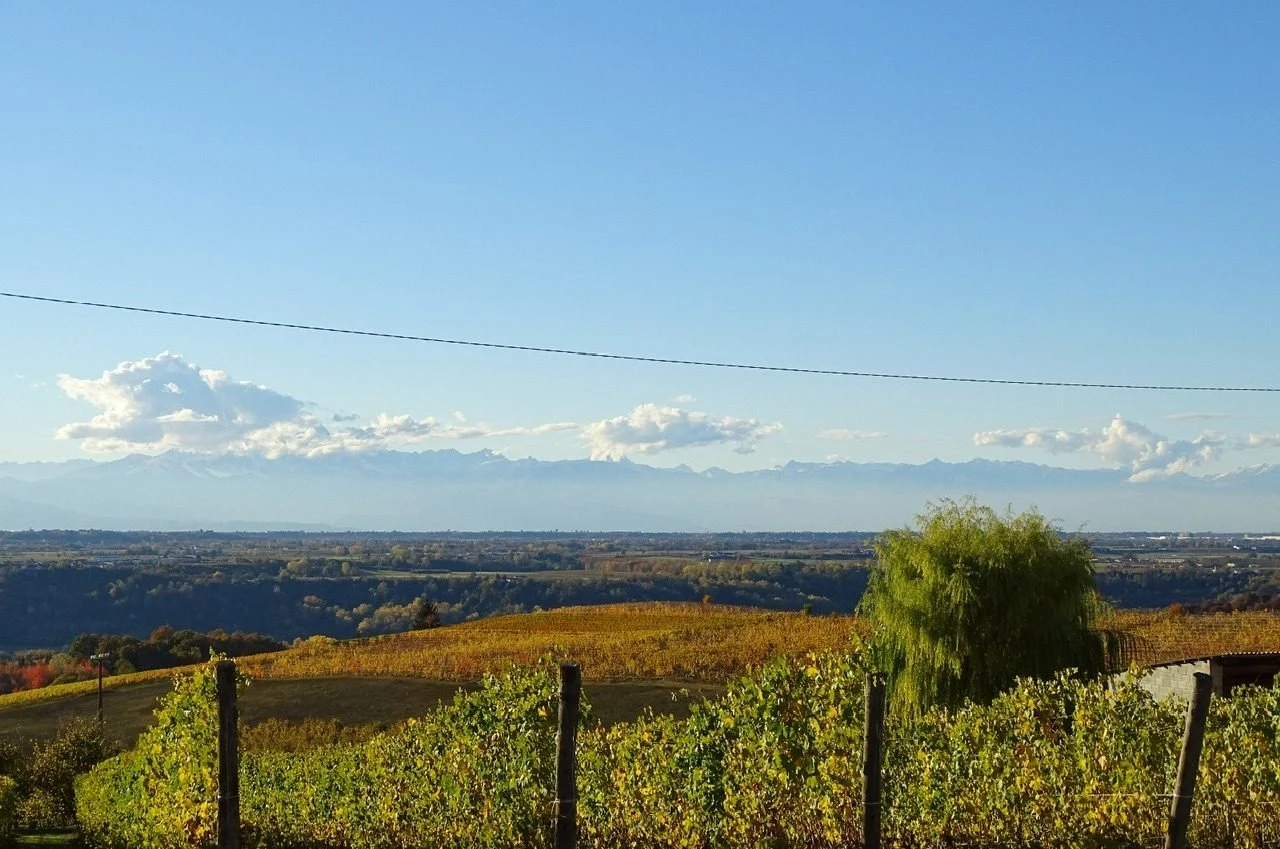
The local altitude band, broadly 200 to 600 meters across the hills, adds another layer. Diurnal shifts help preserve acidity, while the region’s long growing season gives Nebbiolo and Barbera enough time to develop without displacing Dolcetto from the center of the estate’s identity. Cascina Corte’s DOC Dolcetto di Dogliani focus therefore reads as a statement about hierarchy: this is a cellar where the local grape is not treated as a warm-up before Nebbiolo.
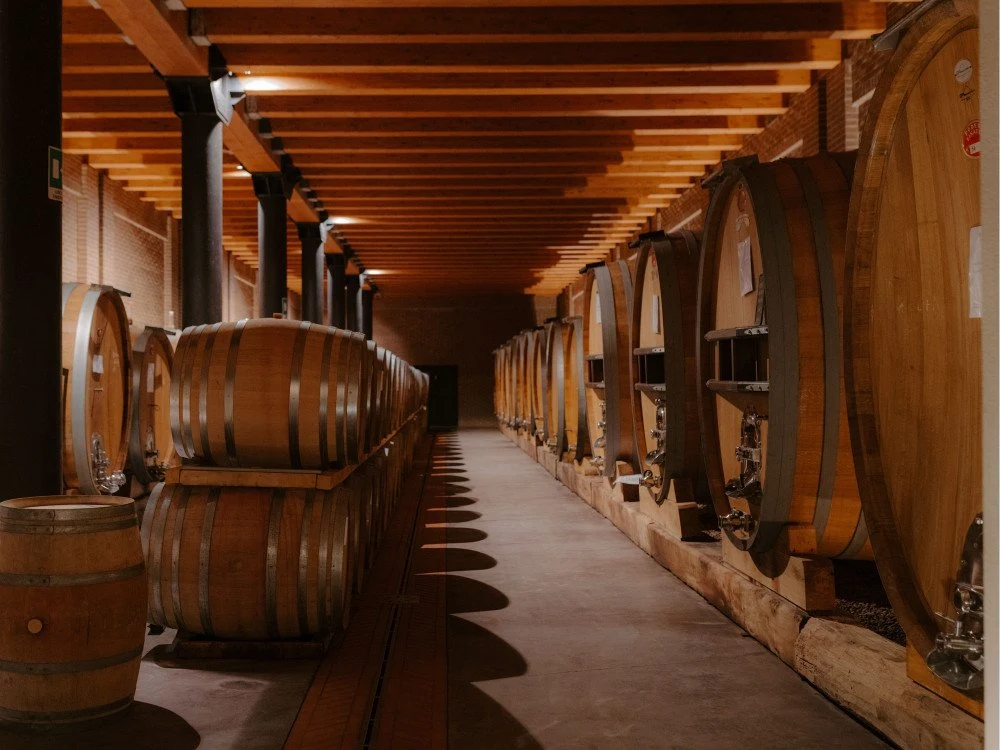
Production choices reinforce that reading. Grapes are hand-picked, fermentations proceed without added fermenting yeasts, and maceration runs three to four weeks with daily pumping over. The wines are neither filtered nor clarified, with sulfur use kept low. Aging moves between stainless steel, demi-muids, foudres, and, since 2015, Tuscan terra-cotta amphorae. The amphora element is useful not because it signals fashion, but because it gives the cellar another way to interpret Dolcetto and other local varieties without making oak the dominant signature.
A farmhouse tasting format, not a high-volume cellar route
The visitor format suits the wines. This is a small estate with guided tastings, vineyard walks, private tastings, and hospitality in a restored 18th-century farmhouse. The tone is countryside and intimate rather than high-energy. That distinction is important in Langhe travel, where some cellars now operate with the polish of luxury retail. Cascina Corte is better understood as a place for learning how Dogliani’s soils, old vines, and organic farming translate into the glass.
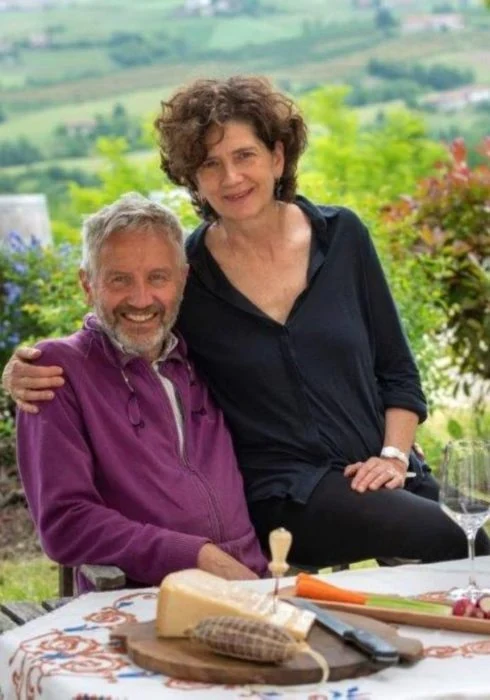
Amalia Battaglia and Sandro Barosi purchased the property in 2001 after the house and vineyards had spent years in neglect. Their Slow Wine background gives the project a relevant credential, but the stronger editorial point is regional: the early-2000s revival of abandoned farm properties helped reshape parts of the Langhe into a patchwork of small, quality-driven estates. Here, restoration and agriculture are linked. The farmhouse is not a backdrop placed beside the wine business; it is part of the estate’s modern history.
The portfolio stays close to local identity. Dogliani Classico DOCG sits at the center, while Dogliani Superiore Vigna Pirochetta DOCG draws on the old La Pirochetta vines. Dogliani San Luigi gives another Dolcetto expression, while Langhe Nebbiolo, Barbera, Freisa, Riesling, and Nascetta widen the view without turning the estate into a variety showcase. For travelers using Dogliani as a base, the point is not to collect labels across Piedmont in one stop. It is to understand how a small organic cellar handles the area’s native priorities.
How to place it within a Dogliani wine itinerary
Dogliani rewards slower scheduling. A visit here pairs naturally with a wider look at the town’s winery culture through Our full Dogliani wineries guide, then a narrower study of nearby producers such as Azienda Agricola Abbona Marziano, Azienda Agricola Pecchenino, Azienda Agricola Valletti, Ca' Viola, and Chionetti. The useful comparison is not a ranking exercise, but a question of emphasis: who treats Dolcetto as immediate pleasure, who pushes it toward age-worthy structure, and who uses cellar technique to make the vineyard more legible.
The broader trip works better when wine is not isolated from the rest of the town. Dining and lodging shape how much attention a tasting receives, so the practical companion reads are Our full Dogliani restaurants guide, Our full Dogliani hotels guide, Our full Dogliani bars guide, and Our full Dogliani experiences guide. For a wider European winery lens beyond Piedmont, contrast Dogliani’s small organic model with 3GP SRL in Treviso, 47 Anno Domini in Trebaseleghe, A Mano Wine in Noci, »der Steiner« Hans Steiner in Podersdorf am See, and & Handwein in Mannheim. Cascina Corte’s value is clearest for travelers who prefer agricultural specificity over polished spectacle: old vines, organic farming, a restored farmhouse, and a Dolcetto-led argument for Dogliani on its own terms.
Questions
Frequently asked
Who works at Cascina Corte?
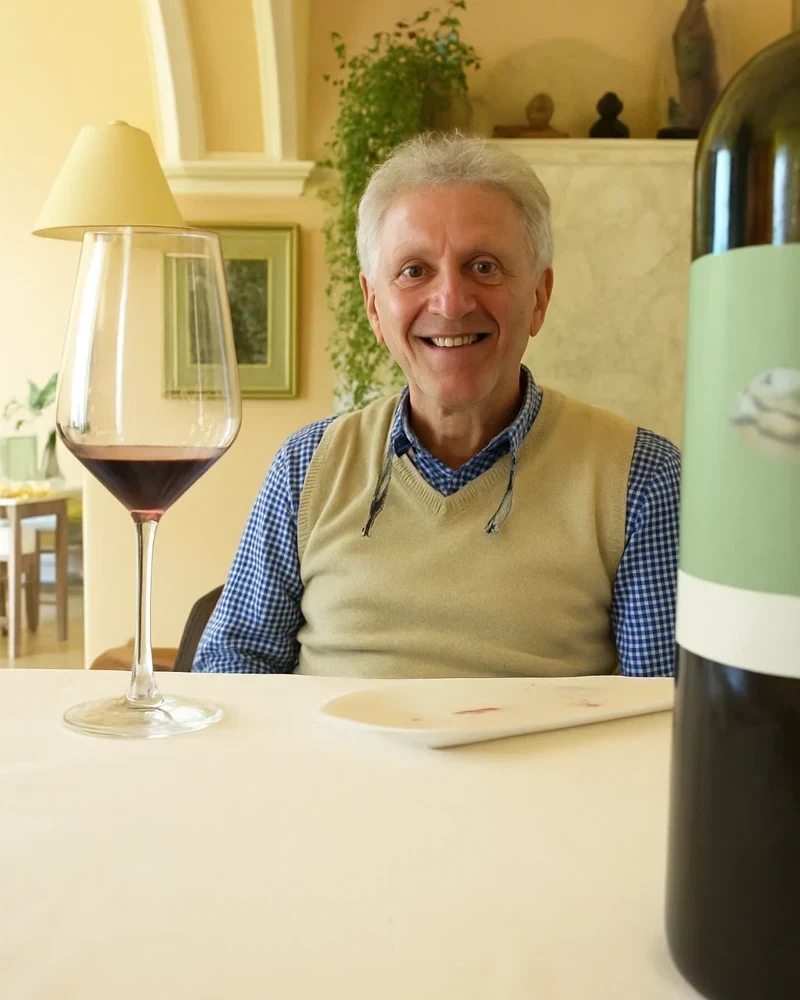
Made By profiles Amalia Battaglia (Winemaker) and Sandro Barosi (Winemaker) at Cascina Corte.
How expensive is Cascina Corte?
Cascina Corte is listed at a price level of $$.
The field
How it compares
| Place | Notes |
|---|---|
| Cascina Corte | Langhe, $$ |
| Azienda Agricola Abbona Marziano | Dogliani |
| Azienda Agricola Pecchenino | Dogliani |
| Azienda Agricola Valletti | Dogliani |
| Ca' Viola | Dogliani |
| Chionetti | Dogliani |
| Poderi Luigi Einaudi | Dogliani |