From the people index
Recommended by
2 trusted voices point here.


Single-vineyard Chianti Classico since 1978
- Falstaff Winery - 5 Stars · 2026
- Pearl 4 Star Prestige · 2025
From vine reading to cellar direction
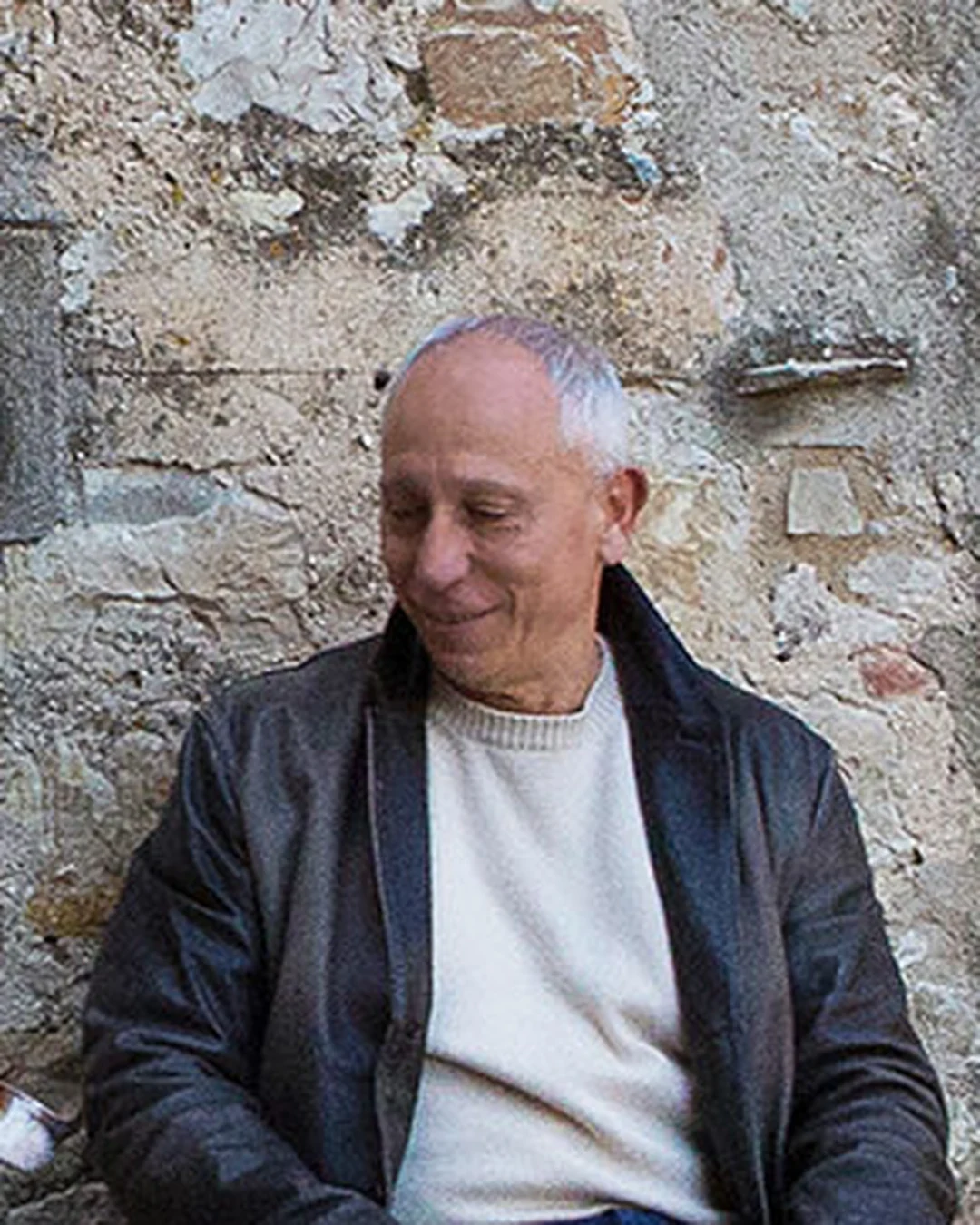
The agronomist’s read of a vine still matters before the wine moves. Marco Pallanti, winemaker at Castello di Ama in Gaiole in Chianti, arrived in 1982 as a young agronomist and became winemaker and technical director that same year. The dual footing remains useful here: the vineyard gives the first instruction, the cellar answers it. Pallanti has stayed with the estate through a long period of work in Chianti Classico DOCG, keeping his role close to both production and representation. From 2006 to 2012, he served as president of the Chianti Classico Consortium, a regional position outside the estate but tied to the same appellation framework. At Ama, his name sits with L’Apparita, Vigneto Bellavista, Vigneto San Lorenzo, Vigneto La Casuccia, and Vigneto Bertinga. They are separate bottlings rather than one signature reduced to a label. The continuity is the point: one maker, one property, several named expressions held inside the same estate logic.
Seventy-five hectares, several named expressions
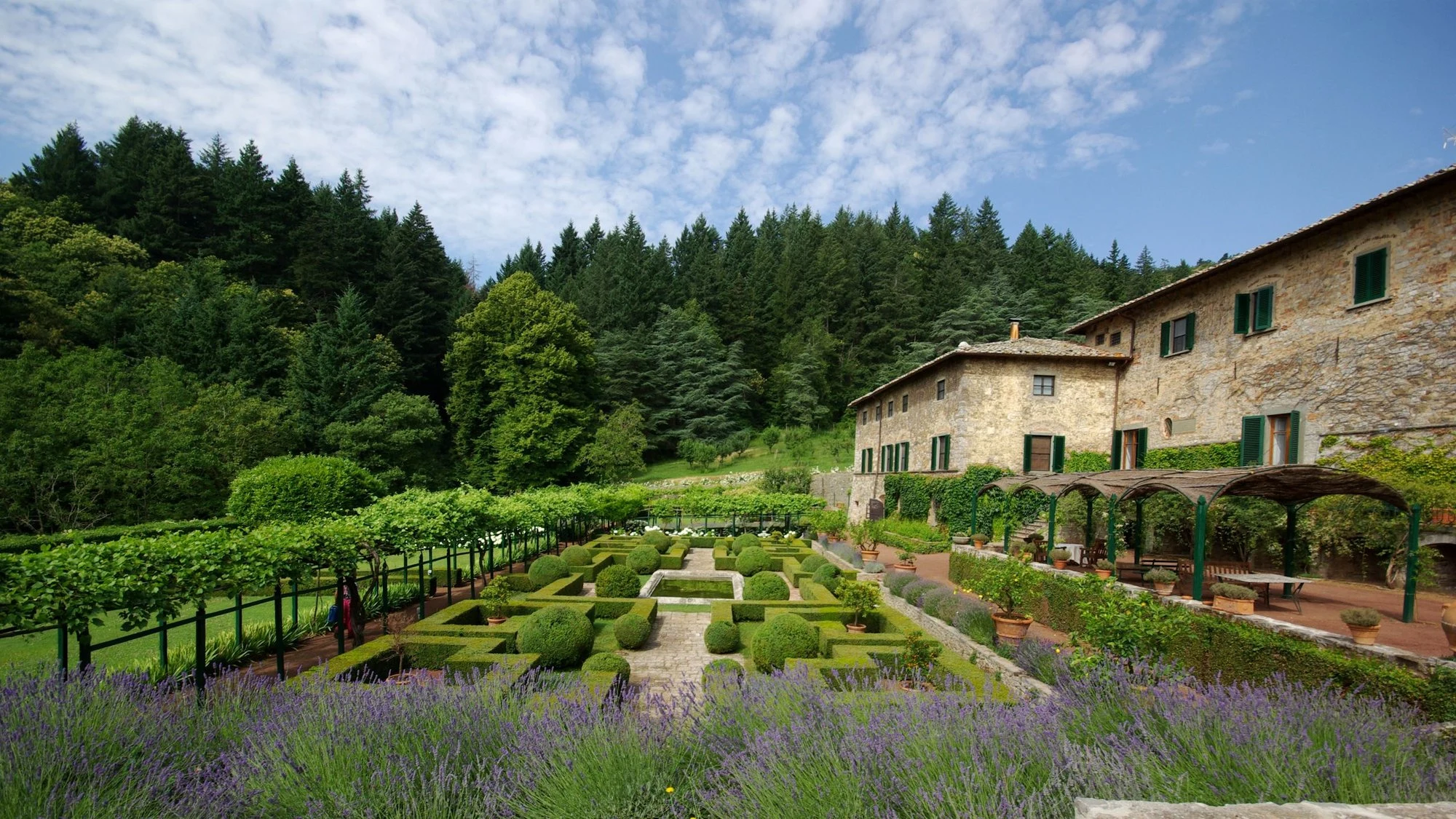
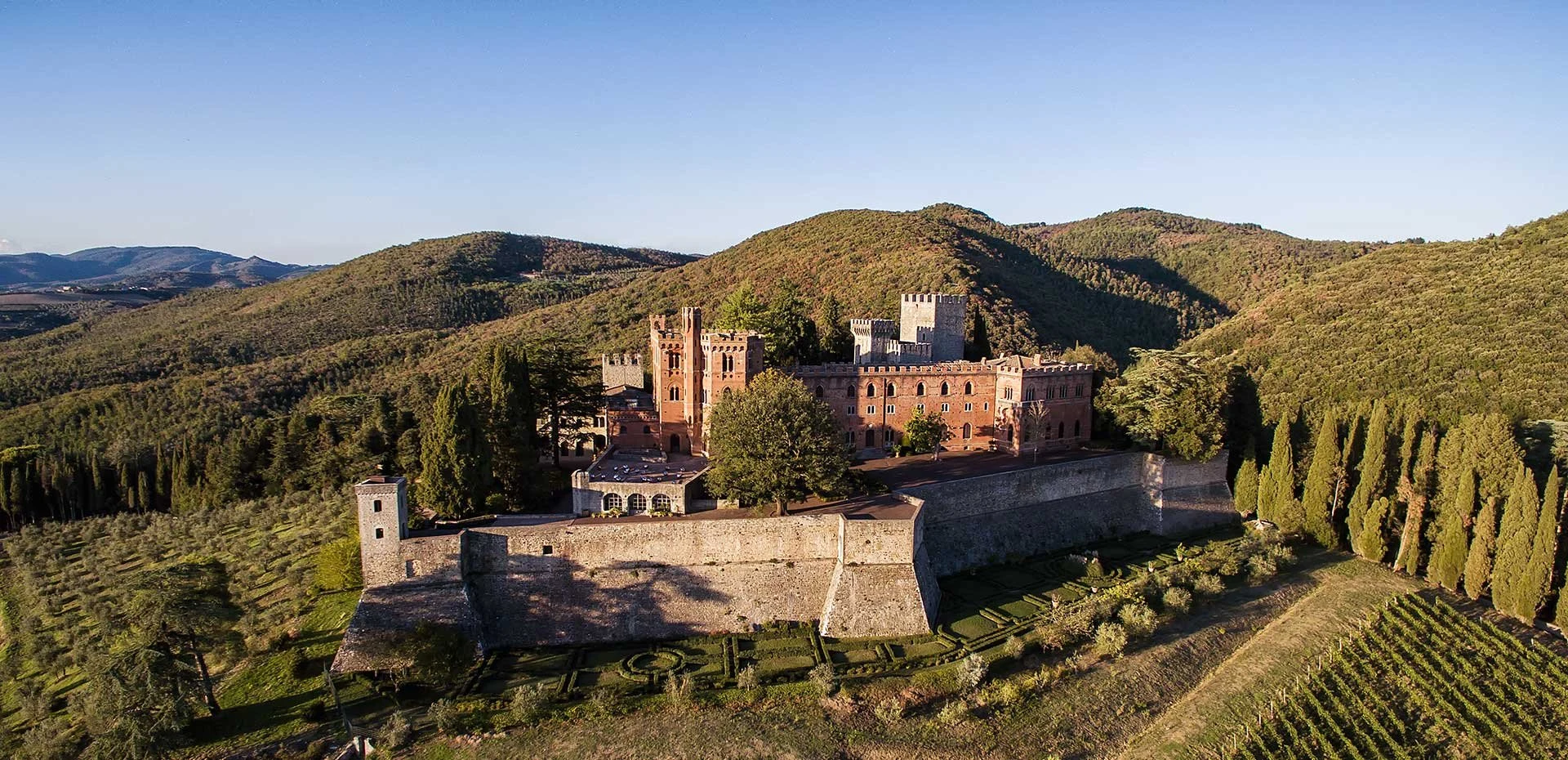
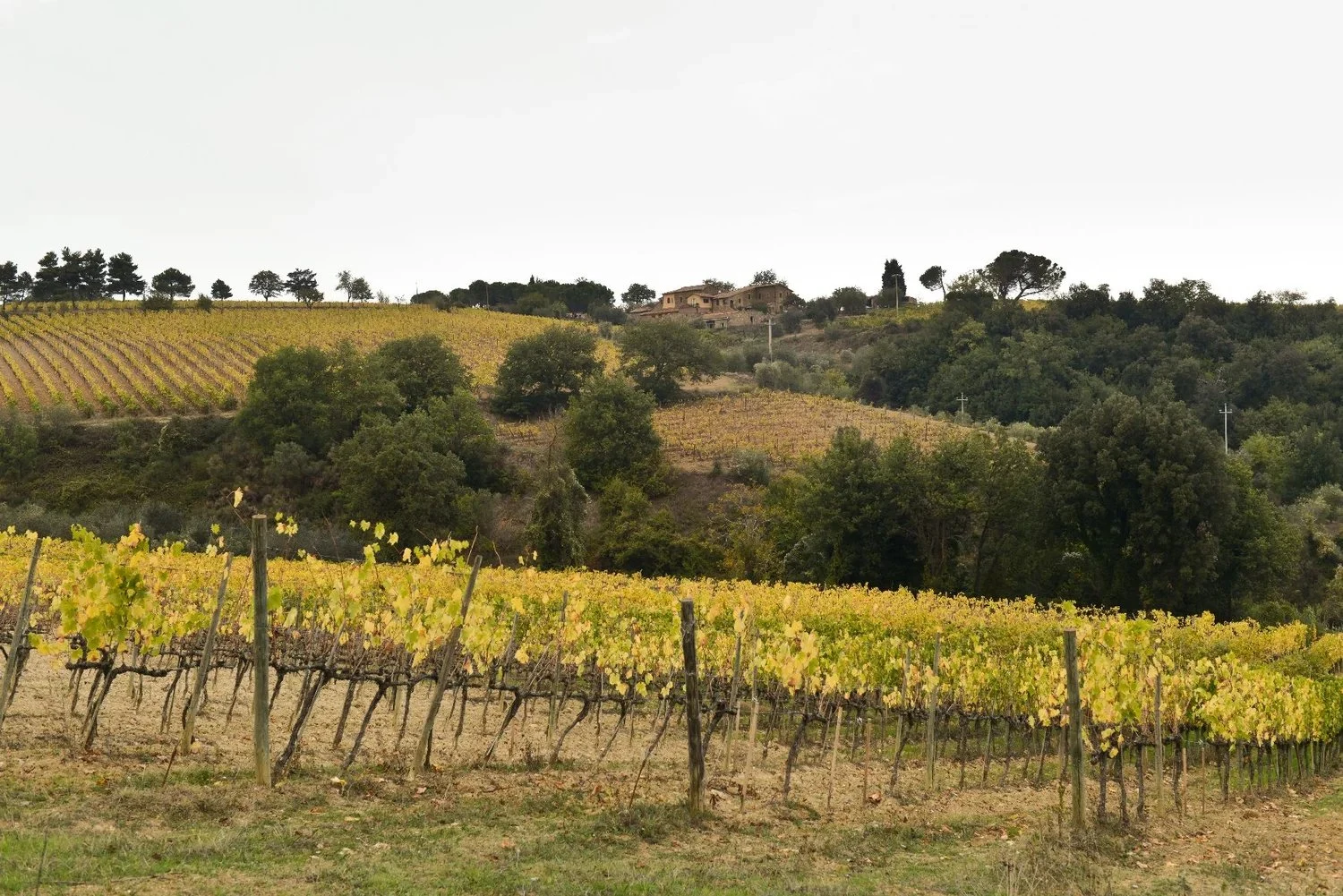
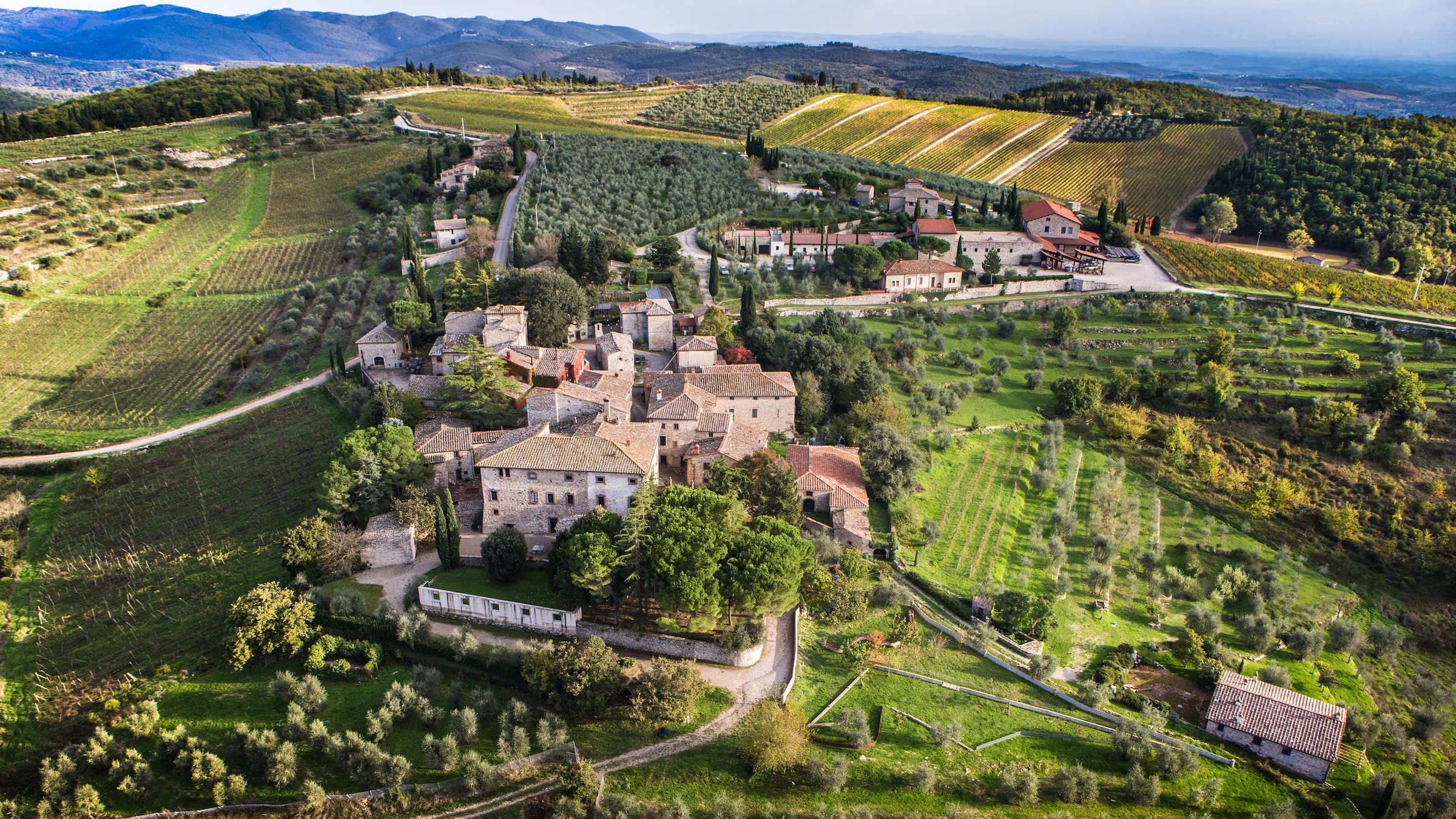
Castello di Ama works from 75 hectares of estate vineyards and a stated production scale of 320,000 bottles annually. The grape vocabulary is broad for a Chianti Classico estate: Sangiovese, Merlot, Chardonnay, Pinot Noir, Malvasia Nera, and Cabernet Franc all appear in the house’s material. The estate has pursued single-vineyard cru selections since 1978, a decision that asks the cellar to keep difference legible rather than smoothed away. The fermentation cellar, completed in 1979, belongs to that discipline. So does the attention to site: the property sits at 500 meters, with clay-limestone soils and four surrounding valleys shaping the vineyard work before a tank or barrel enters the conversation. The production philosophy is sustainable, but the more useful reading is practical. A place at this elevation has to be farmed, picked, fermented, and blended with the hill in mind, not as a decorative fact but as the condition of the wine.
The Arca and the hilltop cellar
The estate does not feel arranged around noise. The cellar, the vineyard, and the tasting room hold a quiet sequence, with contemporary architecture set into older surroundings rather than placed against them. The Arca wine archive gives that sequence its most literal form: 80,000 bottles held above the valleys, with natural light and a wine-by-glass service that keeps the room close to the work rather than separate from it. From the hilltop, the view is not a backdrop. It is the same terrain Pallanti reads when he thinks about Sangiovese and the other varieties planted here. In the room, glass, stone, bottle, and slope sit in the same line of sight.
What carries forward at Ama
The estate’s importance rests less on display than on duration: Pallanti’s tenure, the single-vineyard program, the cellar built for that program, and the archive that preserves the results. The next useful evidence is still in the named bottles as they move through the cellar, especially L’Apparita and Vigneto Bellavista.
Questions
Frequently asked
Who makes the wine at Castello di Ama?
Marco Pallanti has been the winemaker and technical director at Castello di Ama since 1982.
What is Castello di Ama known for?
The estate works from 75 hectares of vineyards and has pursued single-vineyard cru selections since 1978. Named bottlings include L’Apparita, Vigneto Bellavista, Vigneto San Lorenzo, Vigneto La Casuccia, and Vigneto Bertinga.
What kind of visit should be arranged in advance?
Visits are by appointment only.
What should visitors know about getting there and how to dress?
The estate has on-site parking, and the dress code is smart casual.
The field
How it compares
| Place | Notes |
|---|---|
| Castello di Ama | Gaiole in Chianti, $$$ |
| Badia a Coltibuono | Gaiole in Chianti |
| Barone Ricasoli (Brolio) | Gaiole in Chianti |
| Castello di Lucignano | Gaiole in Chianti |
| Fattoria di Rietine | Gaiole in Chianti |
| Fietri | Gaiole in Chianti |
| Ricasoli | Gaiole in Chianti |